Procedure After Issuing Summons
Description
Get your form ready online
Our built-in tools help you complete, sign, share, and store your documents in one place.
Make edits, fill in missing information, and update formatting in US Legal Forms—just like you would in MS Word.
Download a copy, print it, send it by email, or mail it via USPS—whatever works best for your next step.
Sign and collect signatures with our SignNow integration. Send to multiple recipients, set reminders, and more. Go Premium to unlock E-Sign.
If this form requires notarization, complete it online through a secure video call—no need to meet a notary in person or wait for an appointment.
We protect your documents and personal data by following strict security and privacy standards.

Make edits, fill in missing information, and update formatting in US Legal Forms—just like you would in MS Word.

Download a copy, print it, send it by email, or mail it via USPS—whatever works best for your next step.

Sign and collect signatures with our SignNow integration. Send to multiple recipients, set reminders, and more. Go Premium to unlock E-Sign.

If this form requires notarization, complete it online through a secure video call—no need to meet a notary in person or wait for an appointment.

We protect your documents and personal data by following strict security and privacy standards.
Looking for another form?



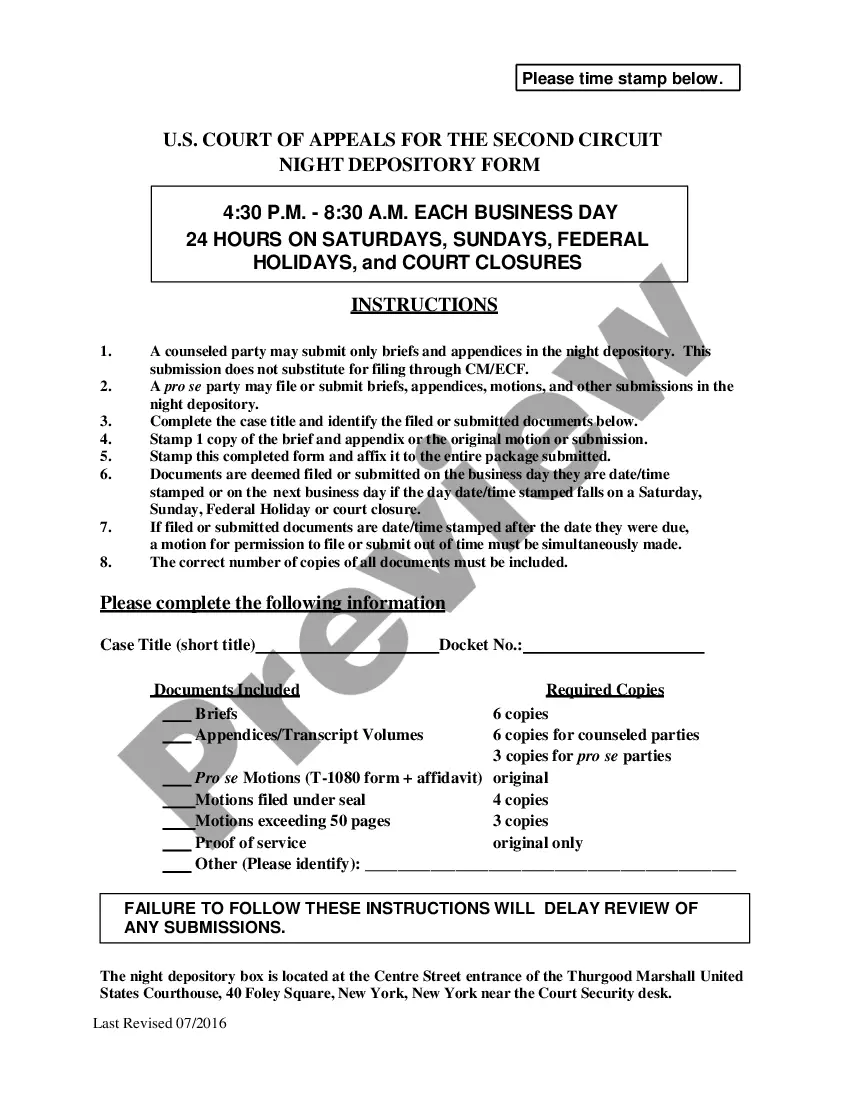
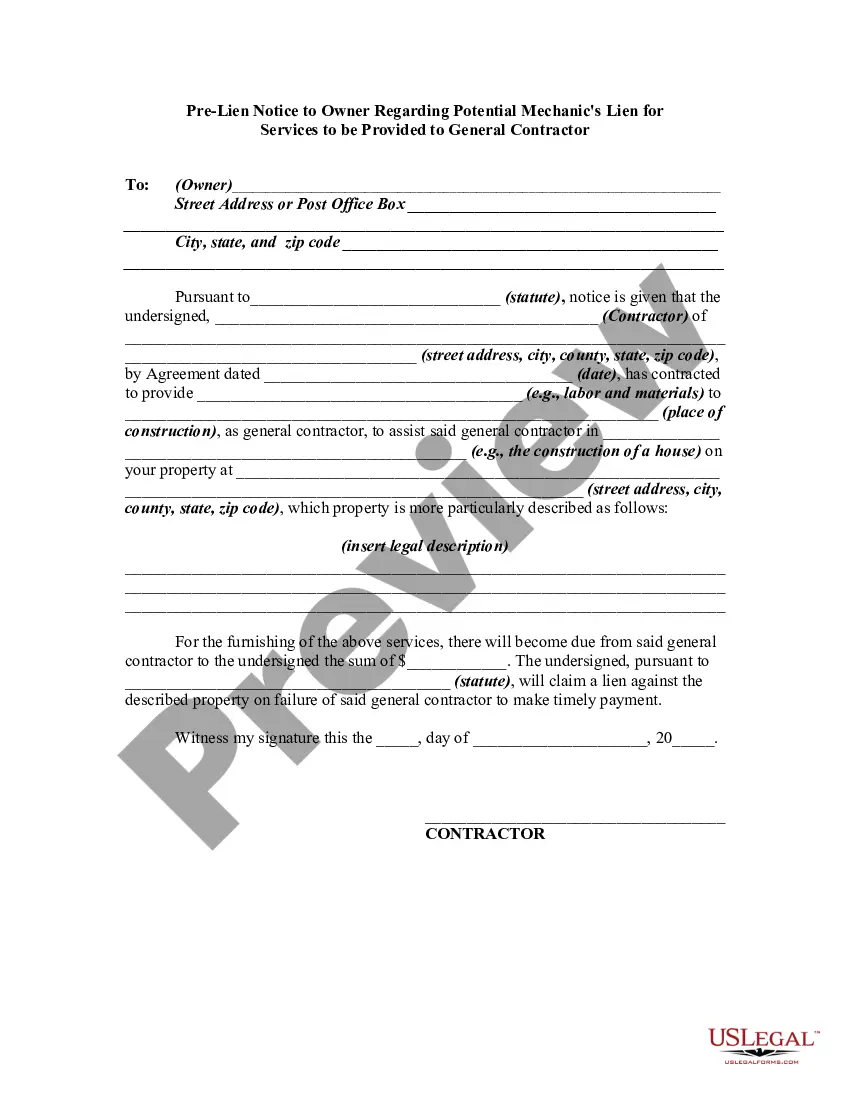
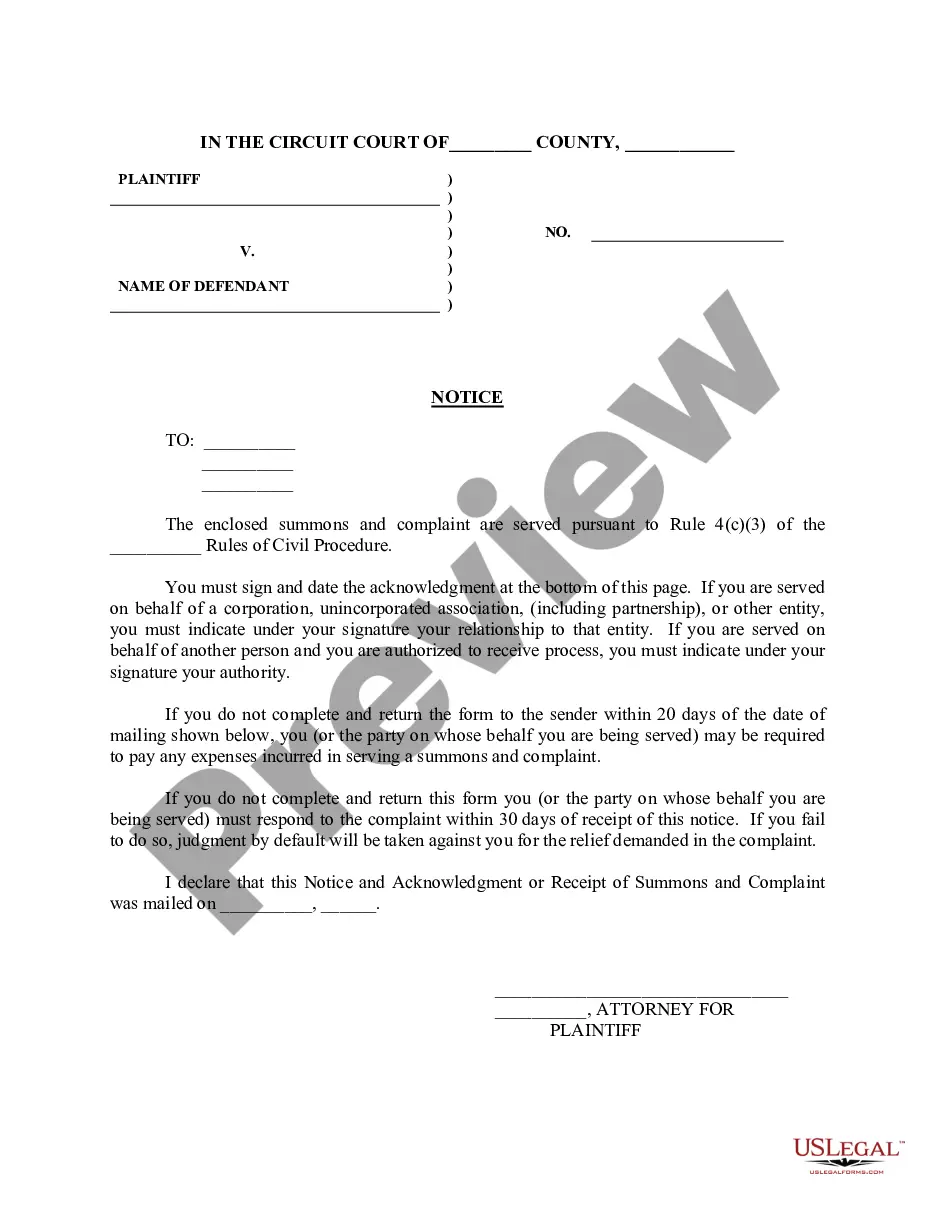
How to fill out Notice - Served With Complaint And Summons?
It’s clear that you cannot instantly become a legal authority, nor can you swiftly learn how to draft Procedure After Issuing Summons without possessing a specific skill set. Assembling legal documents is a lengthy task that necessitates specialized education and abilities. So why not entrust the development of the Procedure After Issuing Summons to the experts.
With US Legal Forms, one of the most extensive legal template repositories, you can discover everything from court documents to templates for internal corporate communications. We understand how crucial compliance and adherence to federal and local laws and regulations are. That’s why, on our website, all forms are location-specific and current.
Here’s how you can initiate your journey with our platform and obtain the document you require in just minutes.
You can revisit your forms from the My documents tab at any time. If you’re an existing client, you can simply Log In, and find and download the template from the same tab.
Regardless of the intent of your documentation—whether it’s financial and legal, or personal—our platform has you covered. Experience US Legal Forms today!
- Locate the document you need by utilizing the search bar at the top of the page.
- Preview it (if this option is available) and review the accompanying description to determine if Procedure After Issuing Summons is what you’re looking for.
- Restart your search if you require any additional form.
- Create a free account and select a subscription plan to purchase the template.
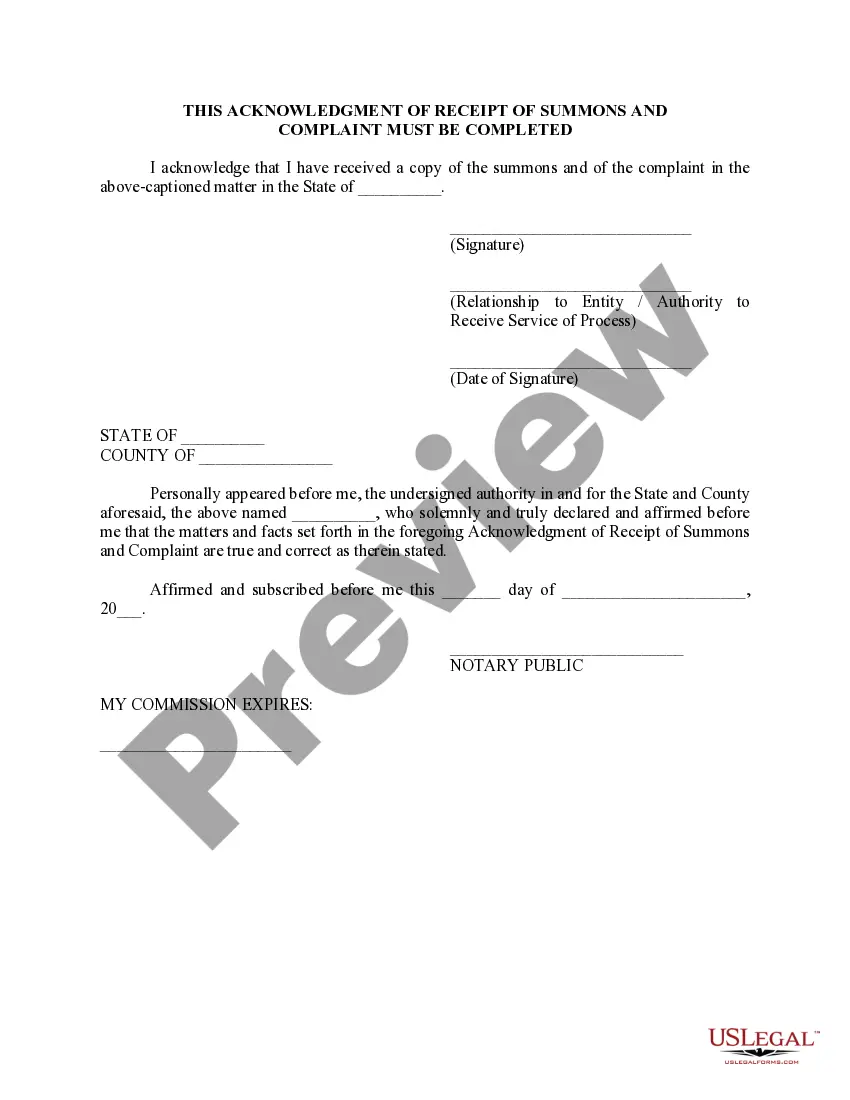
- Click Buy now. Once the payment is processed, you can access the Procedure After Issuing Summons, complete it, print it, and deliver it by mail to the specified individuals or organizations.
Form popularity
FAQ
A summons is a form prepared by the plaintiff and issued by a court that informs the defendant that they are being sued or are required to appear in court. It may be served by a sheriff or other authorized person, such as the process server.
If you choose to answer the summons in writing, you can either use the free form offered by the court, or you can create your own form. If you create your own form for the answer, it must be either typed or neatly handwritten.
Once a summons and complaint or summons with notice have been served, a defendant must respond in writing within a limited period of time. The response is sent to the plaintiff's attorney or directly to the plaintiff, if the plaintiff is appearing is self represented.
Before filing your answer, you must send a copy to the plaintiff (if plaintiff is appearing pro se) or plaintiff's attorney (if plaintiff is represented by counsel). To file your answer, you may deliver it in person or send it by mail to the Pro Se Office.
In New York debt collection lawsuits, you can answer the summons in writing or in person, if the court allows. Either way is fine, so long as you provide the answer within the legal time frame (10-30 days, depending on how you were served). Remember,the court clerk can provide general information but not legal advice.