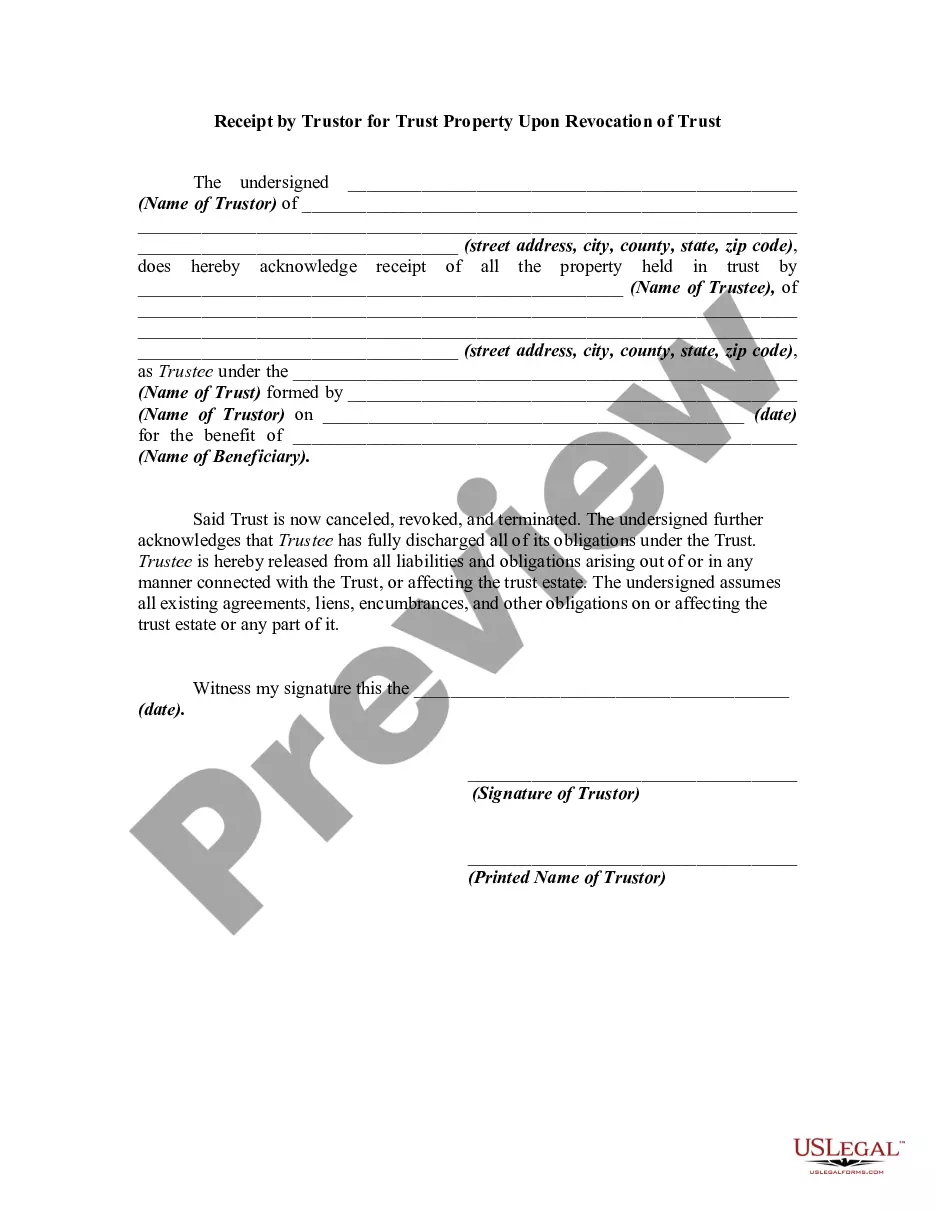
Revocation Trust Acknowledgment Without Consent
Description
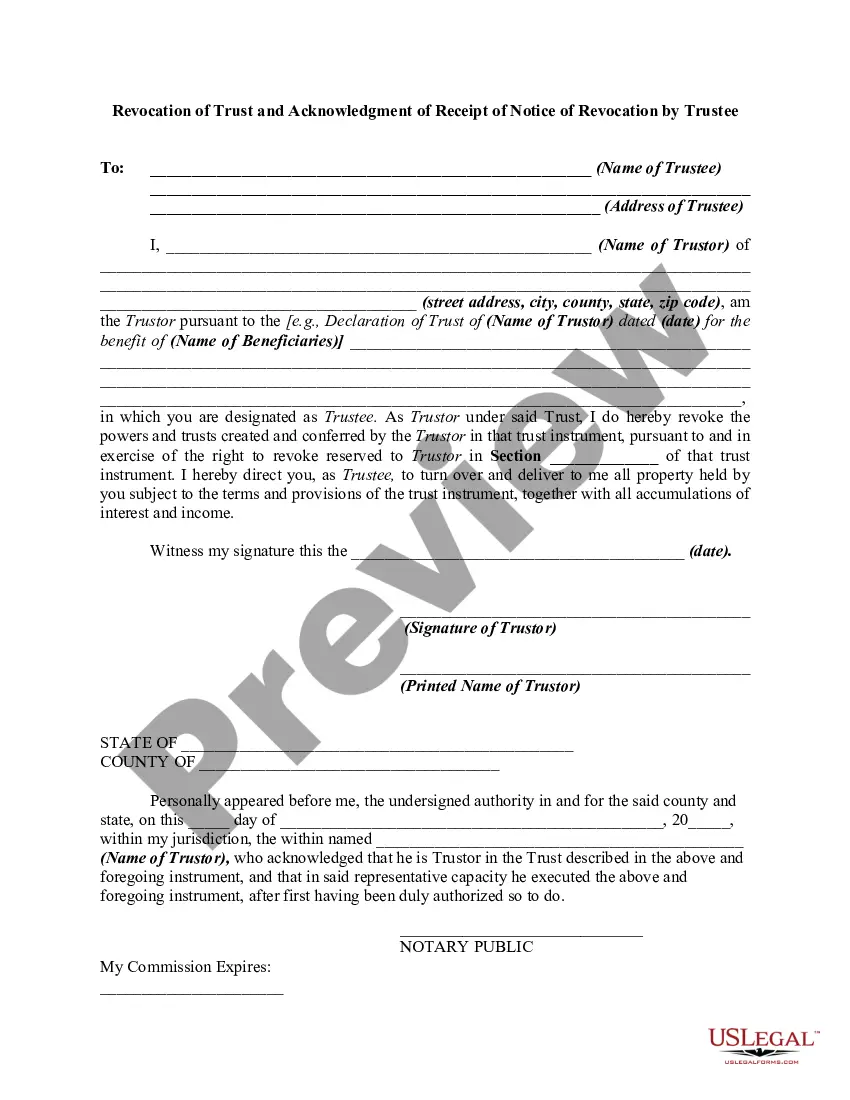
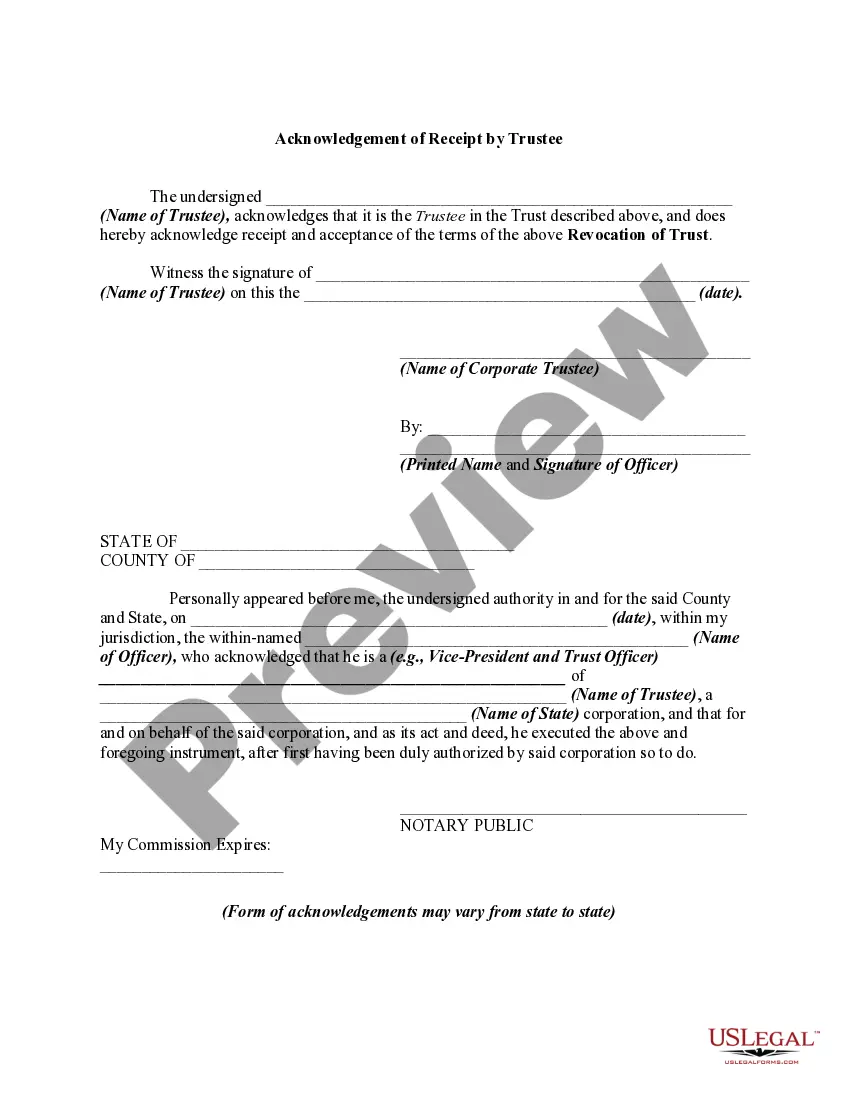
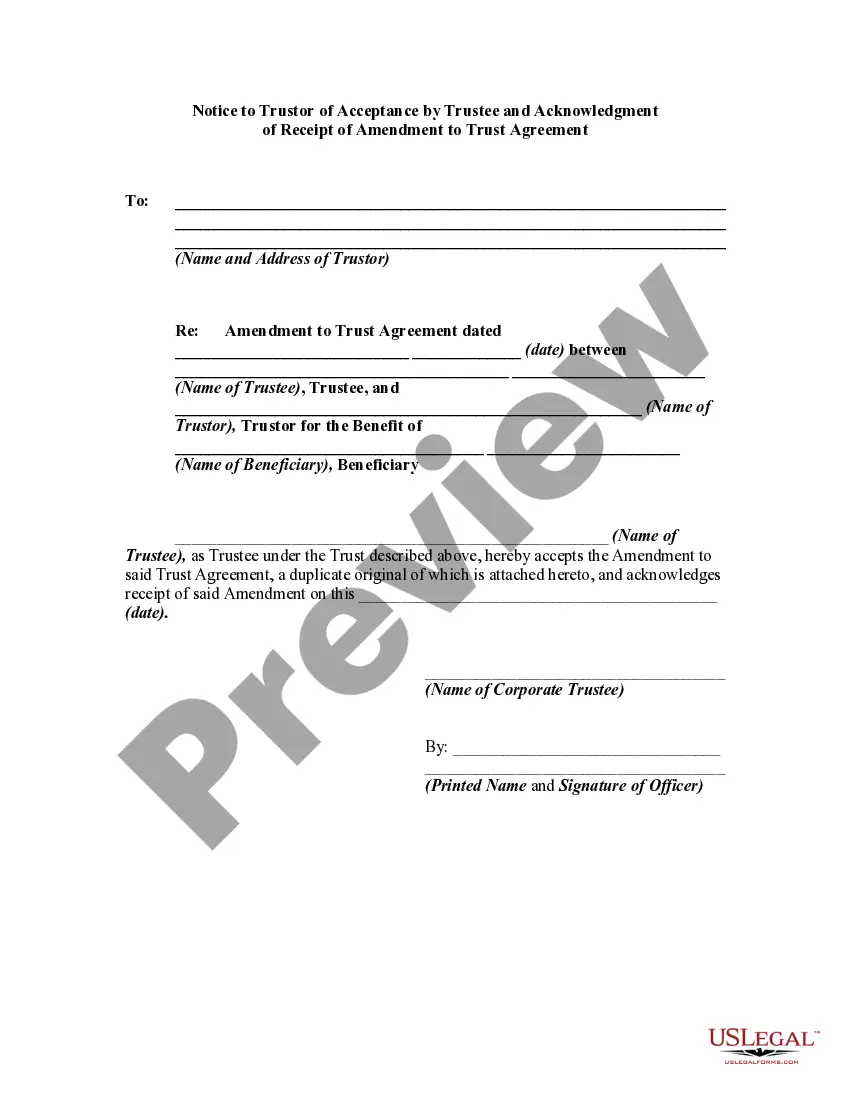
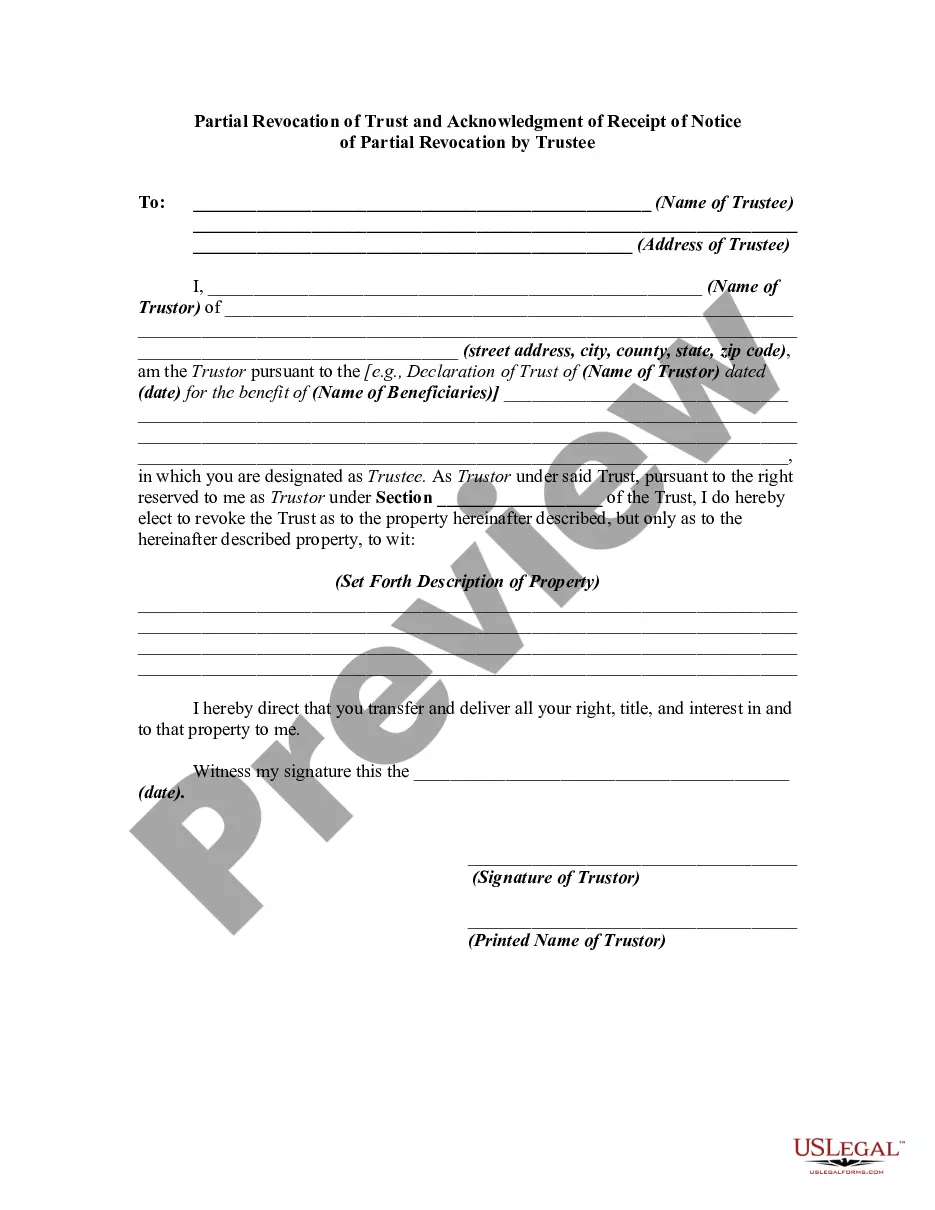
Get your form ready online
Our built-in tools help you complete, sign, share, and store your documents in one place.
Make edits, fill in missing information, and update formatting in US Legal Forms—just like you would in MS Word.
Download a copy, print it, send it by email, or mail it via USPS—whatever works best for your next step.
Sign and collect signatures with our SignNow integration. Send to multiple recipients, set reminders, and more. Go Premium to unlock E-Sign.
If this form requires notarization, complete it online through a secure video call—no need to meet a notary in person or wait for an appointment.
We protect your documents and personal data by following strict security and privacy standards.

Make edits, fill in missing information, and update formatting in US Legal Forms—just like you would in MS Word.

Download a copy, print it, send it by email, or mail it via USPS—whatever works best for your next step.

Sign and collect signatures with our SignNow integration. Send to multiple recipients, set reminders, and more. Go Premium to unlock E-Sign.

If this form requires notarization, complete it online through a secure video call—no need to meet a notary in person or wait for an appointment.

We protect your documents and personal data by following strict security and privacy standards.
Looking for another form?





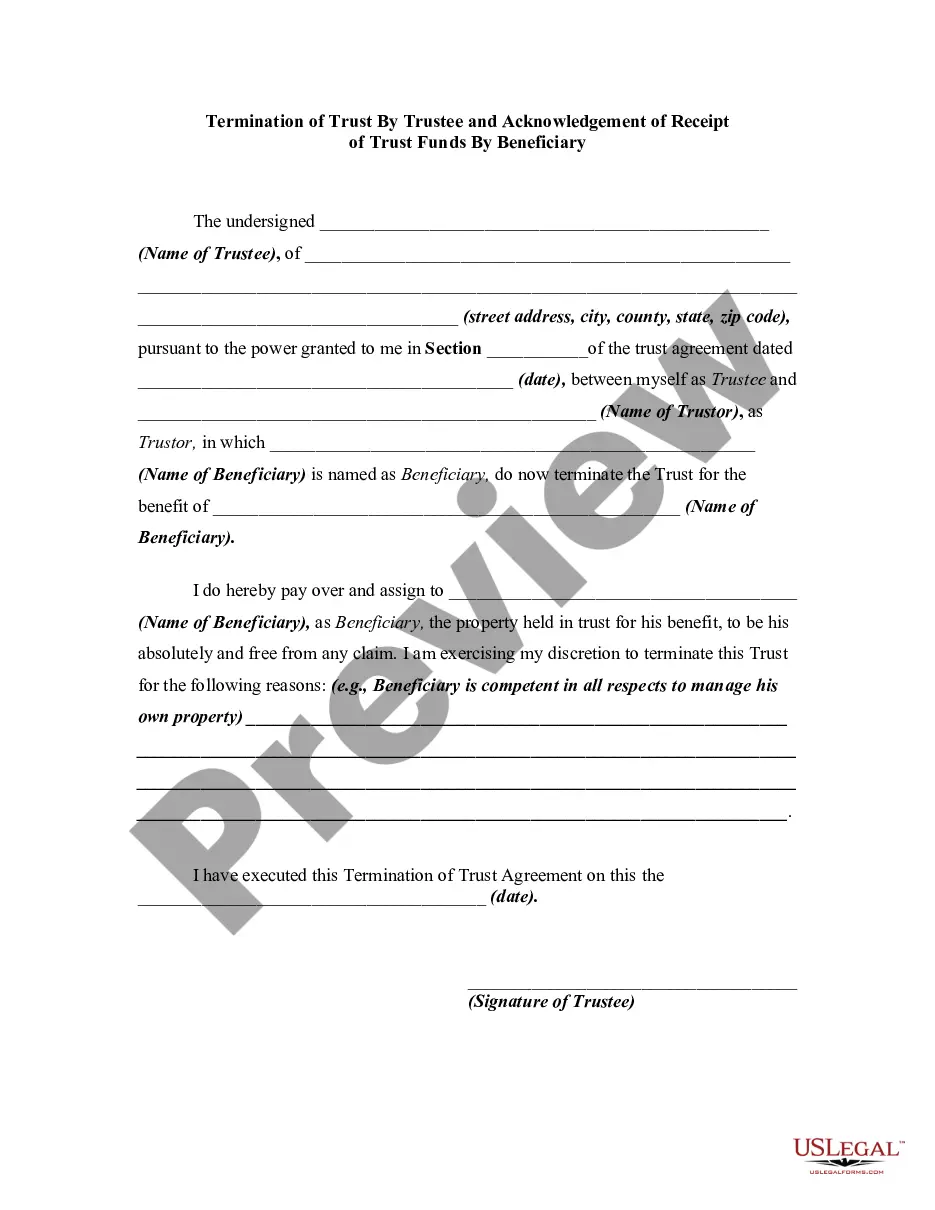
How to fill out Revocation Of Trust And Acknowledgment Of Receipt Of Notice Of Revocation By Trustee?
Legal documents administration can be daunting, even for the most proficient professionals.
If you are looking for a Revocation Trust Acknowledgment Without Consent and lack the time to devote to finding the right and updated version, the processes can be challenging.
Access state- or county-specific legal and business forms. US Legal Forms meets any needs you might have, ranging from personal to corporate documents, all in one location.
Utilize sophisticated tools to complete and manage your Revocation Trust Acknowledgment Without Consent.
Here are the steps to follow after accessing the desired form.
- Access a valuable collection of articles, guides, and manuals relevant to your situation and needs.
- Save effort and time searching for the forms you require, and take advantage of US Legal Forms’ advanced search and Review feature to find Revocation Trust Acknowledgment Without Consent and download it.
- If you hold a monthly subscription, Log In to your US Legal Forms account, locate the form, and download it.
- Check your My documents section to view the documents you saved previously and manage your folders as desired.
- If it’s your first time with US Legal Forms, create an account and gain unlimited access to all the benefits of the library.
- A robust online form repository could be a gamechanger for anyone aiming to navigate these scenarios effectively.
- US Legal Forms is a leader in the online legal document space, with over 85,000 state-specific legal forms available to you at any time.
- With US Legal Forms, you can.
Form popularity
FAQ
A beneficiary can renounce their interest from the trust and, upon the consent of other beneficiaries, be allowed to exit. A trustee cannot remove a beneficiary from an irrevocable trust. A grantor can remove a beneficiary from a revocable trust by going back to the trust deed codes that allow for the same.
The Disadvantage of a Revocable Living Trust Expansive: Creating a revocable living trust can be more expensive than a simple will due to legal fees and document preparation. Complexity: Managing a trust requires ongoing paperwork and record-keeping, which can be burdensome and time-consuming.
If you've already written a will that includes someone you wish to remove, don't add a codicil (an addition to your will written as a separate document) ? write a new will. It'll stop the document becoming too complicated and open to a challenge. It also means you can more accurately outline your current wishes.
Franke, Jr. Yes, once the trust grantor becomes incapacitated or dies, his revocable trust is now irrevocable, meaning that generally the terms of the trust cannot be changed or revoked going forward. This is also true of trusts established by the grantor with the intention that they be irrevocable from the start.
Because grantors don't always acquire an EIN for the created trust, their heirs or beneficiaries may have to do so after the fact. If the grantor in a revocable trust has died, making the trust irrevocable, you will need to complete the application for an EIN.