Successor Trustee Forms For Corporation
Description
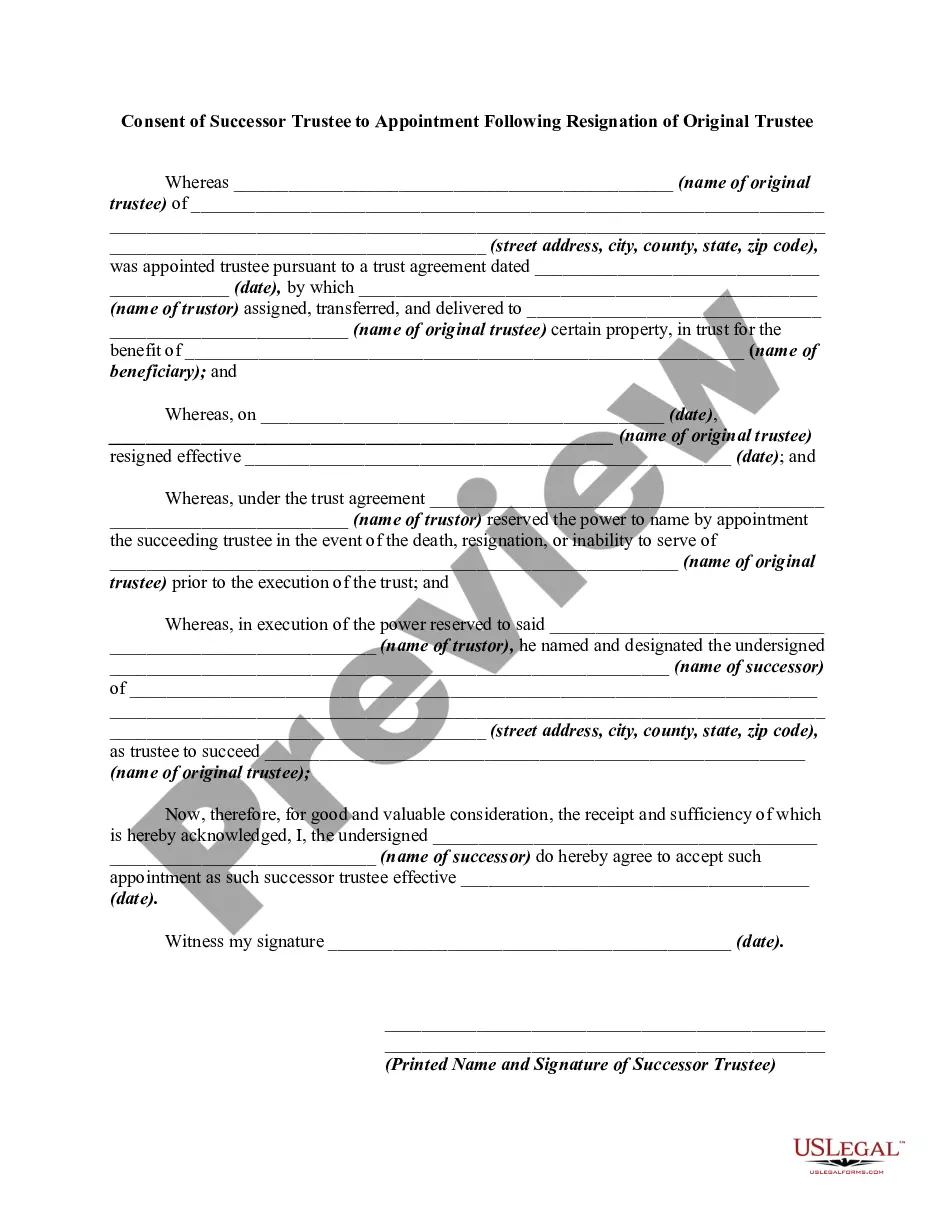

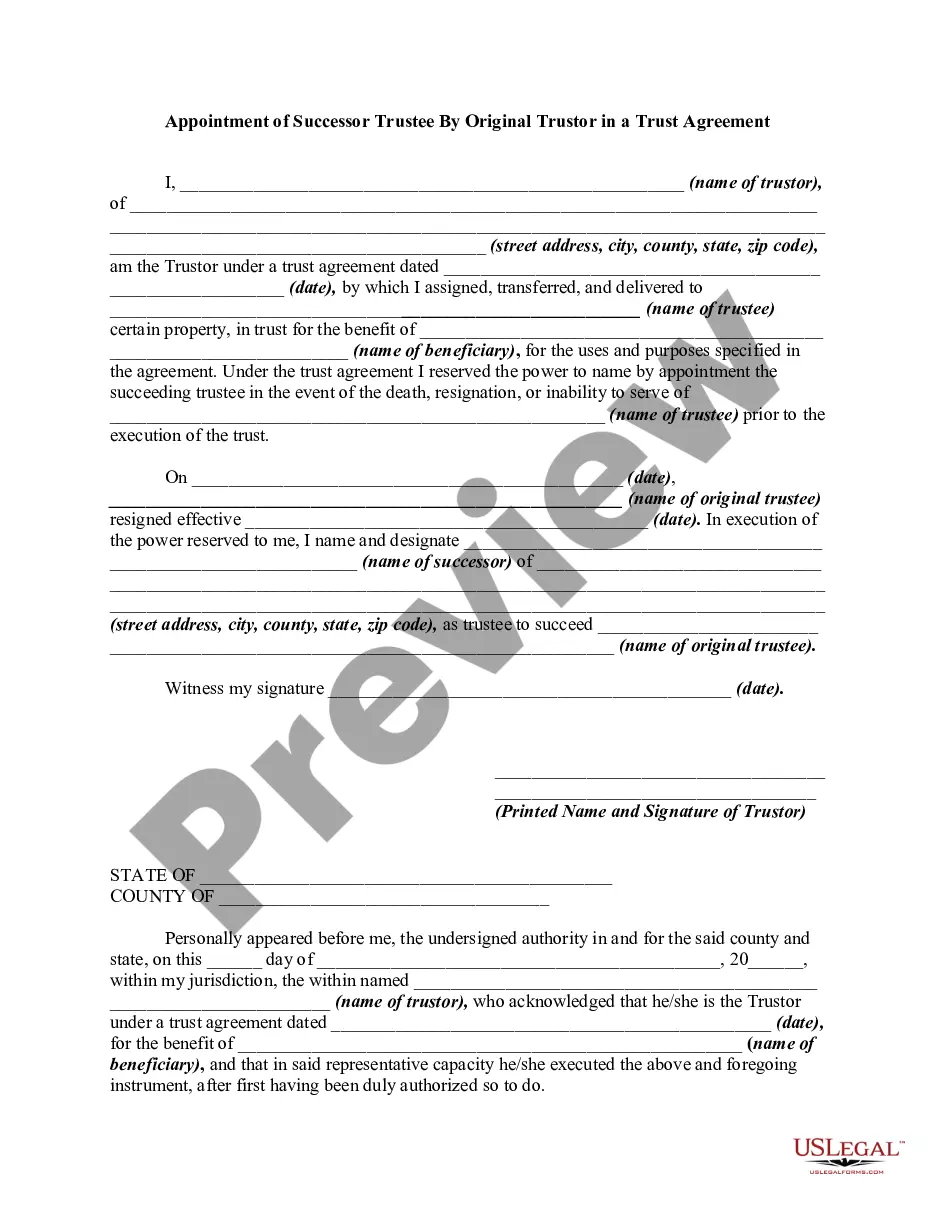

Get your form ready online
Our built-in tools help you complete, sign, share, and store your documents in one place.
Make edits, fill in missing information, and update formatting in US Legal Forms—just like you would in MS Word.
Download a copy, print it, send it by email, or mail it via USPS—whatever works best for your next step.
Sign and collect signatures with our SignNow integration. Send to multiple recipients, set reminders, and more. Go Premium to unlock E-Sign.
If this form requires notarization, complete it online through a secure video call—no need to meet a notary in person or wait for an appointment.
We protect your documents and personal data by following strict security and privacy standards.

Make edits, fill in missing information, and update formatting in US Legal Forms—just like you would in MS Word.

Download a copy, print it, send it by email, or mail it via USPS—whatever works best for your next step.

Sign and collect signatures with our SignNow integration. Send to multiple recipients, set reminders, and more. Go Premium to unlock E-Sign.

If this form requires notarization, complete it online through a secure video call—no need to meet a notary in person or wait for an appointment.

We protect your documents and personal data by following strict security and privacy standards.
Looking for another form?


How to fill out Consent Of Successor Trustee To Appointment Following Resignation Of Original Trustee?
Whether for business purposes or for personal matters, everyone has to manage legal situations sooner or later in their life. Completing legal paperwork demands careful attention, starting with selecting the correct form template. For instance, if you select a wrong edition of a Successor Trustee Forms For Corporation, it will be turned down once you send it. It is therefore essential to have a reliable source of legal documents like US Legal Forms.
If you have to obtain a Successor Trustee Forms For Corporation template, follow these simple steps:
- Find the template you need using the search field or catalog navigation.
- Examine the form’s information to make sure it suits your situation, state, and county.
- Click on the form’s preview to view it.
- If it is the incorrect form, get back to the search function to locate the Successor Trustee Forms For Corporation sample you need.
- Get the template if it meets your requirements.
- If you have a US Legal Forms account, just click Log in to access previously saved documents in My Forms.
- If you do not have an account yet, you may obtain the form by clicking Buy now.
- Choose the proper pricing option.
- Finish the account registration form.
- Select your payment method: you can use a bank card or PayPal account.
- Choose the file format you want and download the Successor Trustee Forms For Corporation.
- Once it is saved, you are able to complete the form with the help of editing applications or print it and complete it manually.
With a substantial US Legal Forms catalog at hand, you never have to spend time seeking for the appropriate template across the web. Take advantage of the library’s easy navigation to find the right form for any occasion.
Form popularity
FAQ
Grantors can choose to nominate a close relative, family friend, or even financial institution to take on the role of Successor Trustee. A Grantor will name their Successor Trustee within a document called a Declaration of Trust, which is also where their role will be explained.
While both roles sound familiar, there are differences between them ? most notably, that if an asset is held outside of the trust (so, in the name of the deceased), it is the responsibility of the executor, and if it is held in the name of the trust, it is the responsibility of the successor trustee.
The successor trustee may be the primary beneficiary of the trust. However, the successor trustee can be anyone you trust. For example, the successor trustee can be a close friend, an adult child, your spouse, your lawyer, an accountant, or a corporate trustee.
Successor trustees can be your adult children, other relatives, a trusted friend, or a corporate trustee (bank trust department or trust company). If you choose an individual, you should name more than one in case your first choice is unable to act.
A trustee, who can either be the trustor or another responsible party, may be appointed while the trustor is still alive; a successor trustee is charged with administering a trust after the trustor or the appointed trustee (if they are different from the trustor) becomes incapacitated or dies.