Unjust Enrichment Form With Intent To Distribute
Description
Get your form ready online
Our built-in tools help you complete, sign, share, and store your documents in one place.
Make edits, fill in missing information, and update formatting in US Legal Forms—just like you would in MS Word.
Download a copy, print it, send it by email, or mail it via USPS—whatever works best for your next step.
Sign and collect signatures with our SignNow integration. Send to multiple recipients, set reminders, and more. Go Premium to unlock E-Sign.
If this form requires notarization, complete it online through a secure video call—no need to meet a notary in person or wait for an appointment.
We protect your documents and personal data by following strict security and privacy standards.

Make edits, fill in missing information, and update formatting in US Legal Forms—just like you would in MS Word.

Download a copy, print it, send it by email, or mail it via USPS—whatever works best for your next step.

Sign and collect signatures with our SignNow integration. Send to multiple recipients, set reminders, and more. Go Premium to unlock E-Sign.

If this form requires notarization, complete it online through a secure video call—no need to meet a notary in person or wait for an appointment.

We protect your documents and personal data by following strict security and privacy standards.
Looking for another form?







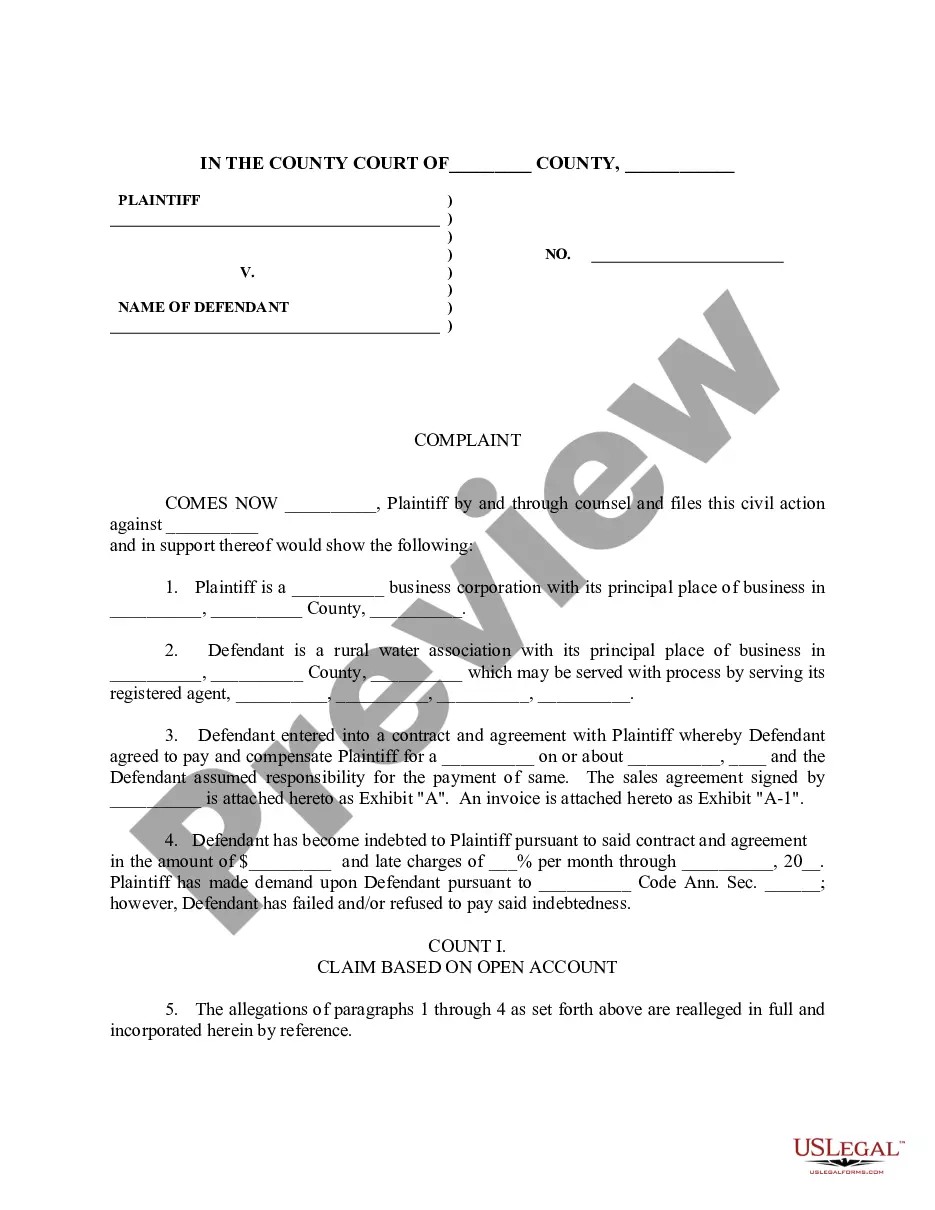
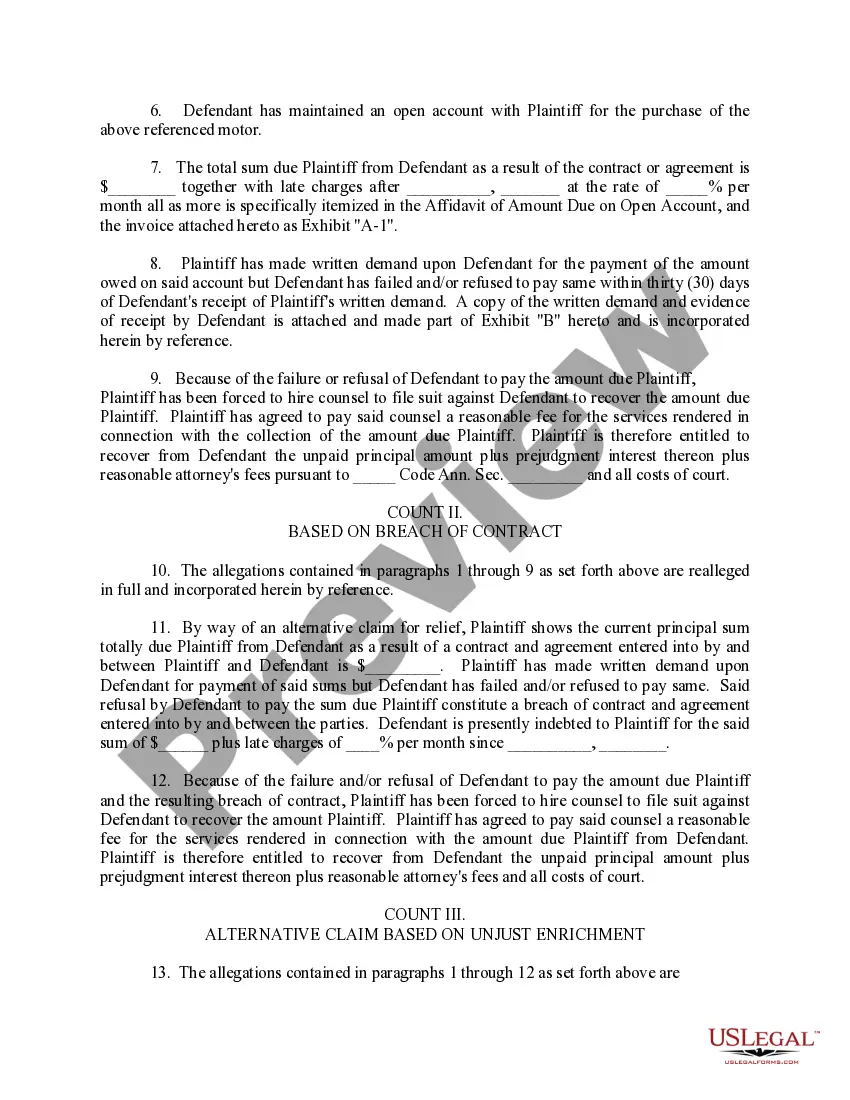
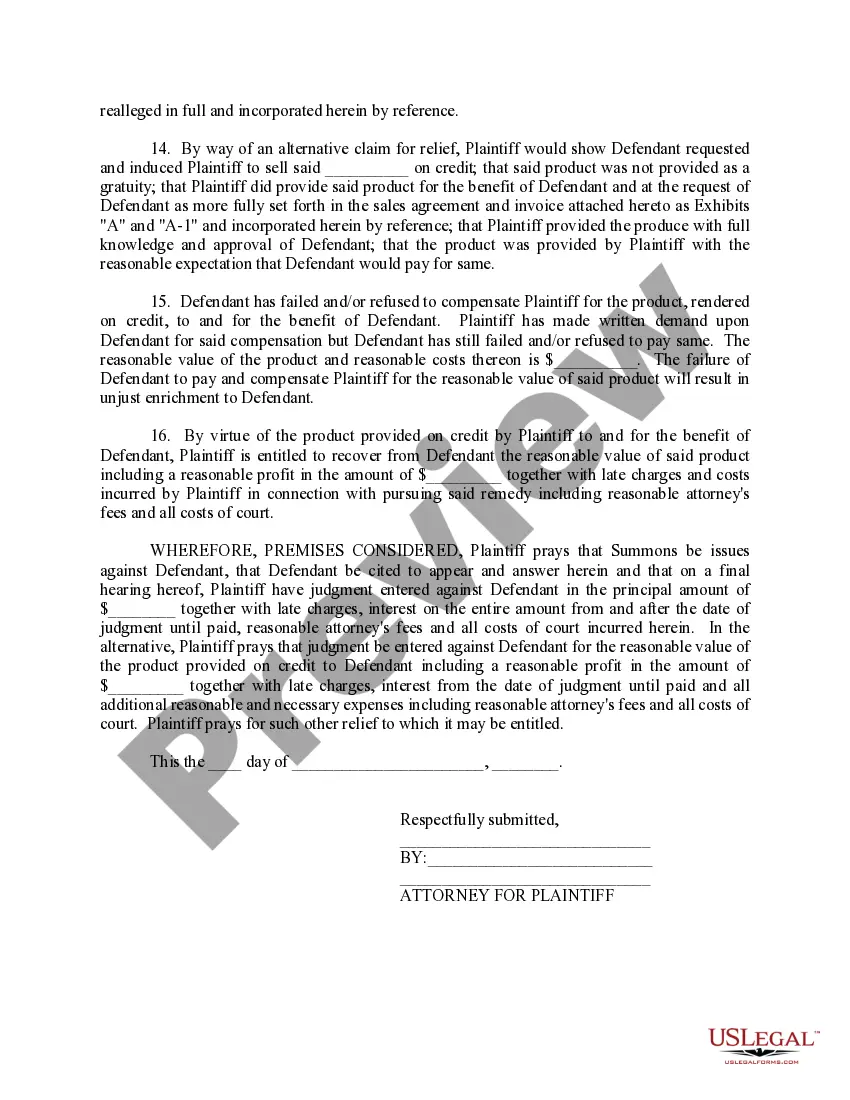
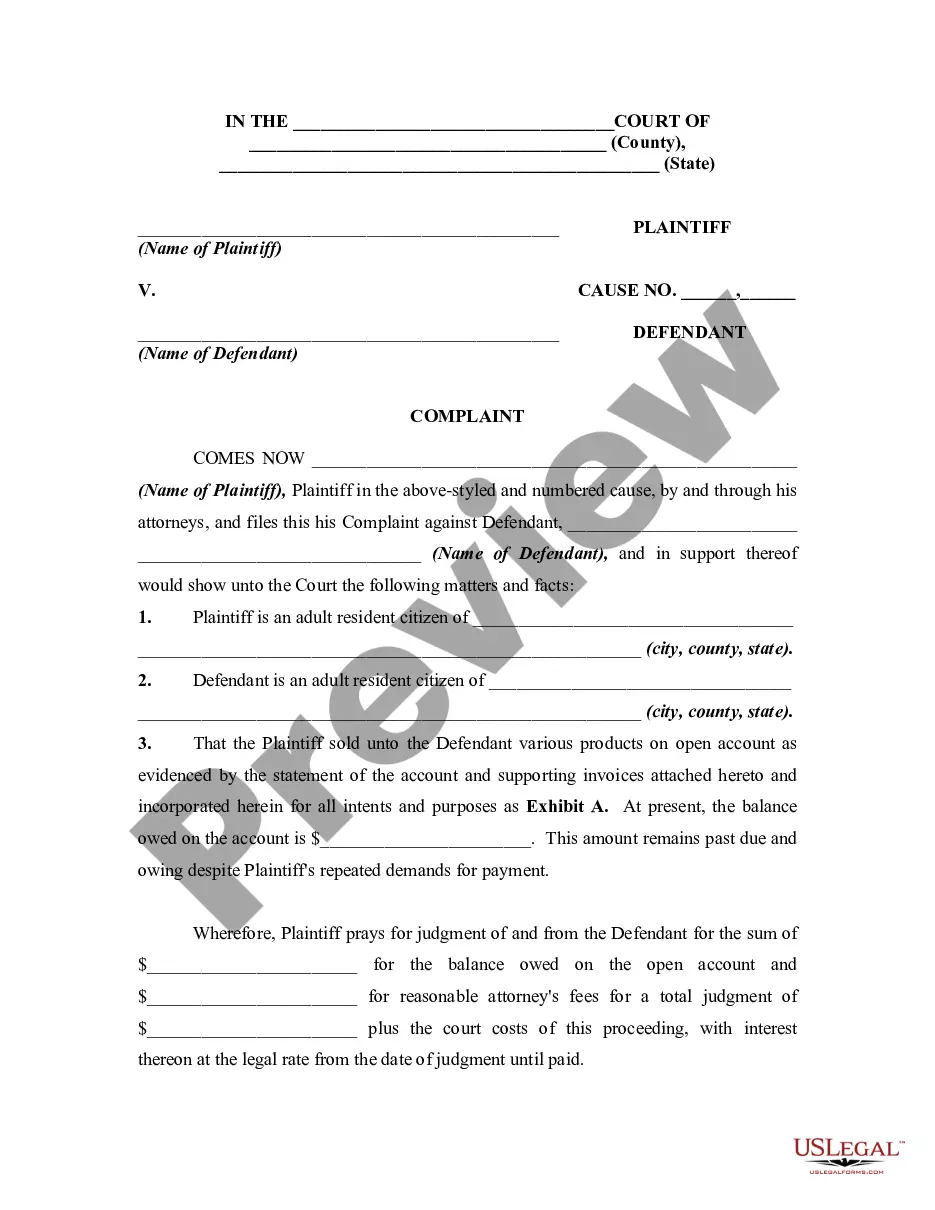
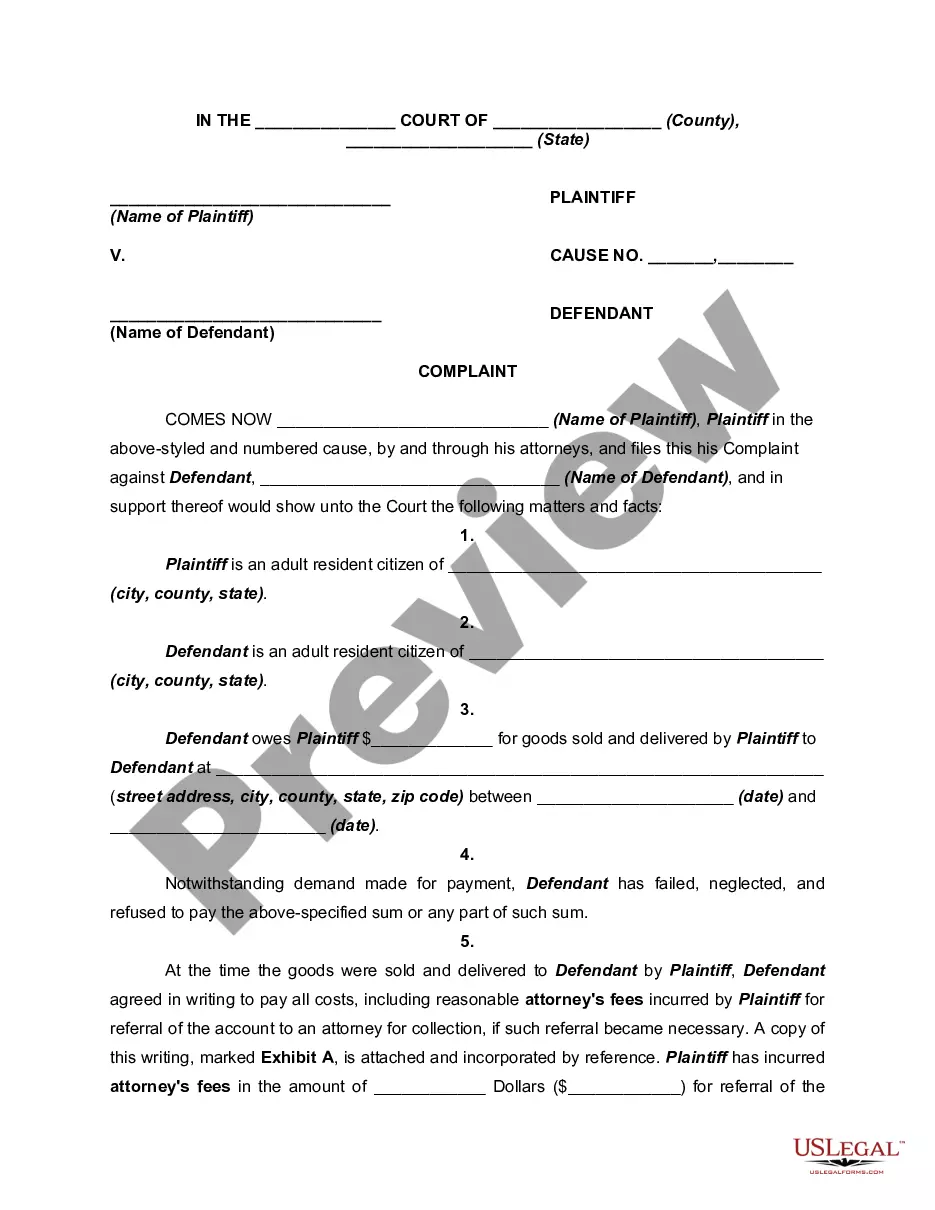
How to fill out Complaint Based On Open Account, Breach Of Contract, Unjust Enrichment?
Regardless of whether it's for corporate reasons or individual issues, everyone must confront legal circumstances at some point in their lives.
Completing legal documents necessitates meticulous care, starting with selecting the suitable form template.
Select the document format you desire and download the Unjust Enrichment Form With Intent To Distribute. Once downloaded, you can fill out the form using editing software or print it and complete it by hand. With an extensive US Legal Forms catalog available, you won’t waste time searching for the suitable sample online. Utilize the library’s user-friendly navigation to obtain the right template for any situation.
- For example, if you select an incorrect version of a Unjust Enrichment Form With Intent To Distribute, it will be denied upon submission.
- Thus, it's crucial to have a trustworthy resource for legal documents like US Legal Forms.
- If you need to procure a sample of the Unjust Enrichment Form With Intent To Distribute, follow these simple steps.
- Locate the sample you require by utilizing the search bar or catalog browsing.
- Review the document’s details to ensure it aligns with your circumstances, state, and county.
- Click on the form’s preview to examine it.
- If it is the wrong document, return to the search tool to find the Unjust Enrichment Form With Intent To Distribute sample you need.
- Obtain the template when it fits your requirements.
- If you possess a US Legal Forms account, simply click Log in to access previously stored documents in My documents.
- If you haven't created an account yet, you can acquire the form by clicking Buy now.
- Select the appropriate payment option.
- Complete the account registration form.
- Choose your payment method: use a debit card or PayPal account.
Form popularity
FAQ
A notice of intent to file legal action serves as a formal warning to the other party involved in a dispute. It informs them of your intention to pursue legal remedies, which could include a claim for unjust enrichment. This notice is crucial as it allows both parties to address the issue before escalating to court, and it often includes the unjust enrichment form with intent to distribute for clarity on the claims being made.
Bringing a claim for unjust enrichment involves several steps. Start by gathering evidence that illustrates how one party benefitted from another's loss. Next, file the unjust enrichment form with intent to distribute, detailing the circumstances of the case. Using a platform like uslegalforms can streamline this process, providing templates and guidance to ensure your claim is strong and well-supported.
To prove unjust enrichment, you must demonstrate three key elements. First, show that one party received a benefit at the expense of another. Second, establish that the retention of this benefit is unjust and inequitable. Lastly, the unjust enrichment form with intent to distribute must be completed correctly to support your claim, ensuring all necessary details are outlined.
Yes, unjust enrichment can occur even in the absence of a contract. The key factor is that one party benefits at another's expense, regardless of any formal agreement. Utilizing an unjust enrichment form with intent to distribute can provide a structured approach to outline your situation and assert your rights. This form can help you articulate your claim clearly, ensuring that your case is presented effectively.
Proving unjust enrichment can be challenging, as you must demonstrate that one party received a benefit unjustly at the expense of another. This typically requires showing that there was no legal justification for the benefit received. To assist you in this process, consider using an unjust enrichment form with intent to distribute, which can help clarify your claims and streamline documentation. With the right tools and guidance, you can navigate the complexities of your case effectively.
The requisites for unjust enrichment generally involve establishing that one party received a benefit, the other party incurred a loss, and it would be inequitable for the benefitting party to retain that benefit. Understanding these requisites is essential, especially if you are looking to utilize an unjust enrichment form with intent to distribute. By clarifying these points, you can build a stronger case and improve your chances of a successful outcome.
The requirements for unjust enrichment include the existence of a benefit conferred upon one party, the recipient's awareness of that benefit, and the lack of a legal basis for that benefit to be retained. In practical terms, this means if you believe you have a valid claim, you should consider completing an unjust enrichment form with intent to distribute. This form can help formalize your claim and guide you through the legal process.
Unjust enrichment does not require intent in the same way as criminal cases. Instead, it's concerned with the benefit gained and whether it is fair for the party to keep it. Hence, you can file an unjust enrichment form with intent to distribute even if the other party did not intend to cause harm, as long as they received a benefit unfairly.
The standard of proof for unjust enrichment generally requires a preponderance of evidence, meaning that it is more likely than not that the claim is true. You, as the claimant, must demonstrate that the other party unjustly benefited at your expense. This standard is vital when preparing an unjust enrichment form with intent to distribute, as it highlights the necessity for solid evidence to support your case.
The three elements of unjust enrichment typically include a benefit conferred, an appreciation of that benefit by the other party, and the unjust nature of retaining that benefit without compensation. Essentially, if one party receives a benefit at the expense of another, the latter may have a case for unjust enrichment. This concept is also crucial when filling out an unjust enrichment form with intent to distribute, as it lays the foundation for your claim.