Unjust Enrichment And Quantum Meruit
Description
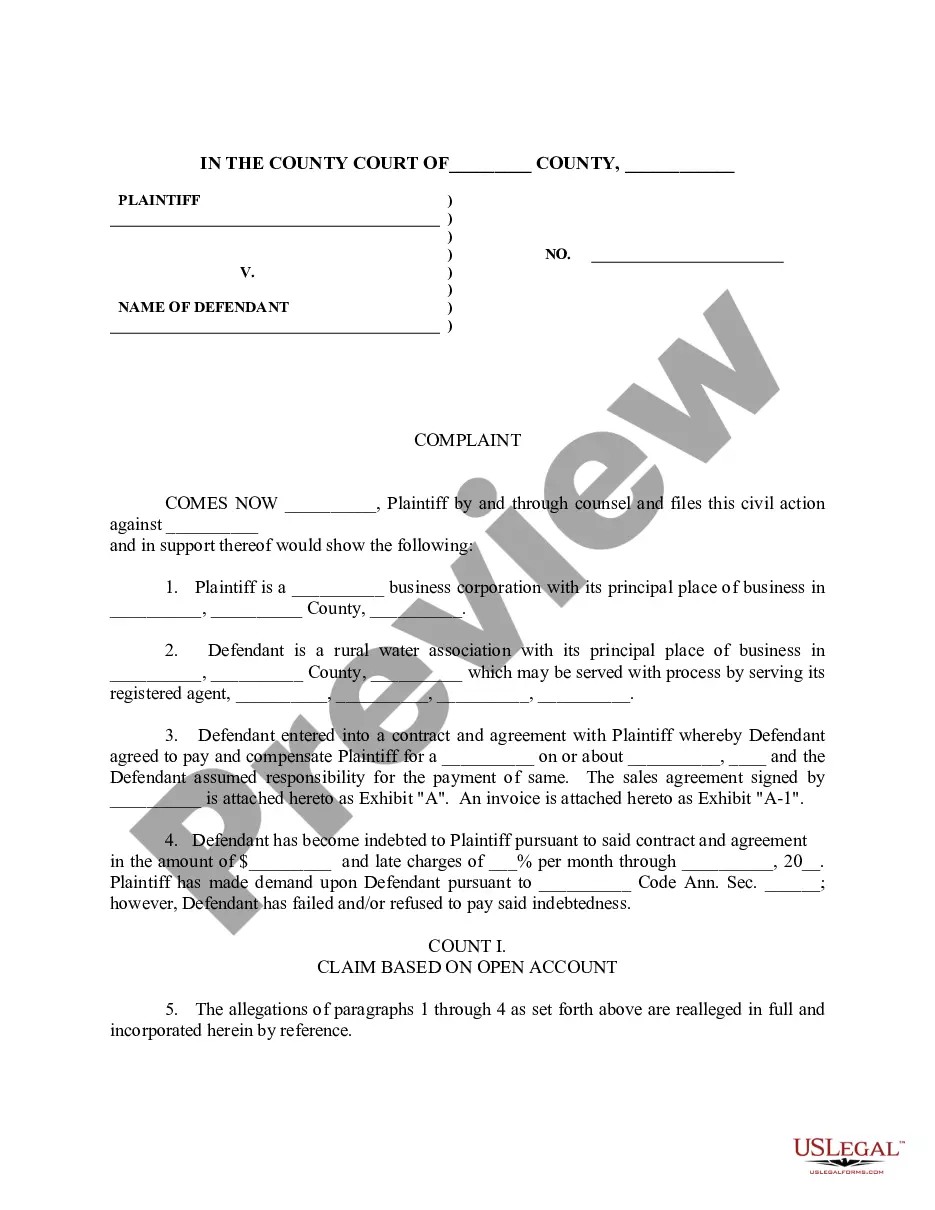
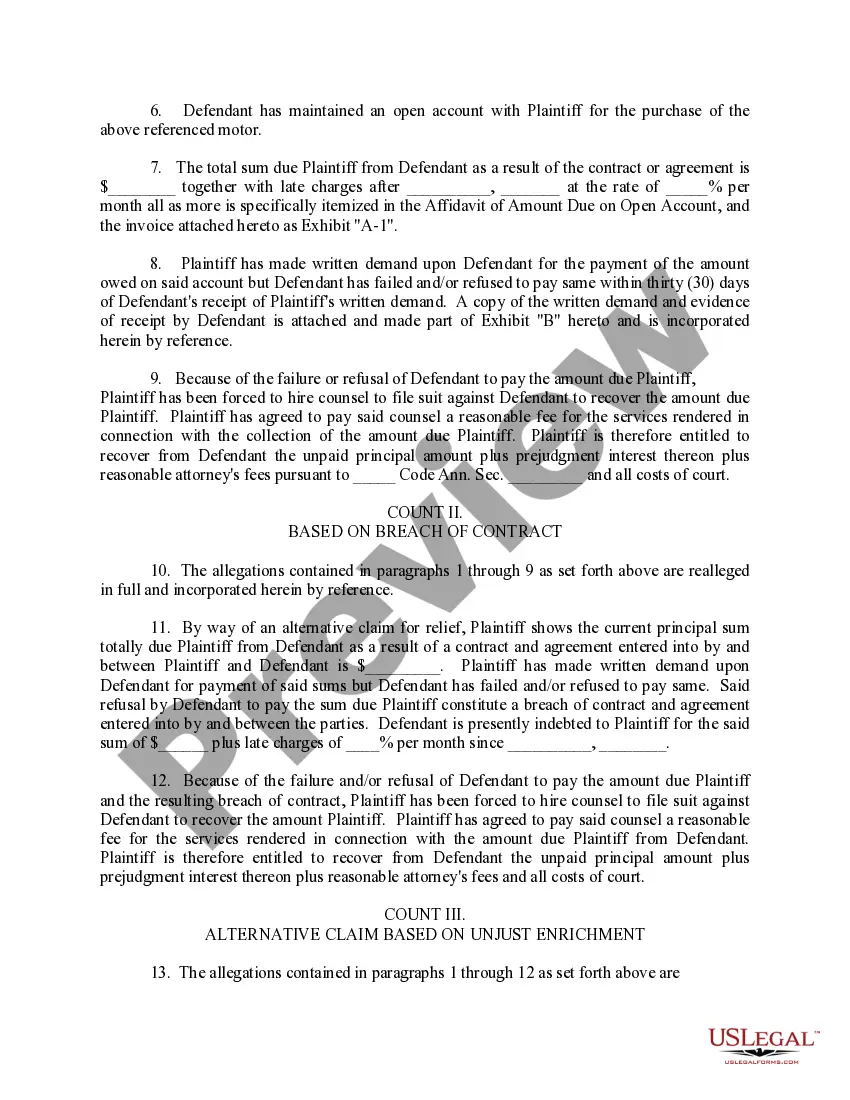
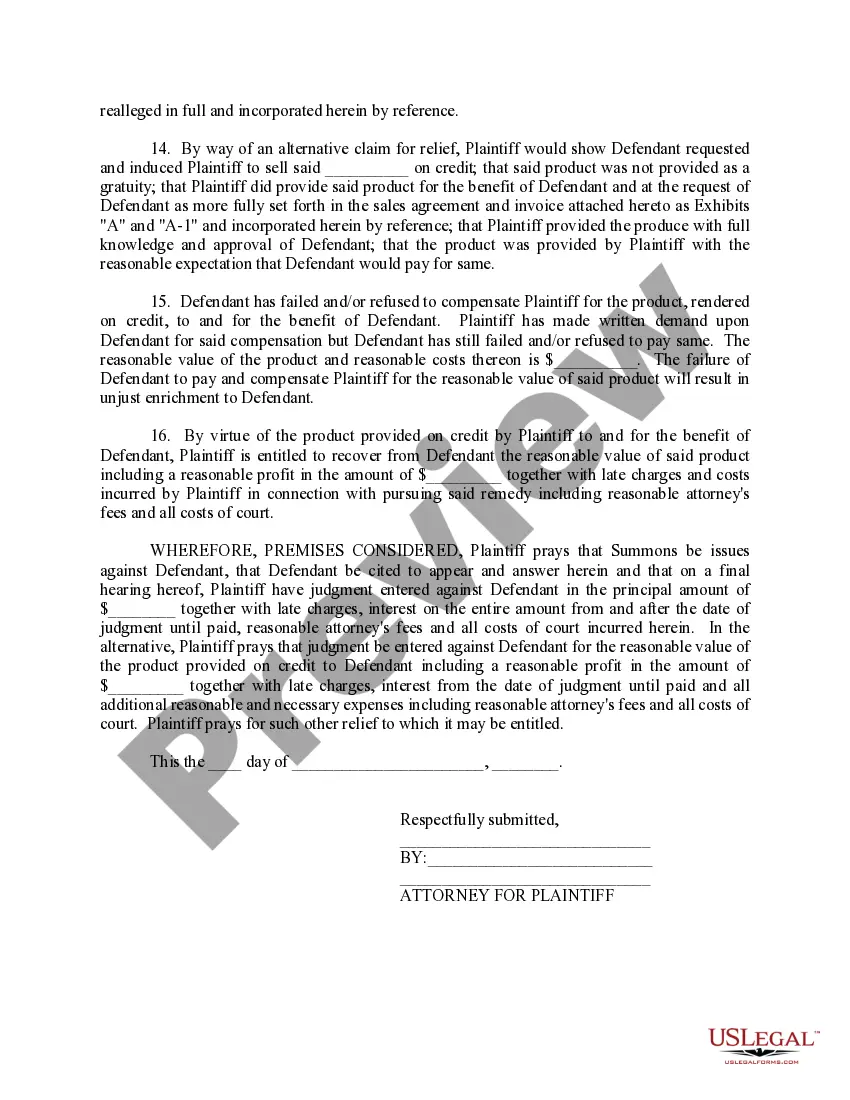
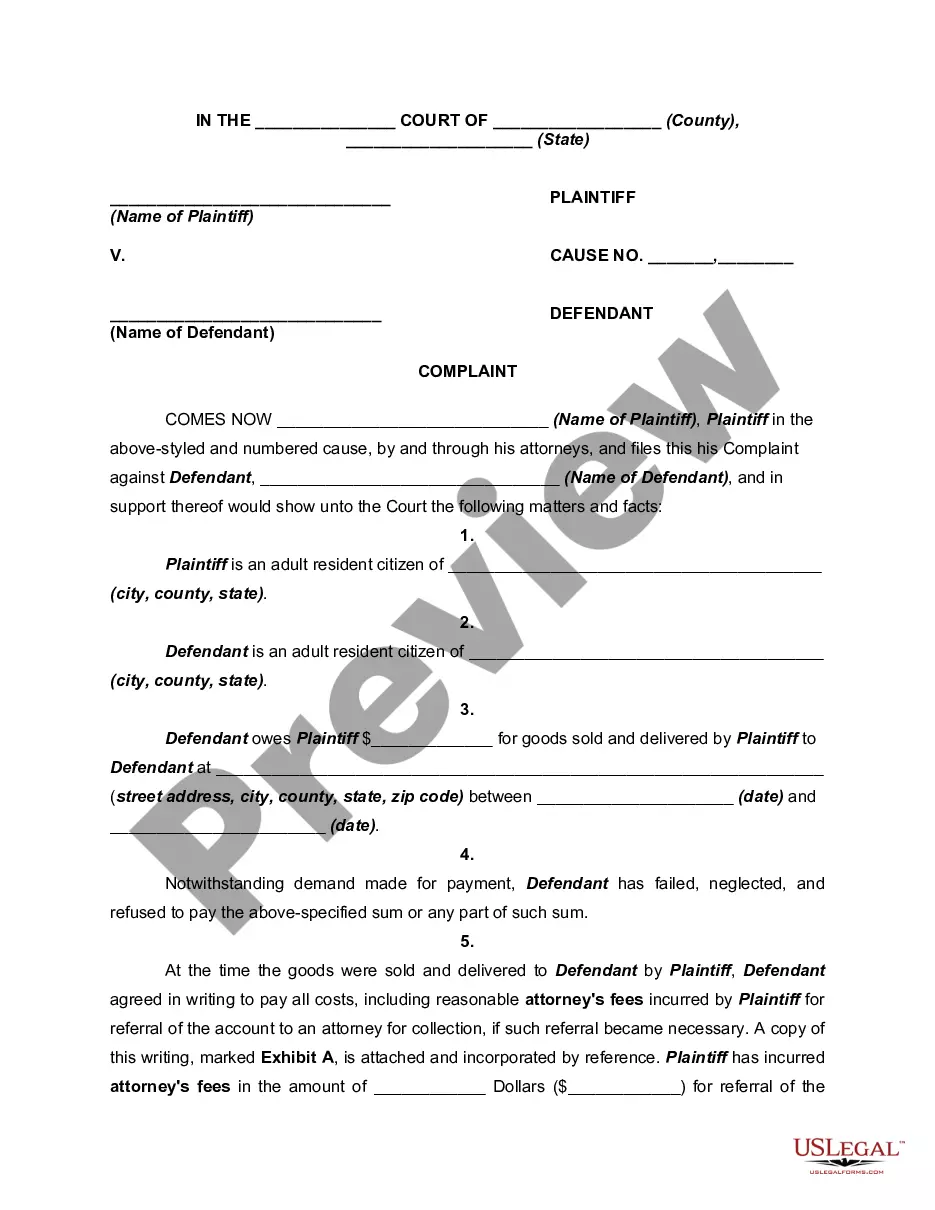
Get your form ready online
Our built-in tools help you complete, sign, share, and store your documents in one place.
Make edits, fill in missing information, and update formatting in US Legal Forms—just like you would in MS Word.
Download a copy, print it, send it by email, or mail it via USPS—whatever works best for your next step.
Sign and collect signatures with our SignNow integration. Send to multiple recipients, set reminders, and more. Go Premium to unlock E-Sign.
If this form requires notarization, complete it online through a secure video call—no need to meet a notary in person or wait for an appointment.
We protect your documents and personal data by following strict security and privacy standards.

Make edits, fill in missing information, and update formatting in US Legal Forms—just like you would in MS Word.

Download a copy, print it, send it by email, or mail it via USPS—whatever works best for your next step.

Sign and collect signatures with our SignNow integration. Send to multiple recipients, set reminders, and more. Go Premium to unlock E-Sign.

If this form requires notarization, complete it online through a secure video call—no need to meet a notary in person or wait for an appointment.

We protect your documents and personal data by following strict security and privacy standards.
Looking for another form?


How to fill out Complaint Based On Open Account, Breach Of Contract, Unjust Enrichment?
The Unfair Enrichment And Quantum Meruit you observe on this page is a reusable formal document crafted by expert attorneys in accordance with federal and local regulations.
For over 25 years, US Legal Forms has supplied individuals, businesses, and legal professionals with more than 85,000 authenticated, state-specific documents for any commercial and personal situation. It’s the quickest, easiest, and most trustworthy way to acquire the documentation you require, as the service ensures the utmost level of data security and anti-malware safeguards.
Register for US Legal Forms to access verified legal documents for all of life’s situations at your fingertips.
- Search for the document you require and examine it.
- Choose the pricing plan that fits you and create an account.
- Select the format you prefer for your Unfair Enrichment And Quantum Meruit (PDF, Word, RTF) and download the document to your device.
- Print out the document to complete it manually.
- Utilize the same document again whenever necessary.
Form popularity
FAQ
In Texas, quantum meruit focuses on compensating for services rendered when no formal agreement exists, while unjust enrichment applies when one party unfairly benefits at another's expense. Texas courts consider these distinctions carefully, often allowing claims for quantum meruit if unjust enrichment can't be clearly established. Understanding these nuances is vital for effective legal action in Texas. Therefore, utilizing US Legal Forms can bolster your efforts in handling these legal matters.
The primary difference between quantum meruit and unjust enrichment lies in the circumstances under which they apply. Quantum meruit applies primarily when there is an implied contract for services provided, while unjust enrichment occurs when one party benefits at the expense of another without a contract. Clarifying these terms can enhance your legal navigation. For comprehensive guidance on both concepts, US Legal Forms offers a field of resources to support your understanding.
An exception to quantum meruit arises when there is a pre-existing contract that governs the relationship between the parties involved. In such cases, the parties must adhere to the terms of the contract instead of pursuing quantum meruit claims. Recognizing this distinction can be crucial in legal scenarios. If you need help differentiating between unjust enrichment and quantum meruit, consider leveraging resources from US Legal Forms to ensure you understand your rights.
The four elements of unjust enrichment are: a measurable benefit provided to one party, the recipient's awareness of this benefit, the acceptance of the benefit, and a lack of legal grounds for keeping it. Understanding these elements can help you assess whether you have a legitimate claim. Therefore, it's advisable to seek expert legal guidance when you face potential cases involving unjust enrichment and quantum meruit. Tools like US Legal Forms can support you in gathering the right information.
Unjust enrichment involves four key elements: a benefit conferred, the recipient's knowledge of that benefit, the recipient's acceptance of the benefit, and the absence of a legal justification for retaining that benefit. Each element plays a critical role in establishing a strong case. If you find yourself dealing with situations of unjust enrichment, consulting with a legal professional can help clarify your options. US Legal Forms can provide valuable resources to navigate these complexities.
Several factors determine whether unjust enrichment has occurred, including the existence of a benefit received, the donor's intent, and the absence of a legal justification for the retention of that benefit. Essential to the analysis of unjust enrichment and quantum meruit is whether accepting the benefit would be inequitable. Courts often consider the context of the transaction and the relationships between parties to establish these factors. For comprehensive guidance on navigating these complexities, the US Legal Forms platform can provide you with valuable resources and templates.
The principles of unjust enrichment focus on the idea that no one should profit at another's expense. This legal concept emphasizes fairness and seeks to restore equity when one party has unjustly benefited from another’s contributions. In the context of unjust enrichment and quantum meruit, key principles also include the recipient’s awareness of the benefit and the lack of a contractual agreement governing the exchange. Examining these principles can clarify your rights and the remedies available to you.
To prove unjust enrichment, you must demonstrate that one party received a benefit at the expense of another without a legal basis. It involves showing that the recipient knew about the benefit and it would be unfair for them to keep it. In cases where unjust enrichment and quantum meruit are involved, evidence such as contracts, communications, or actions taken can support your claim. If you find yourself needing assistance, consider the US Legal Forms platform to access resources and documentation that can help navigate this complex area.
When claiming unjust enrichment, you must demonstrate three critical elements: that the defendant received a benefit, that this benefit came at your expense, and that retaining this benefit without compensation is unjust. Establishing these components is vital for your case’s success. By clearly illustrating how unfair retention of the benefit occurred, you can strengthen your argument in court.
To file a quantum meruit claim, you must first gather all evidence related to the services you provided, including contracts, invoices, and any communications indicating the expectation of payment. You will then fill out the required legal forms, which can often be obtained from resources like uslegalforms. Once the paperwork is complete, file it with the court to begin the legal process. This method allows you to receive compensation that reflects the value of your work.