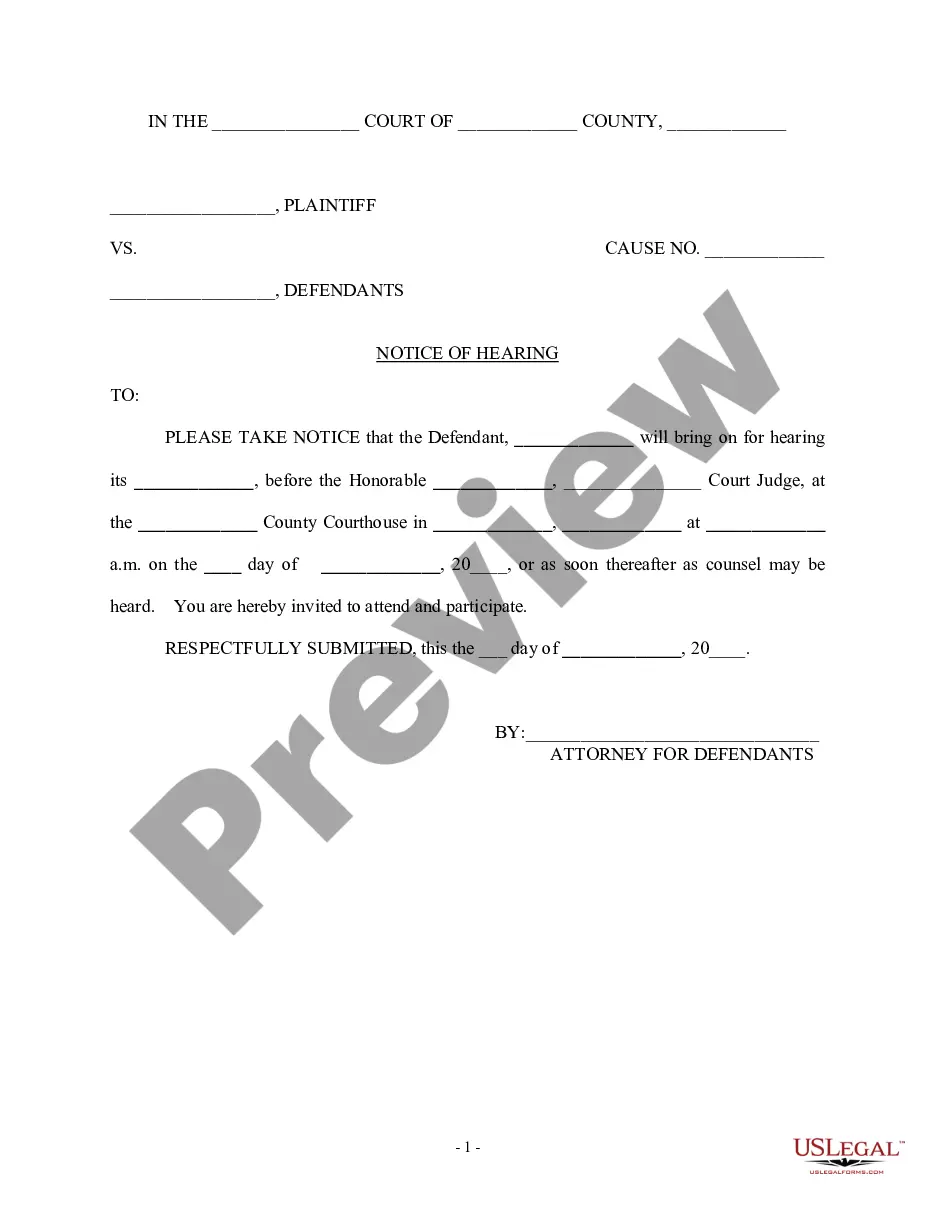
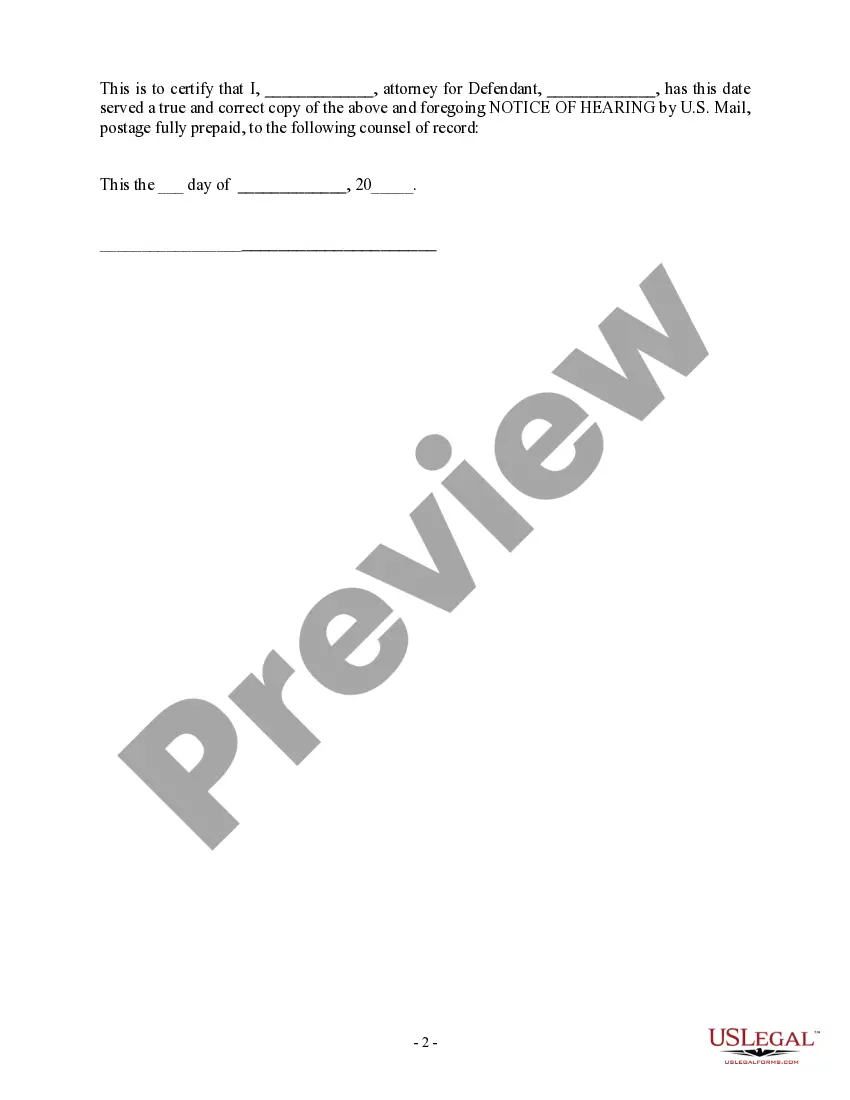
Notice Of Hearing For Motion
Description
Get your form ready online
Our built-in tools help you complete, sign, share, and store your documents in one place.
Make edits, fill in missing information, and update formatting in US Legal Forms—just like you would in MS Word.
Download a copy, print it, send it by email, or mail it via USPS—whatever works best for your next step.
Sign and collect signatures with our SignNow integration. Send to multiple recipients, set reminders, and more. Go Premium to unlock E-Sign.
If this form requires notarization, complete it online through a secure video call—no need to meet a notary in person or wait for an appointment.
We protect your documents and personal data by following strict security and privacy standards.

Make edits, fill in missing information, and update formatting in US Legal Forms—just like you would in MS Word.

Download a copy, print it, send it by email, or mail it via USPS—whatever works best for your next step.

Sign and collect signatures with our SignNow integration. Send to multiple recipients, set reminders, and more. Go Premium to unlock E-Sign.

If this form requires notarization, complete it online through a secure video call—no need to meet a notary in person or wait for an appointment.

We protect your documents and personal data by following strict security and privacy standards.
Looking for another form?


How to fill out Notice Of Hearing?
- Log in to your US Legal Forms account if you're a returning user; otherwise, create a new account.
- Preview the available forms and verify that you are selecting the correct notice that aligns with your specific legal needs and local jurisdiction.
- If the desired form is not satisfactory, utilize the search feature to find the appropriate template that fits your requirements.
- Select the form and click on the 'Buy Now' option to choose your preferred subscription plan for accessing further resources.
- Complete the payment process by entering your payment details or opting for PayPal to finalize your subscription purchase.
- Download the completed form directly onto your device, and access it anytime from the 'My Forms' section of your account.
Finally, it's crucial to ensure that you have the correct form, especially for a notice of hearing for motion. US Legal Forms not only provides a vast library of documents but also offers expert assistance to help you complete your forms accurately, ensuring you're legally sound in your submissions.
Take advantage of US Legal Forms today to streamline your legal document process and gain peace of mind.
Form popularity
FAQ
When writing a motion letter to the court, start by addressing the appropriate judge and stating your name and the case number. Clearly outline the motion's purpose, provide relevant facts, and cite legal statutes or precedents that support your request. Don't forget to include a notice of hearing for motion to let the court know when you would like the matter to be heard.
To file a notice of motion, you should gather all necessary documents, including any supporting affidavits or evidence. Fill out the appropriate forms, ensuring that you include the date, time, and location of the hearing in your notice of hearing for motion. After filing your notice with the court, make sure to serve copies to all parties involved in the case.
You do not necessarily need a lawyer to file a motion for contempt; however, hiring one can increase your chances of success. A lawyer can help you understand the complexity of your case and craft a strong motion with the proper notice of hearing for motion. While self-representation is possible, legal expertise is highly beneficial in contentious matters.
Filing a motion notice typically involves completing specific court forms and submitting them to the appropriate court clerk. It's essential to follow local court rules, which will guide you on the details you must include in your notice of hearing for motion. Additionally, be prepared to serve the notice to all interested parties according to legal requirements.
Writing a motion for a hearing involves outlining the legal grounds for your request clearly and concisely. Begin by stating the purpose, followed by relevant facts and legal reasons supporting your motion. Lastly, ensure to include a notice of hearing for motion to inform the court and the other party about the scheduled date.
In New York, the standard requirement is to provide at least eight days' notice before the hearing date for a motion. This timeframe gives the opposing party a chance to respond adequately. If your motion is urgent, you might be able to request an expedited hearing where different rules could apply.
You can file your own motion without the assistance of a lawyer; however, it requires careful attention to detail. Understanding the process and the specific requirements for your case is crucial. To ensure your motion is valid, consider following the guidelines provided by the court, especially when preparing the notice of hearing for motion.
An example of a motion might include a request for a temporary restraining order, where you ask the court to prevent someone from taking a specific action. This motion would detail why the order is necessary and how it relates to the case. If you're unsure how to draft such documents, platforms like US Legal Forms can offer templates and guidance to help you prepare a proper notice of hearing for motion.
Writing a motion letter involves a formal request directed to the court, clearly outlining your specific request and the legal basis supporting it. Start with a proper salutation and include case details, followed by your argument and supportive evidence. Remember to conclude with your request and ensure to provide a copy of the notice of hearing for motion to inform the other parties involved.
Filling out a notice of motion form requires attention to detail, including writing the motion title, the names of the parties, and the case number. Be sure to specify the relief sought and the hearing date to keep everything clear. Consider using US Legal Forms to access templates that guide you through the process of preparing an effective notice of hearing for motion.