Bankruptcy Hardship Discharge Withheld
Description
Get your form ready online
Our built-in tools help you complete, sign, share, and store your documents in one place.
Make edits, fill in missing information, and update formatting in US Legal Forms—just like you would in MS Word.
Download a copy, print it, send it by email, or mail it via USPS—whatever works best for your next step.
Sign and collect signatures with our SignNow integration. Send to multiple recipients, set reminders, and more. Go Premium to unlock E-Sign.
If this form requires notarization, complete it online through a secure video call—no need to meet a notary in person or wait for an appointment.
We protect your documents and personal data by following strict security and privacy standards.

Make edits, fill in missing information, and update formatting in US Legal Forms—just like you would in MS Word.

Download a copy, print it, send it by email, or mail it via USPS—whatever works best for your next step.

Sign and collect signatures with our SignNow integration. Send to multiple recipients, set reminders, and more. Go Premium to unlock E-Sign.

If this form requires notarization, complete it online through a secure video call—no need to meet a notary in person or wait for an appointment.

We protect your documents and personal data by following strict security and privacy standards.
Looking for another form?








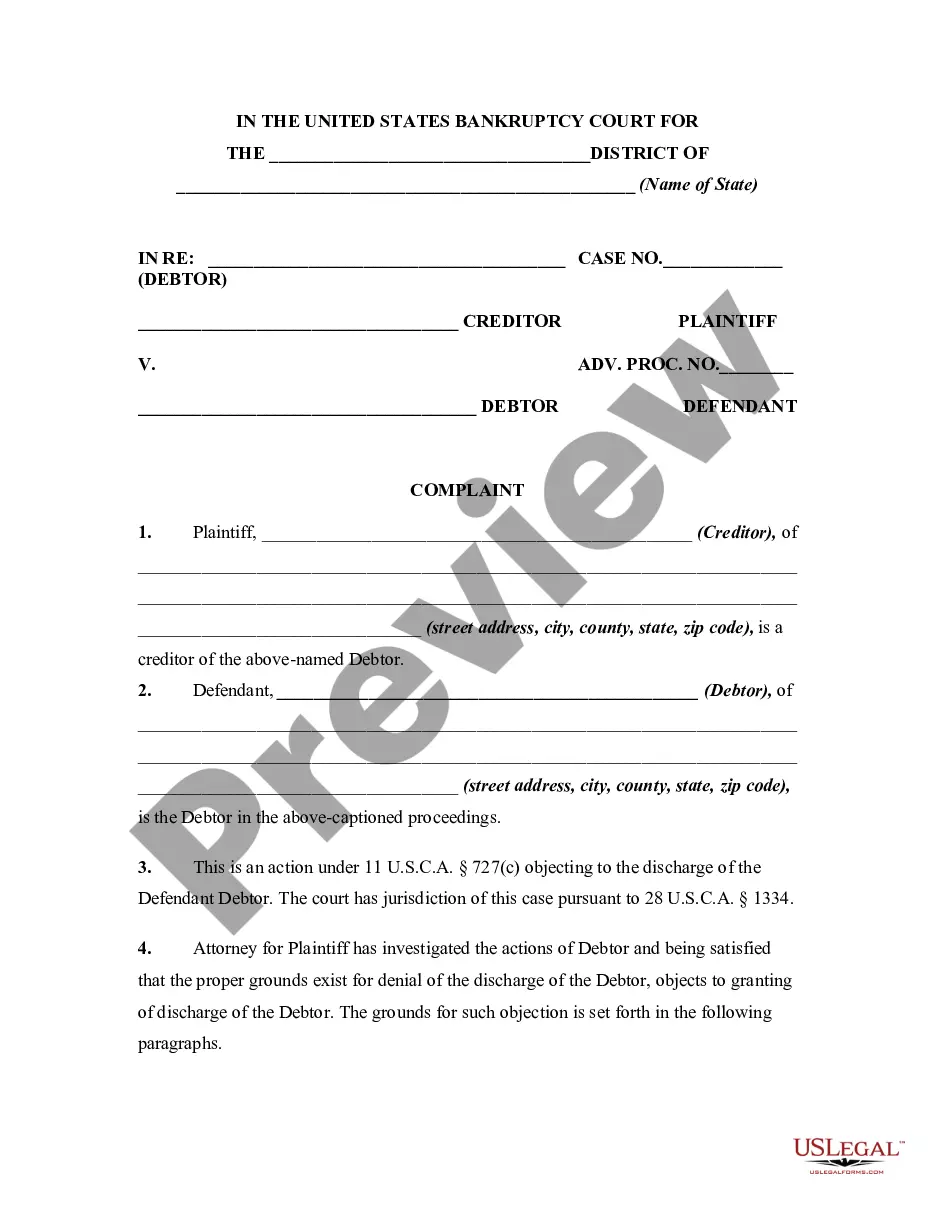
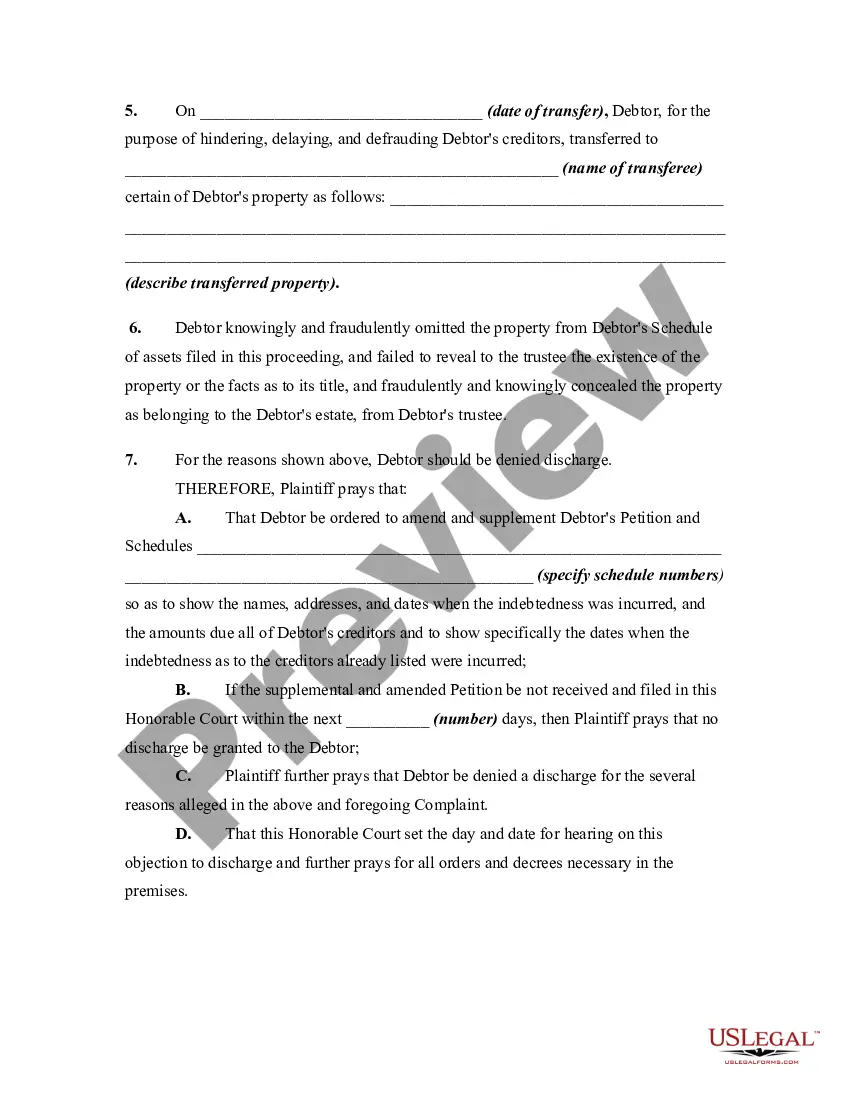
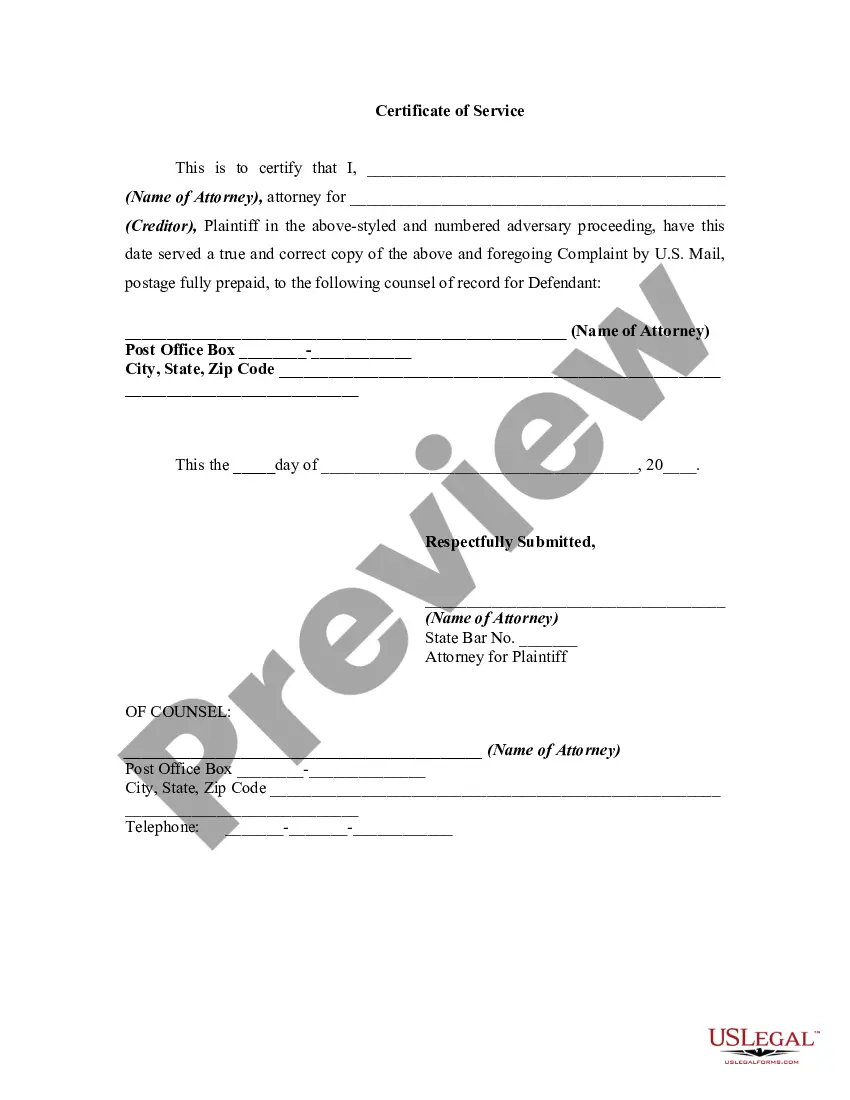
How to fill out Complaint Objecting To Discharge In Bankruptcy Proceedings For Concealment By Debtor And Omitting From Schedules Fraudulently Transferred Property?
It’s widely known that you cannot transform into a legal specialist instantly, nor can you swiftly learn how to draft a Bankruptcy Hardship Discharge Withheld without possessing a specific set of abilities. Crafting legal documents is a lengthy process that necessitates certain training and expertise. So why not entrust the creation of the Bankruptcy Hardship Discharge Withheld to the professionals.
With US Legal Forms, one of the largest legal document repositories, you can discover anything from court filings to templates for internal correspondence. We understand how crucial compliance and adherence to federal and state regulations are. That’s why, on our site, all documents are location-specific and current.
Here’s how to begin with our website and acquire the document you require in just a few minutes.
You can revisit your documents from the My documents tab at any time. If you’re an existing customer, you can simply Log In, and find and download the template from the same tab.
Regardless of the reason for your documents—whether financial and legal or personal—our website has you covered. Try US Legal Forms today!
- Find the document you need by utilizing the search bar at the top of the page.
- Preview it (if this option available) and review the supporting description to ascertain whether Bankruptcy Hardship Discharge Withheld is what you’re looking for.
- Start your search anew if you require a different template.
- Create a free account and select a subscription plan to purchase the document.
- Click Buy now. Once the payment is processed, you can download the Bankruptcy Hardship Discharge Withheld, complete it, print it, and send or mail it to the necessary individuals or organizations.
Form popularity
FAQ
The Chapter 13 Hardship Discharge After confirmation of a plan, circumstances may arise that prevent the debtor from completing the plan. In such situations, the debtor may ask the court to grant a "hardship discharge."
In Chapter 13 bankruptcy, the debtor proposes a repayment plan to manage a portion of their debts over three to five years. The remaining debts are typically discharged at the end of the repayment plan. Monthly payment amounts vary greatly, as one of the factors they are based on is disposable income.
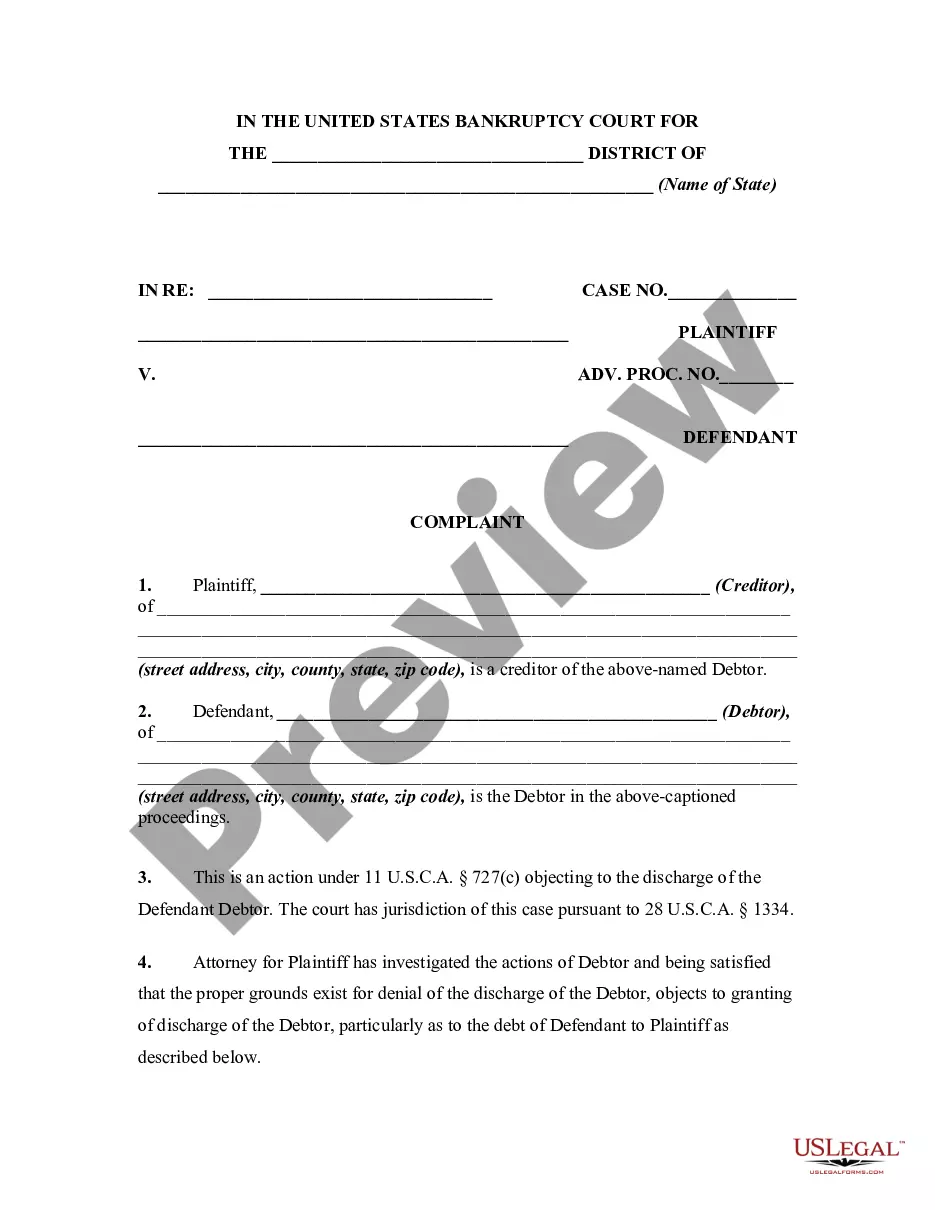
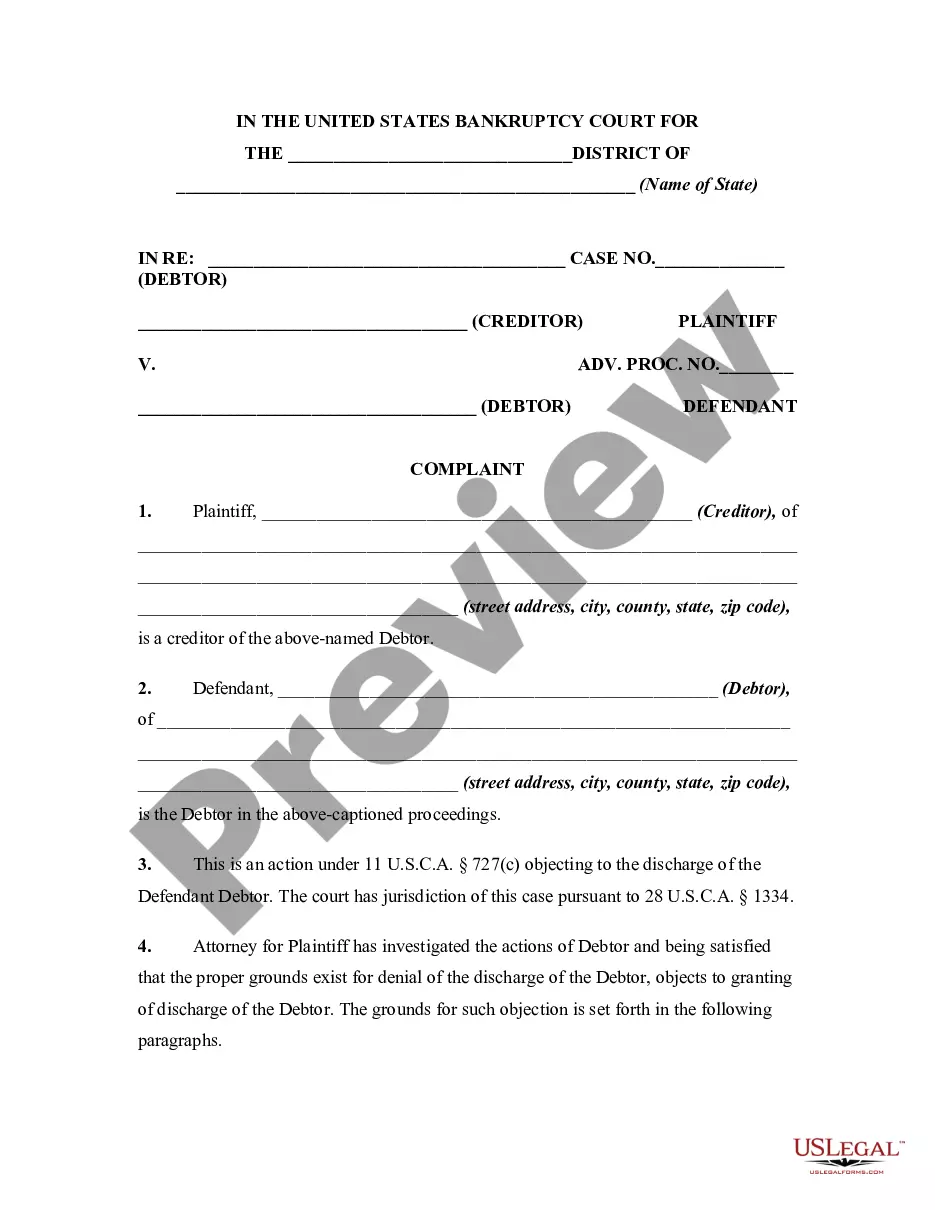
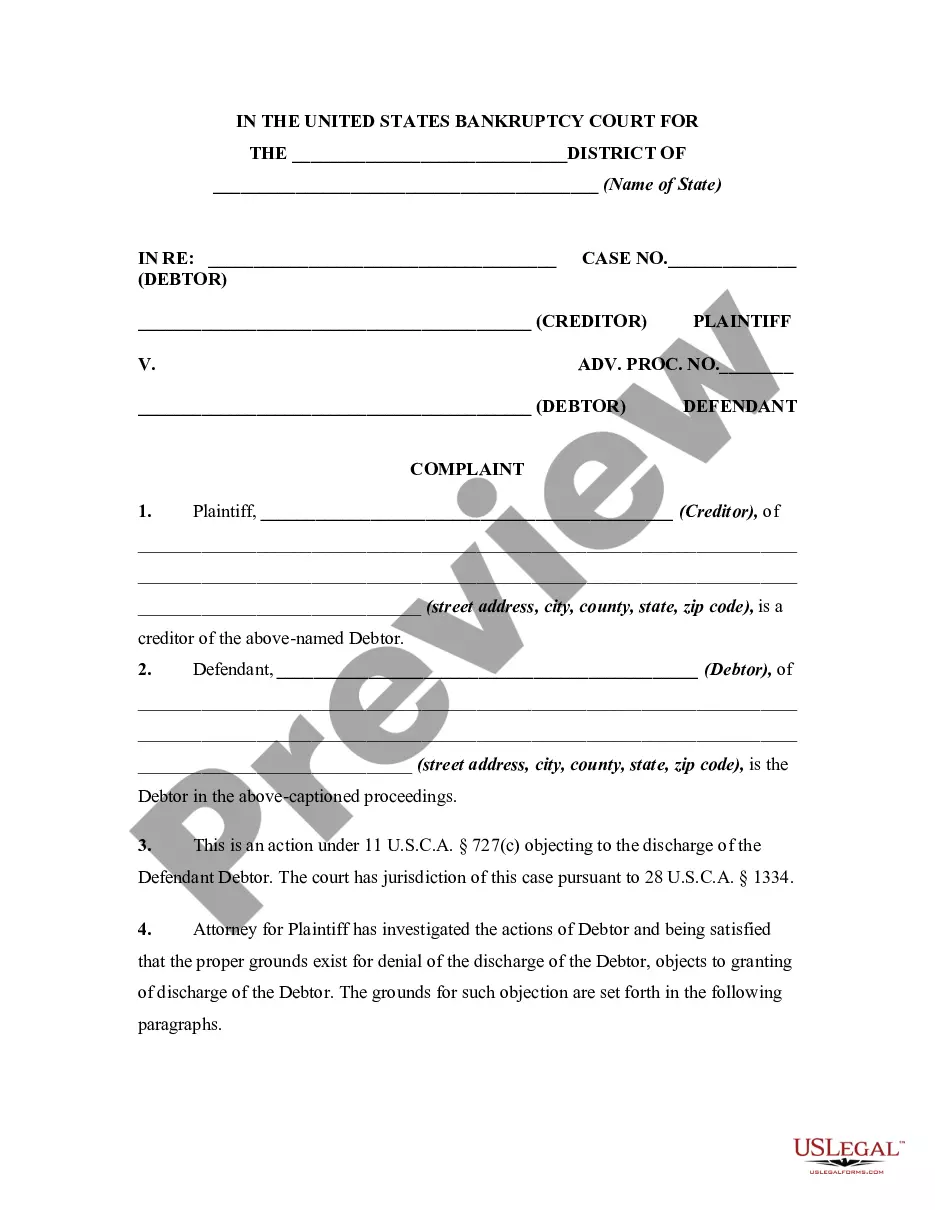
To object to the debtor's discharge, a creditor must file a complaint in the bankruptcy court before the deadline set out in the notice. Filing a complaint starts a lawsuit referred to in bankruptcy as an "adversary proceeding."
Dischargeable Debts ? As opposed to nondischargeable debts, these debts are up for discharge (elimination) when your case concludes. Some examples of dischargeable debts in Chapter 13 include credit card debt, medical bills, utility bills, and personal loans.
A bankrupt's discharge may be opposed by creditors, the LIT or the BIA if the bankrupt has failed to meet his/her obligations or has committed an act of misconduct under the Bankruptcy and Insolvency Act (BIA) (see section 173 (1) of the BIA ). The Court will then review the opposition and render a decision.