Nunc Pro Tunc Example For Immigration Purposes
Description
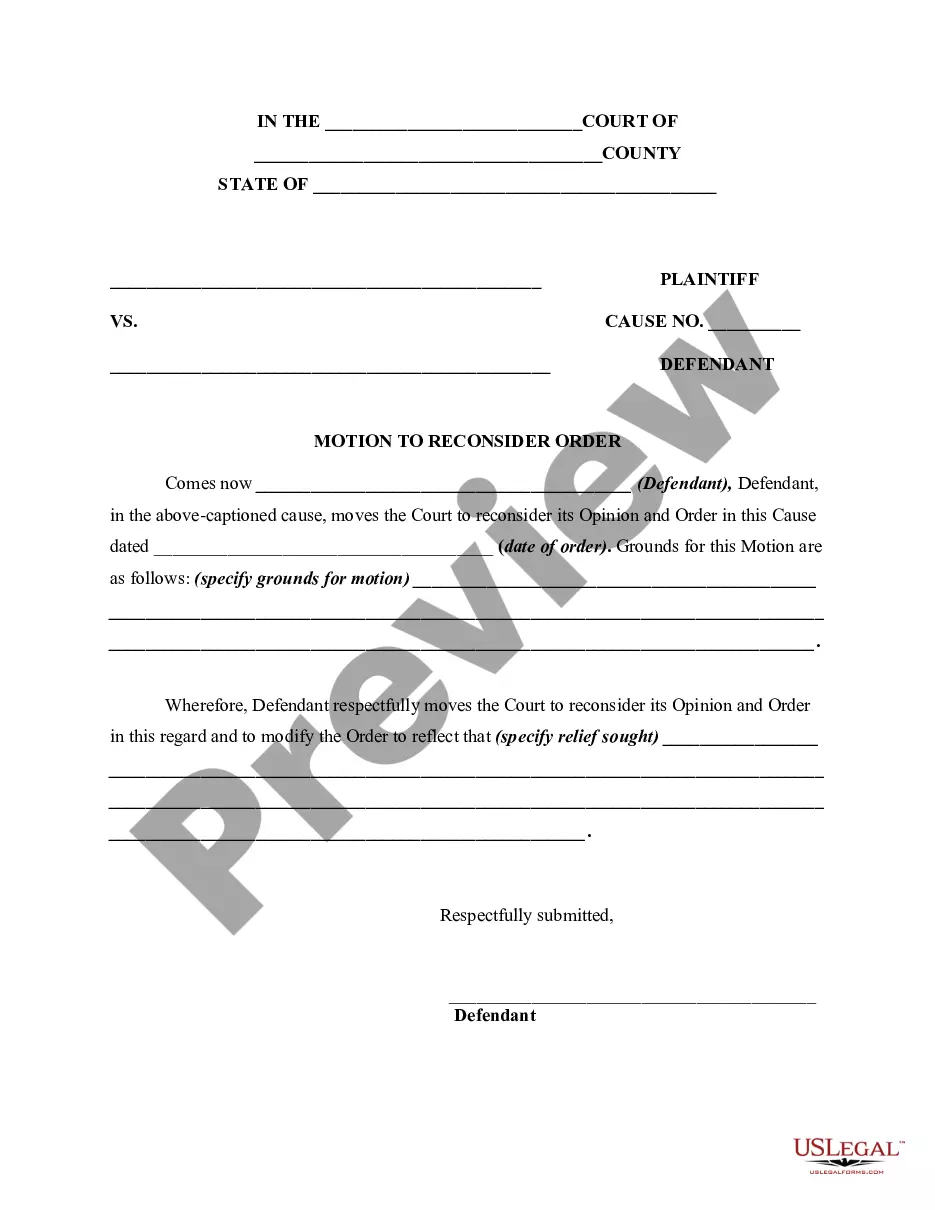
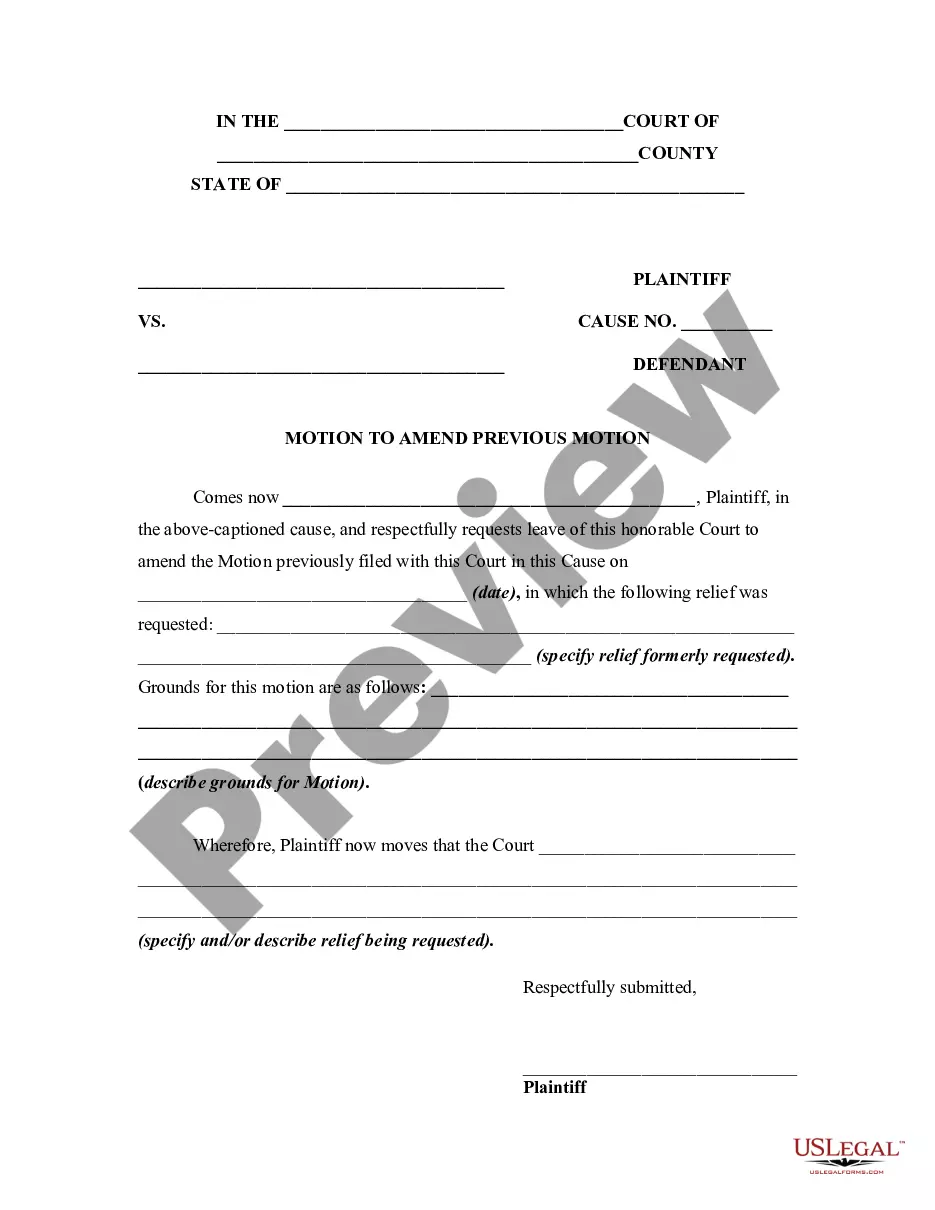
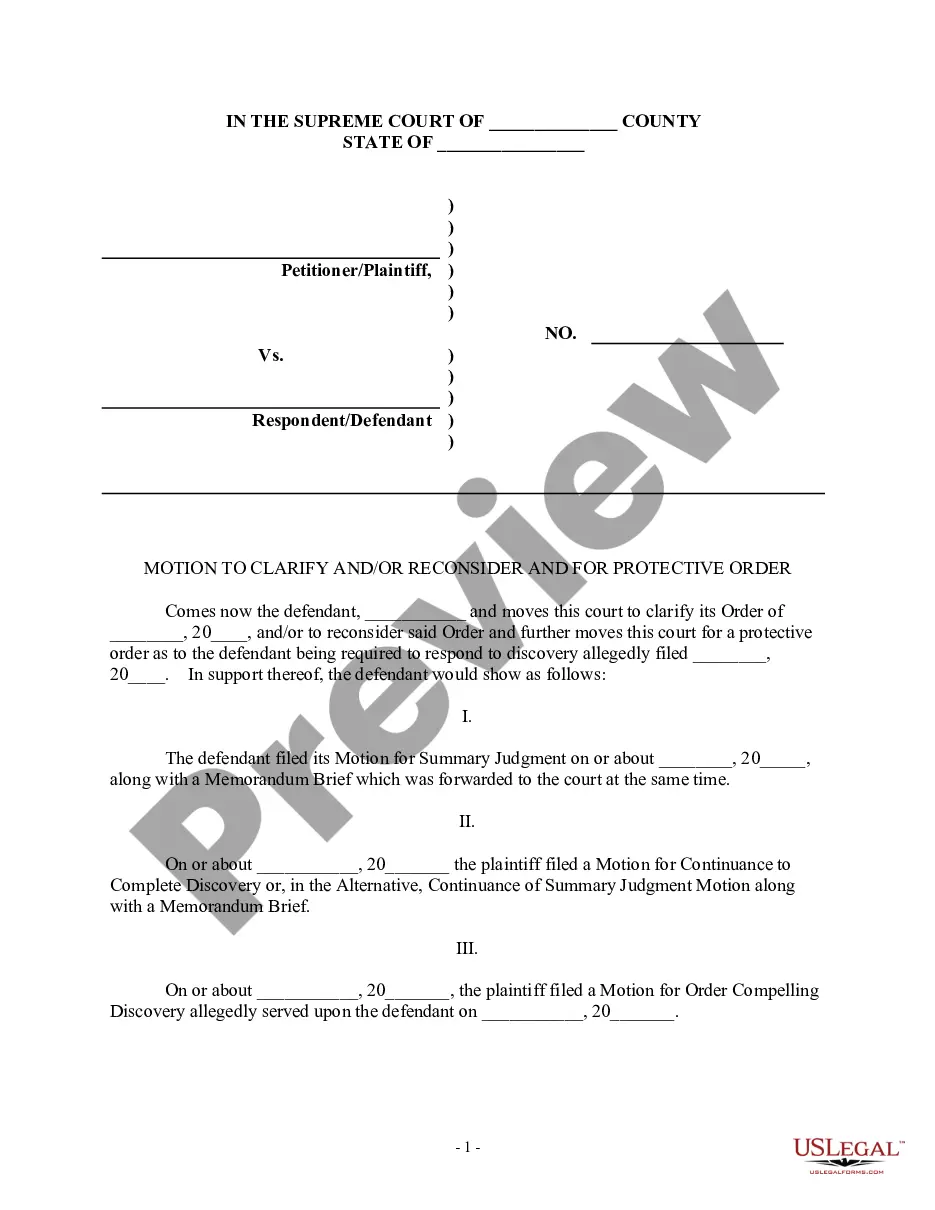

Get your form ready online
Our built-in tools help you complete, sign, share, and store your documents in one place.
Make edits, fill in missing information, and update formatting in US Legal Forms—just like you would in MS Word.
Download a copy, print it, send it by email, or mail it via USPS—whatever works best for your next step.
Sign and collect signatures with our SignNow integration. Send to multiple recipients, set reminders, and more. Go Premium to unlock E-Sign.
If this form requires notarization, complete it online through a secure video call—no need to meet a notary in person or wait for an appointment.
We protect your documents and personal data by following strict security and privacy standards.

Make edits, fill in missing information, and update formatting in US Legal Forms—just like you would in MS Word.

Download a copy, print it, send it by email, or mail it via USPS—whatever works best for your next step.

Sign and collect signatures with our SignNow integration. Send to multiple recipients, set reminders, and more. Go Premium to unlock E-Sign.

If this form requires notarization, complete it online through a secure video call—no need to meet a notary in person or wait for an appointment.

We protect your documents and personal data by following strict security and privacy standards.
Looking for another form?
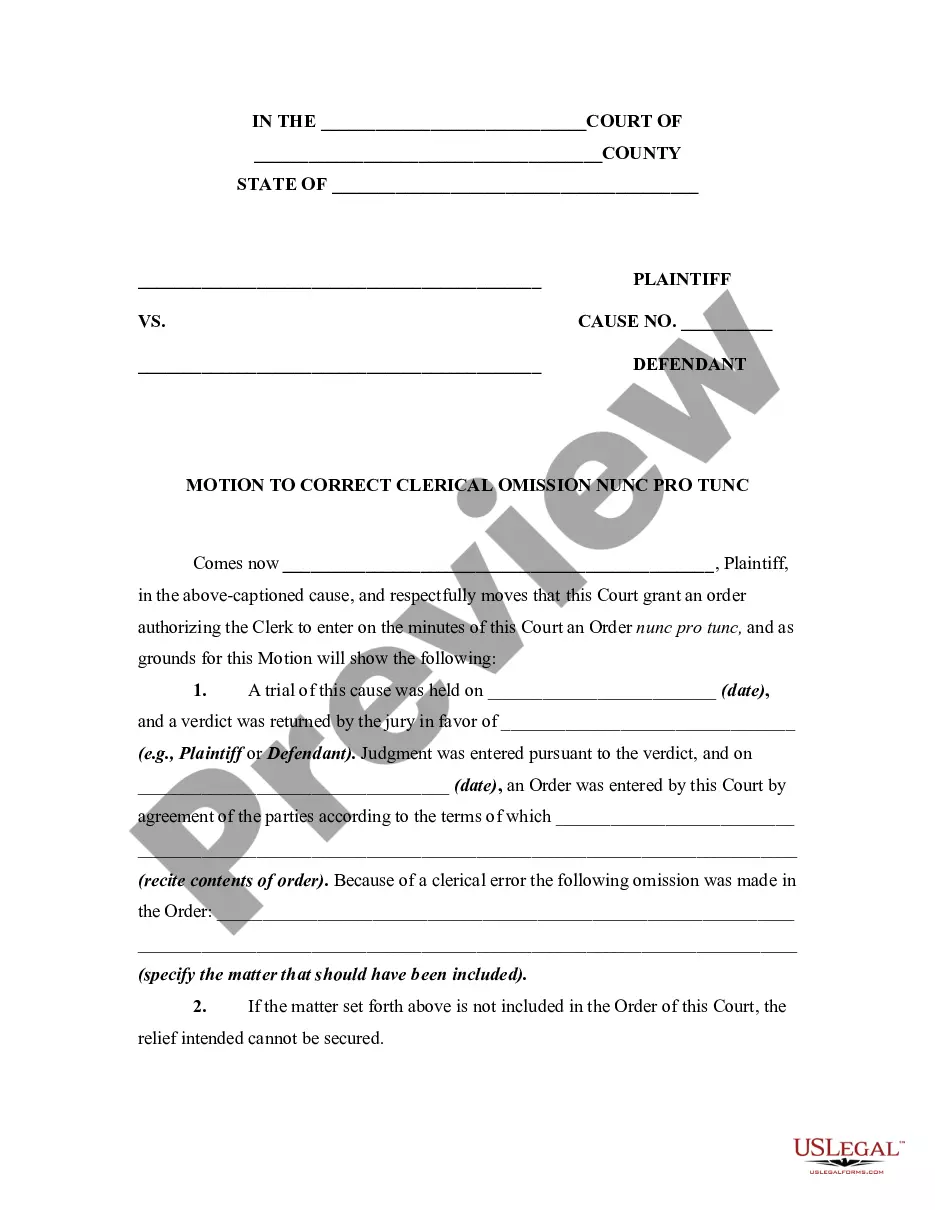
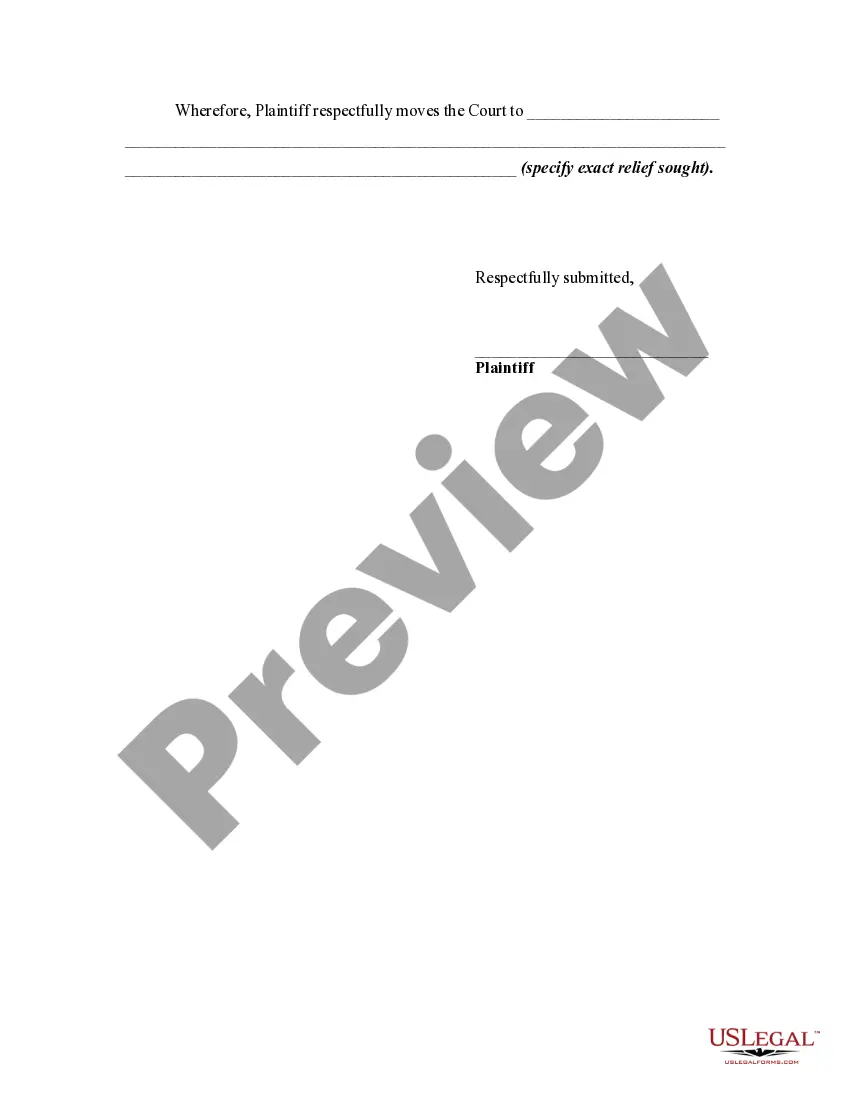
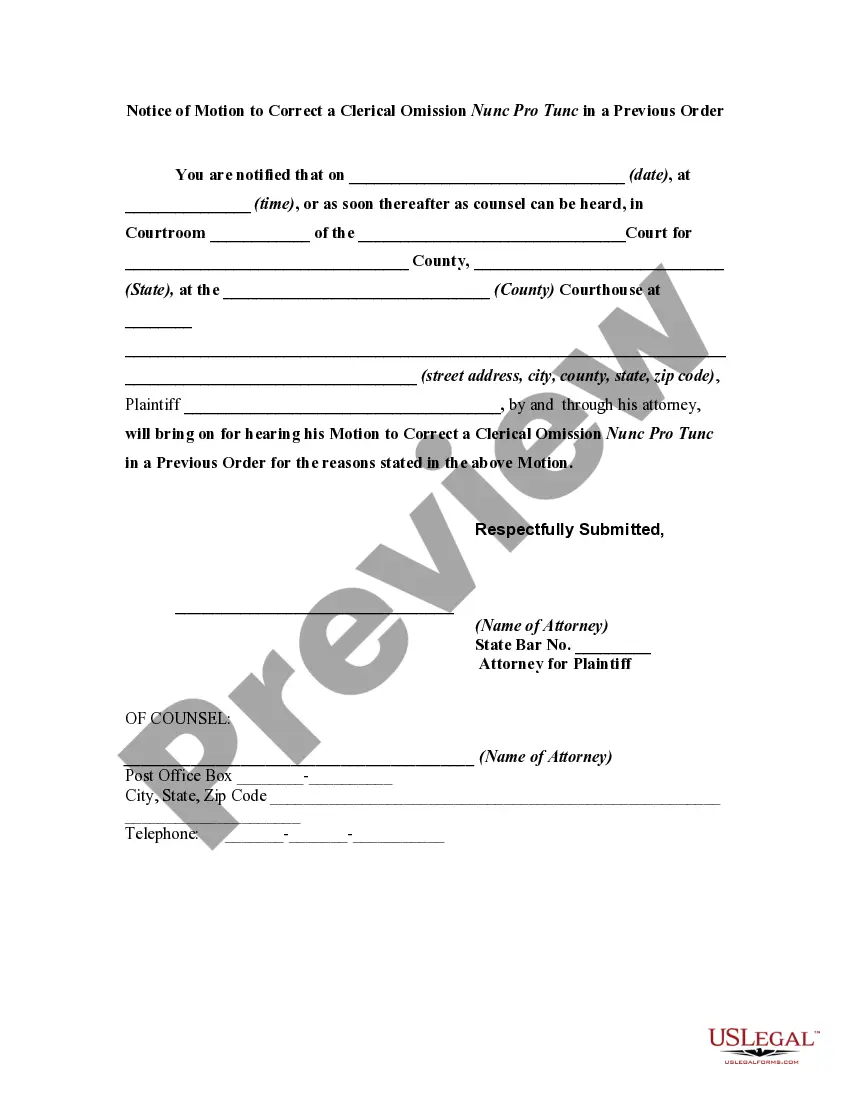
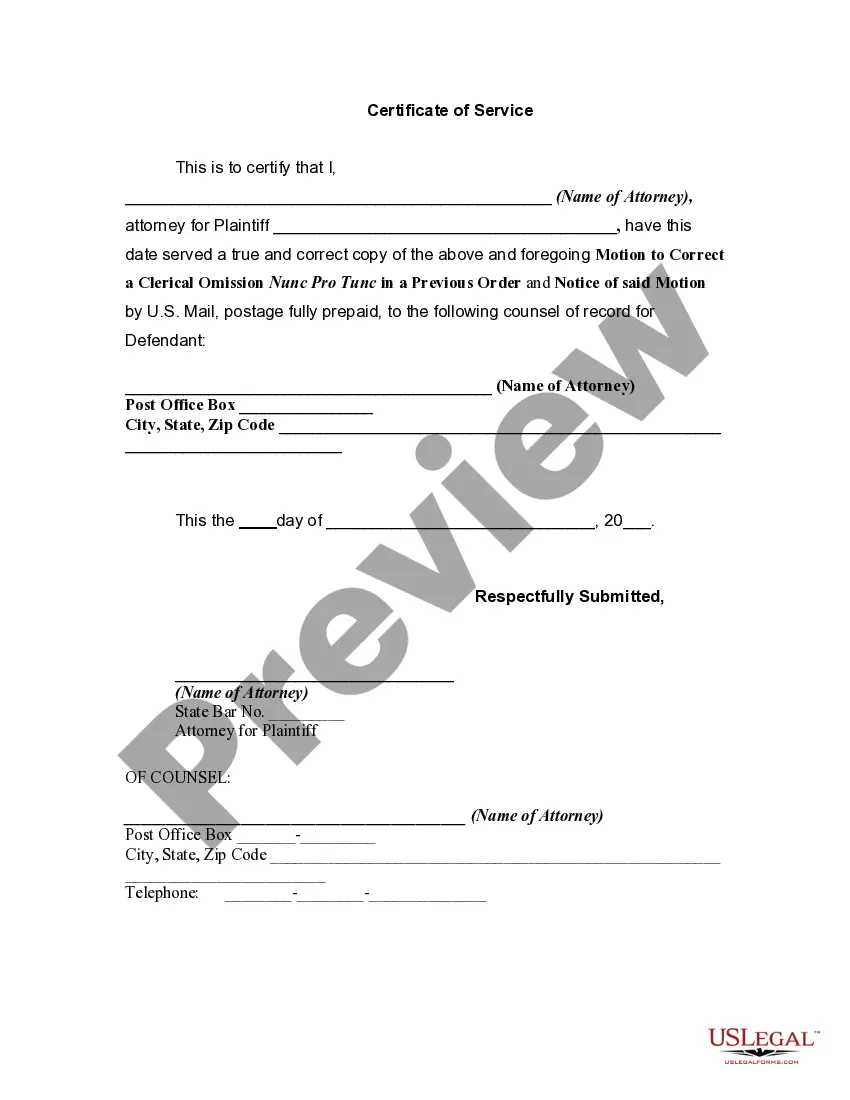
How to fill out Motion To Correct A Clerical Omission Nunc Pro Tunc In A Previous Order?
Whether for commercial reasons or for personal matters, everyone eventually has to navigate legal issues at some point in their lives.
Completing legal documents requires meticulous attention, starting from choosing the appropriate form template.
Once saved, you can complete the form using editing software or print it out and fill it manually. With a vast US Legal Forms collection available, you no longer need to waste time looking for the appropriate template online. Utilize the library’s user-friendly navigation to find the correct form for any event.
- Locate the template you require using the search bar or catalog browsing.
- Review the form’s details to ensure it aligns with your situation, state, and county.
- Click on the form’s preview to examine it.
- If it is not the correct form, return to the search feature to find the Nunc Pro Tunc Example For Immigration Purposes sample you need.
- Obtain the file once it fulfills your requirements.
- If you already possess a US Legal Forms account, simply click Log in to access previously stored files in My documents.
- If you do not have an account yet, you can acquire the form by clicking Buy now.
- Choose the suitable pricing option.
- Fill out the account registration form.
- Select your payment method: you can utilize a credit card or PayPal account.
- Choose the file format you desire and download the Nunc Pro Tunc Example For Immigration Purposes.
Form popularity
FAQ
'Nunc pro tunc' translates to 'now for then,' indicating a legal term that allows a court to retroactively correct past decisions. In immigration, this term facilitates the rectification of applications or decisions that need adjustment due to new evidence or inaccuracies. Understanding this concept is vital when navigating immigration processes.
Nunc pro tunc refers to the discretionary power of USCIS to treat something done now as effective as of an earlier date. When a matter is adjudicated Nunc pro tunc by USCIS, it is effective as if it were done as of the time that it should have been done.
Latin for "now for then." A doctrine that permits a court to change records so that they show what actually happened. For example, if a party filed his motion on January 5, but the clerk's office had erroneously treated it as filed on January 6, the judge could correct the records to show the right date.
Nunc pro tunc is a Latin term meaning "now for then." Generally, this refers to an action taken by a court that applies retroactively to correct an earlier ruling.
In general, nunc pro tunc requests can be filed in order to restore lawful immigration status if it lapses or an applicant fails to renew or extend their existing visa status before it expires.
There are several reasons why the court may use the Nunc Pro Tunc rule: to correct a clerical error on the part of the court. to correct an omission by the court. to correct a neglect by the court. to comply with a request to revert the order based on supporting documents by the person making the request (the moving party)