Nunc Latim
Description
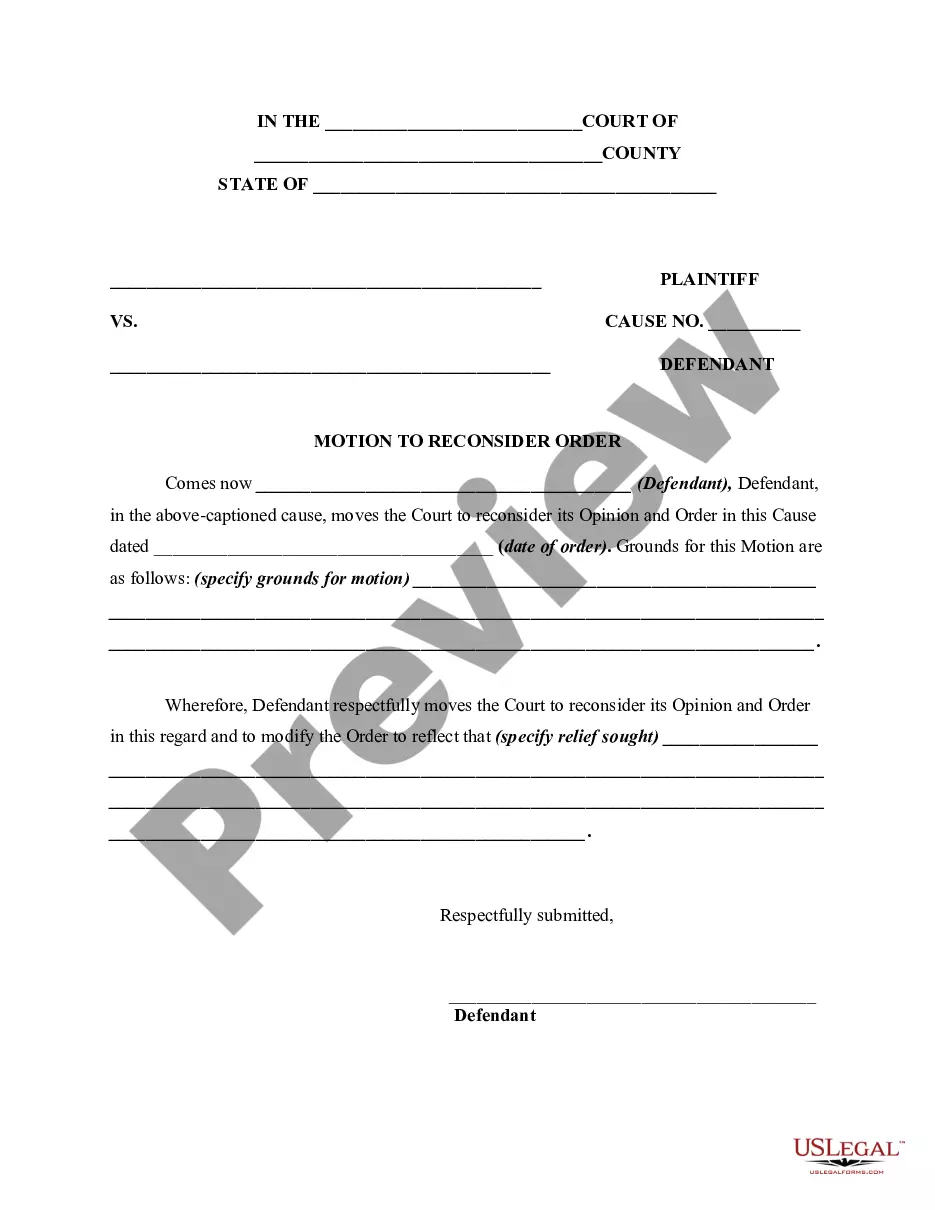
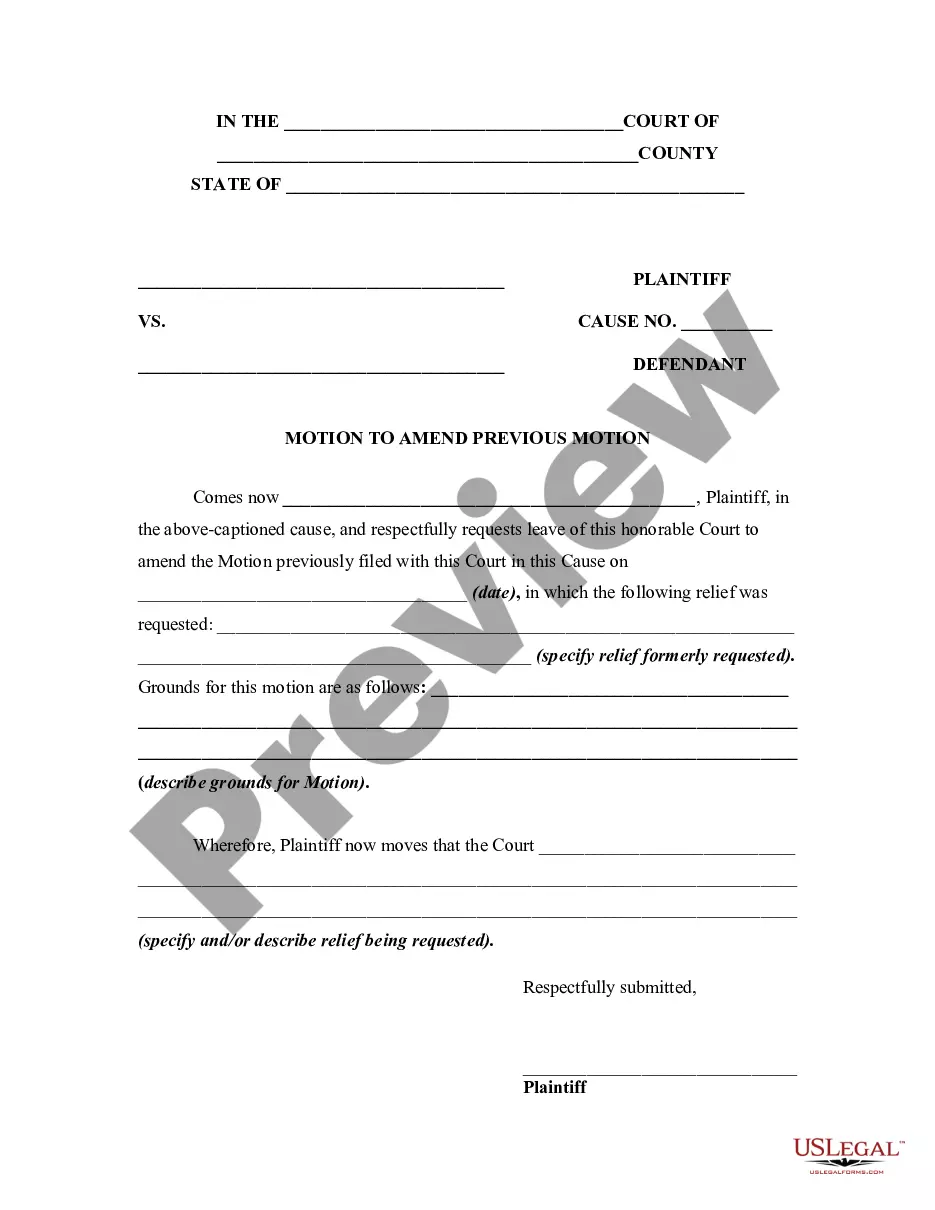
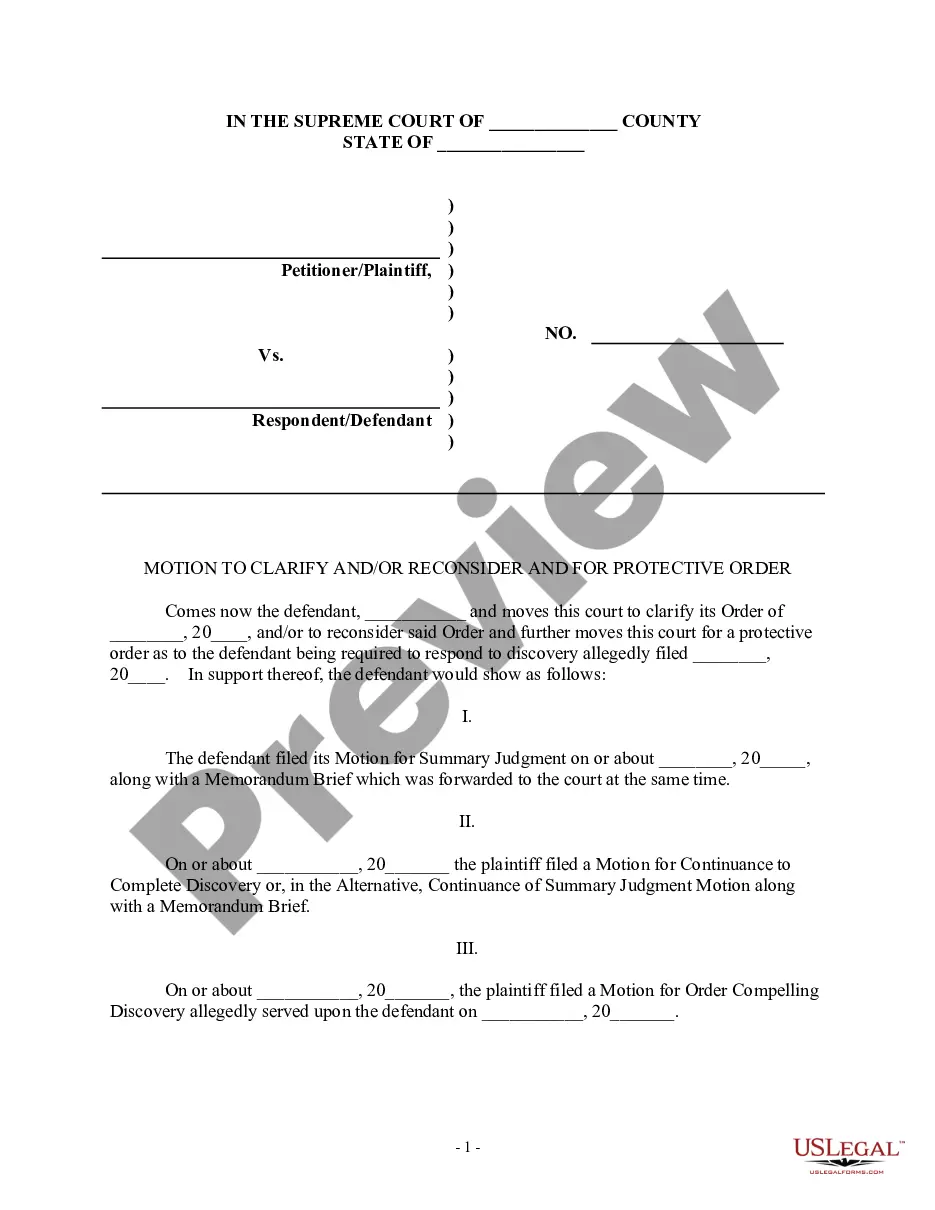

Get your form ready online
Our built-in tools help you complete, sign, share, and store your documents in one place.
Make edits, fill in missing information, and update formatting in US Legal Forms—just like you would in MS Word.
Download a copy, print it, send it by email, or mail it via USPS—whatever works best for your next step.
Sign and collect signatures with our SignNow integration. Send to multiple recipients, set reminders, and more. Go Premium to unlock E-Sign.
If this form requires notarization, complete it online through a secure video call—no need to meet a notary in person or wait for an appointment.
We protect your documents and personal data by following strict security and privacy standards.

Make edits, fill in missing information, and update formatting in US Legal Forms—just like you would in MS Word.

Download a copy, print it, send it by email, or mail it via USPS—whatever works best for your next step.

Sign and collect signatures with our SignNow integration. Send to multiple recipients, set reminders, and more. Go Premium to unlock E-Sign.

If this form requires notarization, complete it online through a secure video call—no need to meet a notary in person or wait for an appointment.

We protect your documents and personal data by following strict security and privacy standards.
Looking for another form?

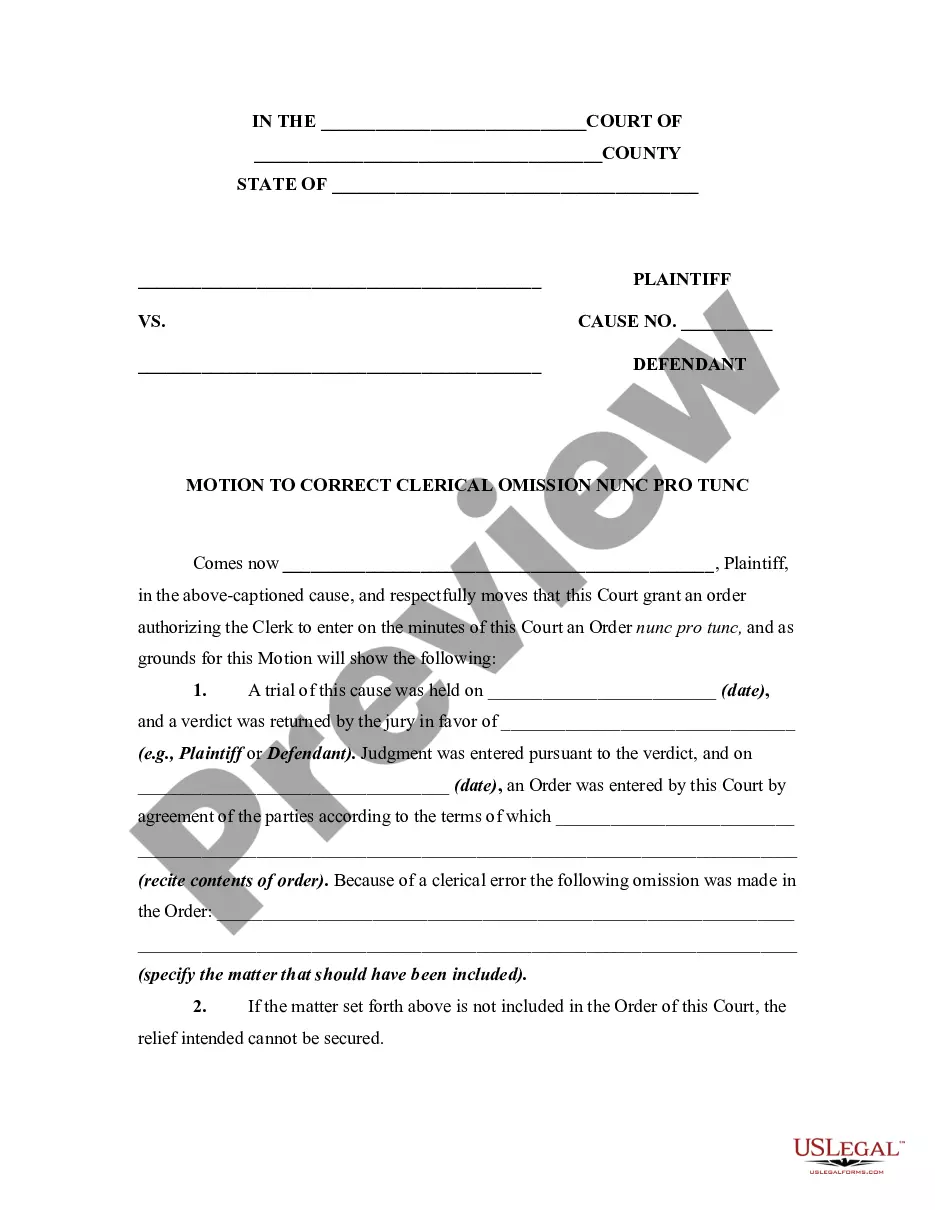
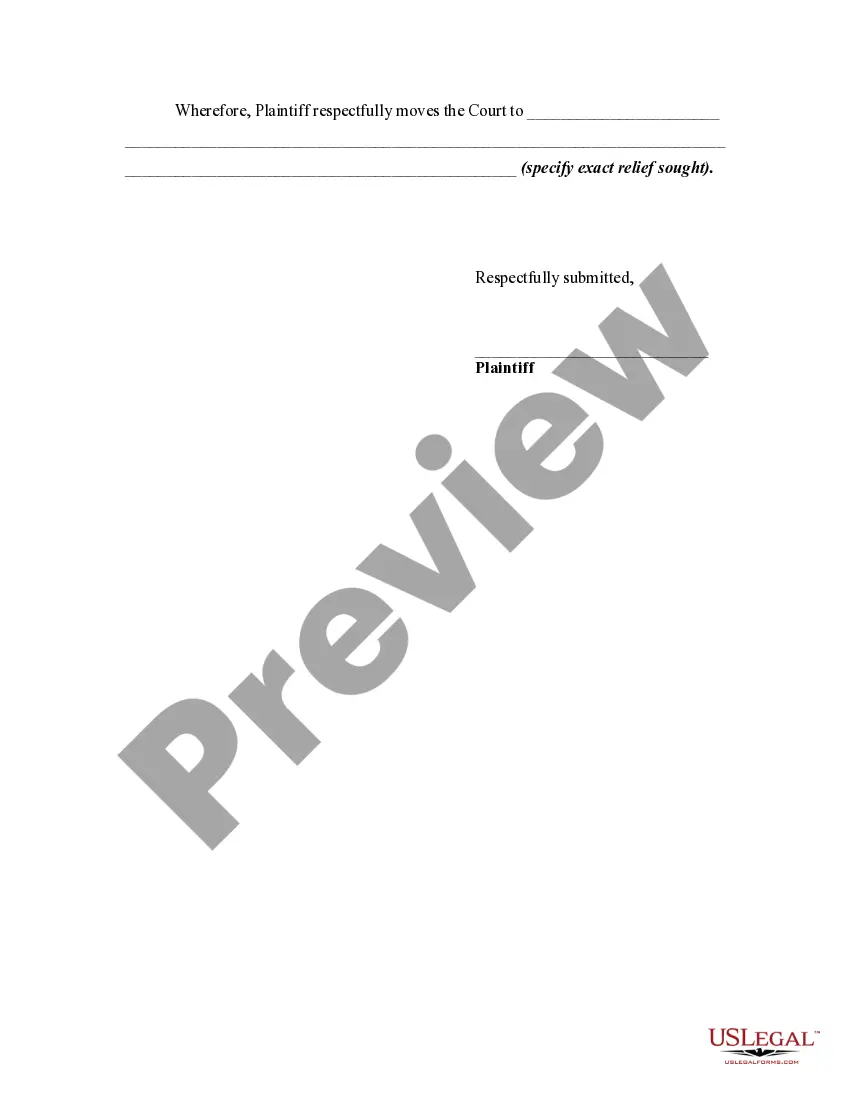
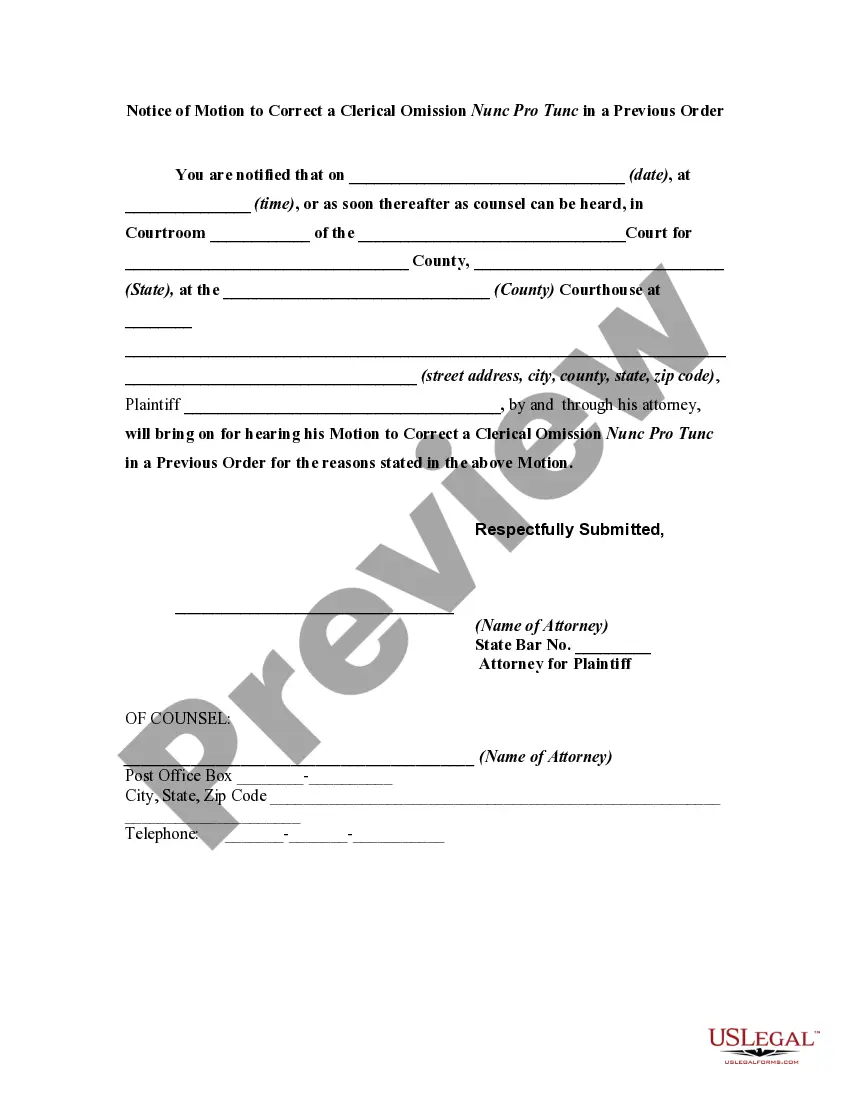
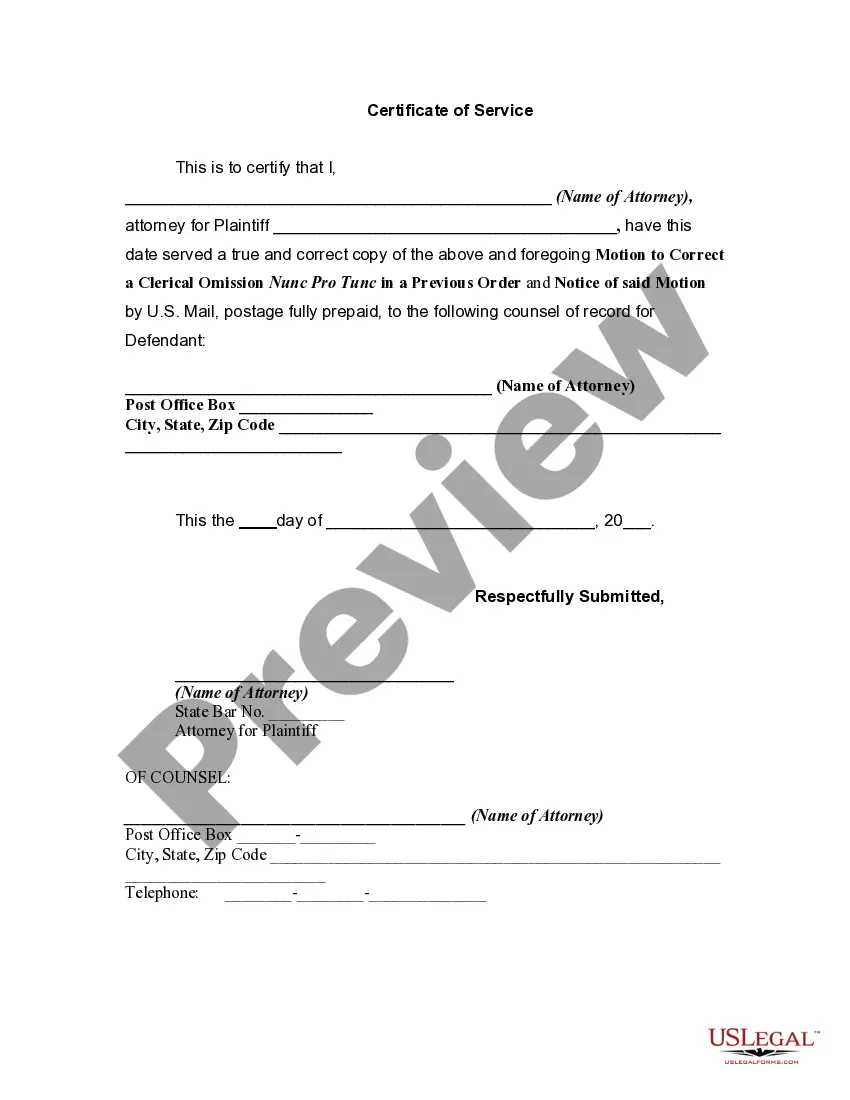
How to fill out Motion To Correct A Clerical Omission Nunc Pro Tunc In A Previous Order?
- Log in to your account if you're a returning user. Ensure your subscription is active or choose a plan to renew.
- For new users, browse the Preview mode and form description to confirm the document aligns with your needs and local jurisdiction requirements.
- If necessary, use the Search tab to find alternative templates that better suit your situation.
- Click the Buy Now button for your chosen form and select your preferred subscription plan, while also creating an account for access.
- Complete your purchase by entering your credit card information or using your PayPal account.
- Download your form and save it to your device. Access it anytime through the 'My Forms' section in your profile.
By utilizing US Legal Forms, you gain access to an extensive library and the ability to consult with premium experts for assistance. This ensures that your documents are not only quick to produce but also accurate and legally sound.
Start simplifying your legal processes today. Explore US Legal Forms and empower yourself with the right tools!
Form popularity
FAQ
To express 'nevermind' in Latin, you can use the phrase 'Nunc latim.' This phrase conveys a sense of dismissing previous considerations or thoughts. If you're exploring how Latin can enhance your communication skills, understanding simple phrases like these can be quite beneficial. Additionally, our platform offers resources for those interested in learning more Latin expressions or legal terminology.
An example of nunc pro tunc in an order might be a court deciding to retroactively adjust the date of an eviction notice. By using nunc latim, the court ensures that all parties are aware of the correct timeline and that the original intent of the order is honored. This legal tool supports justice by ensuring that errors do not lead to unfair outcomes, showcasing the significance of accurate legal documentation.
In a sentencing context, one might say, 'The judge issued a nunc pro tunc order to reflect the originally intended punishment.' This usage illustrates how nunc latim applies, offering a solution for instances where documentation does not accurately capture judicial intentions. Such sentences clarify the purpose of these orders and highlight their importance in maintaining legal integrity.
A nunc pro tunc order is a legal document that corrects an earlier order or judgment, allowing it to have retroactive effect. For instance, if a court forgets to include specific details in a ruling, the nunc pro tunc order can fill in those gaps. Nunc latim serves to emphasize that these corrections are not new decisions but affirmations of what was intended from the start. This method ensures clarity and consistency in legal processes.
While both 'nunc' and 'iam' relate to the concept of time, they serve different purposes. 'Nunc' specifically means 'now,' emphasizing the present moment, whereas 'iam' can mean 'already.' Understanding these nuances enriches your comprehension of time expressions in Latin. A deeper dive into 'Nunc latim' provides clarity on these distinctions.
'Nunc et Semper' means 'now and always.' This expression suggests a timeless quality, reinforcing concepts of continuity and consistency. In legal discussions, this highlights the enduring principles that govern certain regulations. By exploring 'Nunc latim,' you can appreciate how language shapes our understanding of permanence.
The meaning of 'Nunc' revolves around the idea of 'now' in Latin. This word marks the current timeframe, suggesting urgency and relevance. In legal contexts, recognizing the implications of 'Nunc latim' can enhance your analytical skills. This understanding can shape your perspective on various legal transactions.
'Nunc pro tunc' translates to 'now for then.' This legal term denotes a retroactive effect, often used when a decision should be treated as if it were made at an earlier time. Using a platform like US Legal Forms, you can easily navigate these complex terms. Grasping the implications of 'Nunc latim' can empower your legal understanding.
In its simplest form, 'nunc' means 'now.' This single word encapsulates the essence of time and immediacy. When you encounter it in phrases, it highlights the current moment's significance. Familiarity with 'nunc' through 'Nunc latim' can deepen your appreciation for time-related expressions.
Nunc Dimittis means 'now dismiss.' This phrase is often associated with a biblical context, representing a farewell or completion. In legal discussions, it can imply finality in decisions. Understanding phrases like 'Nunc latim' can enhance your grasp of these nuanced ideas.