Remodeling Contract With The Ceo
Description
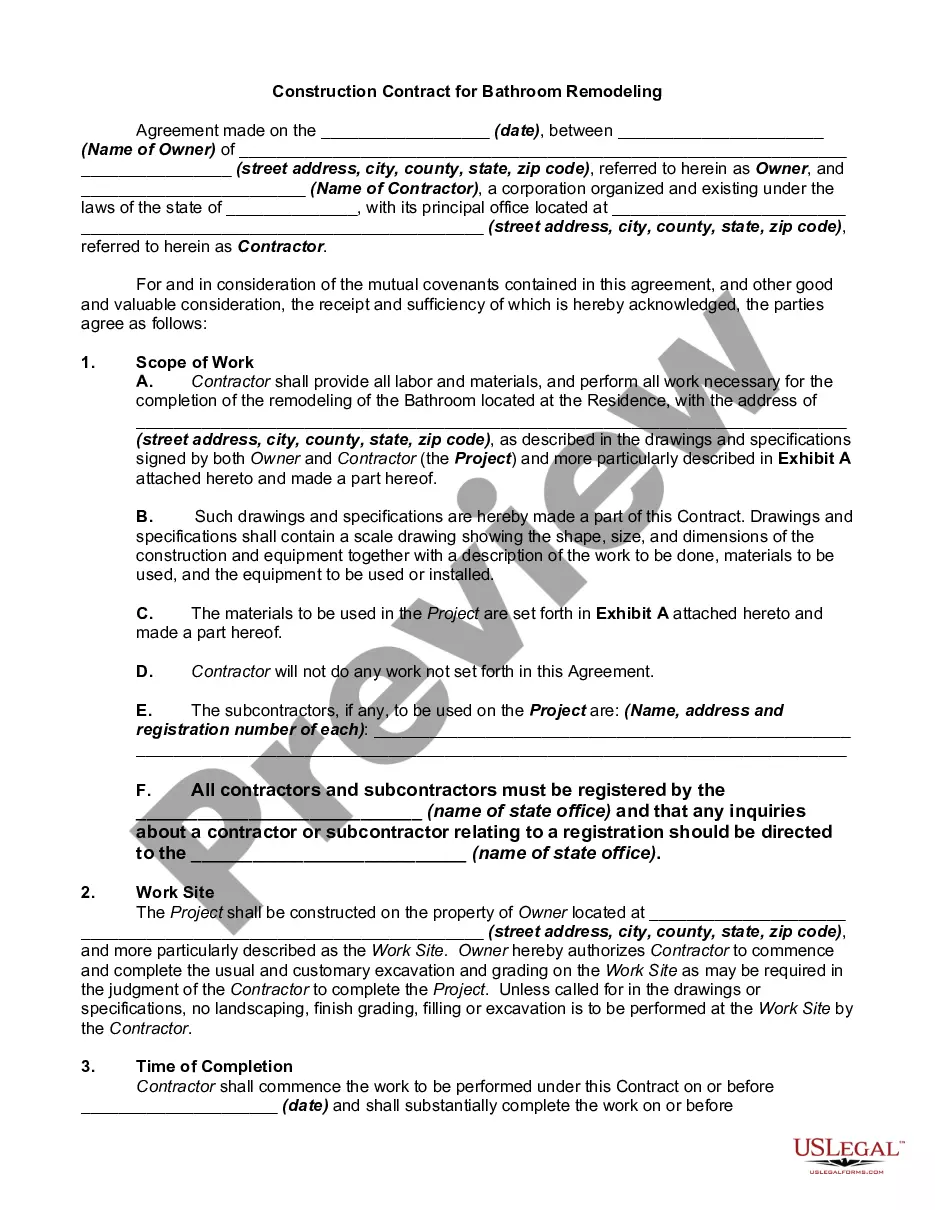
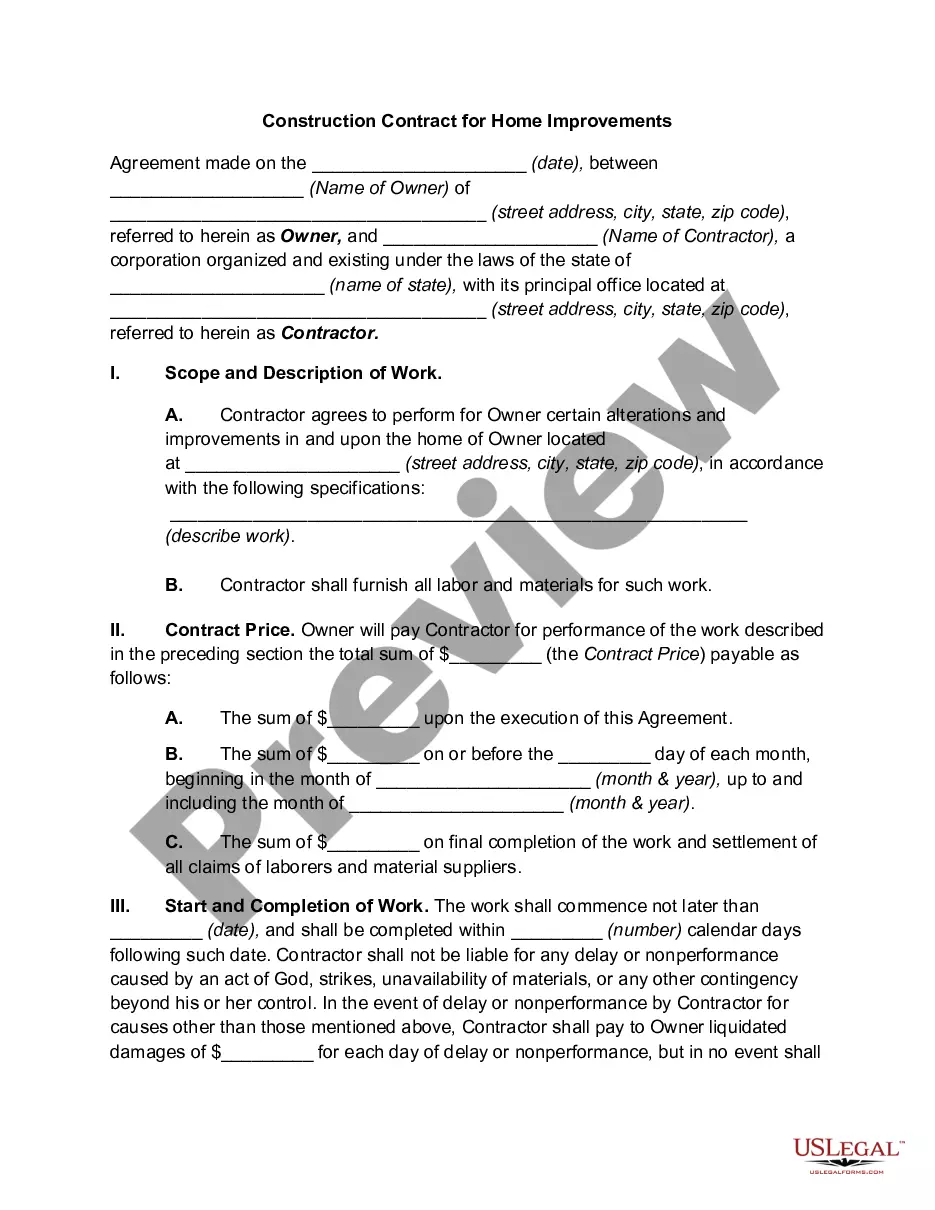
Get your form ready online
Our built-in tools help you complete, sign, share, and store your documents in one place.
Make edits, fill in missing information, and update formatting in US Legal Forms—just like you would in MS Word.
Download a copy, print it, send it by email, or mail it via USPS—whatever works best for your next step.
Sign and collect signatures with our SignNow integration. Send to multiple recipients, set reminders, and more. Go Premium to unlock E-Sign.
If this form requires notarization, complete it online through a secure video call—no need to meet a notary in person or wait for an appointment.
We protect your documents and personal data by following strict security and privacy standards.

Make edits, fill in missing information, and update formatting in US Legal Forms—just like you would in MS Word.

Download a copy, print it, send it by email, or mail it via USPS—whatever works best for your next step.

Sign and collect signatures with our SignNow integration. Send to multiple recipients, set reminders, and more. Go Premium to unlock E-Sign.

If this form requires notarization, complete it online through a secure video call—no need to meet a notary in person or wait for an appointment.

We protect your documents and personal data by following strict security and privacy standards.
Looking for another form?




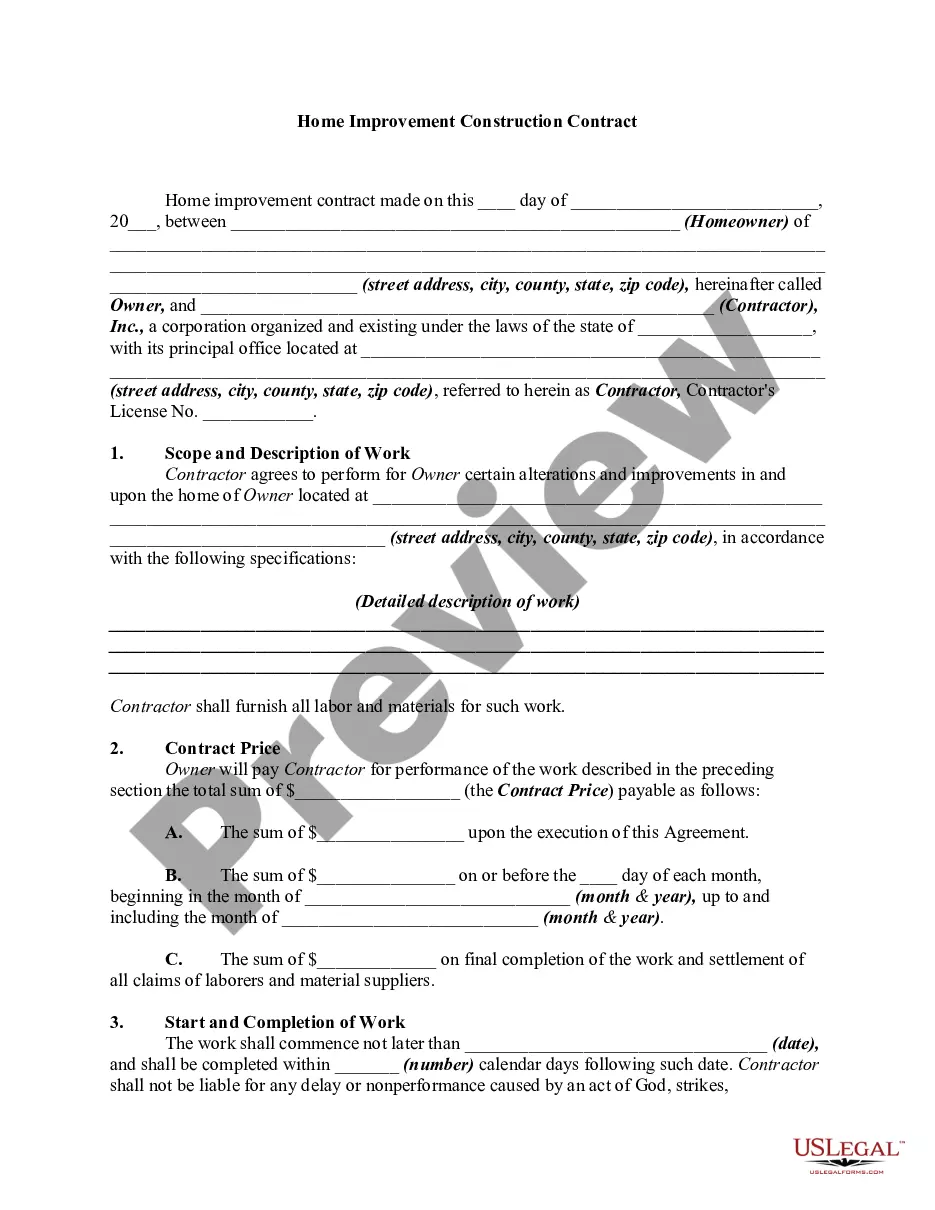
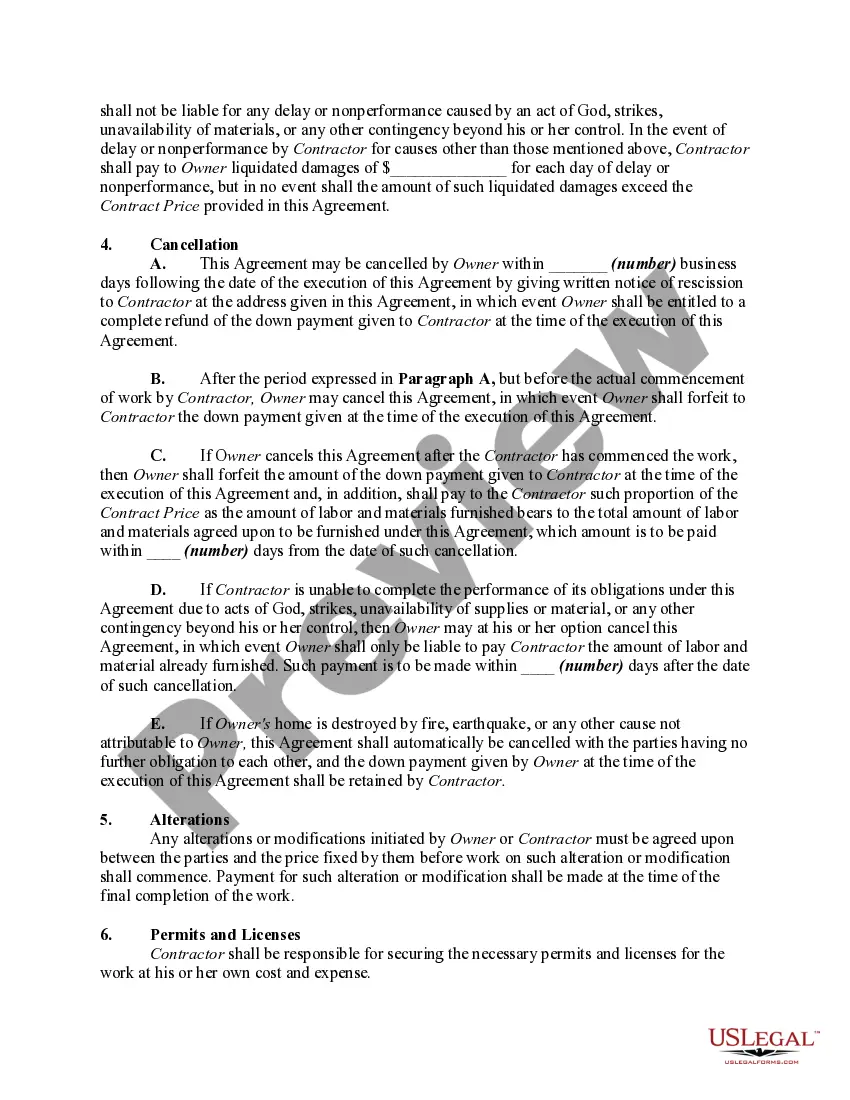
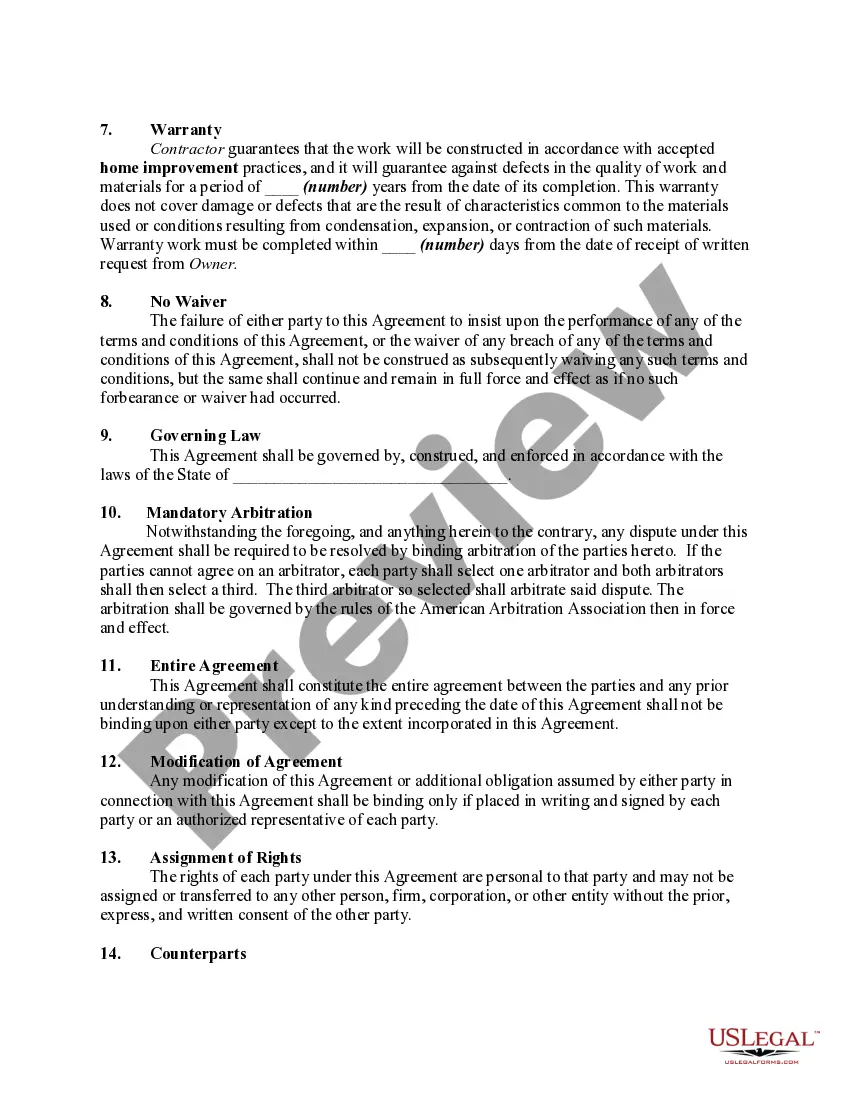
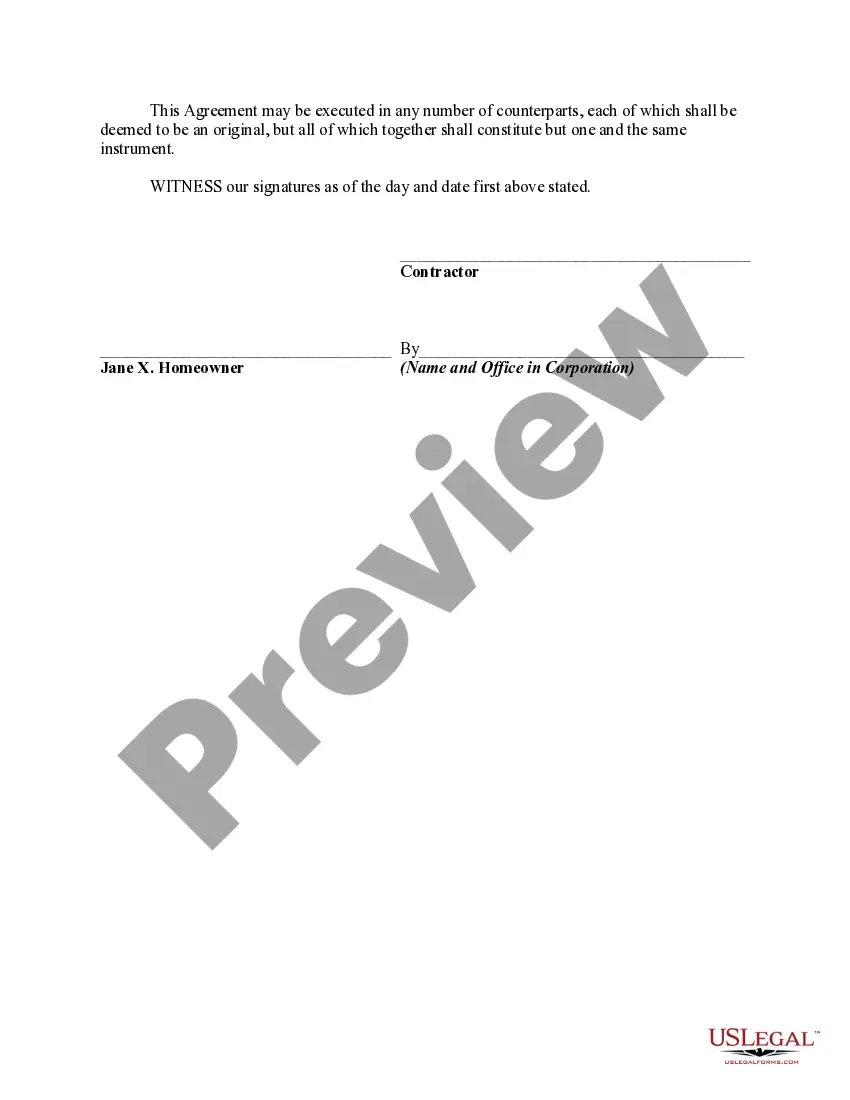
How to fill out Home Improvement Or Remodeling Construction Contract?
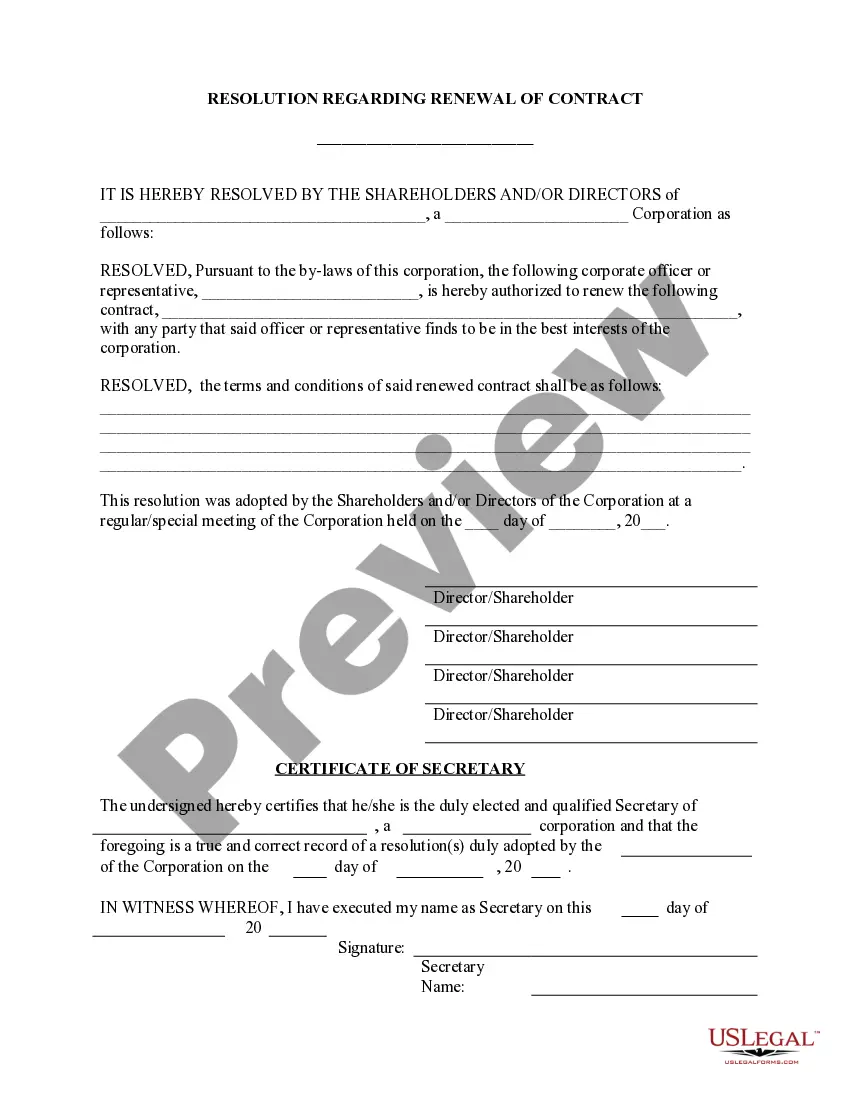
- Log into your US Legal Forms account if you're a returning user and download the remodeling contract template by clicking the Download button. Ensure your subscription is currently active. If not, renew it as per your payment plan.
- For first-time users, start by reviewing the Preview mode and form description to confirm you select the right remodeling contract template that complies with local jurisdiction requirements.
- If you need a different template, use the Search tab to locate any additional forms that may better suit your needs.
- Proceed to purchase your document by clicking on the Buy Now button and choosing a subscription plan. You'll need to create an account to access the library.
- Complete your purchase by entering your credit card details or using your PayPal account.
- Download the remodeling contract template and save it on your device for easy access. You can also find it later in the 'My Forms' section of your profile.
US Legal Forms stands out by offering a robust collection of over 85,000 fillable and editable legal forms, allowing users to find precisely what they need. Additionally, you can connect with premium experts for assistance in creating accurate and legally compliant documents.
Take control of your remodeling project today with US Legal Forms—start crafting your remodeling contract with the CEO now!
Form popularity
FAQ
To create a remodeling contract effectively, begin by gathering all relevant information about the project. Include descriptions of the work to be done, timelines, and a breakdown of costs. Using a platform like US Legal Forms can streamline this process, ensuring that your remodeling contract with the CEO meets all necessary legal requirements while providing a clear framework for the project.
A simple construction contract should include the project description, timelines, and payment terms. Clearly state the obligations of each party alongside any necessary licenses or permits involved in the process. If needed, implement a remodeling contract with the CEO to provide additional structure and clarity to the agreement.
Writing a remodeling contract requires careful attention to detail. Start by defining the project scope and including timelines and payment commitments. Be explicit about the responsibilities of each party, and consider using a remodeling contract with the CEO format that clearly states the project’s objectives while allowing flexibility for adjustments.
Making a home improvement contract involves stating the project's details, including the materials to be used and the anticipated timeline. It is essential to outline payment schedules and any warranties related to the work performed. Considering a remodeling contract with the CEO can help clarify the expectations, ensuring everyone is on the same page from the start.
To create your own contract agreement, start by identifying all parties involved and detailing the terms of the arrangement. Include clear specifications about the scope of work, payment terms, and any deadlines. A well-structured remodeling contract with the CEO should also outline how disputes will be resolved, ensuring that both parties understand their responsibilities.
Yes, a CEO can operate as an independent contractor, depending on the business structure and the terms of their engagement. When a CEO takes on consulting roles or oversees specific projects, they might enter into a remodeling contract with the CEO for specific tasks or services. This arrangement allows flexibility and often includes tailored compensation terms.
A remodeling contract with the CEO can suffer from poor writing through vague clauses, excessive jargon, incomplete terms, and lack of specificity. Ambiguous language can lead to misinterpretations, while unnecessary technical terms might confuse parties not familiar with industry jargon. Similarly, failing to identify all necessary components or leaving out vital details can result in disputes. Clear, direct communication is key to a successful contract.
The rules of contract construction involve principles like interpreting contracts in good faith, ensuring clarity in terms, and adhering to local laws, which are crucial for any remodeling contract with the CEO. Courts often look at the intent of the parties and the agreed-upon terms to resolve disputes. Clear definitions and structured clauses contribute significantly to mitigating misinterpretations. Following these rules can lead to smoother project execution and satisfaction for all parties.
A remodeling contract with the CEO may be deemed invalid if it lacks essential elements such as mutual consent or if it includes illegal terms. Additionally, contracts signed under duress or by an individual who does not have the legal capacity can be rendered void. Misrepresentation of facts or failure to meet state regulations can also invalidate a contract. Understanding these pitfalls can help you craft a robust agreement.
CEO contracts typically outline the terms of employment, including responsibilities, compensation, and duration, all of which can be especially relevant in a remodeling contract with the CEO. These contracts serve as binding agreements that clarify the relationship between the CEO and the company. In the context of construction, these agreements may also include specific conditions related to project management and decision-making authority. Clarity in these terms is key to fostering a productive work environment.