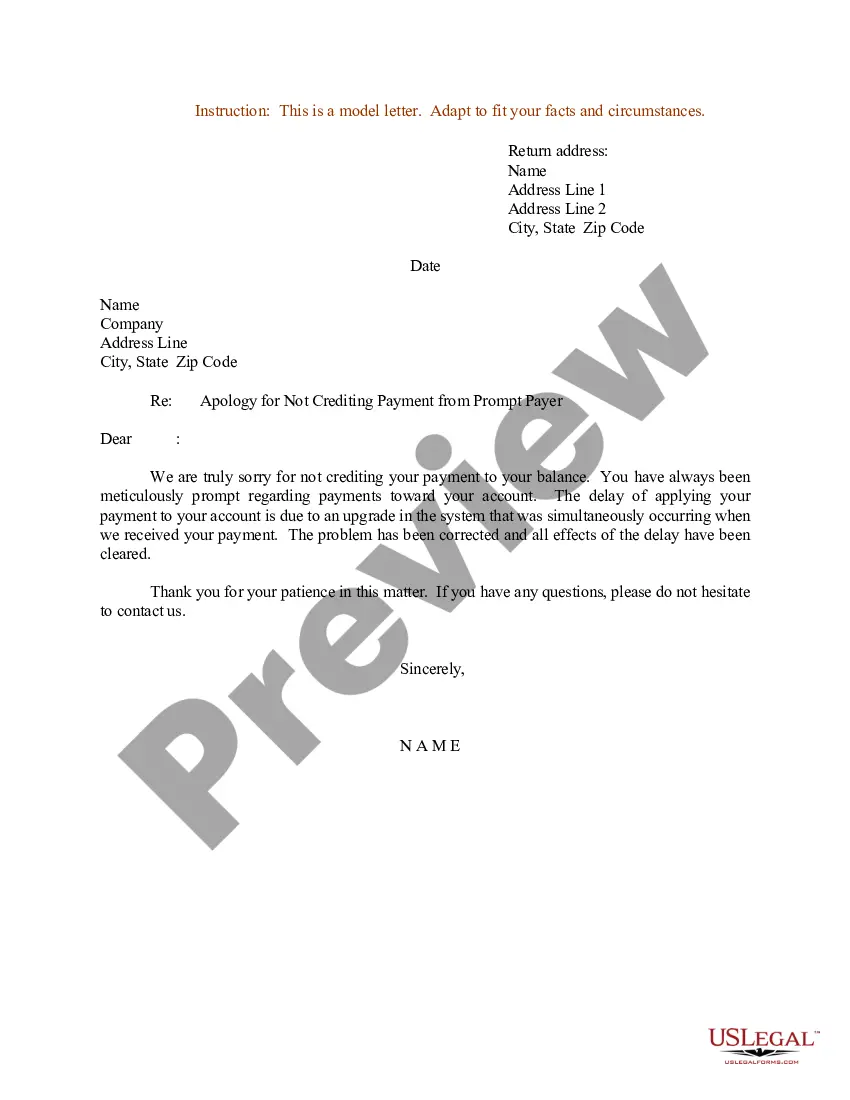
Apology Statement Example
Description
Get your form ready online
Our built-in tools help you complete, sign, share, and store your documents in one place.
Make edits, fill in missing information, and update formatting in US Legal Forms—just like you would in MS Word.
Download a copy, print it, send it by email, or mail it via USPS—whatever works best for your next step.
Sign and collect signatures with our SignNow integration. Send to multiple recipients, set reminders, and more. Go Premium to unlock E-Sign.
If this form requires notarization, complete it online through a secure video call—no need to meet a notary in person or wait for an appointment.
We protect your documents and personal data by following strict security and privacy standards.

Make edits, fill in missing information, and update formatting in US Legal Forms—just like you would in MS Word.

Download a copy, print it, send it by email, or mail it via USPS—whatever works best for your next step.

Sign and collect signatures with our SignNow integration. Send to multiple recipients, set reminders, and more. Go Premium to unlock E-Sign.

If this form requires notarization, complete it online through a secure video call—no need to meet a notary in person or wait for an appointment.

We protect your documents and personal data by following strict security and privacy standards.
Looking for another form?

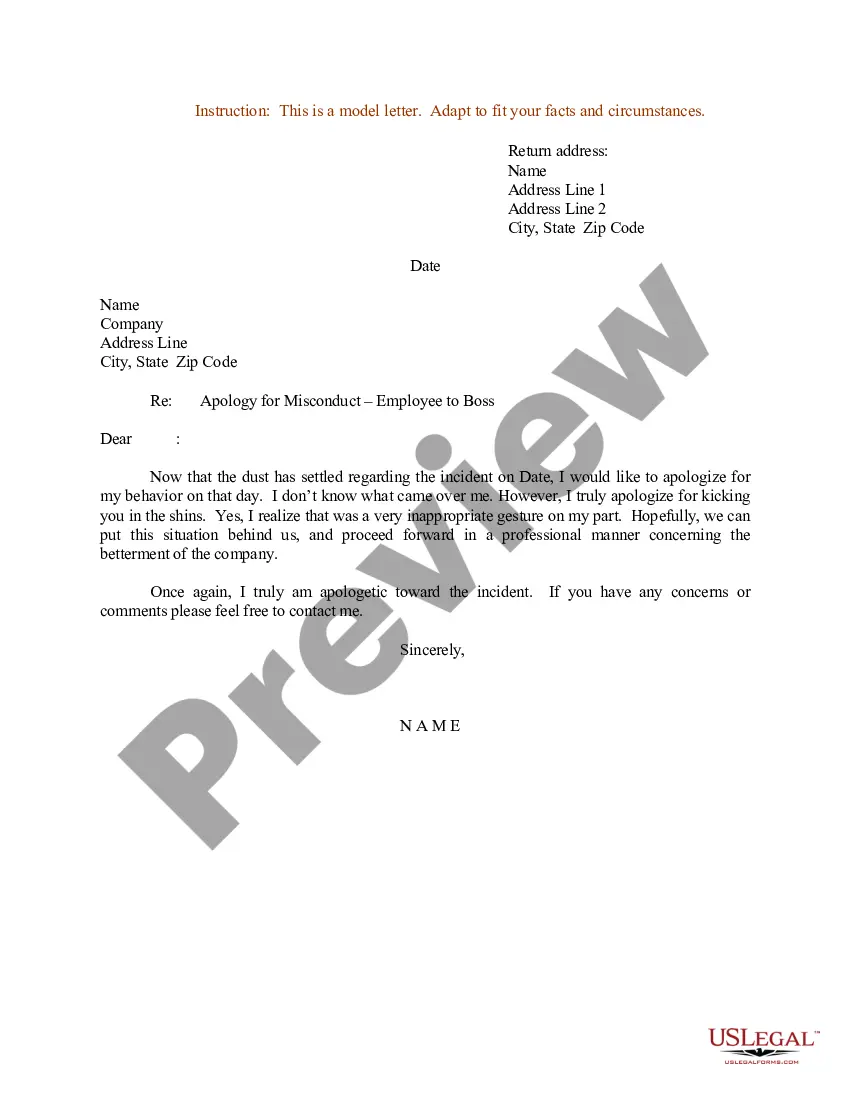



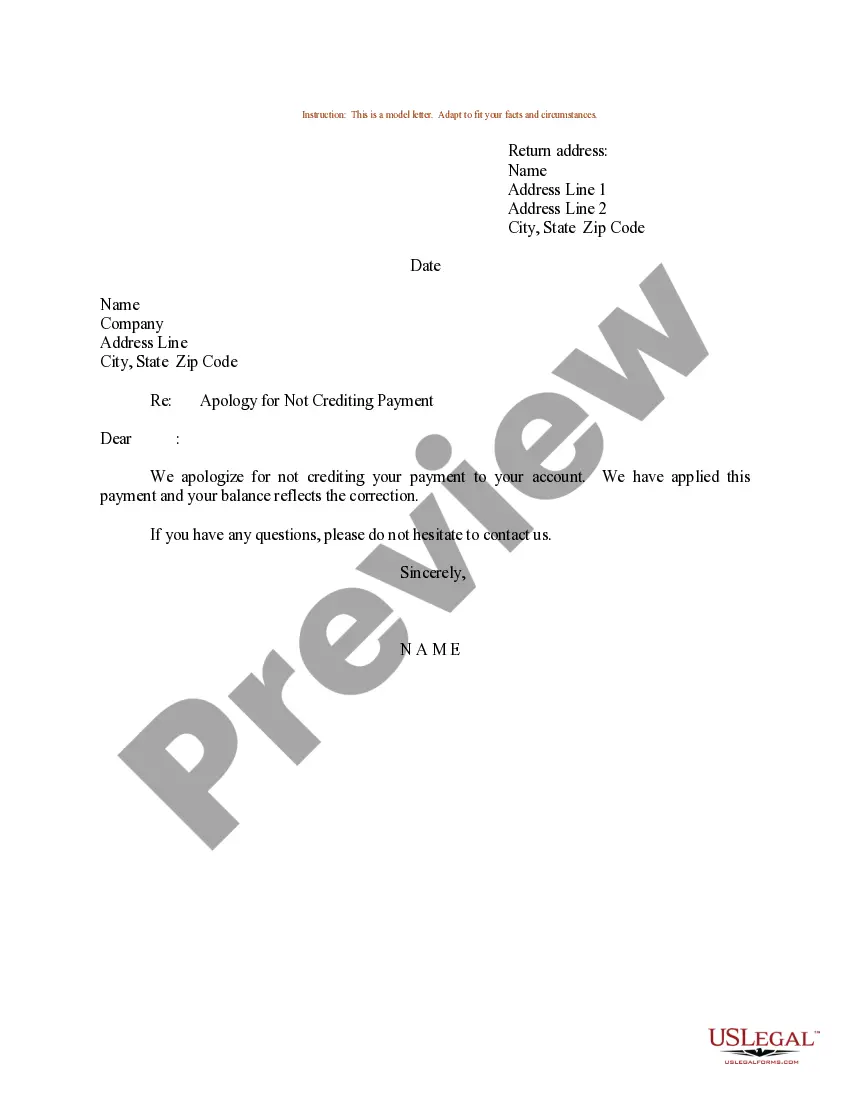
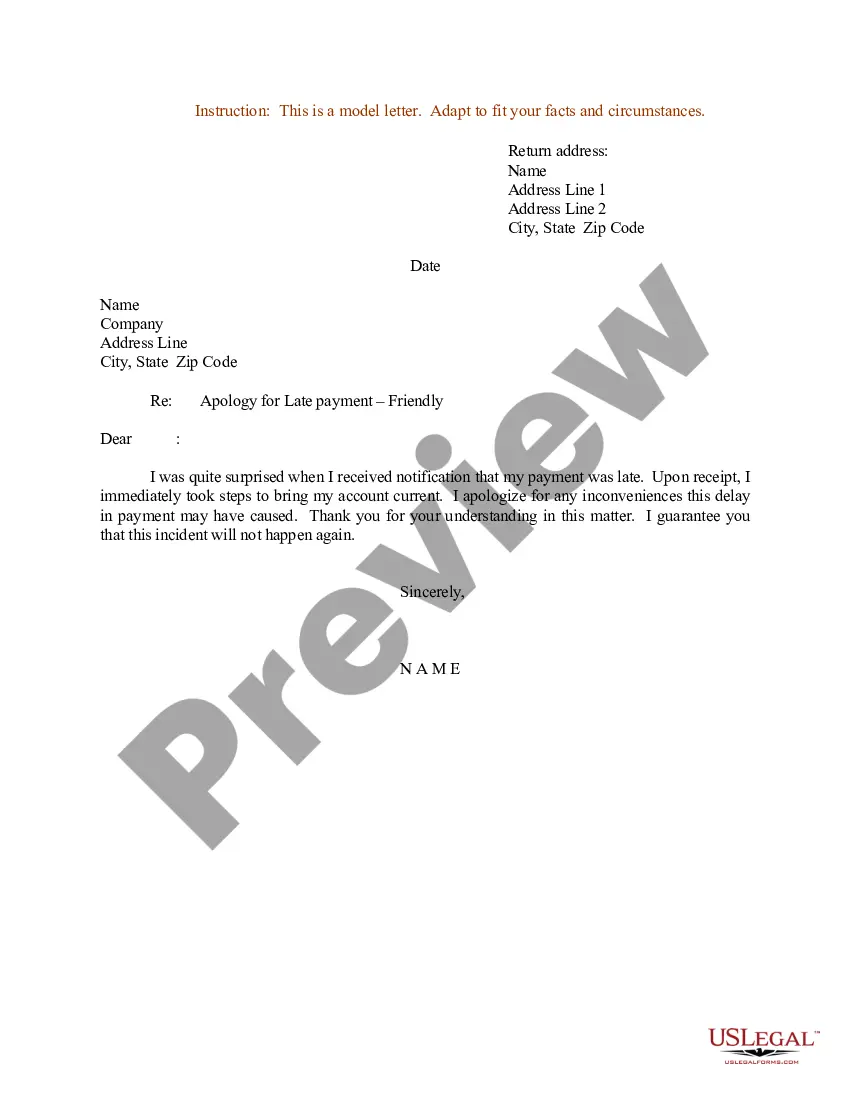
How to fill out Sample Letter For Apology For Not Crediting Payment From Prompt Payer?
Acquiring legal template samples that comply with federal and state regulations is essential, and the internet presents numerous alternatives available for selection.
However, what is the purpose of spending time searching for the suitable Apology Statement Example sample online when the US Legal Forms digital library already compiles such templates in one location.
US Legal Forms is the top digital legal repository boasting over 85,000 editable templates created by lawyers for various professional and personal situations. They are straightforward to navigate with all documents organized by state and intended use. Our specialists keep up with legislative changes, ensuring that you can rely on your form being current and compliant when acquiring an Apology Statement Example from our site.
Every document you find through US Legal Forms is reusable. To re-download and finalize documents previously acquired, navigate to the My documents section in your account. Take advantage of the most comprehensive and user-friendly legal documentation service!
- Obtaining an Apology Statement Example is simple and fast for both existing and new users.
- If you already own an account with an active subscription, sign in and save the required document sample in the correct format.
- If you are a new visitor to our website, follow these steps.
- Review the template using the Preview option or through the text description to ensure it meets your requirements.
- Use the search functionality at the top of the page to find another sample if necessary.
- Click Buy Now after you’ve found the appropriate form and choose a subscription plan.
- Create an account or Log In and complete your payment with PayPal or a credit card.
- Choose the most suitable format for your Apology Statement Example and download it.
Form popularity
FAQ
4 essential estate planning documents A will distributes assets upon death. A power of attorney manages finances. Advance care directives manage your health. A living trust is an alternative to a last will.
While there is no set deadline for when an executor must settle an estate in North Carolina, as previously stated it can take several years for this to happen, the executor is responsible for meeting several key deadlines throughout probate proceedings.
Administering an uncontested probate and estate administration in North Carolina generally takes between six months to a year. The process and time involved can vary depending upon the nature and complexity of the Estate.
For intestate estates, during estate administration, the court will appoint an administrator (similar to an executor) to handle the process, which includes paying the deceased's debts, funeral expenses, court and administrative fees before distributing the deceased's assets to his or her heirs.
For small estates, North Carolina has a simplified process which allows you to wrap up the estate without formal probate. This process applies to estates with personal property valued at $20,000, or $30,000 if the surviving spouse inherits everything under state law.
However, if you do die intestate, the probate court estate administrator takes an inventory of your assets, paying off any outstanding tax debts or other collectors, covering the costs of your funeral and burial expenses, and distributing any remaining assets to the applicable family members ing to the North ...
North Carolina's Intestate Succession Laws If the decedent had two children, the surviving spouse will only receive a one-third interest in the real property. If you die without a surviving spouse, your assets will generally pass to your children. If you have no children, your parents will receive the estate.