To Quiet Title
Description
Get your form ready online
Our built-in tools help you complete, sign, share, and store your documents in one place.
Make edits, fill in missing information, and update formatting in US Legal Forms—just like you would in MS Word.
Download a copy, print it, send it by email, or mail it via USPS—whatever works best for your next step.
Sign and collect signatures with our SignNow integration. Send to multiple recipients, set reminders, and more. Go Premium to unlock E-Sign.
If this form requires notarization, complete it online through a secure video call—no need to meet a notary in person or wait for an appointment.
We protect your documents and personal data by following strict security and privacy standards.

Make edits, fill in missing information, and update formatting in US Legal Forms—just like you would in MS Word.

Download a copy, print it, send it by email, or mail it via USPS—whatever works best for your next step.

Sign and collect signatures with our SignNow integration. Send to multiple recipients, set reminders, and more. Go Premium to unlock E-Sign.

If this form requires notarization, complete it online through a secure video call—no need to meet a notary in person or wait for an appointment.

We protect your documents and personal data by following strict security and privacy standards.
Looking for another form?



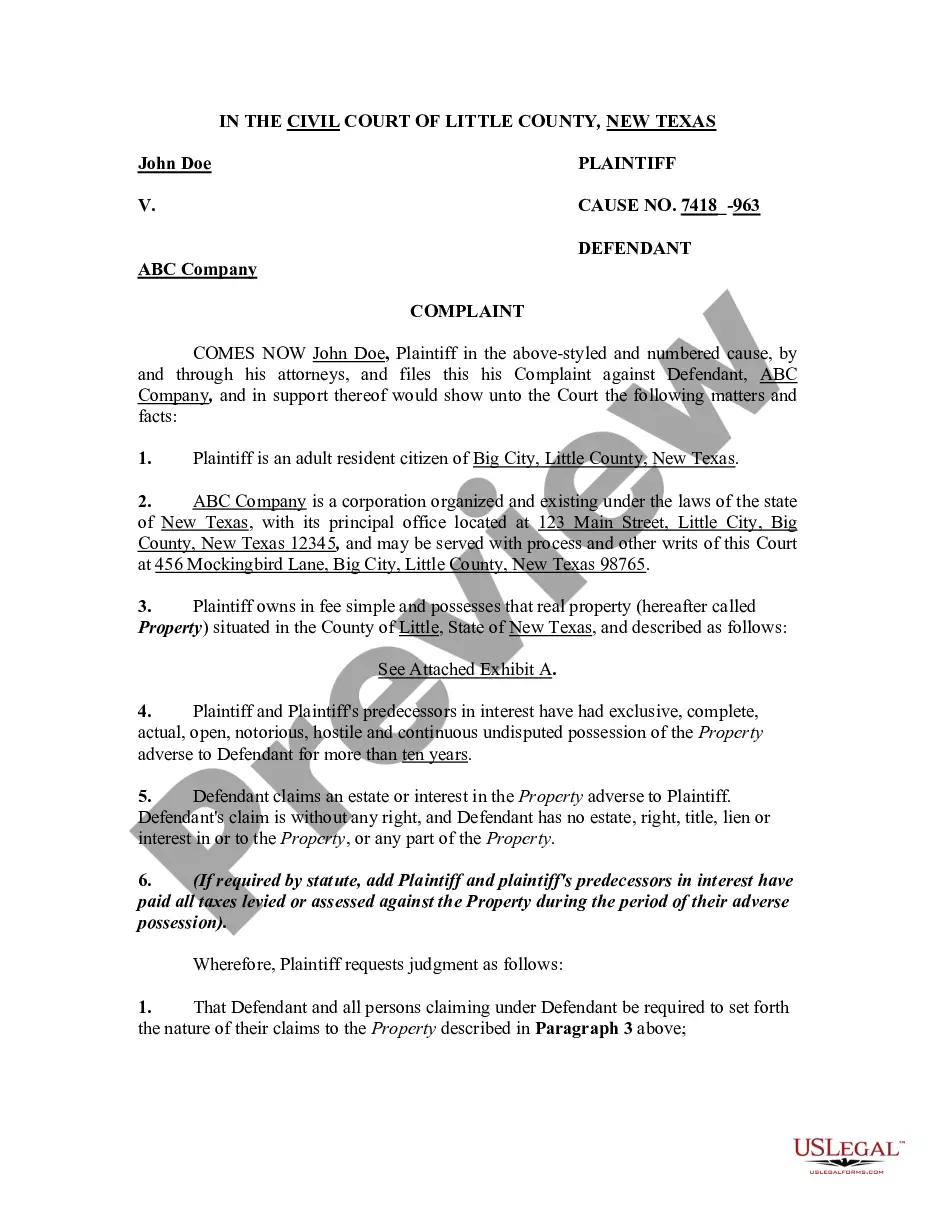
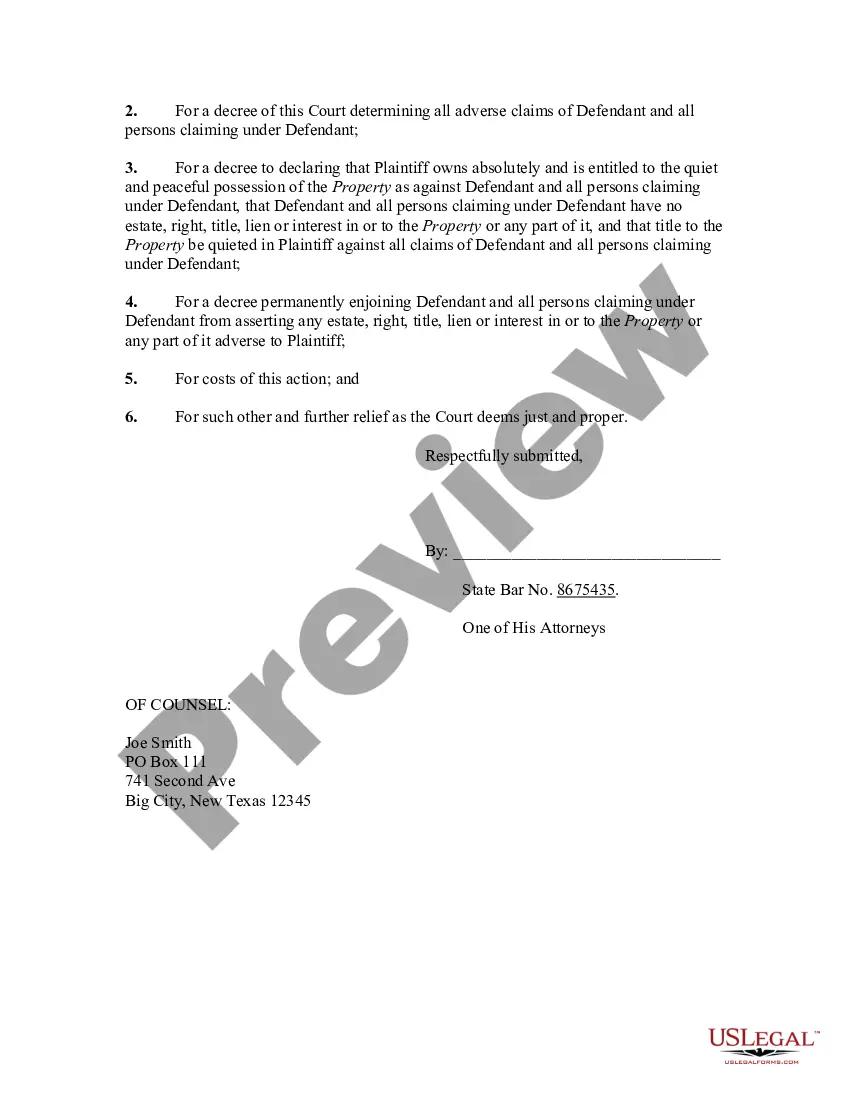
How to fill out Complaint To Quiet Title By Person Claiming Adverse Possession - Squatters Rights?
- If you’re a returning user, log in to your account and download the required form template by clicking the Download button, ensuring your subscription is active. If it's expired, renew it according to your payment plan.
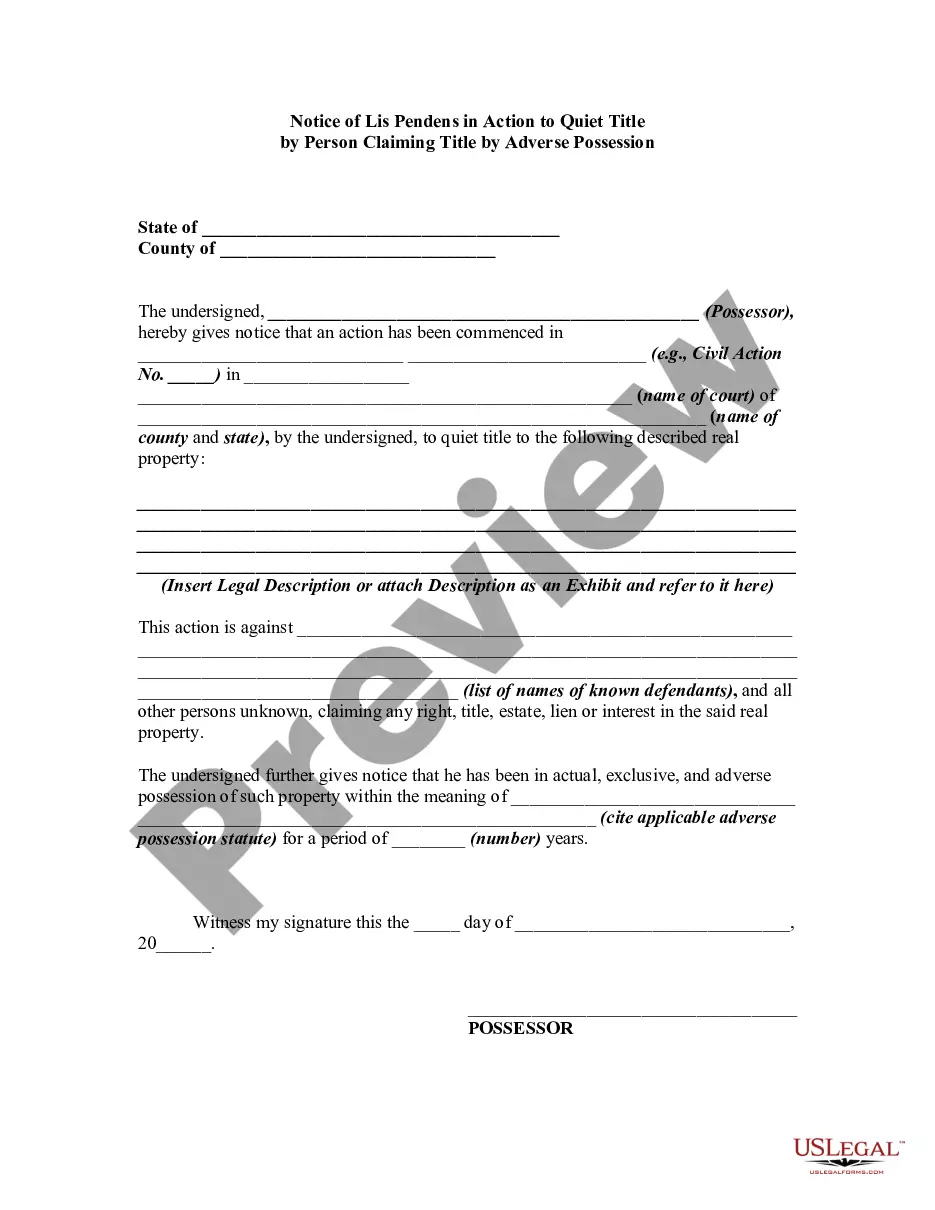
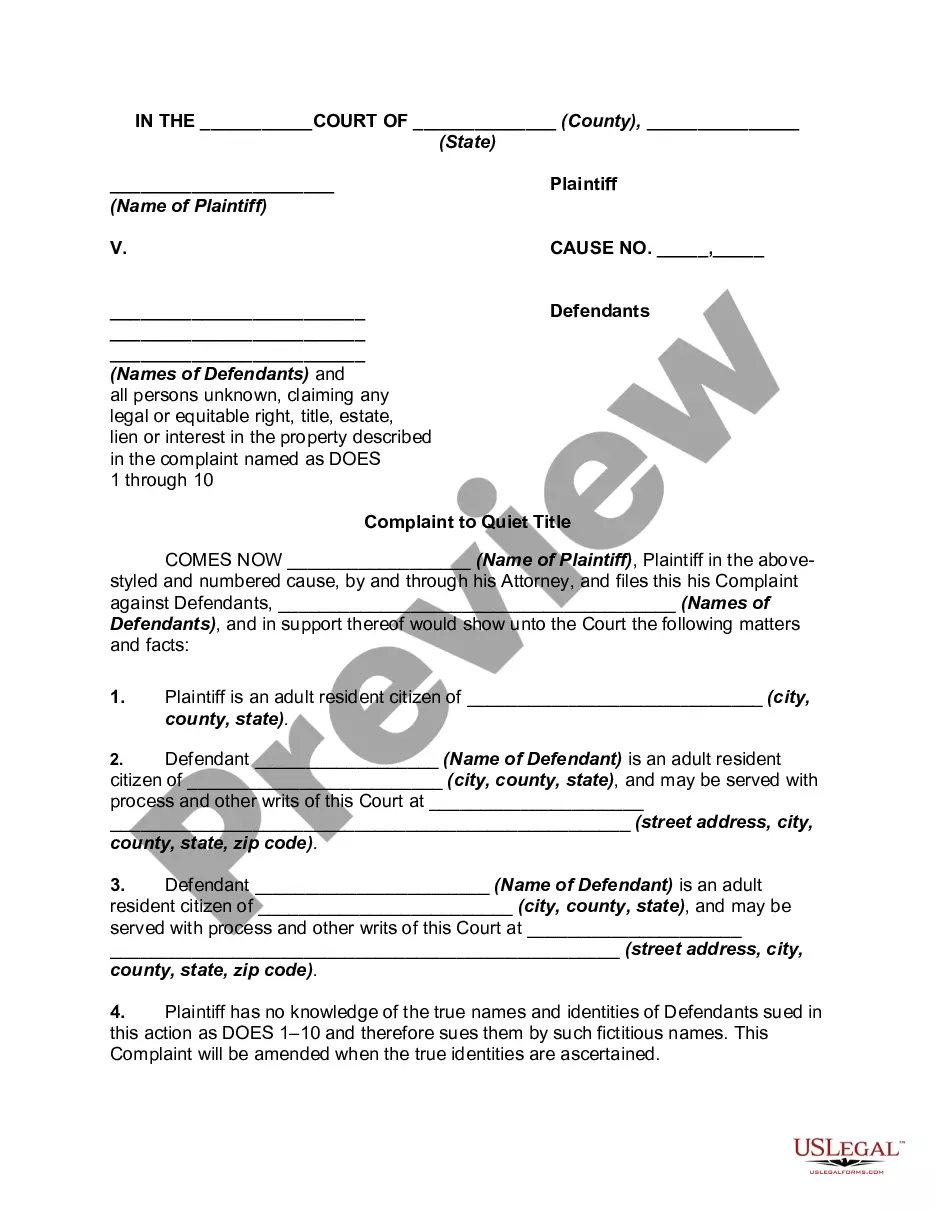
- For first-time users, start by reviewing the form description and Preview mode to confirm you've selected a template that aligns with your needs and complies with your local jurisdiction.
- If you identify any discrepancies or need additional forms, use the Search feature at the top of the page to find alternatives that meet your criteria.
- Proceed to purchase the document by clicking the Buy Now button and selecting your preferred subscription plan. You will need to register for an account to gain access to the full library.
- Complete your purchase by entering your credit card information or using your PayPal account for payment.
- After the transaction is successful, download your form and save it to your device. You can also access it anytime in the My Forms section of your profile.
Utilizing US Legal Forms not only ensures you have the correct document but also connects you with premium experts who can assist in completing the forms accurately.
By following these steps, you can efficiently quiet title and resolve property ownership issues. Start your journey today with US Legal Forms for a streamlined legal experience!
Form popularity
FAQ
No, a quitclaim deed is not the same as a quiet title. A quitclaim deed transfers interest in a property without warranty; it simply conveys whatever rights the grantor has. In contrast, to quiet title is a legal action that aims to remove uncertainties from property ownership. Thus, if you want to ensure clear title, pursuing a quiet title action would be the best option.
Quitclaims are often viewed with caution because they transfer ownership without guarantees. When you use a quitclaim deed, you relinquish your rights to the property, but it does not guarantee that the title is clear. This lack of assurance makes it risky, especially if there are unresolved claims or liens. Therefore, for a more secure transaction, consider the benefits of using a quiet title action instead.
To quiet title is a legal action taken to establish clear ownership of a property. This process resolves disputes over property claims and removes any clouds on the title. When you quiet title, you receive a court order affirming your ownership, which is crucial for future transactions. Thus, understanding how to quiet title can provide you with peace of mind regarding your property rights.
While it is possible to pursue a quiet title action independently, navigating the legal system can be complex. You need to understand the specific requirements and gather necessary documentation. If you feel uncertain, using a platform like US Legal Forms can provide templates and resources that simplify this process. However, consulting with a legal expert may ultimately safeguard your interests.
When writing for a quiet title action, you should start by outlining your property description, including parcel numbers and location. Next, clearly state your claim and the reasons for seeking the quiet title, referencing any legal grounds or evidence. You may benefit from using a template or guidance from a legal expert to ensure that your document meets the specific requirements for court submission.
A deed represents the official ownership of property, while a quiet title action is a legal process to resolve disputes about ownership. While a deed transfers property rights, quiet title aims to eliminate any claims or clouds on the title. Understanding this distinction is vital when considering actions related to property rights and ownership clarity.
To successfully quiet title, it is essential to present clear and convincing evidence regarding your ownership. You should gather all pertinent documents, such as property tax records, title insurance policies, and historical deeds. Engaging a legal professional can also enhance your chances of success, as they can help argue your case persuasively. Thorough preparation is crucial for this legal action.
The timeline to quiet title in Texas can vary based on several factors, including the complexity of the case and the court's schedule. Typically, the process can take several months. However, ensuring all documentation is in order and addressing any disputes promptly can help accelerate the process. Patience and diligence are key as you work through the legal requirements to quiet title.
To quiet title, you must carefully review the claims against your property. Begin by gathering necessary documentation, such as past deeds and survey reports. Next, prepare your legal response, including any objections you may have. If you choose to, consulting with a legal expert can help you navigate this process more effectively.
To be successful in a quiet title action, you should gather all relevant documents related to your ownership and any challenges others may pose. It's essential to demonstrate clear, uninterrupted ownership of the property. Additionally, being prepared for any counterclaims will strengthen your position. USLegalForms offers tools and templates that can guide you through this process, making it easier to compile your evidence and present a robust case.