Explain Summary Judgment
Description
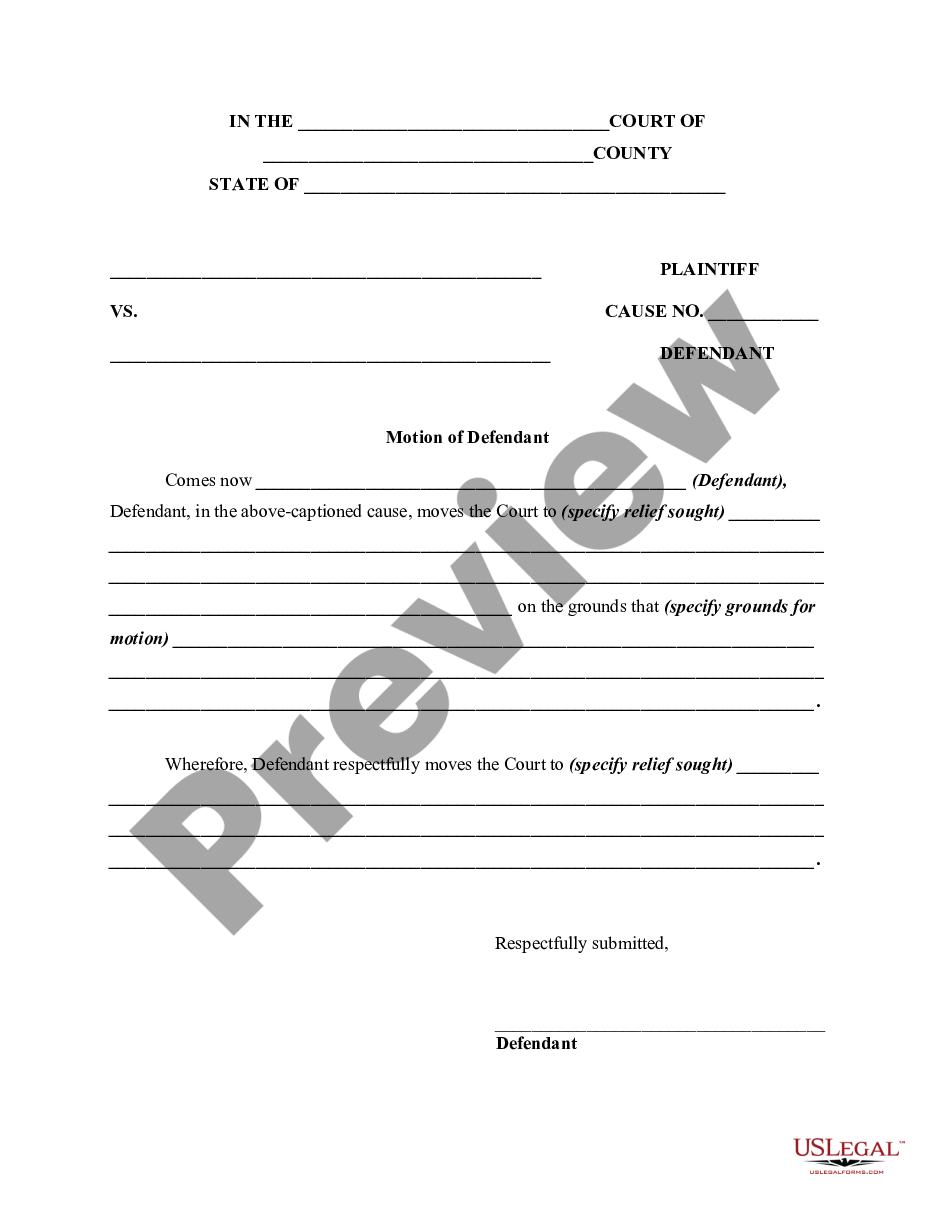
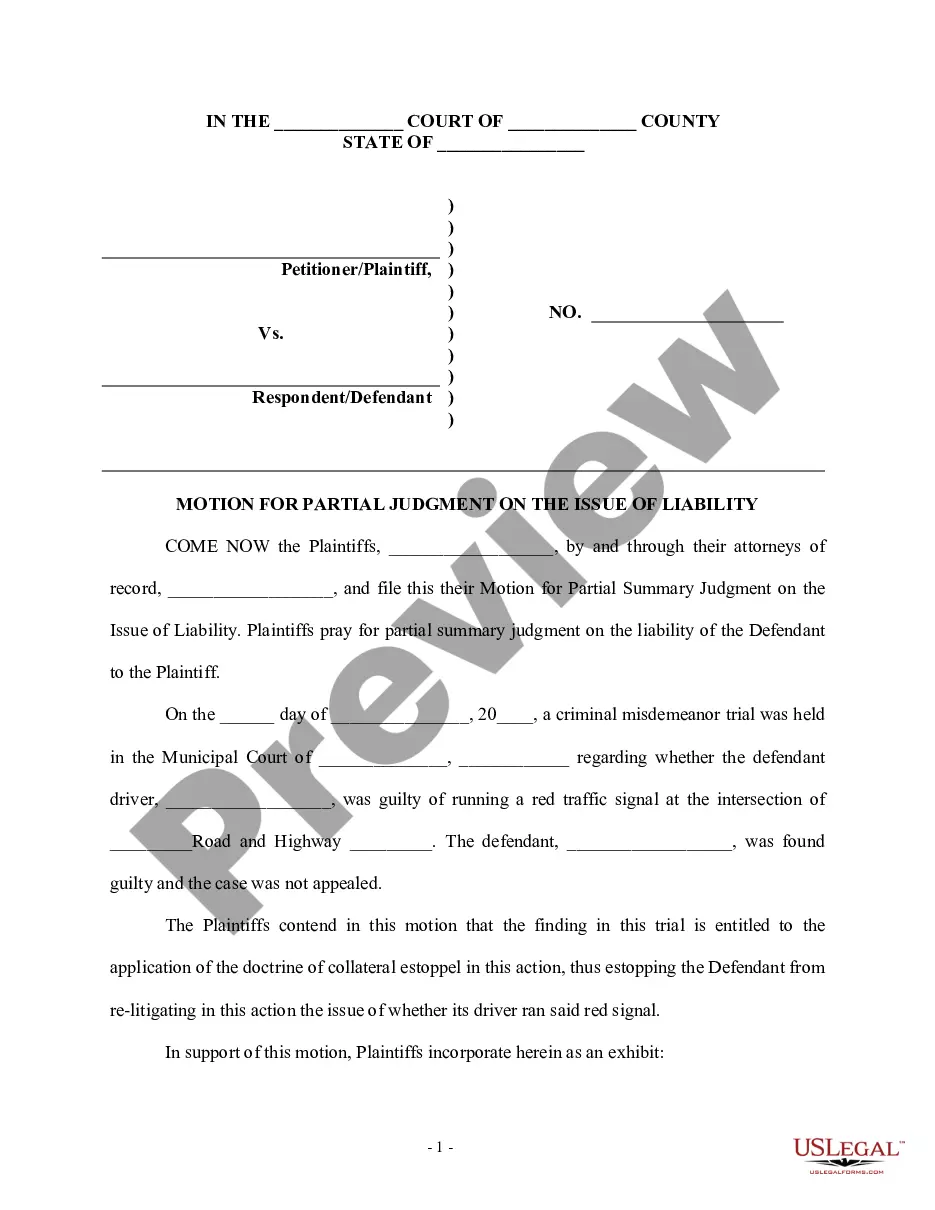
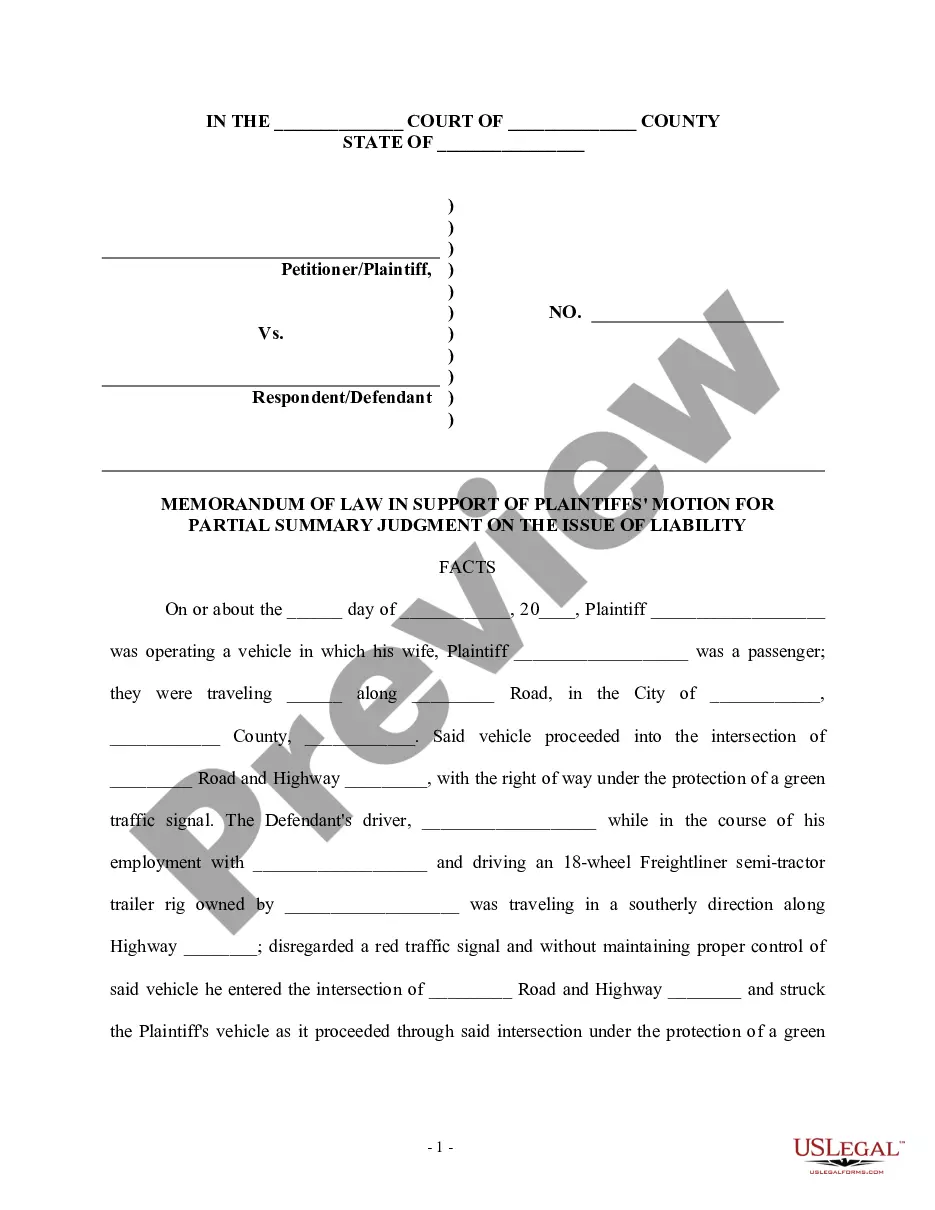
Get your form ready online
Our built-in tools help you complete, sign, share, and store your documents in one place.
Make edits, fill in missing information, and update formatting in US Legal Forms—just like you would in MS Word.
Download a copy, print it, send it by email, or mail it via USPS—whatever works best for your next step.
Sign and collect signatures with our SignNow integration. Send to multiple recipients, set reminders, and more. Go Premium to unlock E-Sign.
If this form requires notarization, complete it online through a secure video call—no need to meet a notary in person or wait for an appointment.
We protect your documents and personal data by following strict security and privacy standards.

Make edits, fill in missing information, and update formatting in US Legal Forms—just like you would in MS Word.

Download a copy, print it, send it by email, or mail it via USPS—whatever works best for your next step.

Sign and collect signatures with our SignNow integration. Send to multiple recipients, set reminders, and more. Go Premium to unlock E-Sign.

If this form requires notarization, complete it online through a secure video call—no need to meet a notary in person or wait for an appointment.

We protect your documents and personal data by following strict security and privacy standards.
Looking for another form?







How to fill out General Form Of Partial Motion For Summary Judgment By Plaintiff On Issue Of Liability With Notice Of Motion And With Request For Separate Trial On Issue Of Damages?
Creating legal documents from the beginning can occasionally be intimidating.
Certain situations may require numerous hours of investigation and substantial financial investment.
If you seek a simpler and more cost-effective method for generating Explain Summary Judgment or any other documents without unnecessary complications, US Legal Forms is always available to assist you.
Our online repository of over 85,000 current legal forms caters to nearly every aspect of your financial, legal, and personal issues. With just a few clicks, you can swiftly obtain state- and county-compliant documents meticulously assembled for you by our legal experts.
Ensure the template you choose aligns with the stipulations of your state and county. Select the most appropriate subscription plan to obtain the Explain Summary Judgment. Download the file, then complete, sign, and print it. US Legal Forms has a solid reputation and over 25 years of experience. Join us today and make form completion a simple and efficient process!
- Utilize our platform whenever you require trustworthy and dependable services through which you can effortlessly discover and download the Explain Summary Judgment.
- If you’re familiar with our website and have previously established an account with us, simply Log In to your account, find the template, and download it or re-download it anytime later from the My documents section.
- Not registered yet? No worries. It takes minimal time to create an account and browse the catalog.
- However, before proceeding to download Explain Summary Judgment, adhere to these recommendations.
- Review the document preview and descriptions to confirm that you are on the document you need.
Form popularity
FAQ
Stated differently, to successfully defend against summary judgment the non-moving party (you) should seek to demonstrate that indeed there are material facts in dispute. Alternatively, the non-moving party (you) can argue that the undisputed facts support a judgment as a matter of law in your favor.
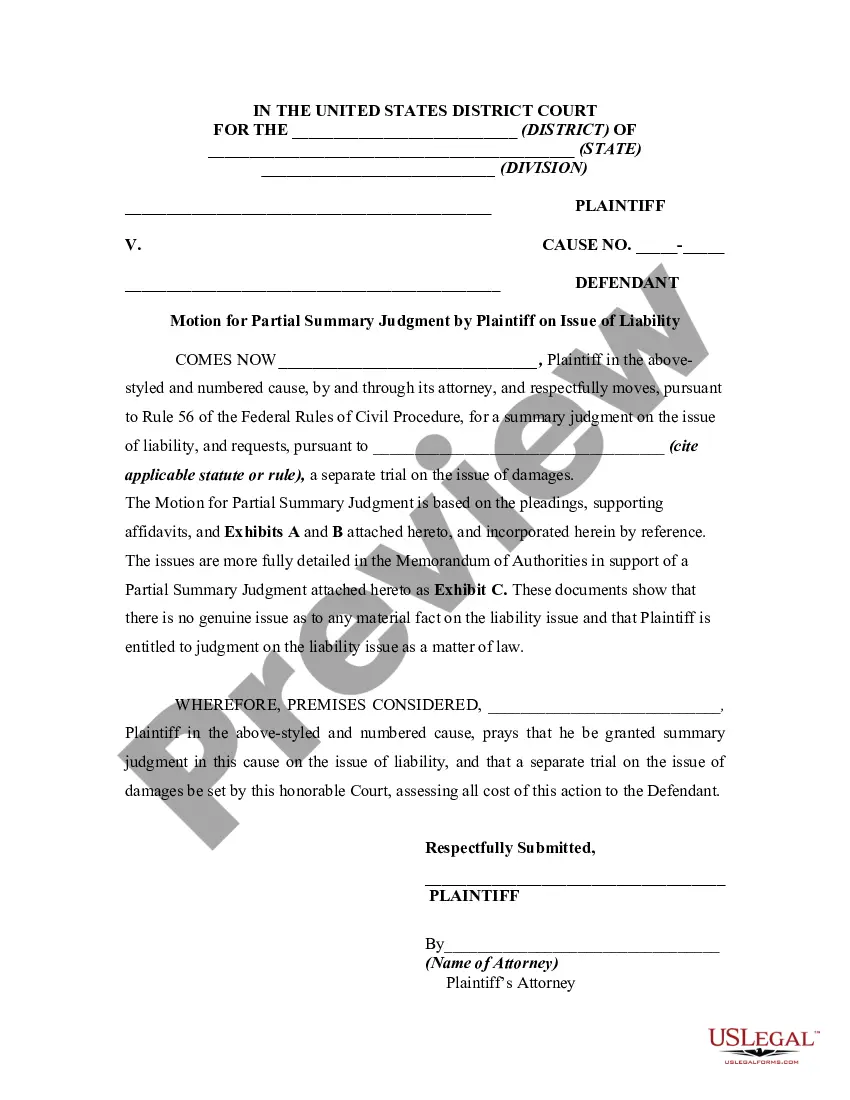
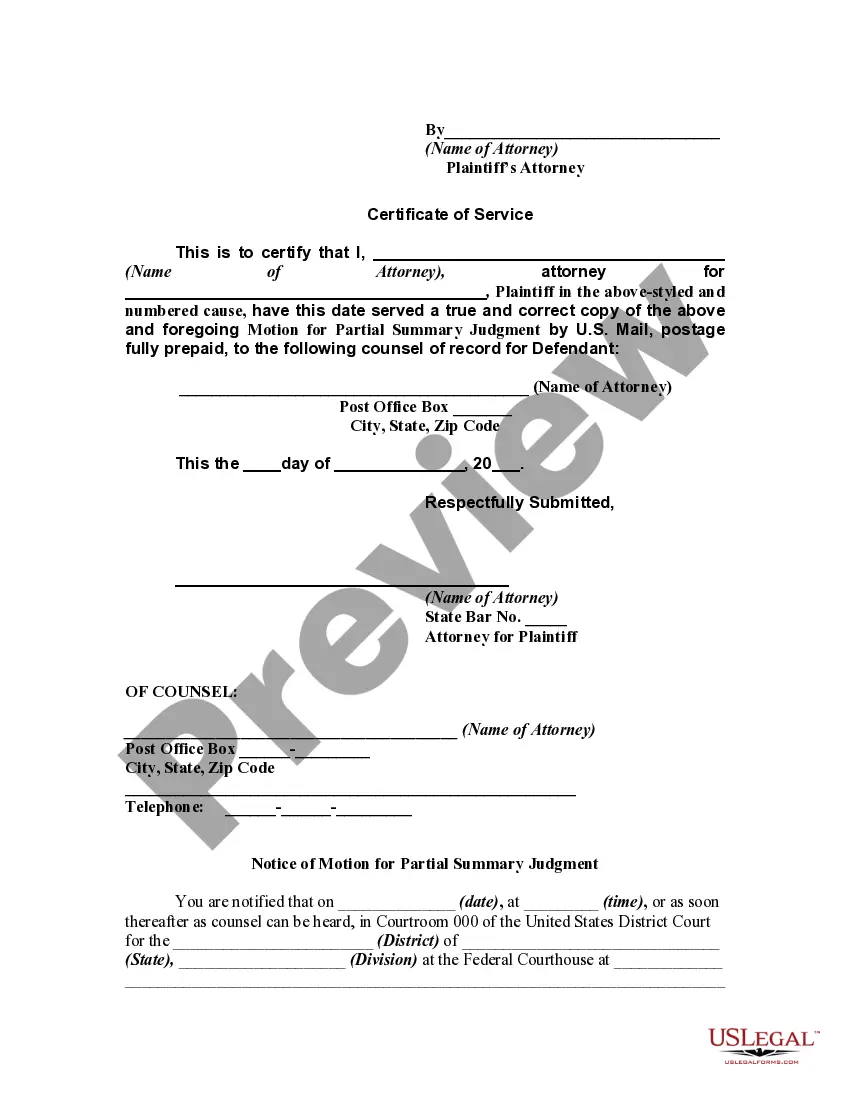
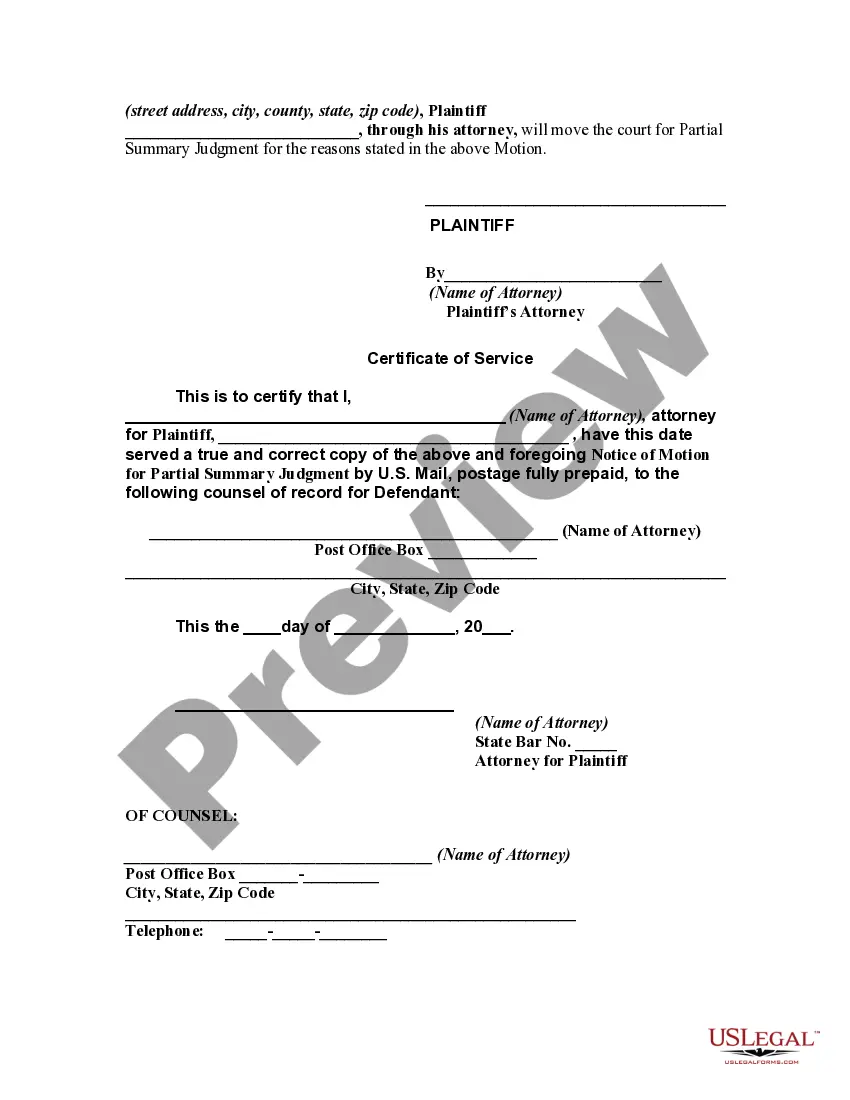
Judges may grant partial summary judgment. For example, a judge might rule on some factual issues, but leave others for trial. Alternately, a judge might grant summary judgment regarding liability, but still hold a trial to determine damages.
All trials under the simplified procedure are summary trials, unless a judge orders otherwise. A summary judgment motion can be used by a plaintiff or a defendant to ask the court to decide if there is any issue in the case that requires a trial. If the court decides a trial is not needed, it may grant judgment.
Examples of summary judgement motions John says that Linda ran a red light and caused the crash. John happens to have a video of Linda running the red light and crashing into him. John's attorney files a motion for summary judgment claiming that: There are no material facts that can be reasonably disputed.
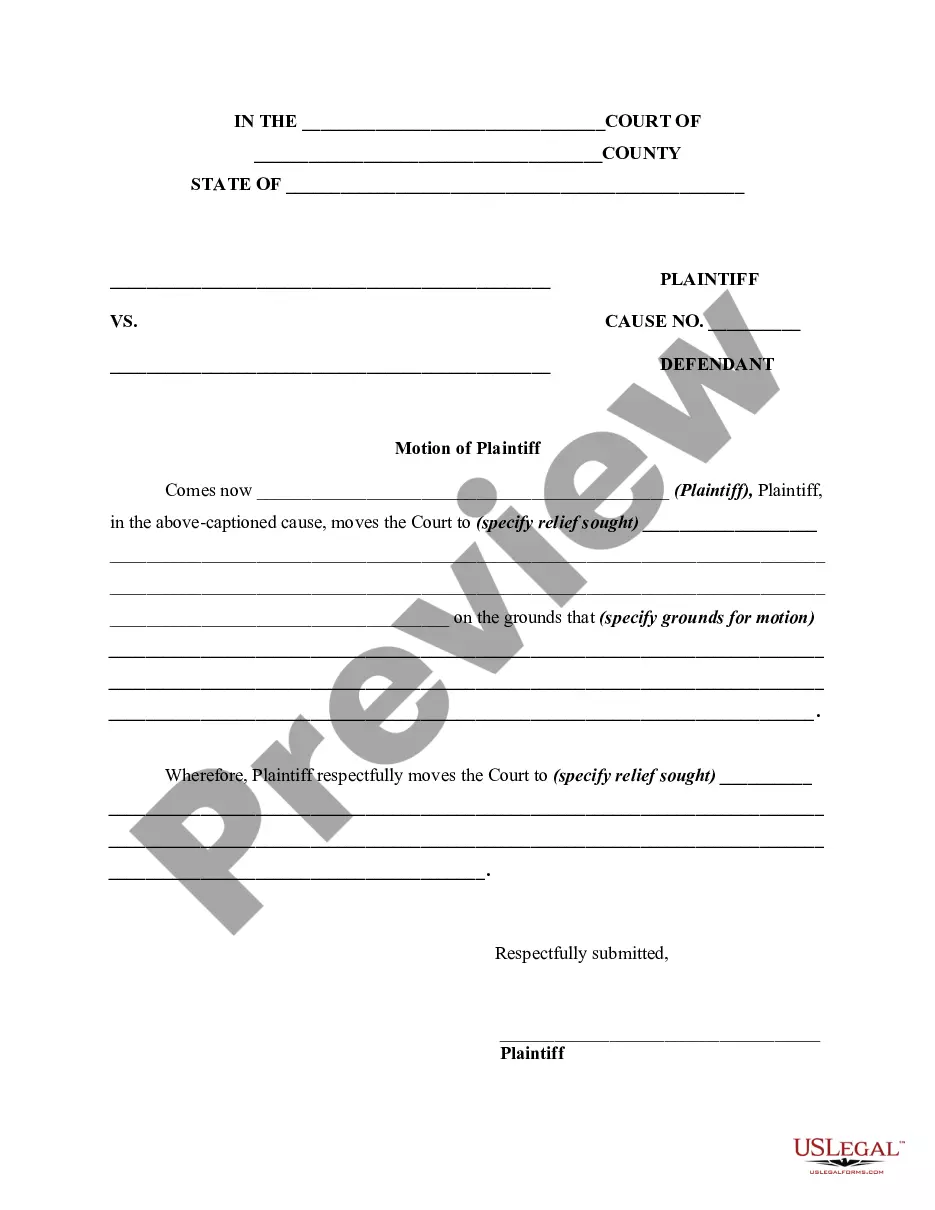
In a summary judgment, one party may contend there are no facts that need to be decided, or the parties may agree on what the facts are. Either side (and sometimes both sides) may bring a motion for summary judgment arguing that they are entitled to a judgment in their favor without a trial.