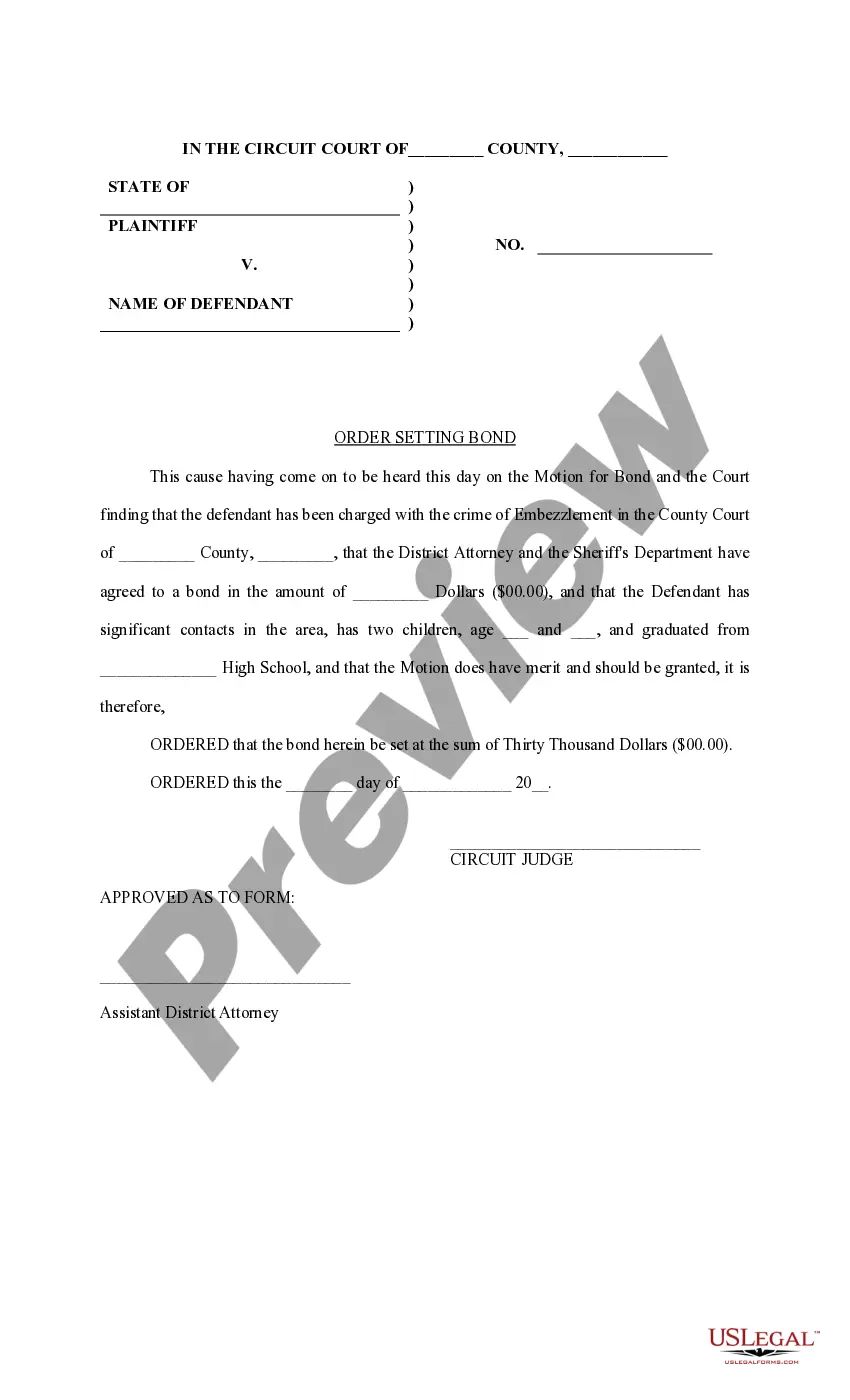
Order Setting Without Changing
Description






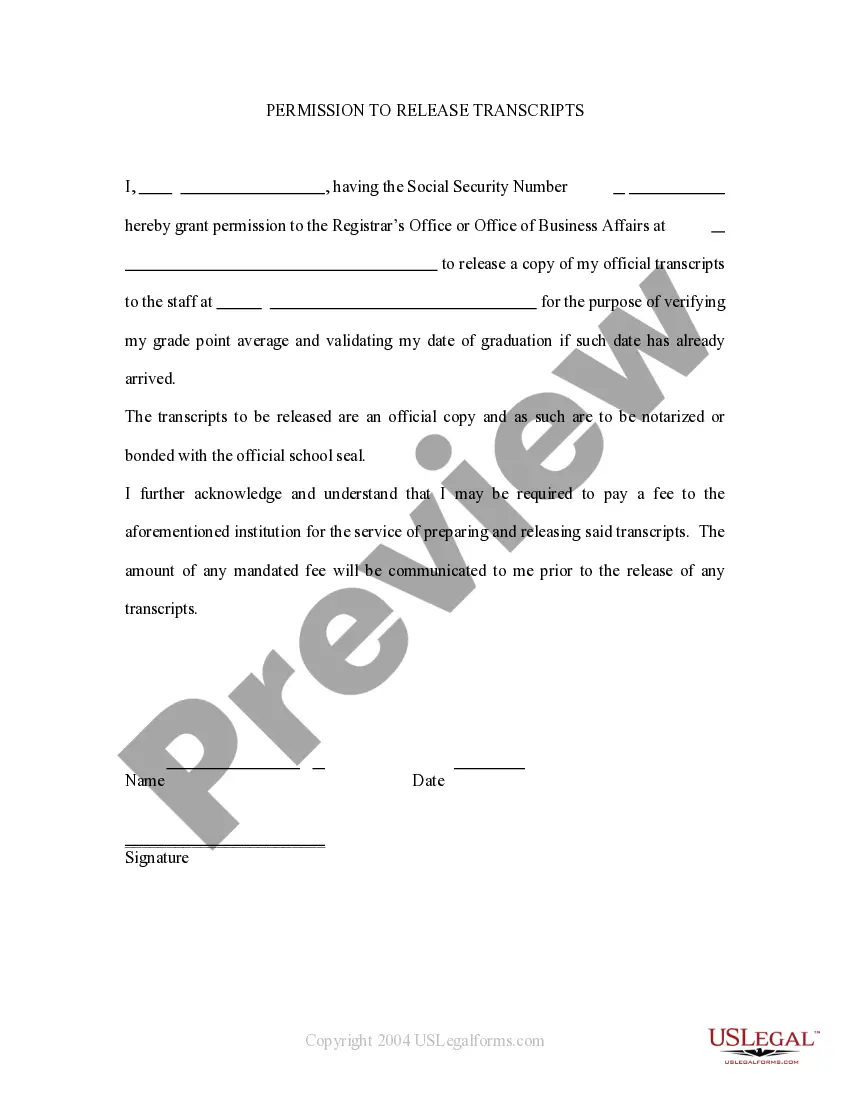




How to fill out Order Setting Bond?
Regardless of whether for commercial reasons or personal matters, everyone must handle legal situations at some point in their life.
Completing legal documents necessitates meticulous attention, beginning with selecting the correct form template. For instance, if you choose an incorrect version of the Order Setting Without Changing, it will be rejected upon submission. Thus, it is crucial to obtain a reliable source of legal paperwork like US Legal Forms.
With an extensive US Legal Forms catalog available, you no longer have to waste time searching for the suitable template online. Utilize the library’s straightforward navigation to find the correct form for any occasion.
- Locate the template you require by using the search bar or browsing through the catalog.
- Review the form’s details to ensure it fits your circumstances, state, and county.
- Click on the form’s preview to inspect it.
- If it is the wrong document, return to the search feature to locate the Order Setting Without Changing template you require.
- Download the template if it aligns with your requirements.
- If you already possess a US Legal Forms account, simply click Log in to access previously saved documents in My documents.
- Should you not have an account yet, you can acquire the template by clicking Buy now.
- Select the appropriate pricing option.
- Complete the account registration form.
- Choose your payment method: use a credit card or PayPal account.
- Select the document format you desire and download the Order Setting Without Changing.
- Once downloaded, you can fill out the form using editing software or print it and complete it by hand.
Form popularity
FAQ
You can sort a list in Python using the sort() method. The method accepts two optional arguments: reverse : which sorts the list in the reverse order (descending) if True or in the regular order (ascending) if False (which it is by default) key : a function you provide to describe the sorting method.
Convert the set into a List Using list method. Using sorted() method. Using the map() function. Using list comprehension. Using [*set, ]
Unlike lists, ordinary sets do not preserve the order in which we insert the elements. This is because the elements in a set are usually not stored in the order in which they appear.
Sets are unordered, meaning the elements do not have any predictable order, at all. When you print a set , or iterate through one, yes, the items will appear in some order. This order may, by chance, correspond to some 'original' order, or it may, by chance, appear to be sorted.