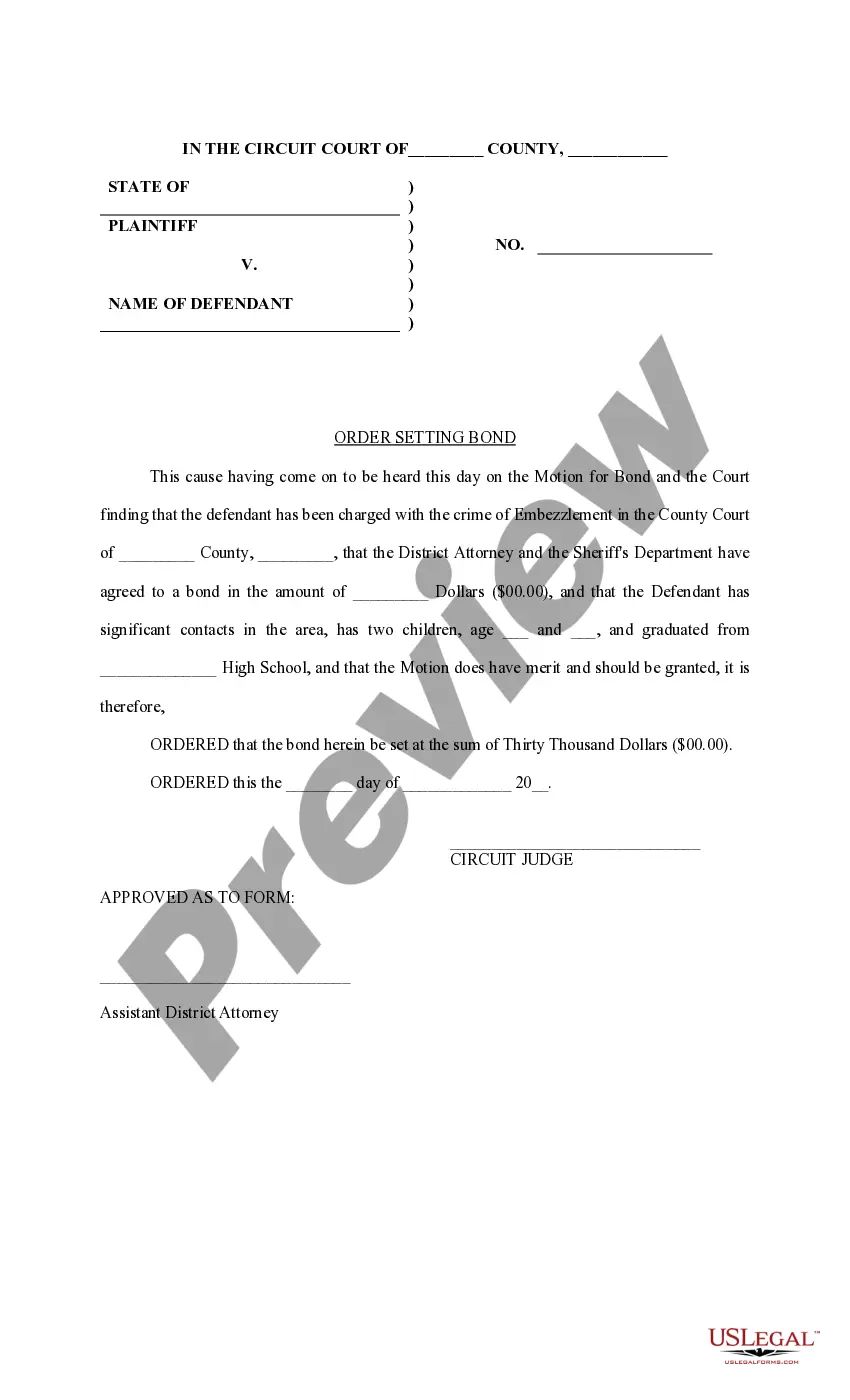
Order Setting Bond With Resonance Structures
Description
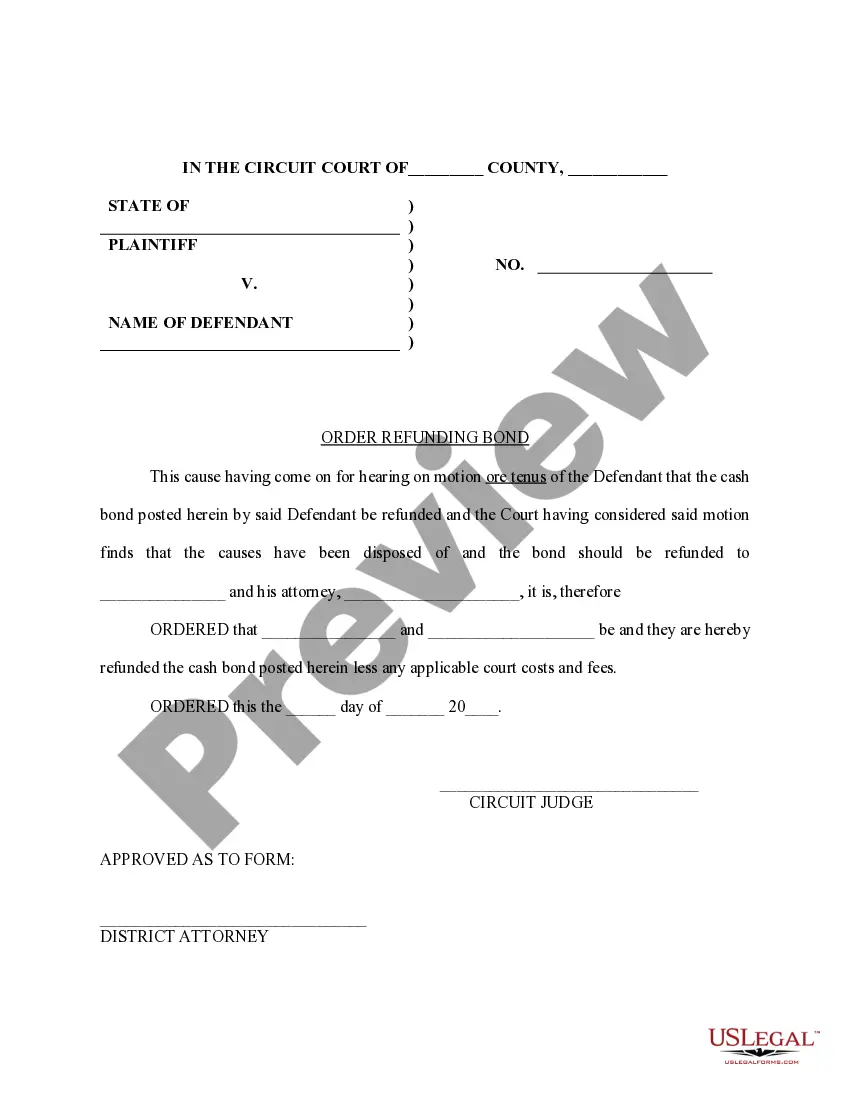



How to fill out Order Setting Bond?
It’s well known that you cannot instantly become a legal authority, nor can you swiftly learn how to draft an Order Setting Bond With Resonance Structures without a specialized skill set.
Assembling legal documents is a lengthy task that necessitates particular training and abilities. So why not entrust the preparation of the Order Setting Bond With Resonance Structures to the experts.
With US Legal Forms, one of the most extensive legal template collections, you can find everything from court documents to templates for internal corporate communication. We recognize the importance of compliance and adherence to federal and state regulations. That’s why, on our platform, all templates are location-specific and current.
Select Buy now. Once the payment is finalized, you can access the Order Setting Bond With Resonance Structures, fill it out, print it, and send it or mail it to the intended individuals or organizations.
You can retrieve your forms from the My documents tab at any time. If you’re an existing customer, you can simply Log In, and find and download the template from the same section. Regardless of the nature of your forms—whether financial, legal, or personal—our site has you covered. Try US Legal Forms today!
- Start off with our website and obtain the form you need in just a few minutes.
- Locate the document you require using the search bar at the top of the page.
- Preview it (if this option is available) and review the accompanying description to ascertain if Order Setting Bond With Resonance Structures is what you seek.
- If you need a different template, restart your search.
- Create a free account and choose a subscription plan to buy the template.
Form popularity
FAQ
Bond order = [(Bonding molecules' number of electrons) ? (Antibonding molecules' number of electrons)]/2. Where, Nb is that the number of bonding electrons. Na is that the number of antibonding electrons.
Aso Bond order of a molecule can be calculated by using bonding and ant bonding electrons in case of resonance, it can be calculated by dividing total number of bonds involved resonance by total number of resonating structures.
Aso Bond order of a molecule can be calculated by using bonding and ant bonding electrons in case of resonance, it can be calculated by dividing total number of bonds involved resonance by total number of resonating structures.
Bond order (B.O.) is defined as one-half the difference between the number of electrons present in the bonding and the anti-bonding orbitals. Bond order (B.O) = ( Number of bonding electrons - Number of the anti-bonding electron) Bond order = (Nb- Na)
The resonance hybrid has two identical N-O bonds. They share a double bond and a single bond between them, so the average bond order is 1.5. We would predict that the N-O bond length should be halfway between a single bond and a double bond.