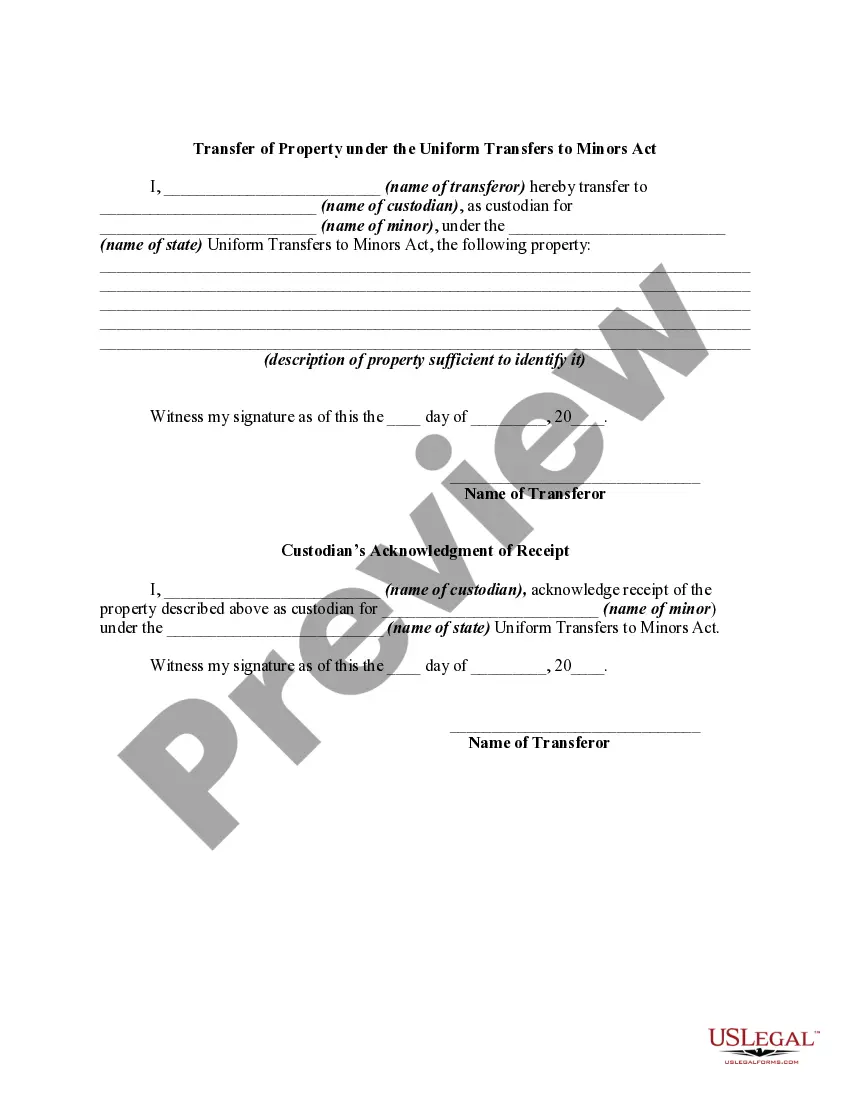
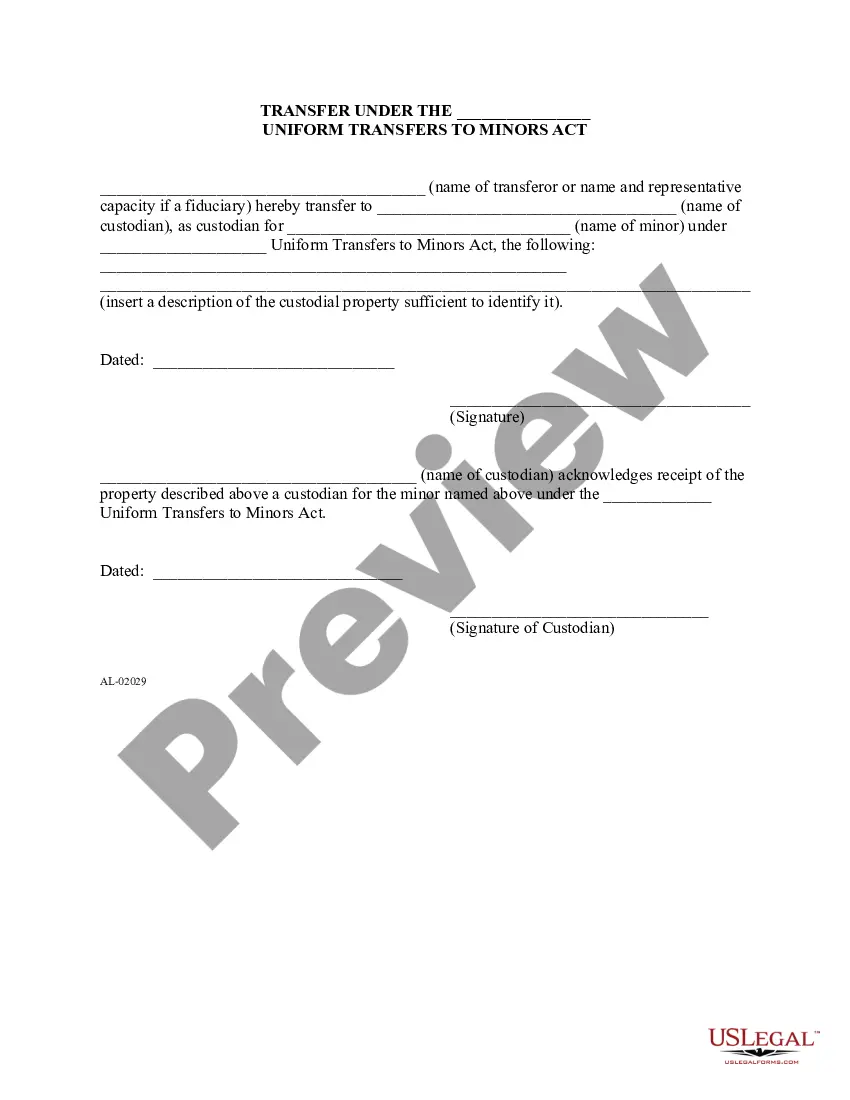
Uniform Transfer Format Definition
Description
Get your form ready online
Our built-in tools help you complete, sign, share, and store your documents in one place.
Make edits, fill in missing information, and update formatting in US Legal Forms—just like you would in MS Word.
Download a copy, print it, send it by email, or mail it via USPS—whatever works best for your next step.
Sign and collect signatures with our SignNow integration. Send to multiple recipients, set reminders, and more. Go Premium to unlock E-Sign.
If this form requires notarization, complete it online through a secure video call—no need to meet a notary in person or wait for an appointment.
We protect your documents and personal data by following strict security and privacy standards.

Make edits, fill in missing information, and update formatting in US Legal Forms—just like you would in MS Word.

Download a copy, print it, send it by email, or mail it via USPS—whatever works best for your next step.

Sign and collect signatures with our SignNow integration. Send to multiple recipients, set reminders, and more. Go Premium to unlock E-Sign.

If this form requires notarization, complete it online through a secure video call—no need to meet a notary in person or wait for an appointment.

We protect your documents and personal data by following strict security and privacy standards.
Looking for another form?

How to fill out Transfer Of Property Under The Uniform Transfers To Minors Act?
Managing legal documents can be perplexing, even for the most seasoned experts.
When you are looking for a Uniform Transfer Format Definition and lack the time to invest in finding the correct and current version, the process can be stressful.
US Legal Forms addresses any needs you might have, ranging from personal to business documents, all in a single location.
Utilize cutting-edge tools to complete and manage your Uniform Transfer Format Definition.
Here are the steps to follow after obtaining the form you desire: Verify that this is the correct form by previewing it and reviewing its description. Ensure that the template is accepted in your state or county. Click Buy Now when you are prepared. Select a subscription plan. Choose the file format you prefer, and Download, fill out, eSign, print, and send your documents. Take advantage of the US Legal Forms online library, backed by 25 years of expertise and reliability. Transform your daily document management into a seamless and user-friendly process today.
- Access a repository of articles, tutorials, and guides related to your situation and requirements.
- Save time and energy in locating the documents you require, and use US Legal Forms’ advanced search and Review tool to discover and download the Uniform Transfer Format Definition.
- If you possess a subscription, Log In to your US Legal Forms account, search for the form, and download it.
- Check the My documents tab to review the documents you have previously downloaded and to organize your folders as needed.
- If this is your initial experience with US Legal Forms, create an account and gain unlimited access to all the platform's features.
- A comprehensive online form library could be transformative for anyone aiming to navigate these scenarios efficiently.
- US Legal Forms stands as a frontrunner in the realm of online legal documents, boasting over 85,000 state-specific legal forms available to you at any time.
- With US Legal Forms, you can access state- or county-specific legal and business documents.
Form popularity
FAQ
Because money placed in an UGMA/UTMA account is owned by the child, earnings are generally taxed at the child's?usually lower?tax rate, rather than the parent's rate. For some families, this savings can be significant. Up to $1,050 in earnings tax-free. The next $1,050 is taxable at the child's tax rate.
Transferring a UTMA account to a child is simple. You can do so with most financial or investment institutions. You can also consult a tax or business lawyer to help you set up the legal structure, although most financial institutions can do this for you.
UTMA accounts offer parents a way to give their children a head start in life. But just because a child holds the account doesn't mean they avoid taxes. UTMA account holders may owe taxes at their personal rate and their parents' rate if the account earns any investment income or capital gains on asset sales.
If a minor has reached the age of twenty-one (21) and seeks to withdraw the funds from the UTMA account of which he/she is the beneficiary, the minor must contact the custodian, as the custodian is the only person authorized to make withdrawals or close the account.
B or 1099DIV should be received at the end of the tax year from the financial institution handling the UGMA/UTMA account to report any interest or earnings on the account.