Contract Agreement Works With Vendor
Description
Get your form ready online
Our built-in tools help you complete, sign, share, and store your documents in one place.
Make edits, fill in missing information, and update formatting in US Legal Forms—just like you would in MS Word.
Download a copy, print it, send it by email, or mail it via USPS—whatever works best for your next step.
Sign and collect signatures with our SignNow integration. Send to multiple recipients, set reminders, and more. Go Premium to unlock E-Sign.
If this form requires notarization, complete it online through a secure video call—no need to meet a notary in person or wait for an appointment.
We protect your documents and personal data by following strict security and privacy standards.

Make edits, fill in missing information, and update formatting in US Legal Forms—just like you would in MS Word.

Download a copy, print it, send it by email, or mail it via USPS—whatever works best for your next step.

Sign and collect signatures with our SignNow integration. Send to multiple recipients, set reminders, and more. Go Premium to unlock E-Sign.

If this form requires notarization, complete it online through a secure video call—no need to meet a notary in person or wait for an appointment.

We protect your documents and personal data by following strict security and privacy standards.
Looking for another form?
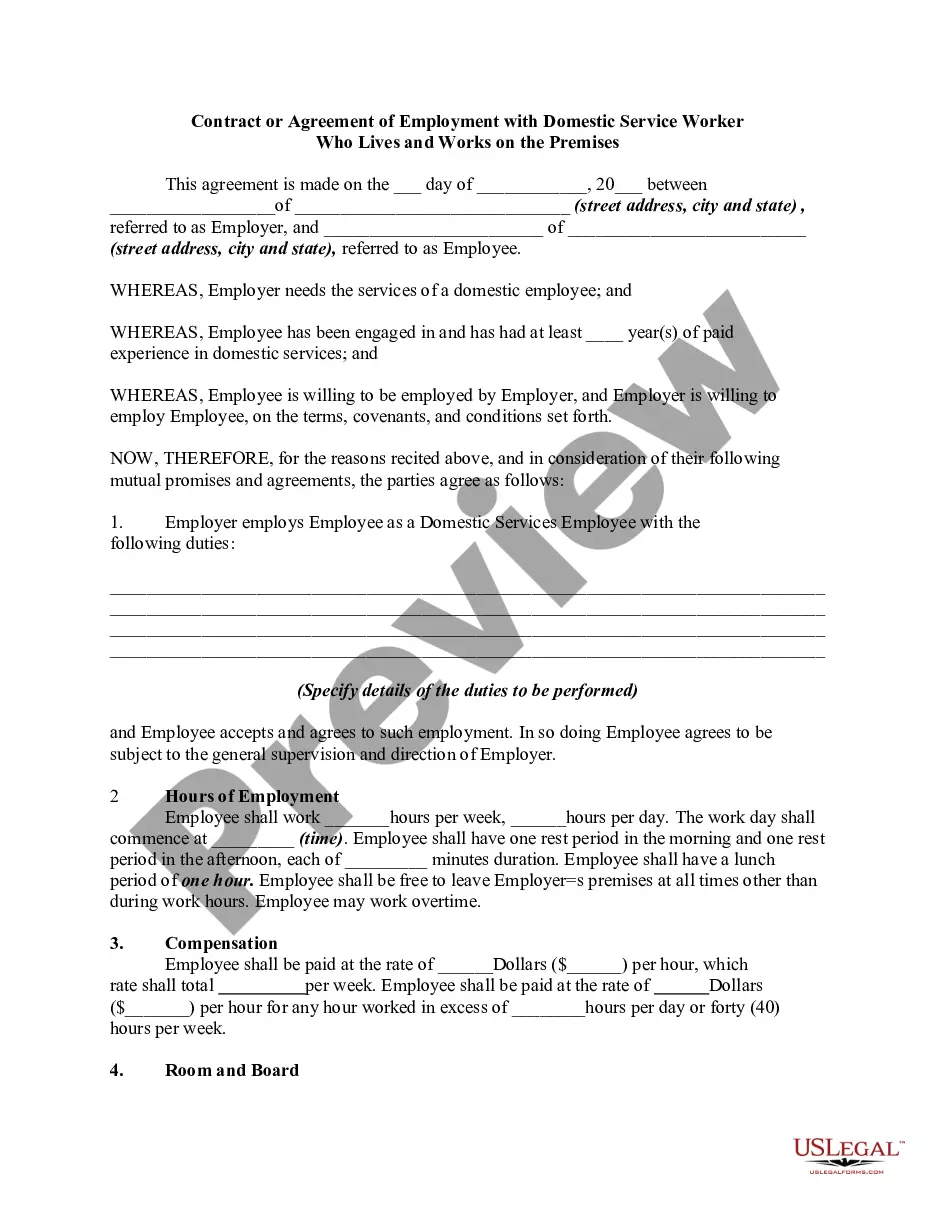
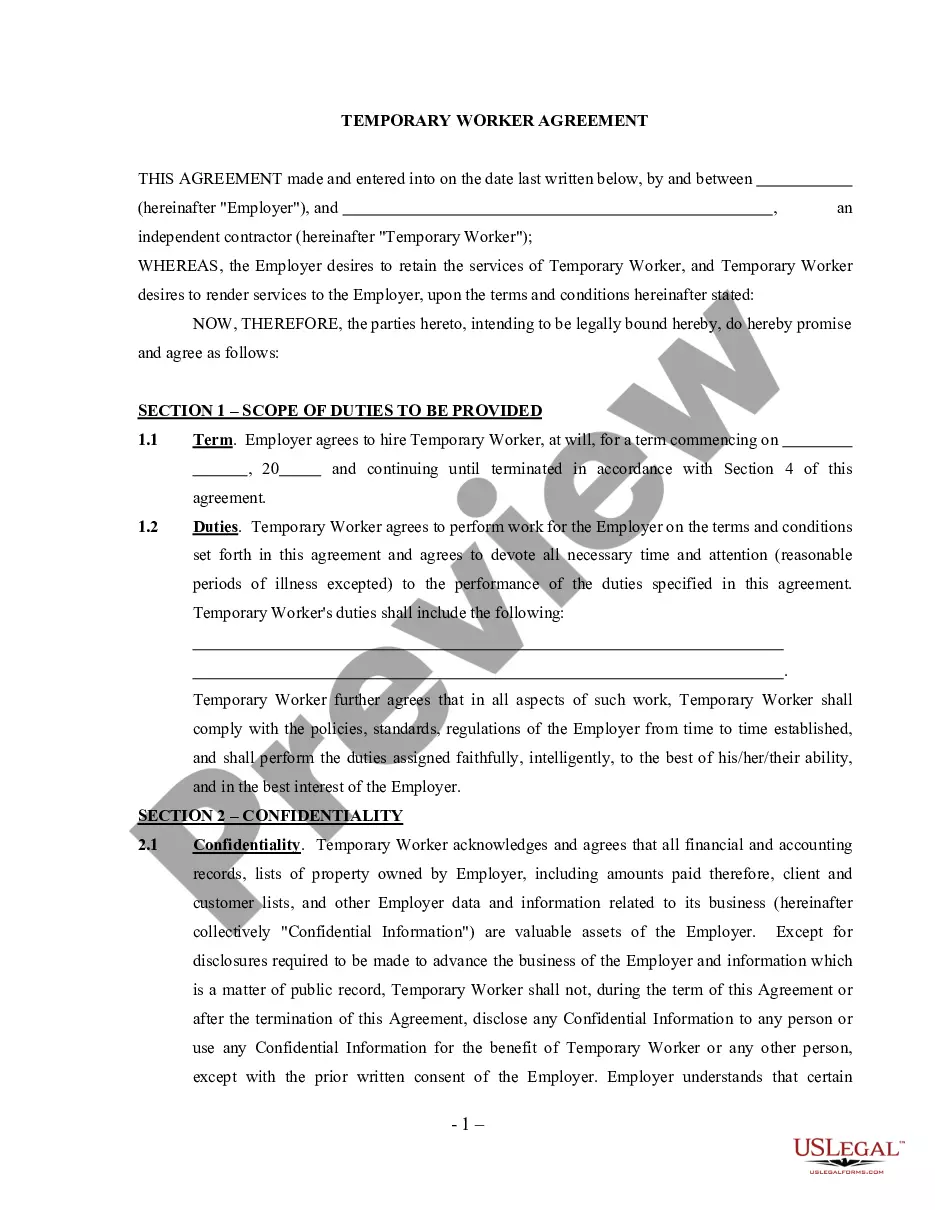
How to fill out Contract Or Agreement Of Employment With Domestic Service Worker Who Lives And Works On The Premises?
Finding a go-to place to take the most recent and appropriate legal samples is half the struggle of handling bureaucracy. Choosing the right legal documents needs accuracy and attention to detail, which is the reason it is important to take samples of Contract Agreement Works With Vendor only from reputable sources, like US Legal Forms. An improper template will waste your time and delay the situation you are in. With US Legal Forms, you have little to worry about. You can access and view all the information concerning the document’s use and relevance for your circumstances and in your state or region.
Consider the following steps to complete your Contract Agreement Works With Vendor:
- Use the catalog navigation or search field to find your template.
- View the form’s description to check if it suits the requirements of your state and region.
- View the form preview, if available, to make sure the template is definitely the one you are searching for.
- Get back to the search and find the right template if the Contract Agreement Works With Vendor does not fit your requirements.
- When you are positive about the form’s relevance, download it.
- If you are a registered user, click Log in to authenticate and access your selected templates in My Forms.
- If you do not have an account yet, click Buy now to obtain the form.
- Pick the pricing plan that suits your requirements.
- Proceed to the registration to complete your purchase.
- Complete your purchase by selecting a transaction method (bank card or PayPal).
- Pick the file format for downloading Contract Agreement Works With Vendor.
- When you have the form on your gadget, you can modify it with the editor or print it and complete it manually.
Eliminate the headache that comes with your legal paperwork. Check out the extensive US Legal Forms library to find legal samples, check their relevance to your circumstances, and download them immediately.
Form popularity
FAQ
A vendor agreement is a business contract by which you and another party agree to an exchange of goods and services for compensation, for specific amounts and prices. The agreement sets conditions and details under which this exchange will take place, and can either be once or on a regular basis.
A vendor contract agreement is a document that outlines the terms and conditions of a business relationship between a company and a supplier. The agreement should spell out the roles and responsibilities of each party, as well as the expectations for quality, quantity, delivery, and payment.
How to Write Winning Contracts with Your Vendors Term and Termination. Definitions. Scope of Products, Services and Support. Pricing. Ordering, Delivery, Invoicing and Payment. Account Management and Reporting. Title, Risk of Loss and Warranty. Data Privacy and Protection.
A: The vendor contract management process typically includes contract creation, negotiation, execution, monitoring performance, tracking key milestones, managing changes or amendments, and contract renewal or termination.
How to write a vendor contract. Contact information for both parties. Detailed description of the goods or services. Length of the contract and/or expected product delivery time. Price and payment method. Terms for ending the contract. Consequences of contract breach.