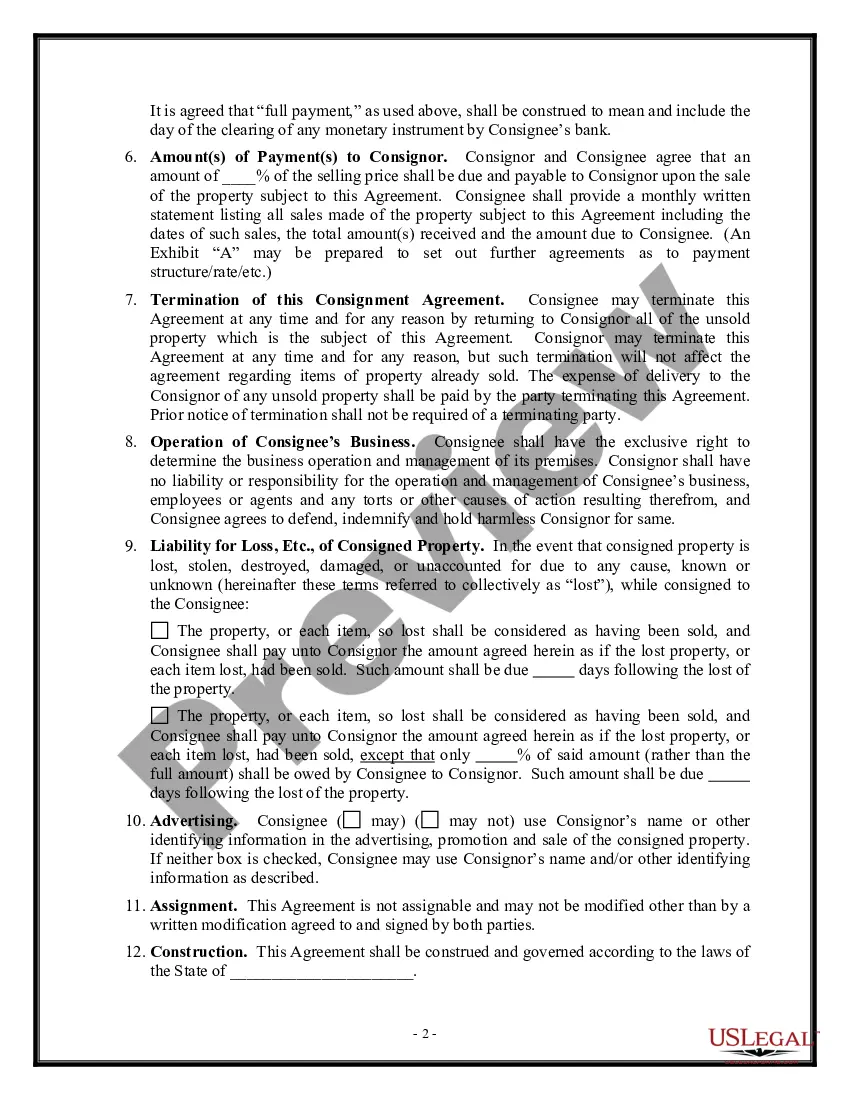
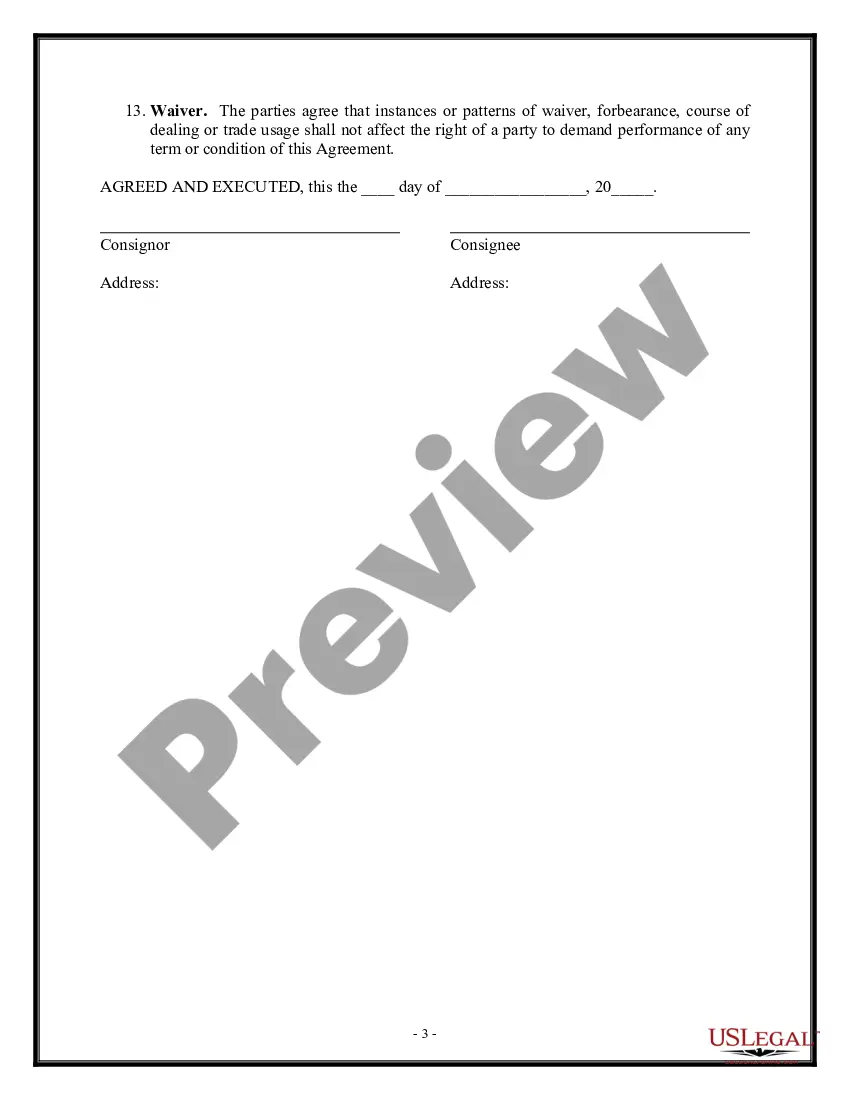
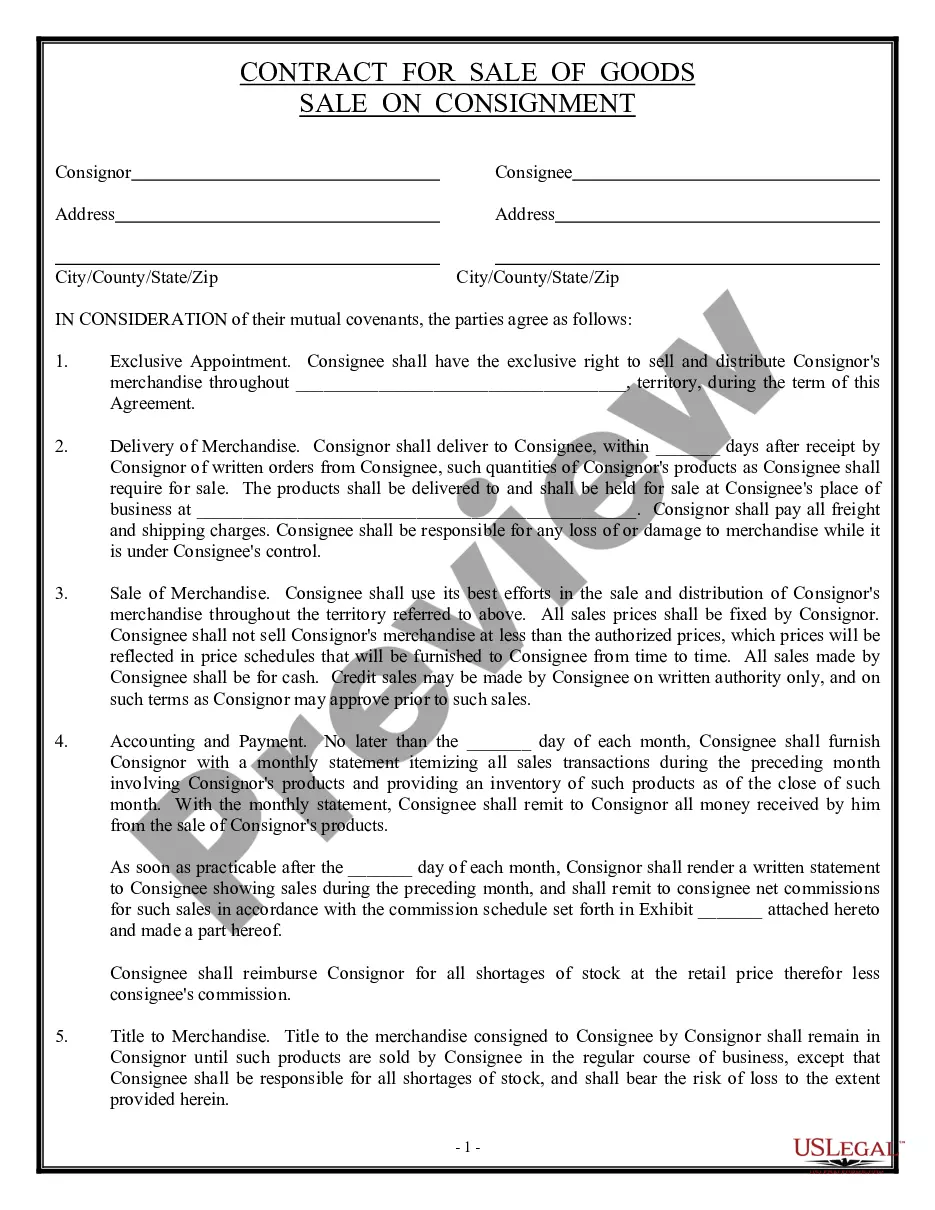
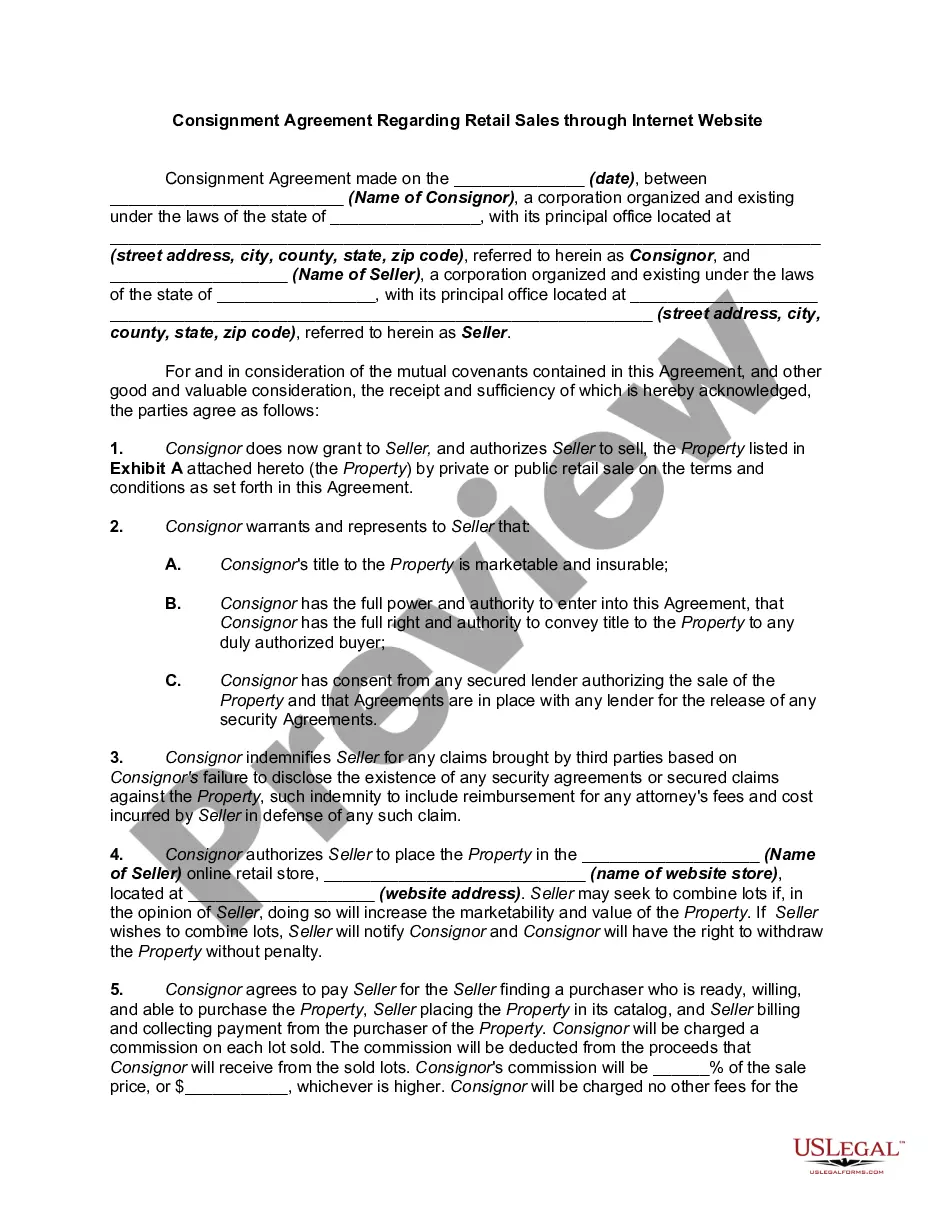
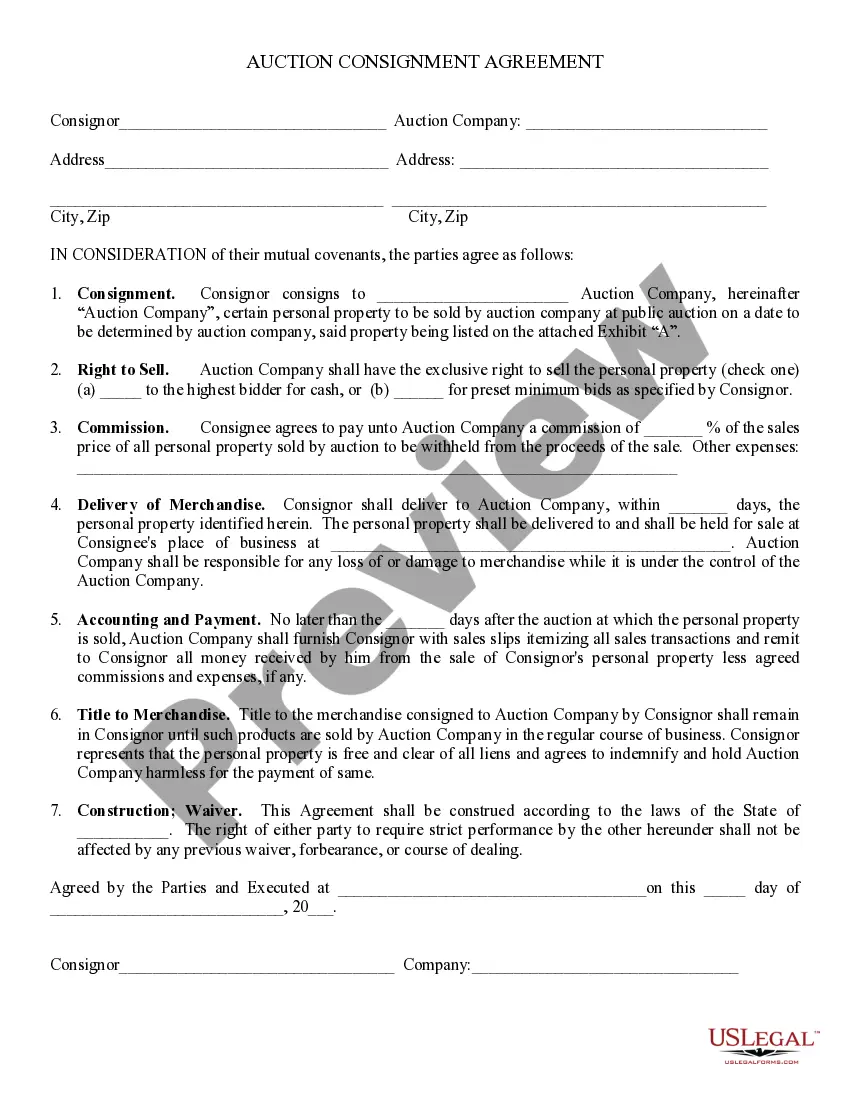
Consignment Form Of Retailing In Harris
Description

Get your form ready online
Our built-in tools help you complete, sign, share, and store your documents in one place.
Make edits, fill in missing information, and update formatting in US Legal Forms—just like you would in MS Word.
Download a copy, print it, send it by email, or mail it via USPS—whatever works best for your next step.
Sign and collect signatures with our SignNow integration. Send to multiple recipients, set reminders, and more. Go Premium to unlock E-Sign.
If this form requires notarization, complete it online through a secure video call—no need to meet a notary in person or wait for an appointment.
We protect your documents and personal data by following strict security and privacy standards.

Make edits, fill in missing information, and update formatting in US Legal Forms—just like you would in MS Word.

Download a copy, print it, send it by email, or mail it via USPS—whatever works best for your next step.

Sign and collect signatures with our SignNow integration. Send to multiple recipients, set reminders, and more. Go Premium to unlock E-Sign.

If this form requires notarization, complete it online through a secure video call—no need to meet a notary in person or wait for an appointment.

We protect your documents and personal data by following strict security and privacy standards.
Looking for another form?


Form popularity
FAQ
Sales Uncertainty The retailer can potentially lose selling space if the products don't sell while this space could be better stocked with more in-demand products. Also, profit margins are often lower for the retailer when selling consigned products because some of the profit goes to the seller.
This kind of arrangement is called Consignment. Definition. The contract or an agreement of sending several goods by the producers or manufacturers of a place to their agents for the sale is known as a consignment. Types of Consignment. Outward Consignment. Inward Consignment. Consignment Processing. Sale. Features of a Sale.
In a consignment agreement, a consignor supplies goods to a consignee, who sells them on the consignor's behalf. The consignee earns a commission from each sale and sends the remaining sales revenue to the consignor. The consignor retains ownership of the goods until they are sold.
There are many types of products that are frequently sold on consignment, such as vintage products, children's toys, handmade items, furniture, books, clothing, musical instruments, jewellery, shoes, seasonal items and sports equipment.
Selling goods on consignment is described as a situation whereby goods are shipped to a dealer who pays you, the consignor, only for the merchandise which sells. The dealer, referred to as the consignee, has the right to return to you the merchandise which does not sell and without obligation.
Consignment is not the same as selling goods. A consignment is an agreement between the owner of goods and the consignor. The consignee stores and sells goods on behalf of the consignor and earns a profit. A sale, on the other hand, is a simple transaction, with goods being traded between two parties.
“Consignment only” refers to a unique selling arrangement, where you retain ownership of your item until it sells. You entrust your goods to a store or platform (the consignee) to market and sell on your behalf. This model is especially popular in fashion, art, and antiques.
In a consignment agreement, a consignor supplies goods to a consignee, who sells them on the consignor's behalf. The consignee earns a commission from each sale and sends the remaining sales revenue to the consignor. The consignor retains ownership of the goods until they are sold.