Consignment Form Template For Child
Description

Get your form ready online
Our built-in tools help you complete, sign, share, and store your documents in one place.
Make edits, fill in missing information, and update formatting in US Legal Forms—just like you would in MS Word.
Download a copy, print it, send it by email, or mail it via USPS—whatever works best for your next step.
Sign and collect signatures with our SignNow integration. Send to multiple recipients, set reminders, and more. Go Premium to unlock E-Sign.
If this form requires notarization, complete it online through a secure video call—no need to meet a notary in person or wait for an appointment.
We protect your documents and personal data by following strict security and privacy standards.

Make edits, fill in missing information, and update formatting in US Legal Forms—just like you would in MS Word.

Download a copy, print it, send it by email, or mail it via USPS—whatever works best for your next step.

Sign and collect signatures with our SignNow integration. Send to multiple recipients, set reminders, and more. Go Premium to unlock E-Sign.

If this form requires notarization, complete it online through a secure video call—no need to meet a notary in person or wait for an appointment.

We protect your documents and personal data by following strict security and privacy standards.
Looking for another form?

How to fill out Consignment Agreement?
Legal administration can be daunting, even for experienced experts.
When you are seeking a Consignment Form Template For Child and lack the time to dedicate to finding the accurate and current version, the process can be taxing.
US Legal Forms addresses all your needs, from personal to business paperwork, all in one location.
Utilize advanced tools to complete and manage your Consignment Form Template For Child.
Here are the steps to follow after accessing the form you need: Verify it is the appropriate form by previewing it and reviewing its details. Confirm that the template is valid in your state or county. Click Buy Now when you are ready. Choose a subscription plan. Select the format you need, and Download, fill it out, sign, print, and send your document. Take advantage of the US Legal Forms online library, supported by 25 years of expertise and trustworthiness. Make your everyday document management seamless and user-friendly today.
- Access a database of articles, guides, and resources pertinent to your situation and requirements.
- Save effort and time searching for the documents you require, and use US Legal Forms’ sophisticated search and Preview feature to locate your Consignment Form Template For Child and download it.
- If you have a monthly subscription, Log In to your US Legal Forms account, search for the form, and download it.
- Check your My documents tab to see the documents you have previously downloaded and to manage your folders as needed.
- If it’s your first time with US Legal Forms, create a free account and gain unlimited access to all platform benefits.
- A comprehensive online form library could be a gamechanger for anyone looking to handle these situations effectively.
- US Legal Forms is a leading provider in digital legal documents, featuring over 85,000 state-specific legal forms available to you at any time.
- With US Legal Forms, you can access state- or county-specific legal and business documents.
Form popularity
FAQ
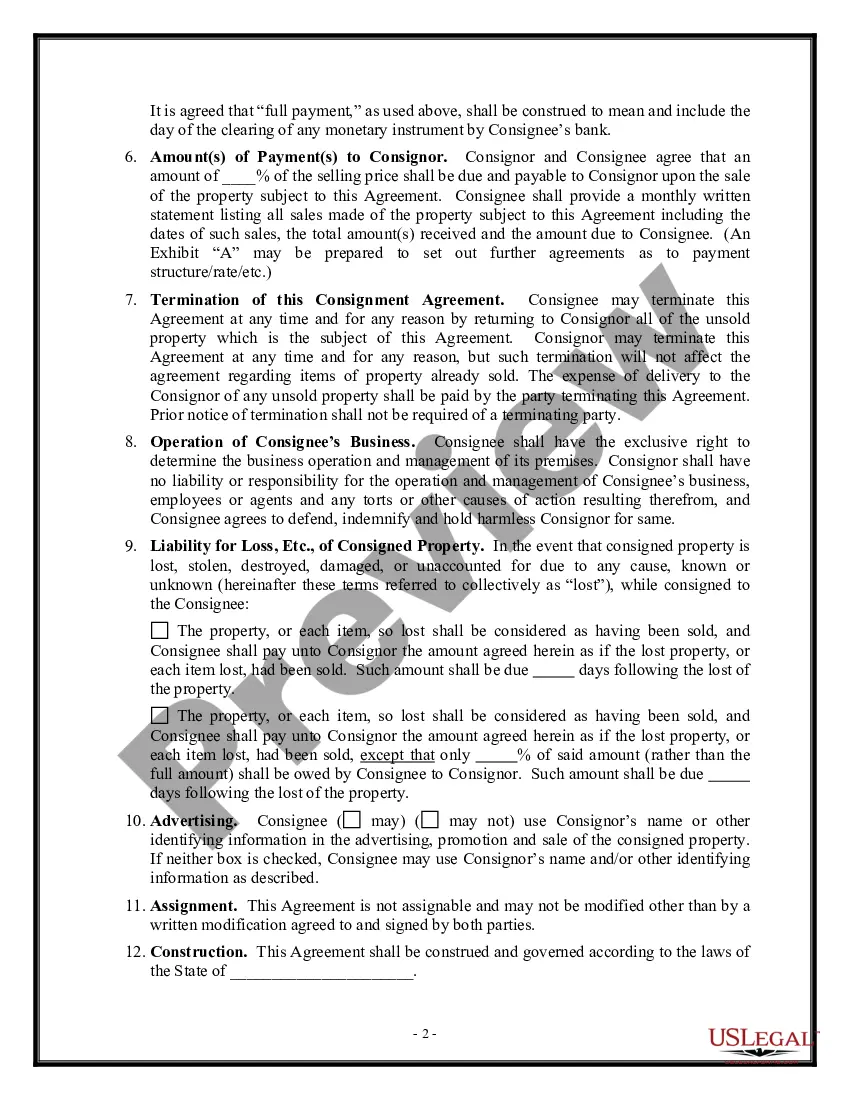
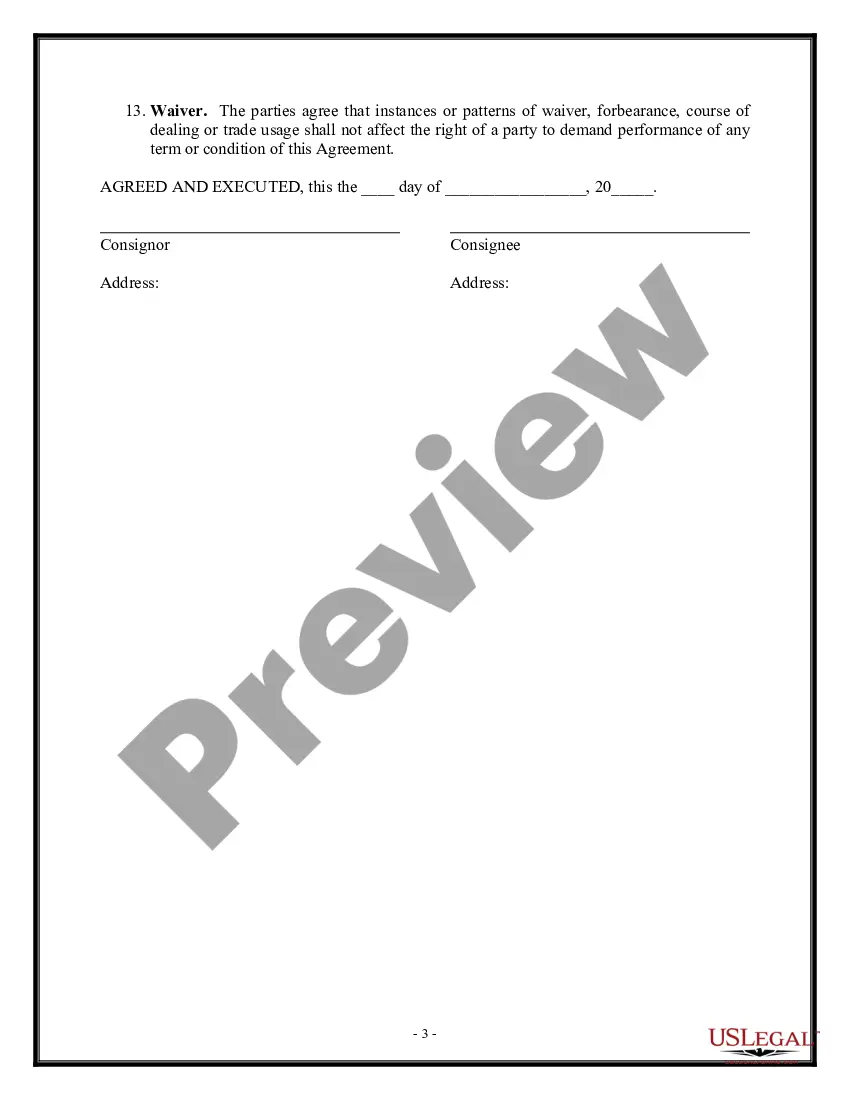
To write up a simple agreement, start by clearly stating the parties involved and the purpose of the agreement. Incorporating a consignment form template for child can help you include vital details such as item descriptions, payment terms, and duration. Keep the language straightforward and ensure both parties agree on the terms. Finally, both parties should sign the document to finalize the agreement.
A fair percentage for consignment often ranges from 25% to 60%, depending on the type of items and the market. For children's items, using a consignment form template for child can help you clarify what percentage each party will receive. Factors like item quality and demand can also influence the percentage. Always strive for a balance that benefits both the consignor and the consignee.
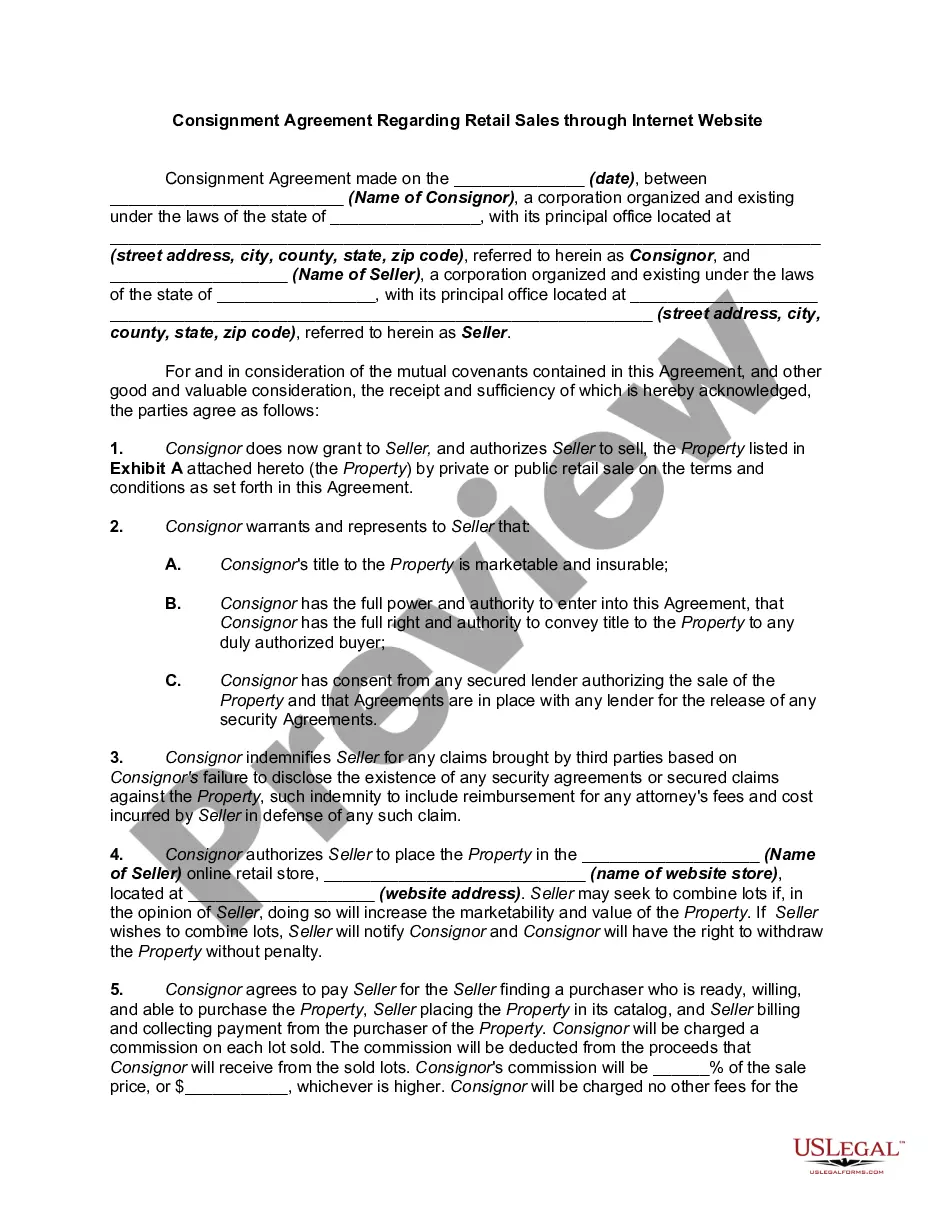
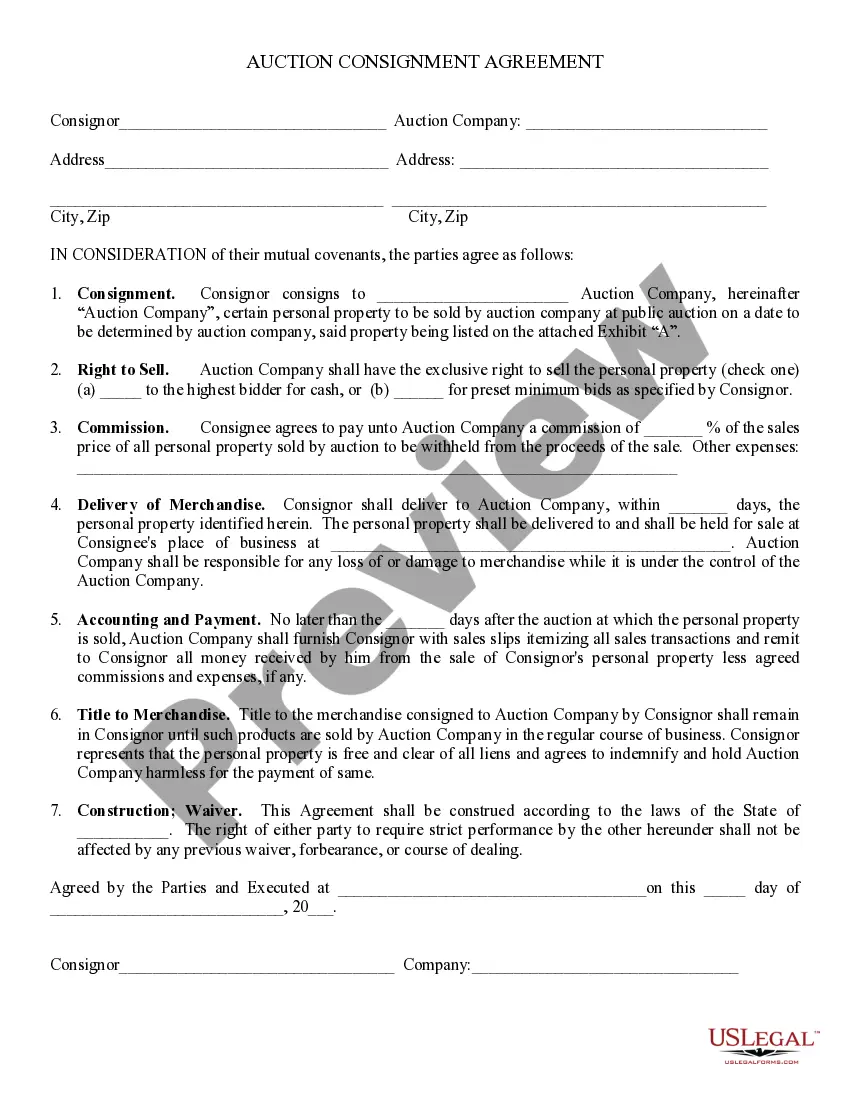
To write a consignment agreement, start by outlining the terms of the consignment, including the items being consigned, the duration of the agreement, and the payment terms. You can use a consignment form template for child to ensure that you cover all necessary details. Be sure to specify the responsibilities of both parties and any conditions for unsold items. Finally, sign and date the agreement to make it official.
3. Consignment agreement instructions Introduction of Parties. Identifies the parties and the date of the agreement. ... Recitals. ... Section 1: Consigned property. ... Section 2: Delivery of goods. ... Section 3: Consignment period. ... Section 4: Efforts to sell. ... Section 5: Title to products. ... Section 6: Payment; commission.
A consignment agreement is a contract between the consignor and the consignee, and should include these basic provisions: Parties. Provide the names and addresses of the consignor and the consignee. Item(s) for sale. ... Pricing. ... Payment. ... Expenses. ... Record-keeping. ... Ownership. ... Insurance.
Hear this out loud PauseFor example, a consignment store might sell previously owned prom dresses by offering to pay a 20% revenue fee to anyone who wants to sell a dress through their store. Some examples of goods you may often see for sale using the consignment business model include: Antiques and collectibles. Magazines and newspapers.
A consignment agreement is a contract that places an item the consignor (or owner) owns with the consignee (or seller) for the consignee to sell. The consignee often takes a commission or fee and then the remainder of the sale price is paid to the consignor.
Hear this out loud PauseConsignment is an arrangement in which goods are left with a third party to sell. The party that sells the goods on consignment receives a portion of the profits, either as a flat rate fee or commission. Selling via a consignment arrangement can be a low-commission, low-time-investment way of selling items or services.