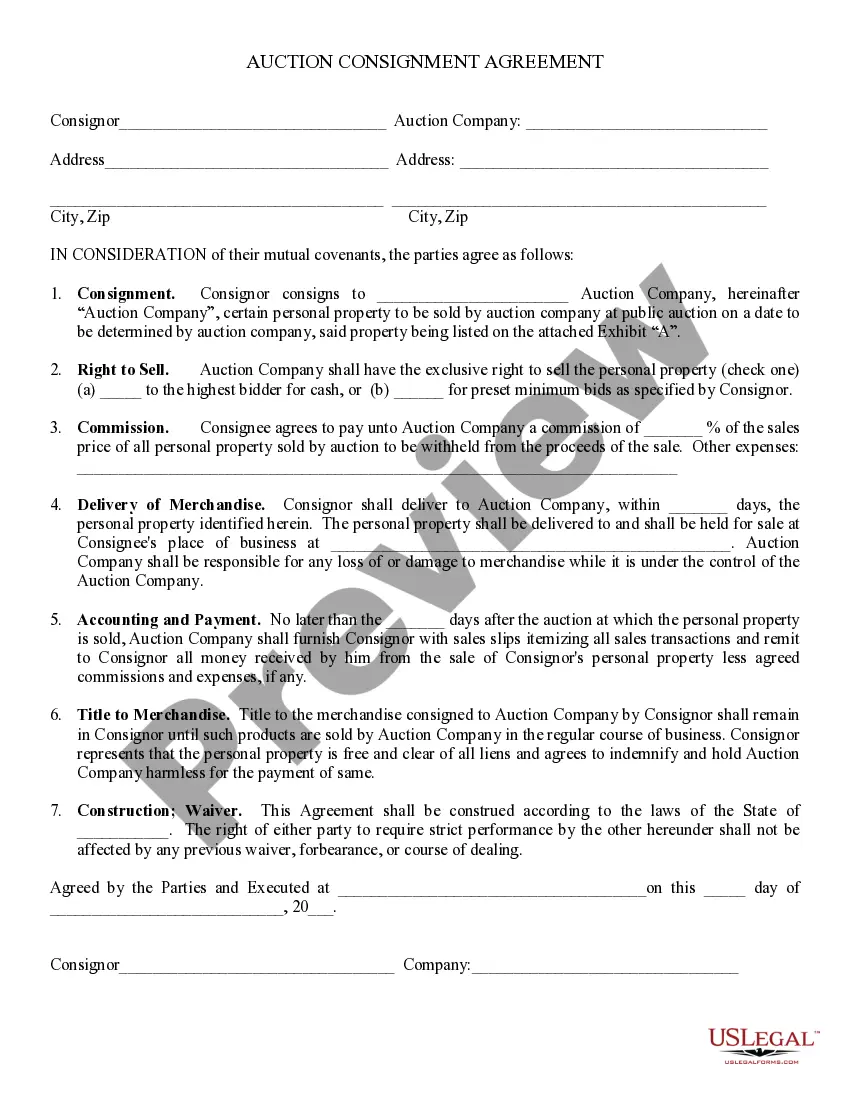
Consignment Agreement In Law
Description

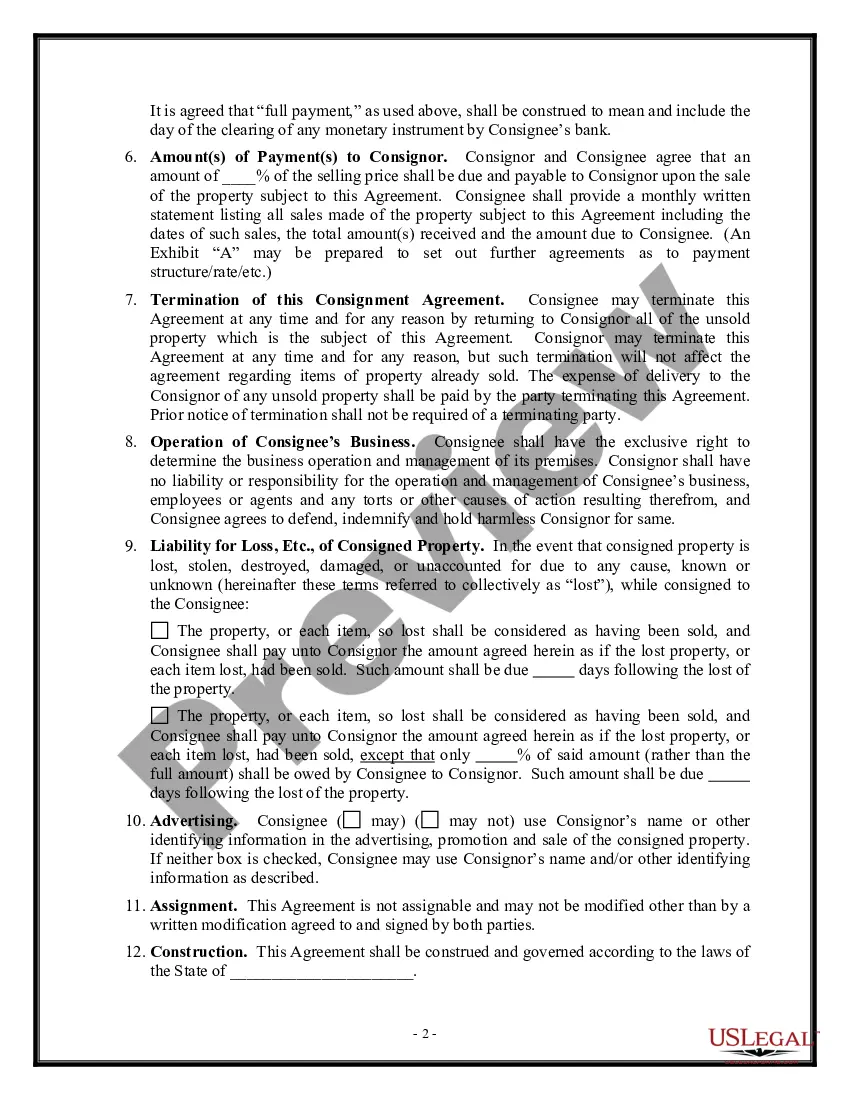
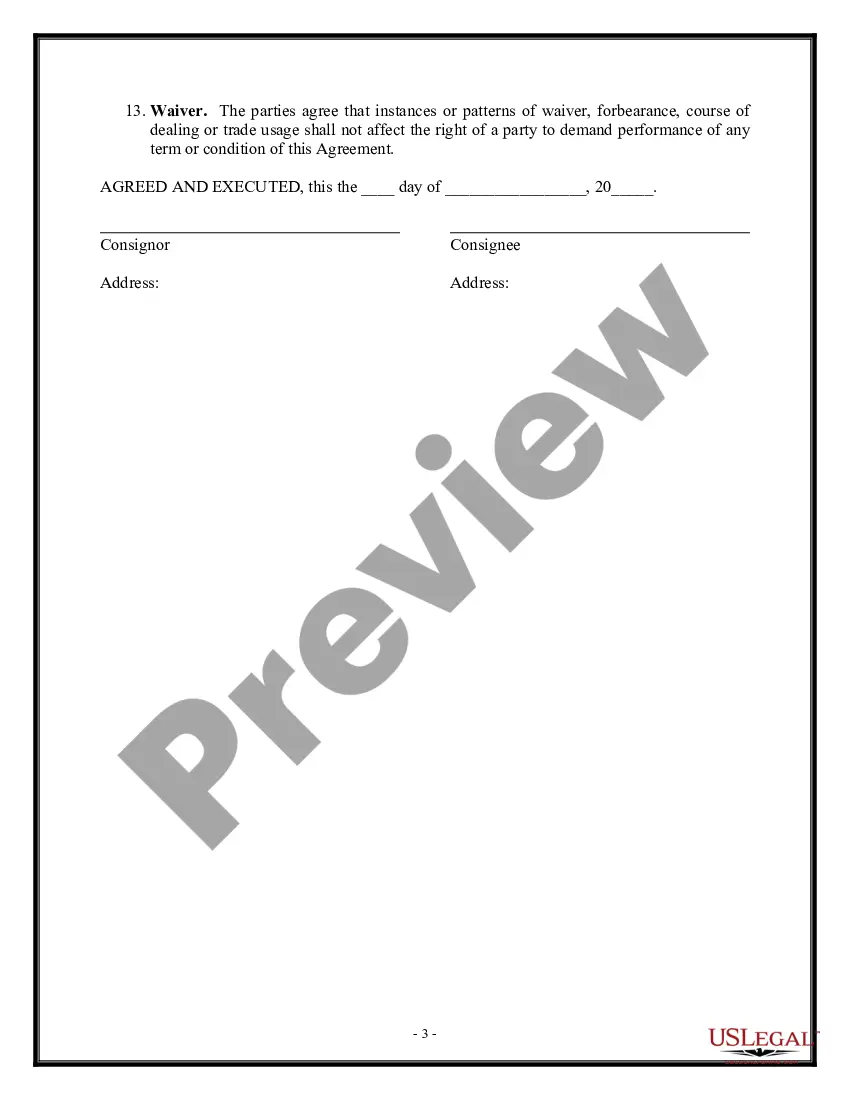
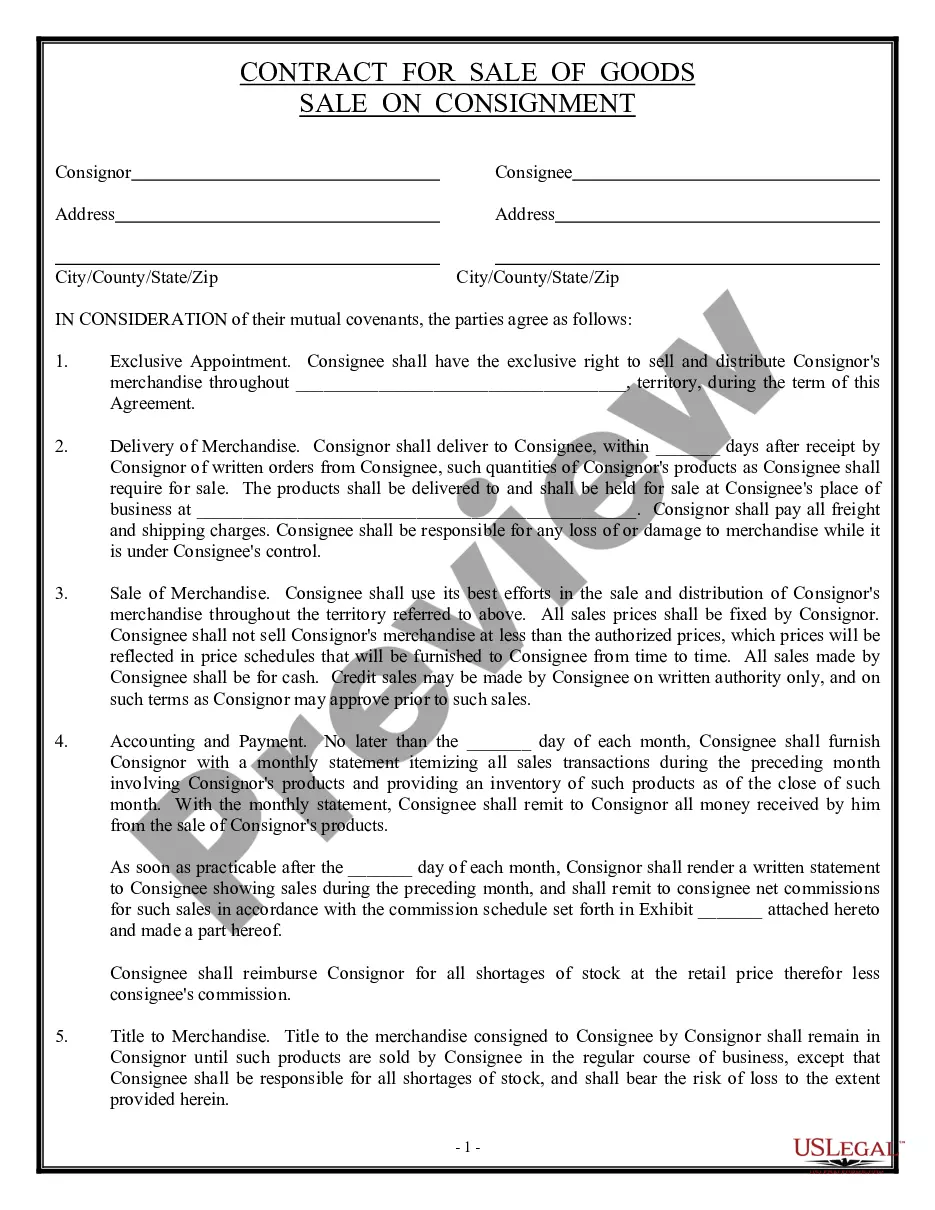
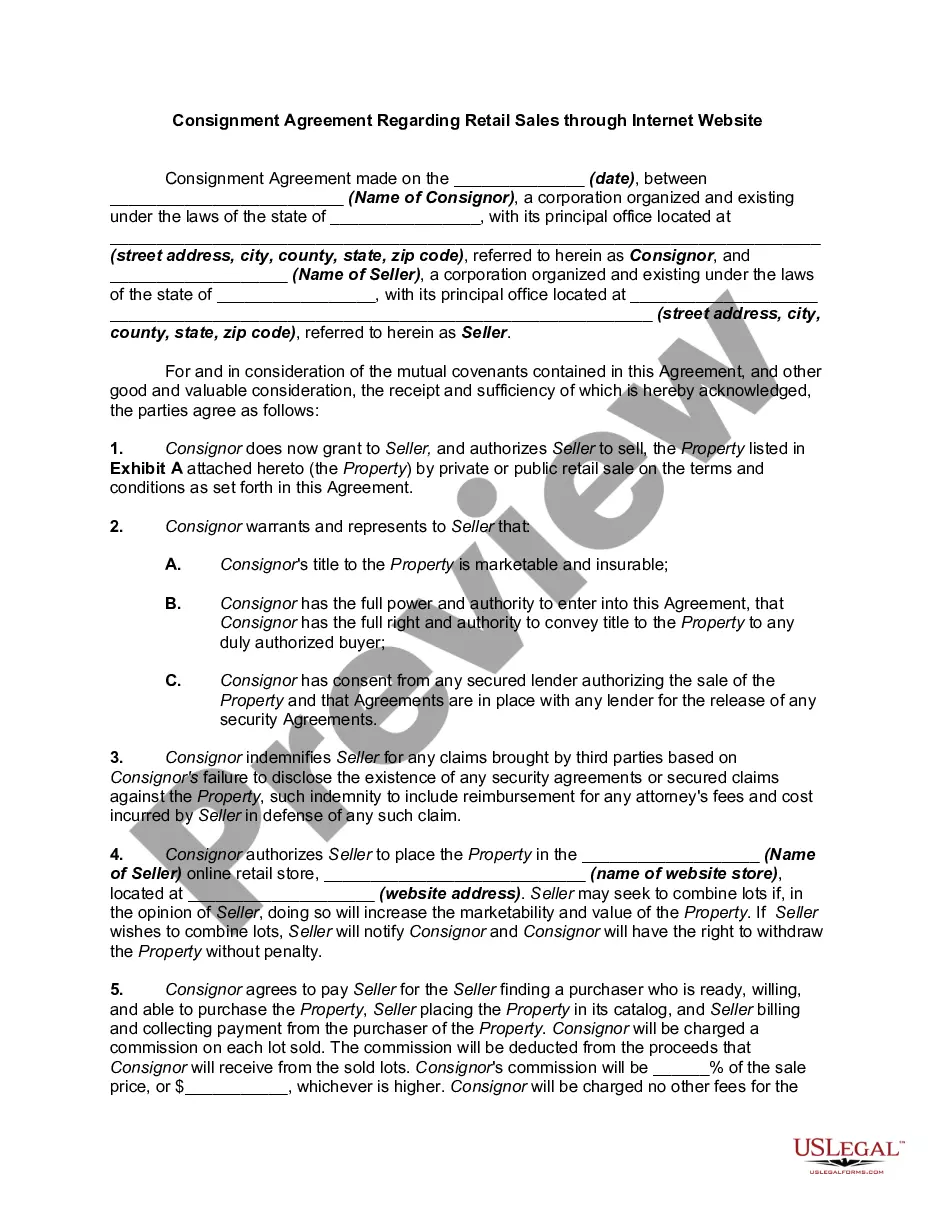
Get your form ready online
Our built-in tools help you complete, sign, share, and store your documents in one place.
Make edits, fill in missing information, and update formatting in US Legal Forms—just like you would in MS Word.
Download a copy, print it, send it by email, or mail it via USPS—whatever works best for your next step.
Sign and collect signatures with our SignNow integration. Send to multiple recipients, set reminders, and more. Go Premium to unlock E-Sign.
If this form requires notarization, complete it online through a secure video call—no need to meet a notary in person or wait for an appointment.
We protect your documents and personal data by following strict security and privacy standards.

Make edits, fill in missing information, and update formatting in US Legal Forms—just like you would in MS Word.

Download a copy, print it, send it by email, or mail it via USPS—whatever works best for your next step.

Sign and collect signatures with our SignNow integration. Send to multiple recipients, set reminders, and more. Go Premium to unlock E-Sign.

If this form requires notarization, complete it online through a secure video call—no need to meet a notary in person or wait for an appointment.

We protect your documents and personal data by following strict security and privacy standards.
Looking for another form?






How to fill out Consignment Agreement?
Creating legal documents from square one can frequently be intimidating.
Particular situations may demand extensive investigation and considerable financial investment.
If you’re looking for a simpler and more cost-effective method of drafting Consignment Agreement In Law or any other documentation without the hassle of navigating complex processes, US Legal Forms is readily available to assist you.
Our online repository of over 85,000 current legal forms encompasses nearly every aspect of your financial, legal, and personal matters.
However, before diving right into downloading the Consignment Agreement In Law, consider these suggestions: Verify the form preview and descriptions to confirm that you are on the correct document you’re searching for. Ascertain that the template you choose meets the criteria of your state and county. Select the most appropriate subscription option to acquire the Consignment Agreement In Law. Download the document, then complete, sign, and print it out. US Legal Forms has a solid reputation and more than 25 years of expertise. Join us today and transform form completion into a simple and efficient process!
- With just a few clicks, you can swiftly obtain state- and county-compliant documents meticulously created for you by our legal experts.
- Utilize our website whenever you require trustworthy and dependable services that allow you to easily find and download the Consignment Agreement In Law.
- If you are already familiar with our site and have previously set up an account, simply Log In to your profile, choose the template, and download it immediately or re-download it anytime in the My documents section.
- Not signed up yet? No problem. Registration takes just minutes, allowing you to browse the catalog.
Form popularity
FAQ
A consignment agreement is a contract that places an item the consignor (or owner) owns with the consignee (or seller) for the consignee to sell. The consignee often takes a commission or fee and then the remainder of the sale price is paid to the consignor.
They include: Potentially risky: The supplier may face costly losses if the vendor does not sell all their stock. ... Cash flow can be unpredictable: Depending on the consignment agreement, suppliers may not receive any money at all until a certain percentage or all of the consigned stock is sold.
Create fields for the agreement that both parties must agree to, such as the date of the agreement, a description of the products to be sold on consignment, the duration of the agreement, and the terms of payment. Fill out the fields with the appropriate information from both parties.
The consignee pays the consignor for the goods when they are sold by the consignee. Prior to sale by the consignee, the consignor holds title to the consignor's goods and the consignor bears the risk of loss.
Consignees assume responsibility for the care, custody, and control of the consigned goods and are liable for any loss or damage that may occur while the goods are in their possession. This includes risks such as theft, damage, spoilage, obsolescence, or other unforeseen events that may result in financial losses.