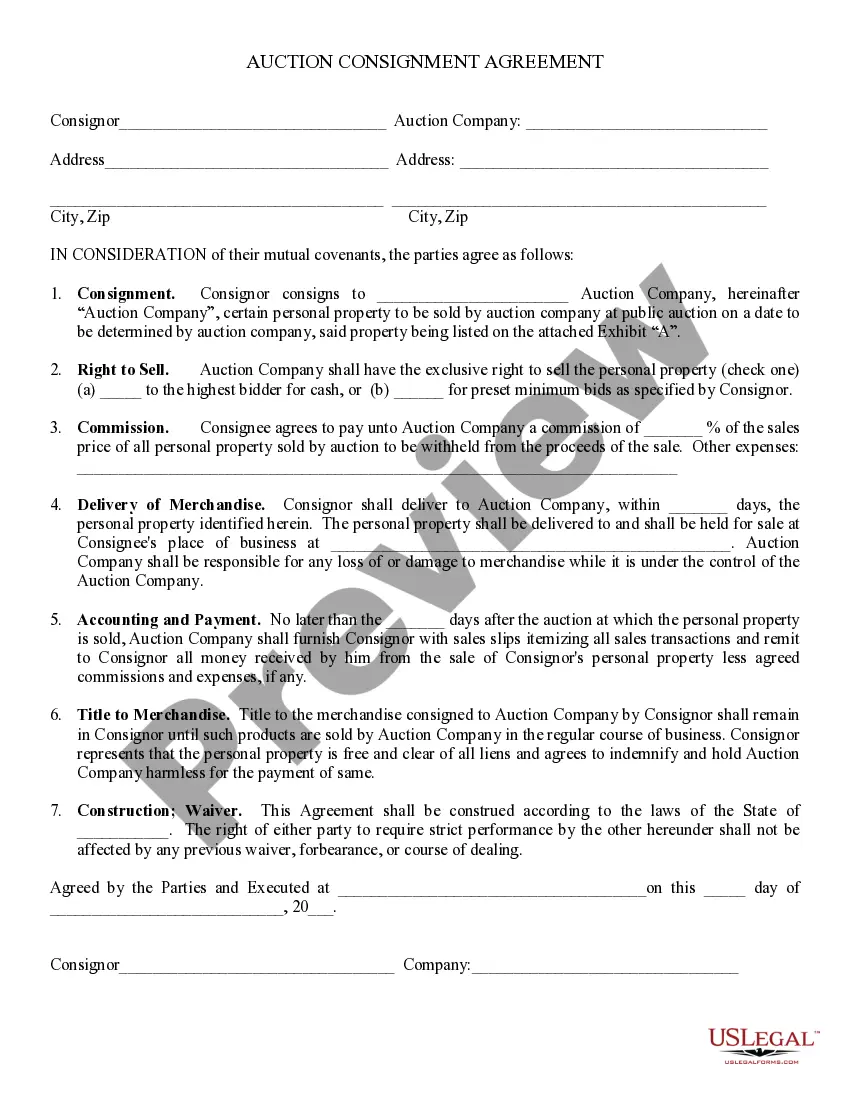
Consignment Form Of Retailing In Chicago
Description

Get your form ready online
Our built-in tools help you complete, sign, share, and store your documents in one place.
Make edits, fill in missing information, and update formatting in US Legal Forms—just like you would in MS Word.
Download a copy, print it, send it by email, or mail it via USPS—whatever works best for your next step.
Sign and collect signatures with our SignNow integration. Send to multiple recipients, set reminders, and more. Go Premium to unlock E-Sign.
If this form requires notarization, complete it online through a secure video call—no need to meet a notary in person or wait for an appointment.
We protect your documents and personal data by following strict security and privacy standards.

Make edits, fill in missing information, and update formatting in US Legal Forms—just like you would in MS Word.

Download a copy, print it, send it by email, or mail it via USPS—whatever works best for your next step.

Sign and collect signatures with our SignNow integration. Send to multiple recipients, set reminders, and more. Go Premium to unlock E-Sign.

If this form requires notarization, complete it online through a secure video call—no need to meet a notary in person or wait for an appointment.

We protect your documents and personal data by following strict security and privacy standards.
Looking for another form?




Form popularity
FAQ
A monthly return is due the 20th day of the month following the month for which the return is filed. A quarterly return is due the 20th day of the month following the quarter for which the return is filed. An annual return is due January 20th of the year following the year for which the return is filed.
Exemptions Sales to state, local, and federal governments. Sales to not-for-profit organizations that are exclusively charitable, religious, or educational. Sales of newspapers and magazines.
Purchasers may either document their tax-exempt purchases by completing Form CRT-61, Certificate of Resale, or by making their own certificate. A copy of the certificate must be provided to the retailer. Certificates of Resale should be updated at least every three years.
Back to top. Sales Tax (Retailers' Occupation Tax ROT) A tax imposed on retailers selling tangible personal property to purchasers in Illinois. It includes the taxes levied under the Retailers' Occupation Tax Act (35 ILCS 120) and all applicable local retailers' occupation taxes administered by IDOR.
You must register with the Illinois Department of Revenue (IDOR) if you conduct business in Illinois or with Illinois customers.
The Consignment Percentage While rates will vary from one consignment agreement to another, the industry average is around 60% for the product owner/maker and 40% for the shop owner. Keep in mind that it is possible for the consignor to negotiate even more favorable terms than those outlined above.
Here's how a typical consignment arrangement works: You bring your items to a consignment store. The store agrees to sell it on your behalf. You both sign an agreement outlining the terms of the sale.
Some types of product are commonly sold through consignment. These include clothing, athletic equipment, furniture, musical instruments, art, and jewelry. For example, an artist might have five large pieces of artwork to sell but has no place to showcase the work for prospective buyers.
Consignment inventory best practices Establish clear agreements. Clearly define terms, responsibilities, and expectations with your consignment partners. Implement robust tracking systems. Maintain effective communication. Optimize replenishment processes. Analyze and adjust strategies.
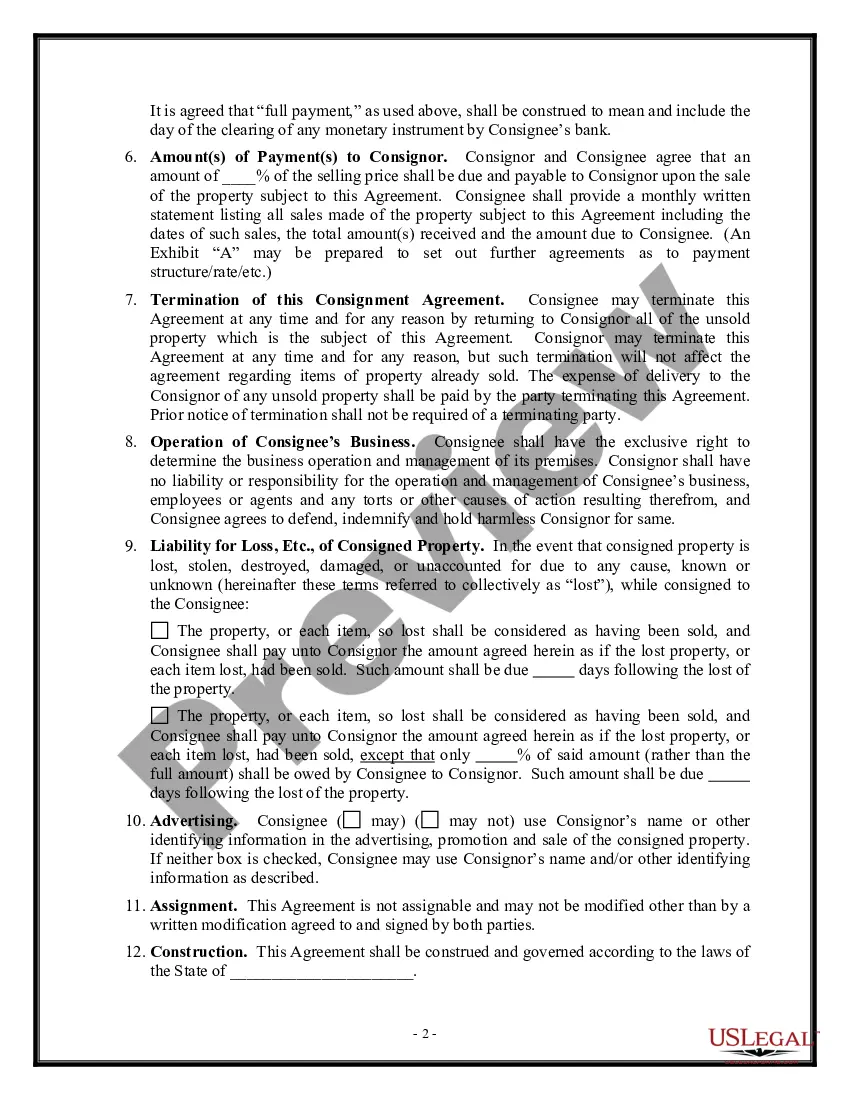
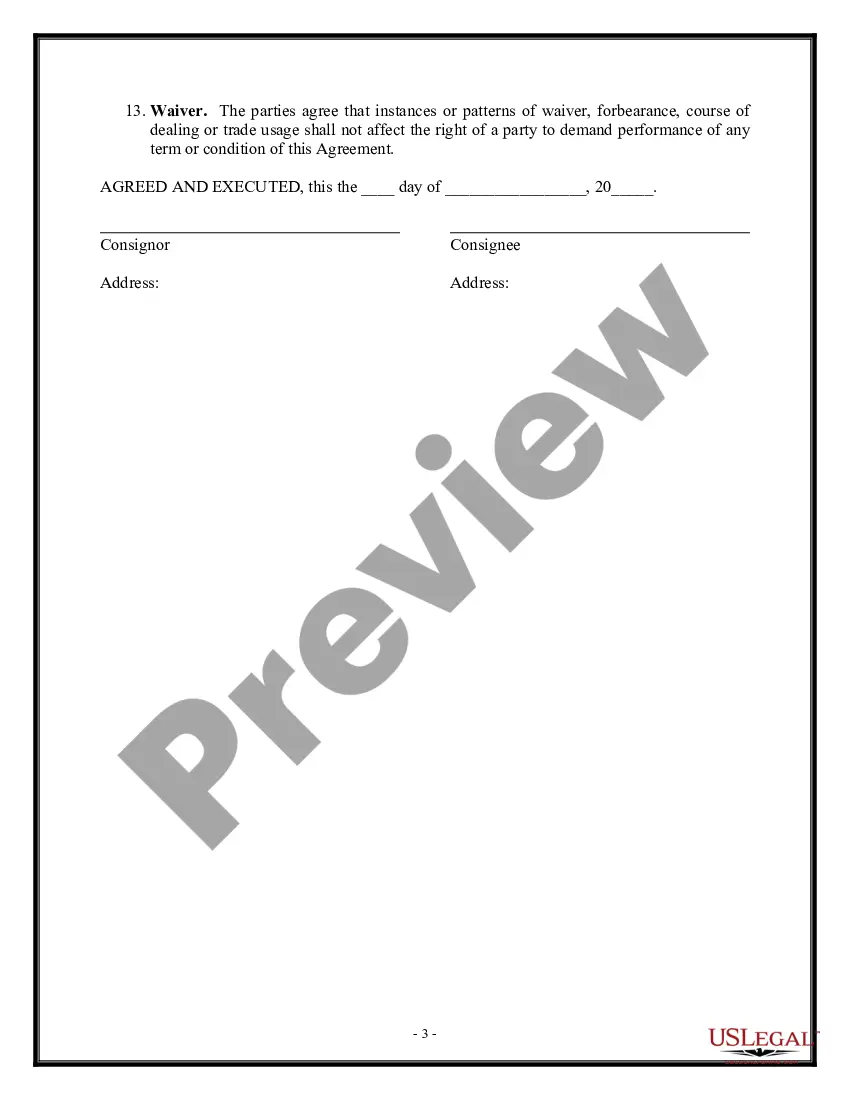
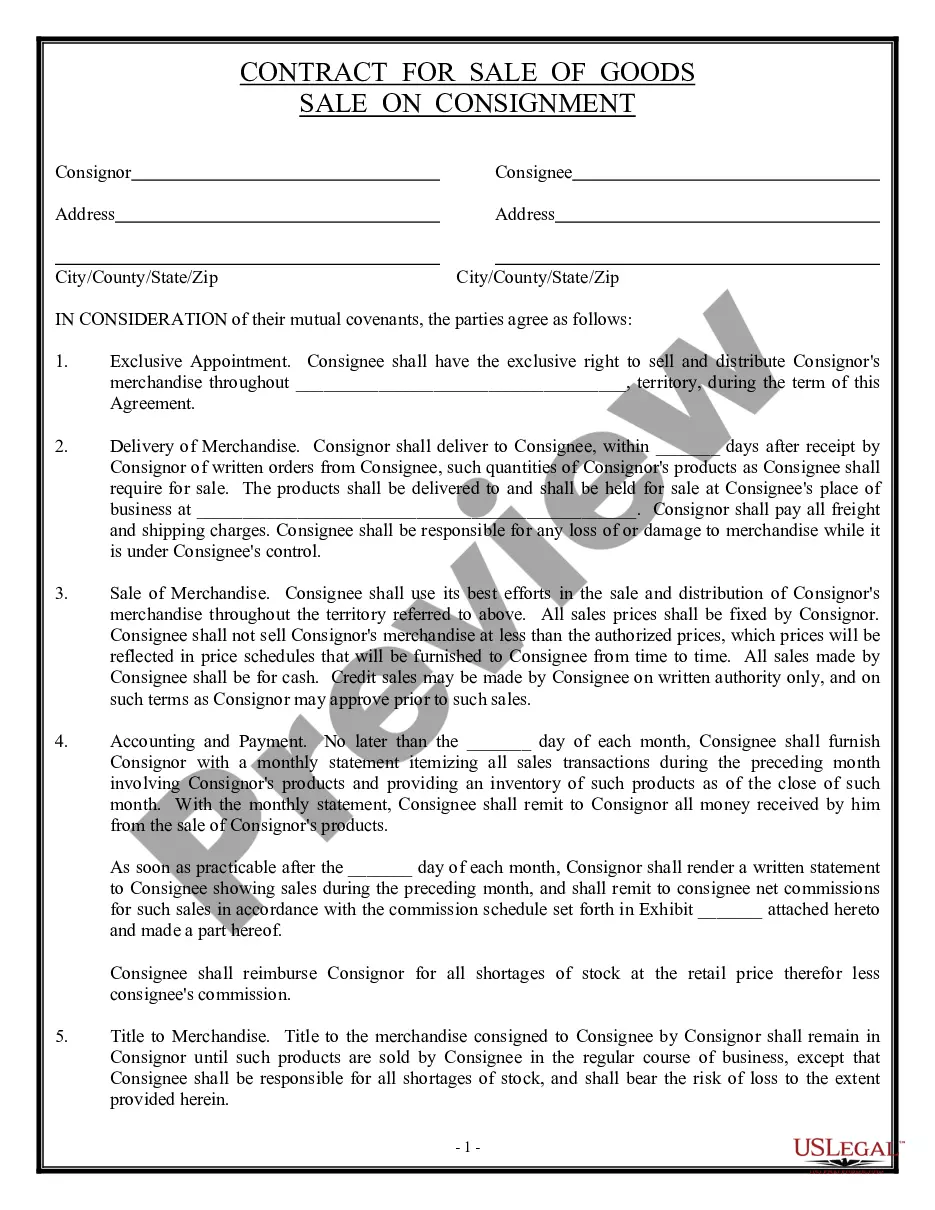
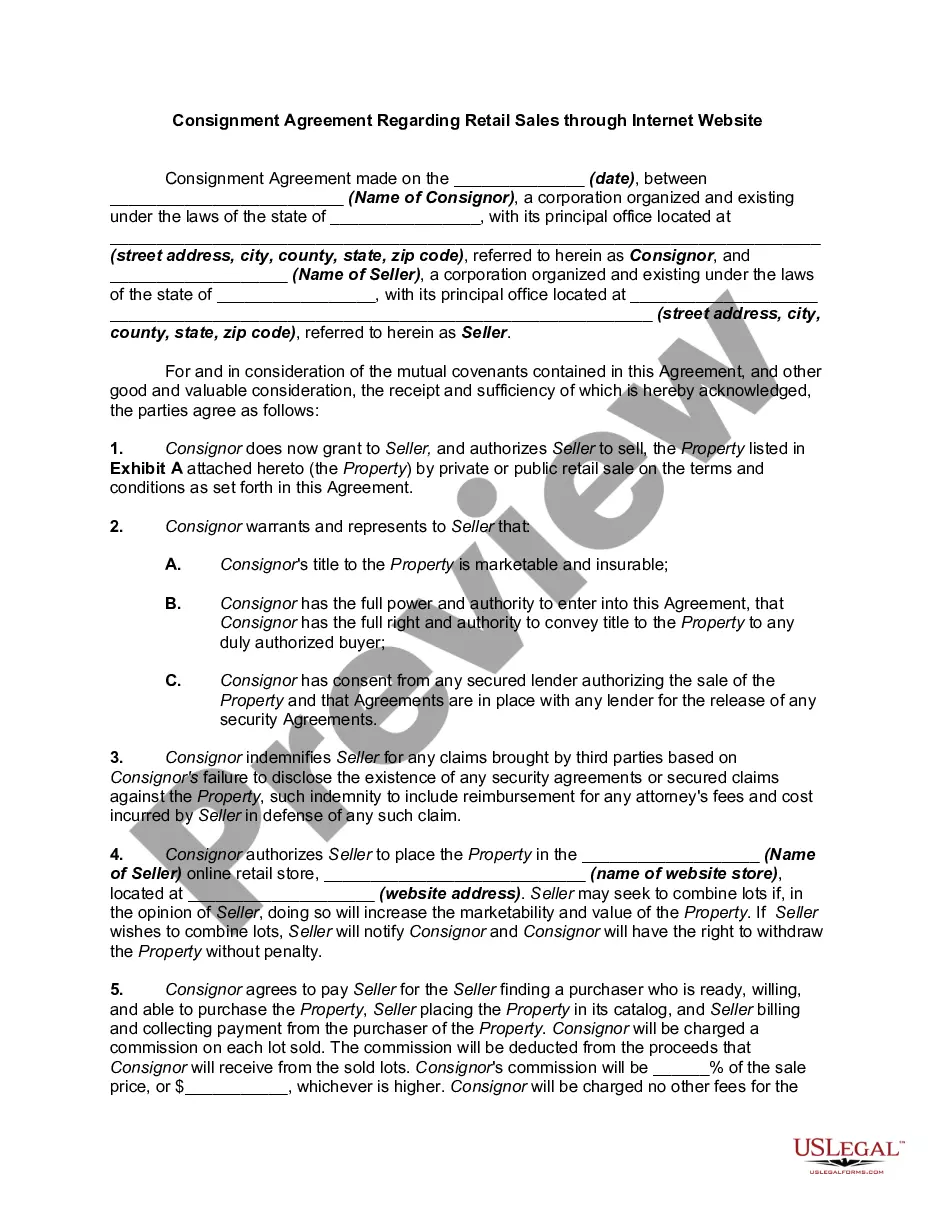
A consignment agreement is an agreement between a consignee and consignor for the storage, transfer, sale or resale and use of the commodity. The consignee may take goods from the consignment stock for use or resale subject to payment to the consignor agreeably to the terms bargained in the consignment agreement.
