Caregiver Form Application With Medicare In Clark
Description

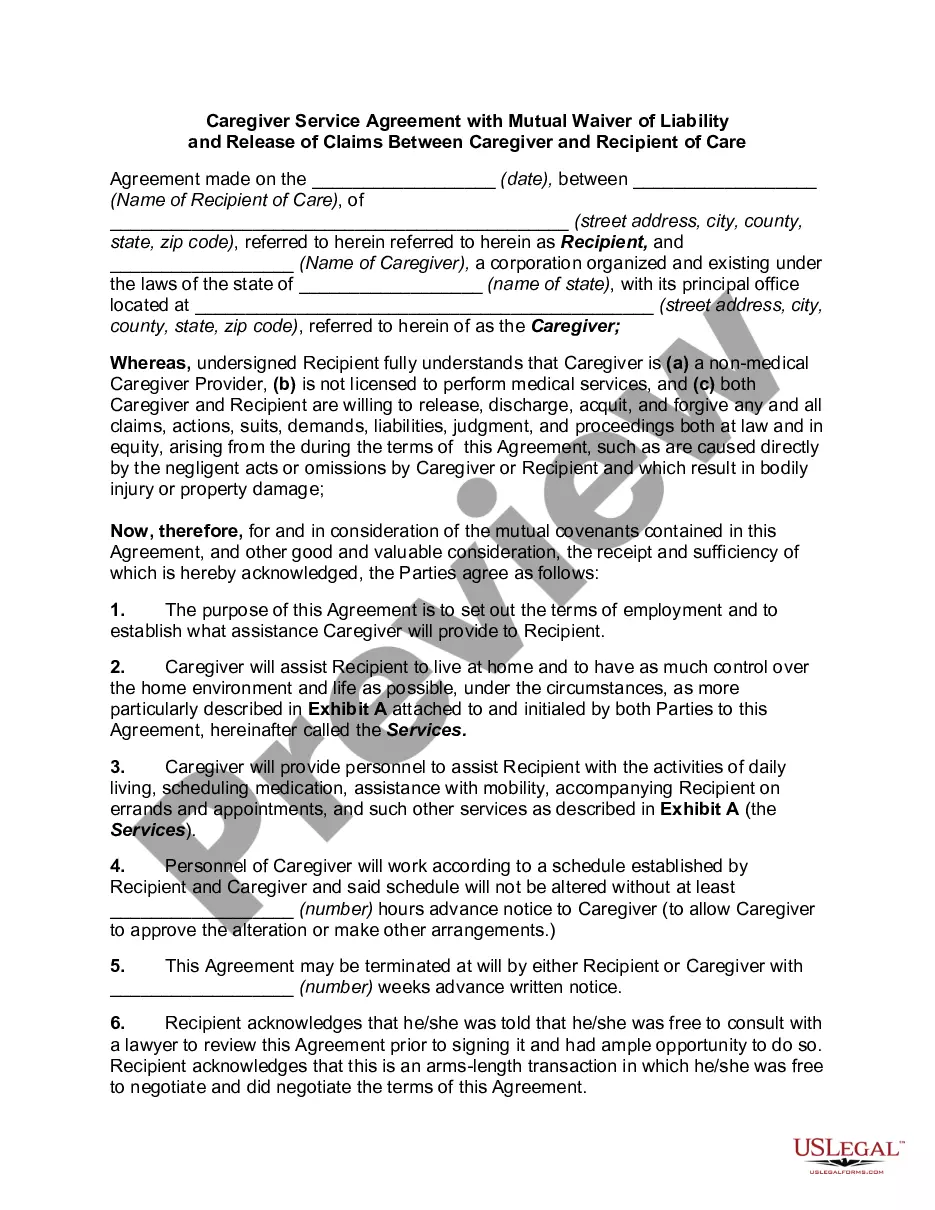
Get your form ready online
Our built-in tools help you complete, sign, share, and store your documents in one place.
Make edits, fill in missing information, and update formatting in US Legal Forms—just like you would in MS Word.
Download a copy, print it, send it by email, or mail it via USPS—whatever works best for your next step.
Sign and collect signatures with our SignNow integration. Send to multiple recipients, set reminders, and more. Go Premium to unlock E-Sign.
If this form requires notarization, complete it online through a secure video call—no need to meet a notary in person or wait for an appointment.
We protect your documents and personal data by following strict security and privacy standards.

Make edits, fill in missing information, and update formatting in US Legal Forms—just like you would in MS Word.

Download a copy, print it, send it by email, or mail it via USPS—whatever works best for your next step.

Sign and collect signatures with our SignNow integration. Send to multiple recipients, set reminders, and more. Go Premium to unlock E-Sign.

If this form requires notarization, complete it online through a secure video call—no need to meet a notary in person or wait for an appointment.

We protect your documents and personal data by following strict security and privacy standards.
Looking for another form?

Form popularity
FAQ
Unlike some states, Nevada requires licensing for all non-medical home care providers, including those offering basic services like homemaking, companionship care and personal assistance. You must apply through the Department of Health and Human Services before legally operating.
Caregivers in Las Vegas can become CNAs by doing the following: Finishing at least 75 hours of a state-approved CNA training program at a university or college. Successfully passing the certification exam. Completing another 12 hours of ongoing caregiver education (CE) courses on an annual basis.
If you are helping care for a family member or friend, you are not alone! More than 820,000 Washington State citizens provide care to an adult who needs help with care.
Emotional support is crucial for caregivers, as it can help them manage stress, cope with difficult emotions and prevent burnout. This support can come from friends, family or professional counselors who provide a safe, nonjudgmental space for caregivers to express their feelings and concerns.
What do caregivers need most? Listen attentively. Really listen to what they have to say. Don't tell horror stories. Don't be judgmental. Ask what they need. Offer the gift of your time. Give your friend space. Bring food. Offer to take your friend out—and help arrange respite care.
Support for caregivers can come in various forms, including respite care, caregiver support groups, and training and educational resources - all of these provide support, and contribute to the sustainability and quality of care they provide.
Prevention and Treatment for Caregiver Burnout Involve other family members. Support group recommendations and self-care. Connect with emotional support resources. Provide education on caregiving responsibilities. Provide alternatives to medication such as a healthy lifestyle. Monitor medication use.
Family Caregiver Programs - The purpose of the Family Caregiver Programs are to support families and other unpaid caregivers to continue providing quality, safe, long-term care to adults with functional disabilities. Call 425-290-1240 for more information.
