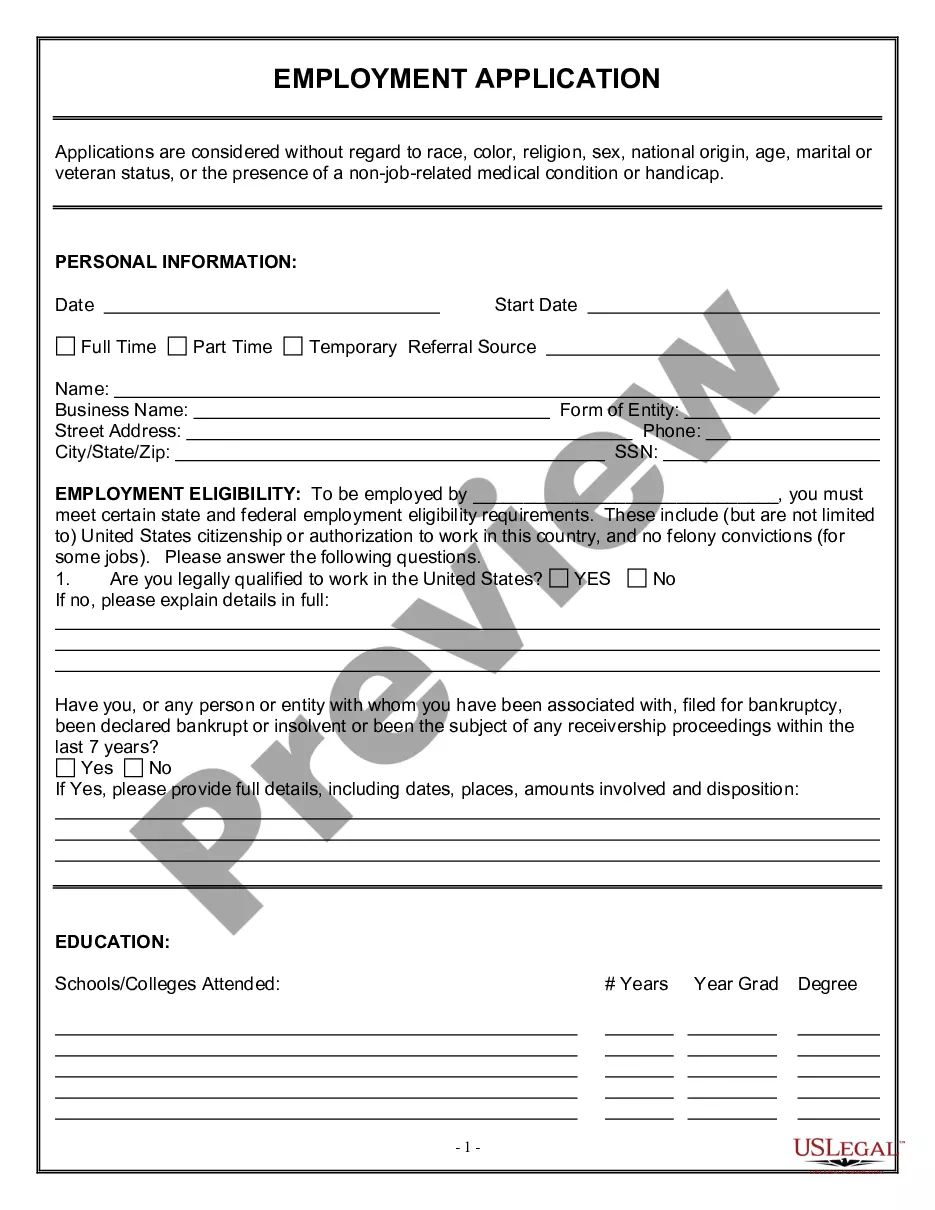
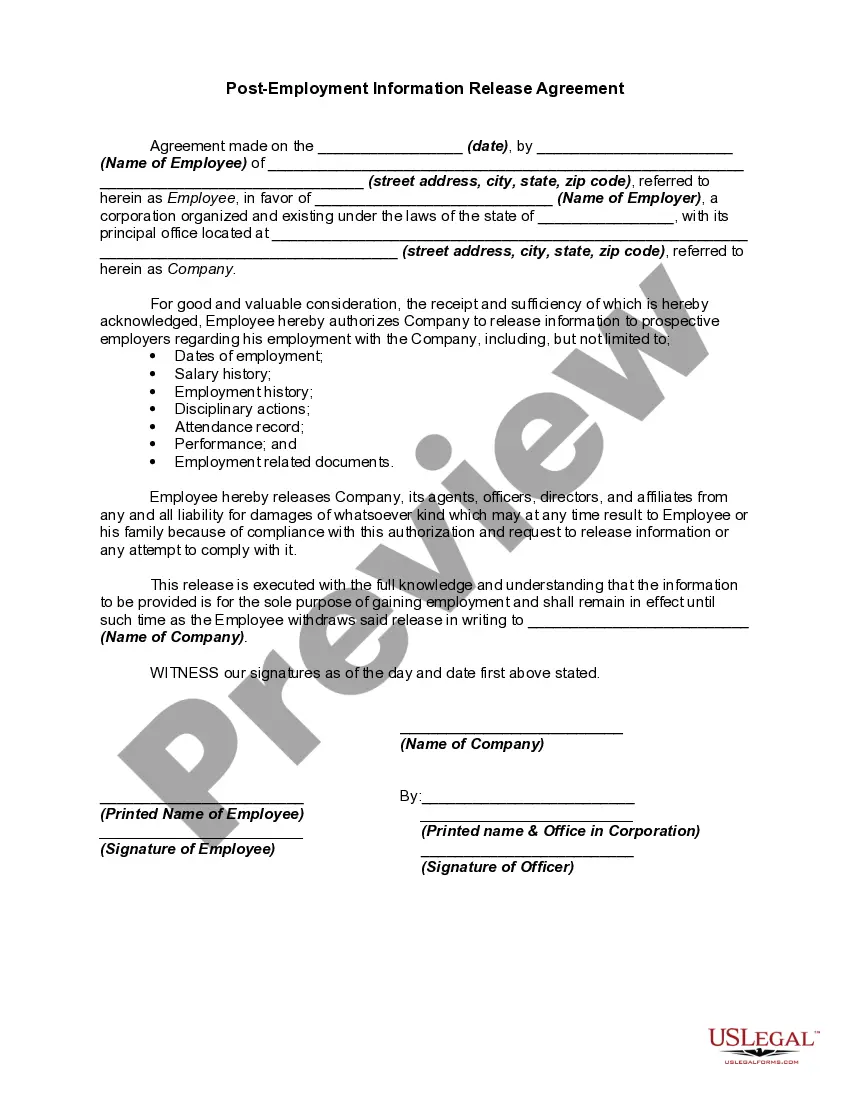
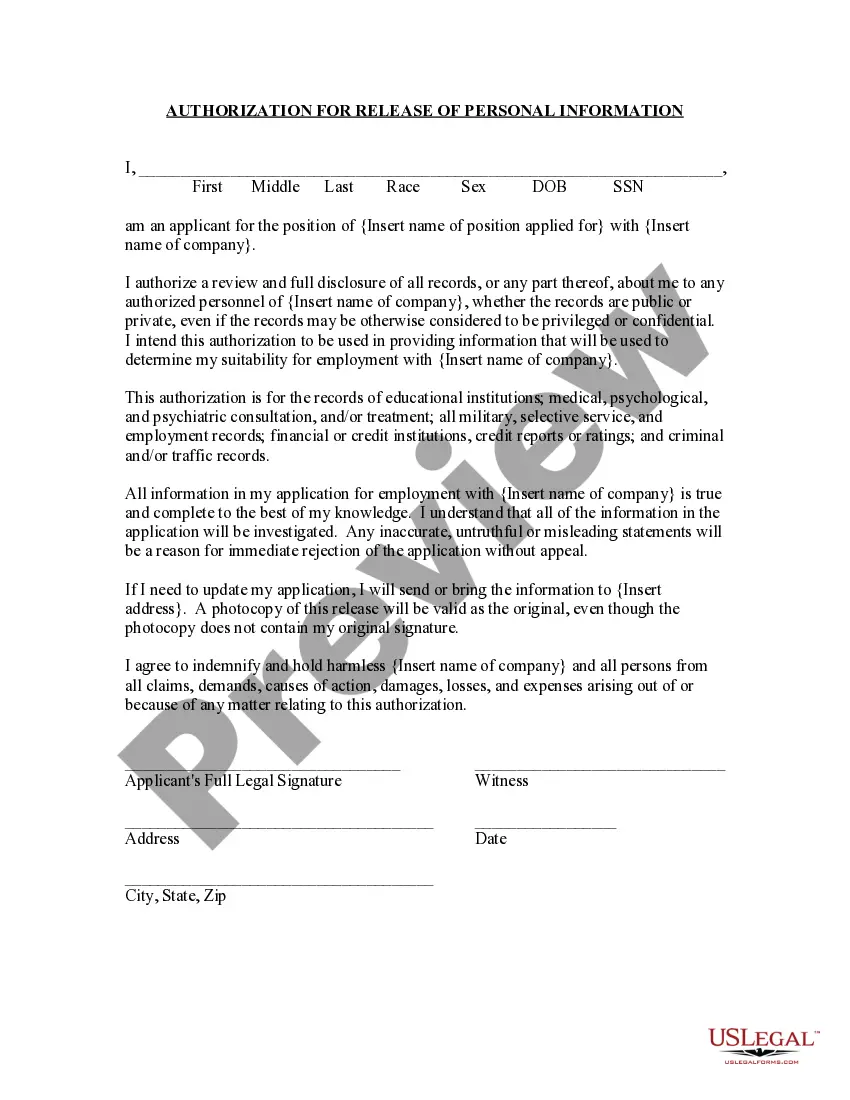
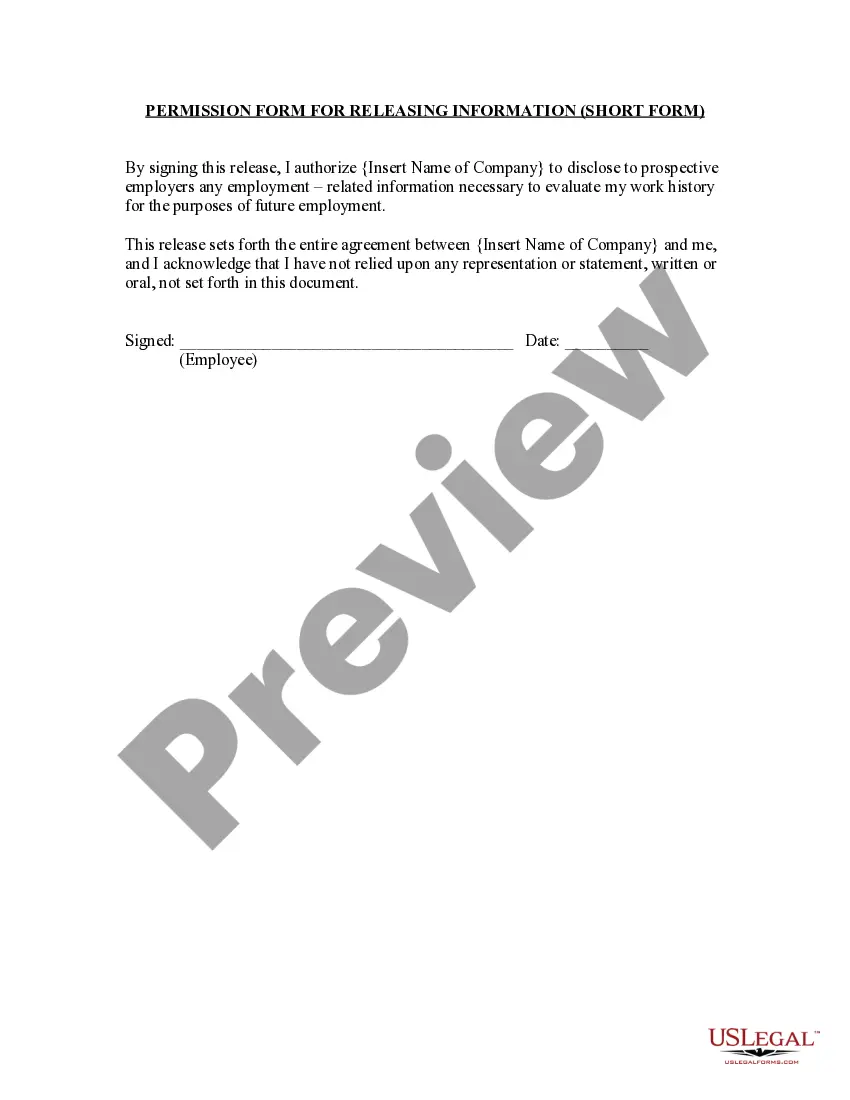
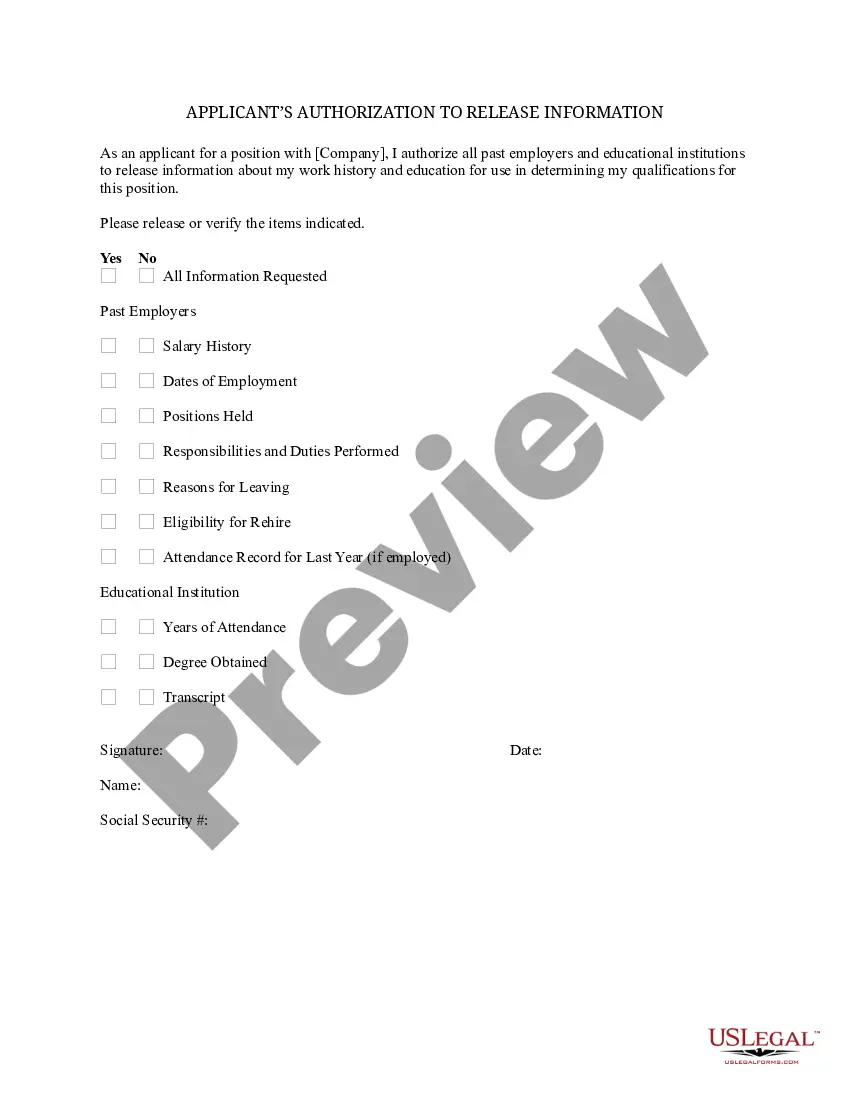
Employee Consent Form Personal Information In Texas
Description
Get your form ready online
Our built-in tools help you complete, sign, share, and store your documents in one place.
Make edits, fill in missing information, and update formatting in US Legal Forms—just like you would in MS Word.
Download a copy, print it, send it by email, or mail it via USPS—whatever works best for your next step.
Sign and collect signatures with our SignNow integration. Send to multiple recipients, set reminders, and more. Go Premium to unlock E-Sign.
If this form requires notarization, complete it online through a secure video call—no need to meet a notary in person or wait for an appointment.
We protect your documents and personal data by following strict security and privacy standards.

Make edits, fill in missing information, and update formatting in US Legal Forms—just like you would in MS Word.

Download a copy, print it, send it by email, or mail it via USPS—whatever works best for your next step.

Sign and collect signatures with our SignNow integration. Send to multiple recipients, set reminders, and more. Go Premium to unlock E-Sign.

If this form requires notarization, complete it online through a secure video call—no need to meet a notary in person or wait for an appointment.

We protect your documents and personal data by following strict security and privacy standards.
Looking for another form?


Form popularity
FAQ
The Consent Form provides an employer's disclosure of information, rights and rules pertaining to the background check and obtains the consumer's authorization to run the background check.
Employee privacy rights in Texas stem from a combination of state and federal laws, protecting various aspects of employee privacy. The Texas Privacy Act, for instance, encompasses personal data collected from users in an individual or household context but does not apply to private employers in a business setting.
The Act exempts six types of entities: state agencies and political subdivisions of the state, financial institutions governed by the Gramm-Leach-Bliley Act (“GLB”), entities governed by the Health Insurance Portability and Accountability Act (“HIPAA”), nonprofit organizations, and institutions of higher education.
Do I have a right to privacy in the workplace? You have a right to privacy under U.S. Constitution's 4th Amendment and the California Constitution. Whether your privacy right has been violated depends on whether you have a protected privacy interest and what your employer is trying to find out about you.
Texas employers should know that Texas courts recognize the following three of the four common law invasion of privacy claims: Intrusion upon the solitude or seclusion of another. Public disclosure of private facts. Appropriation of name or likeness.
Here's a list of the new hire forms in Texas that your employee will need to sign. The official offer letter. An Employee Personal Data Form. A W2 Tax Form. The I-9 Form, which proves their right to work in the United States. A Direct Deposit Authorization Form. A Federal W-4 Form.
Texas follows the “7-year rule,” which means most background checks can only go back 7 years when reporting criminal history, provided the job pays less than $75,000 annually. It is legal for potential employers to run background checks.
These laws require employers to provide former employees with certain basic information, in writing, about their employment. In Texas, an employee may ask an employer to provide a service letter. If the employee was discharged, the employer must provide a written statement of the reasons for the termination.
Sec. 103.003. AUTHORIZED DISCLOSURE; APPLICATION TO CERTAIN EMPLOYEES. (a) An employer may disclose information about a current or former employee's job performance to a prospective employer of the current or former employee on the request of the prospective employer or the employee.