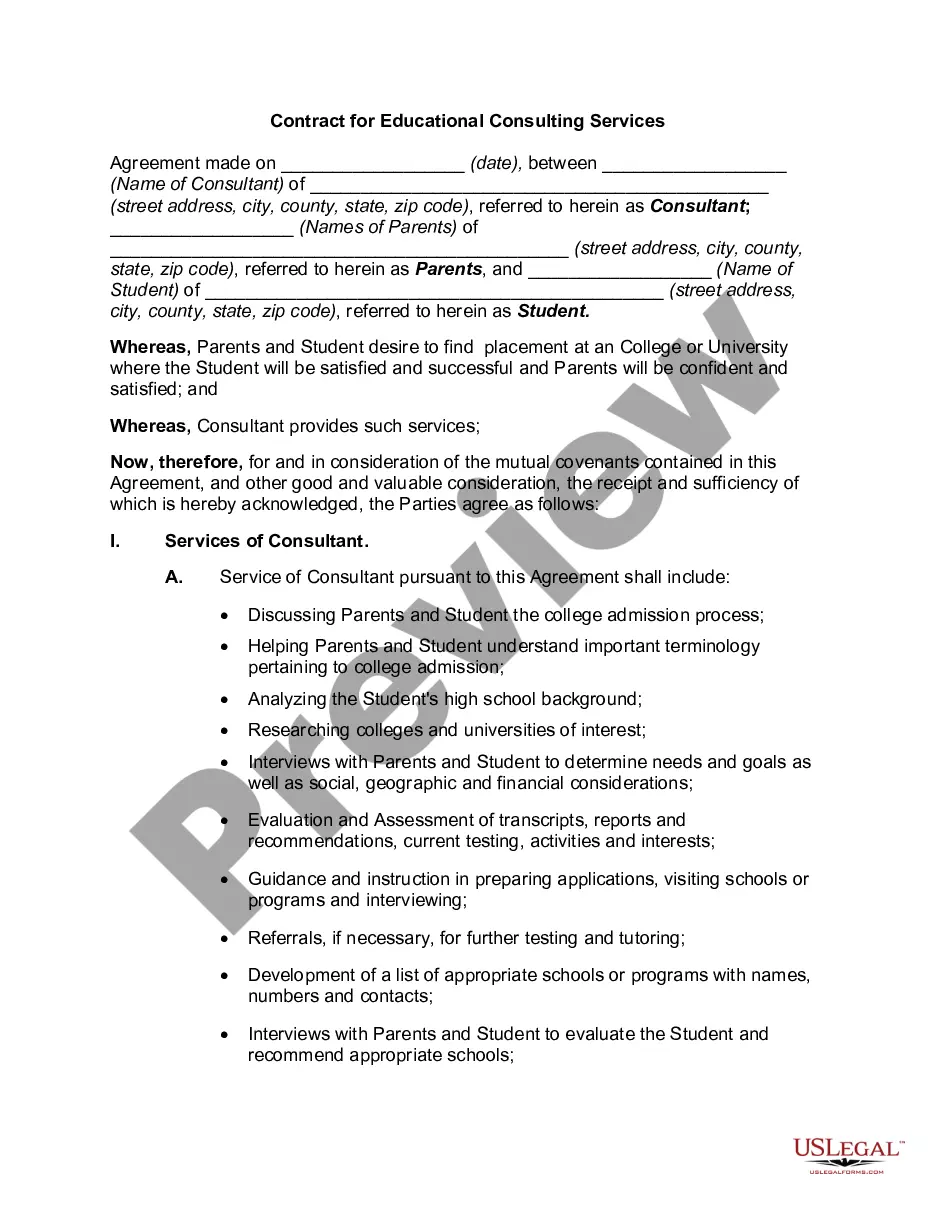
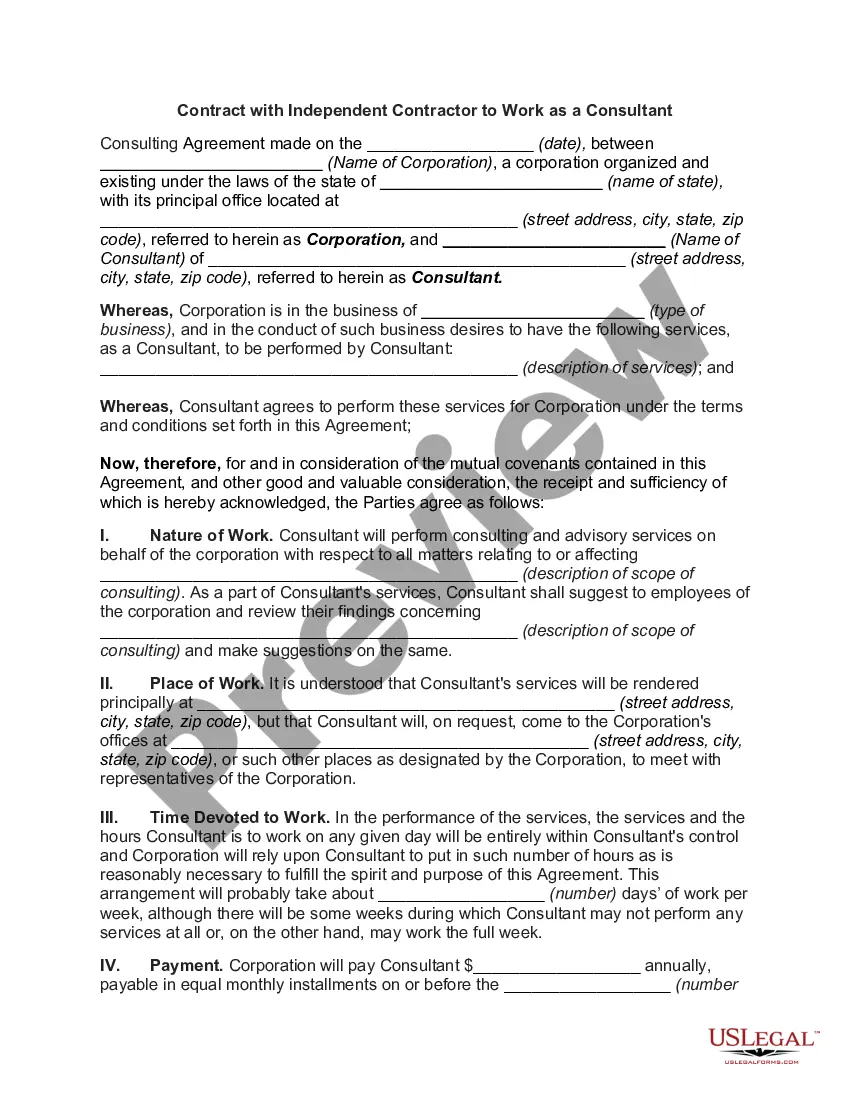
Consultant Contract Under Withholding In Palm Beach
Description

Get your form ready online
Our built-in tools help you complete, sign, share, and store your documents in one place.
Make edits, fill in missing information, and update formatting in US Legal Forms—just like you would in MS Word.
Download a copy, print it, send it by email, or mail it via USPS—whatever works best for your next step.
Sign and collect signatures with our SignNow integration. Send to multiple recipients, set reminders, and more. Go Premium to unlock E-Sign.
If this form requires notarization, complete it online through a secure video call—no need to meet a notary in person or wait for an appointment.
We protect your documents and personal data by following strict security and privacy standards.

Make edits, fill in missing information, and update formatting in US Legal Forms—just like you would in MS Word.

Download a copy, print it, send it by email, or mail it via USPS—whatever works best for your next step.

Sign and collect signatures with our SignNow integration. Send to multiple recipients, set reminders, and more. Go Premium to unlock E-Sign.

If this form requires notarization, complete it online through a secure video call—no need to meet a notary in person or wait for an appointment.

We protect your documents and personal data by following strict security and privacy standards.
Looking for another form?


Form popularity
FAQ
However, to be legally binding, a contract must include four key elements: an offer, acceptance, consideration, and an intention to create legal relations.
The four primary options are arbitration, mediation, negotiation, and collaborative law. Arbitration occurs when the disputing parties agree to determine settlement outside the court system, but seek a binding, third-party decision.
Lesson Summary. A contract is a legal agreement between two or more parties in which they agree to each other's rights and responsibilities. Offer, acceptance, awareness, consideration, and capacity are the five elements of an enforceable contract.
The basic elements required for the agreement to be a legally enforceable contract are: mutual assent , expressed by a valid offer and acceptance ; adequate consideration ; capacity ; and legality . In some states , elements of consideration can be satisfied by a valid substitute.
Here are six best practices to write a consulting contract that defines your project scope and protects both you and your business. Define Duties, Deliverables, and Roles. Prepare for Potential Risk. Specify Project Milestones and Engagement Time. Identify Expenses and Outline Payment Terms. Specify Product Ownership.
How to determine if you have an enforceable contract Were both parties aware that they were entering into an agreement? ... Does the contract have an offer? ... Was there an acceptance of the offer? ... Does the contract have consideration? ... Did all parties have the capacity to enter into the contract? ... Is the contract legal?
A Statement of Work (SOW) is a document that outlines the specific tasks, deliverables, and timeline for a project. The parties involved determine the scope of work to perform. A contract is a legal agreement between two or more parties that outlines their rights, duties, and obligations.
Consulting Agreements detail the terms of specific engagements, ensuring that both parties are aligned on expectations, deliverables, and compensation. SOWs, on the other hand, provide granular detail on project tasks, timelines, and milestones, making them indispensable for project management and accountability.
A scope of work (SOW) defines how a project will be executed through specific tasks, activities, deliverables, and timelines. A SOW also provides important legal protections for both you and your client. The main purpose of a SOW is to break down the project into concrete details.
A consulting contract should offer a detailed description of the duties you will perform and the deliverables you promise the client. The agreement may also explain how much work you will perform at the client's office and how often you will work remotely.
