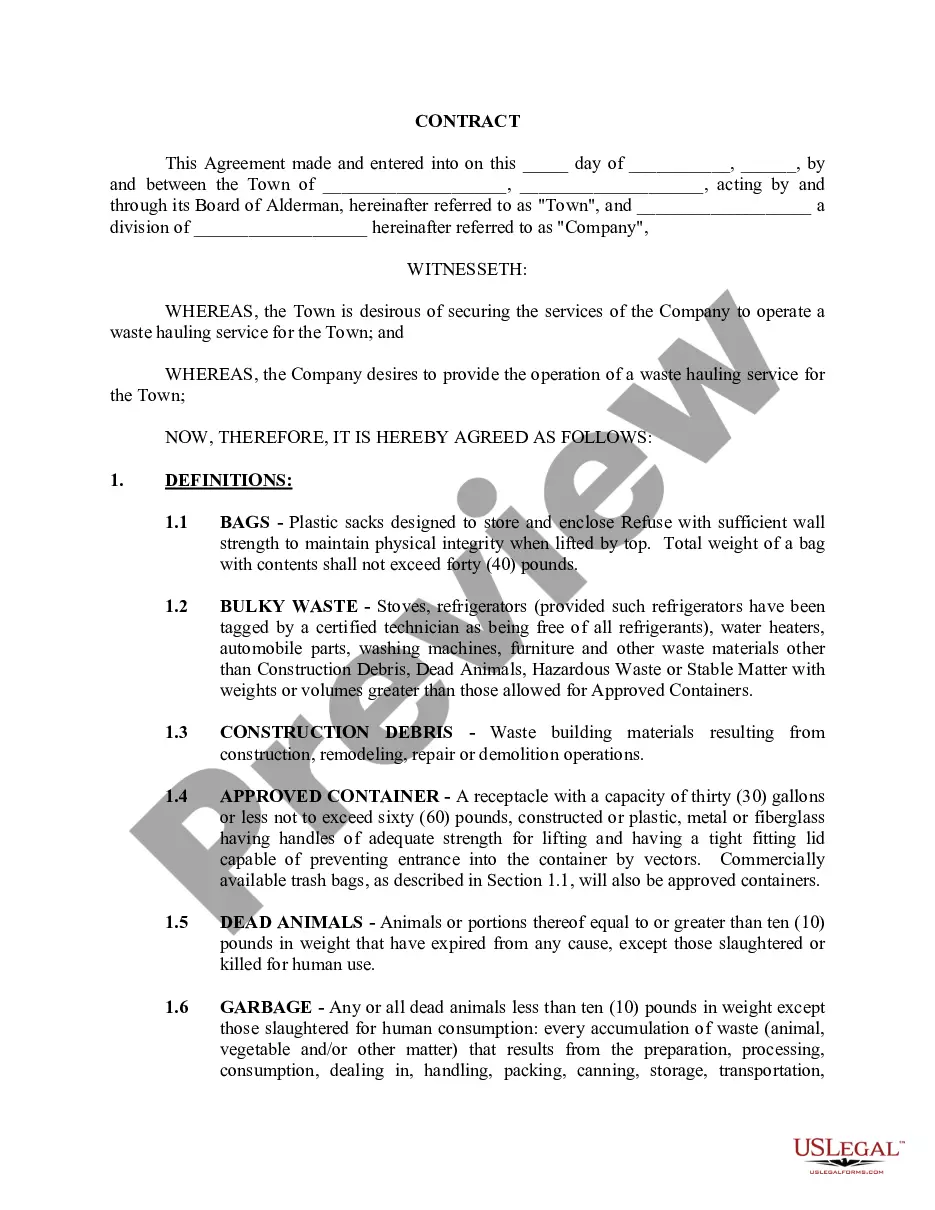
Garbage Collection Contract Template With Time In Michigan
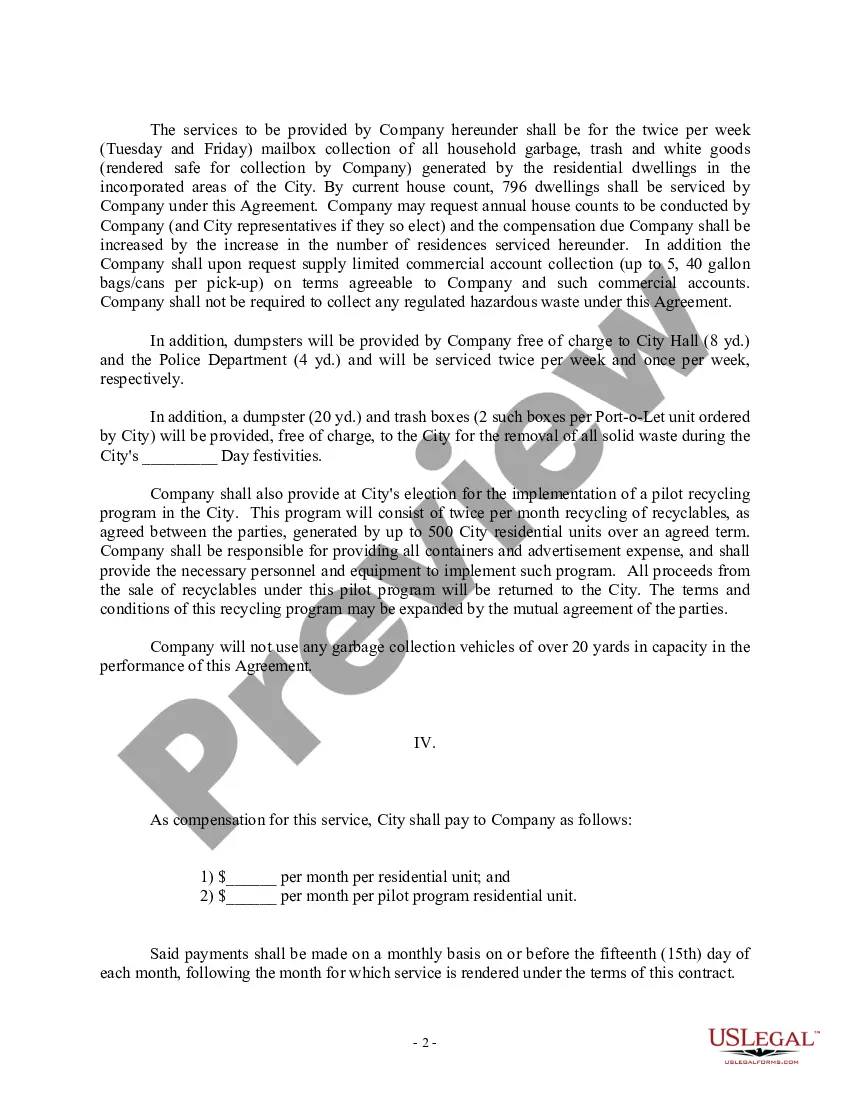
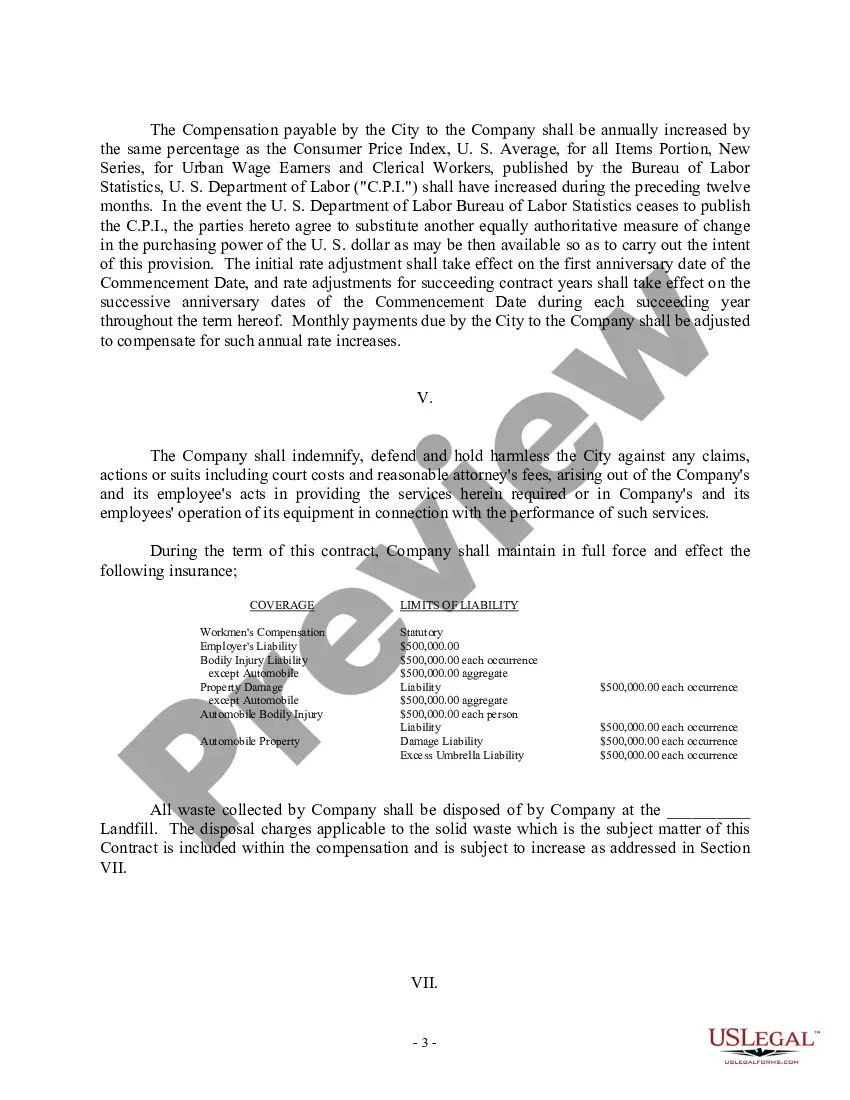
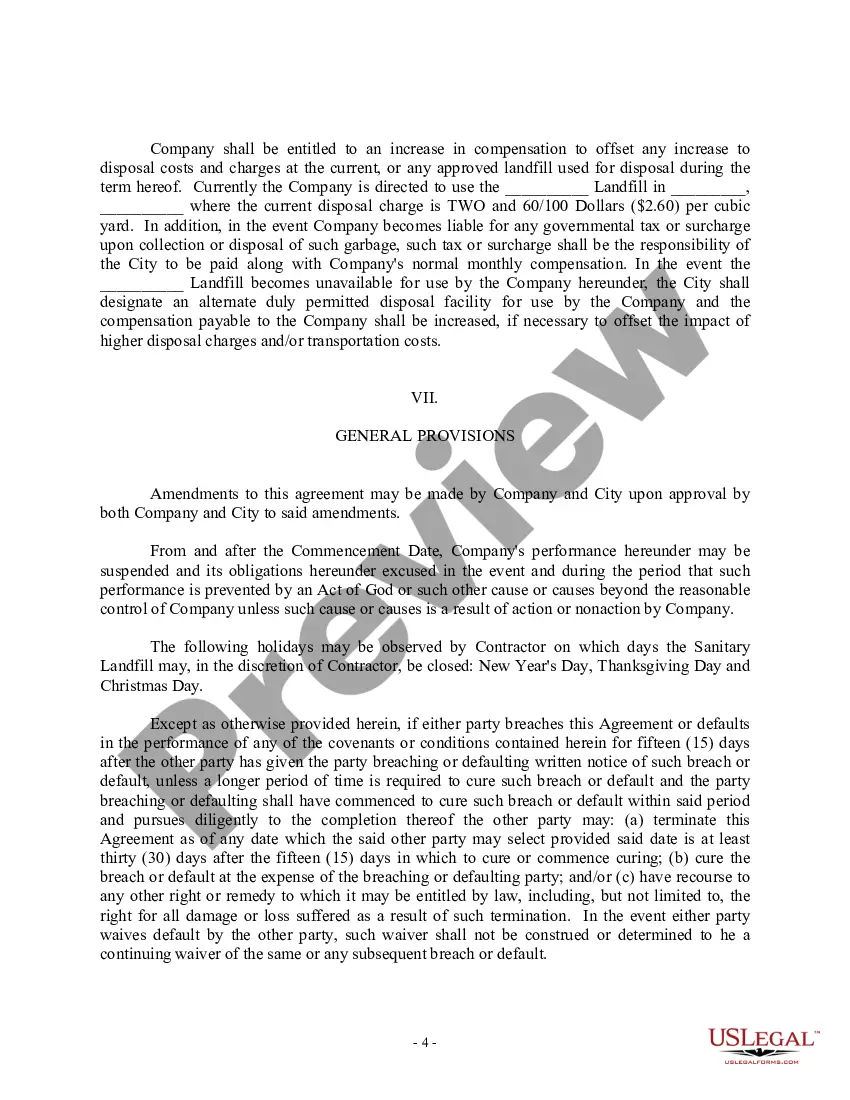
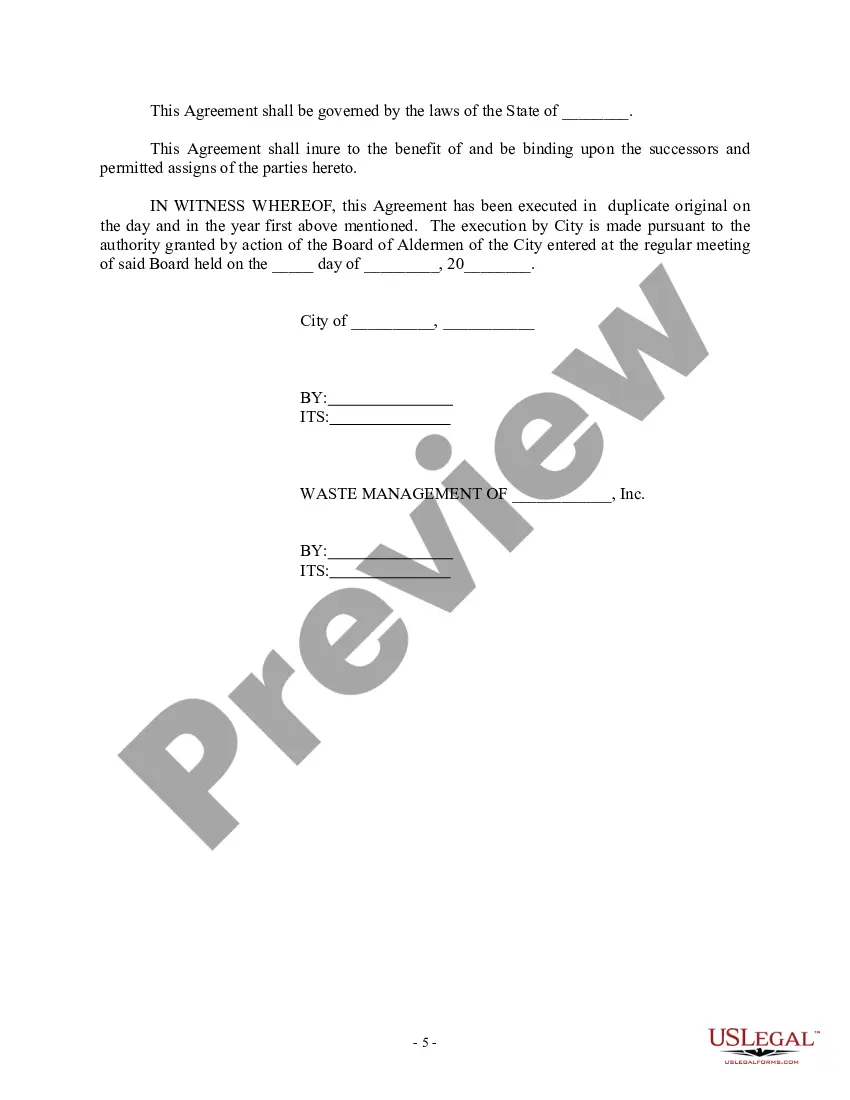
Description




Form popularity
FAQ
The main types of waste disposal include landfilling, incineration, waste compaction, biogas generation, composting, and vermicomposting. 3. How do waste disposal methods differ? Waste disposal methods vary based on the waste type, environmental impact, and local regulations.
The main types of waste disposal include landfilling, incineration, waste compaction, biogas generation, composting, and vermicomposting. 3. How do waste disposal methods differ? Waste disposal methods vary based on the waste type, environmental impact, and local regulations.
Five actions should respectively be taken if possible before recycling any products. These R's include: refuse, reduce, reuse, repurpose and finally, recycle.
Below are the seven effective methods of solid waste disposal and management: Preventing or Reducing Waste Generation. Recycling. Incineration. Composting. Sanitary Landfill. Disposal in Ocean/Sea. Plasma Gasification.
Although the solid waste regulations do not require a license, permit, or registration from EGLE to haul solid waste, there are several regulations that haulers must meet to ensure human health and our environment are protected.
FAQs Address of the Municipal Corporation Office. Date (dd/mm/yy) Subject (Write the issue for which you are writing the letter) Salutation (Dear Sir/Ma'am) Introductory Paragraph. (Write the issue you are concerned about. Body. Closing Paragraph. Signing Off ( Use 'Regards', 'Sincerely', etc.)
10 Steps for Effective Waste Management Planning Identify the Waste Your Facility Creates. Identify Waste Streams. Establish a Waste Management Team. Assess Current Waste Disposal Methods. Consider Your Waste Hierarchy. Select Waste Management Partners. Set Targets for Waste Reduction. Create a Waste Management Action Plan.
Take your waste to your local recycling centre (or 'tip') - find a recycling centre by checking on your council's website. take your waste to a permitted private waste site. use a registered private business that provides a waste collection service - for example, a skip company or household clearance service.
All ships of 100 gross tonnage and above, every ship certified to carry 15 persons or more, and every fixed or floating platform must carry a garbage management plan on board, which includes written procedures for minimizing, collecting, storing, processing and disposing of garbage, including the use of the equipment ...
