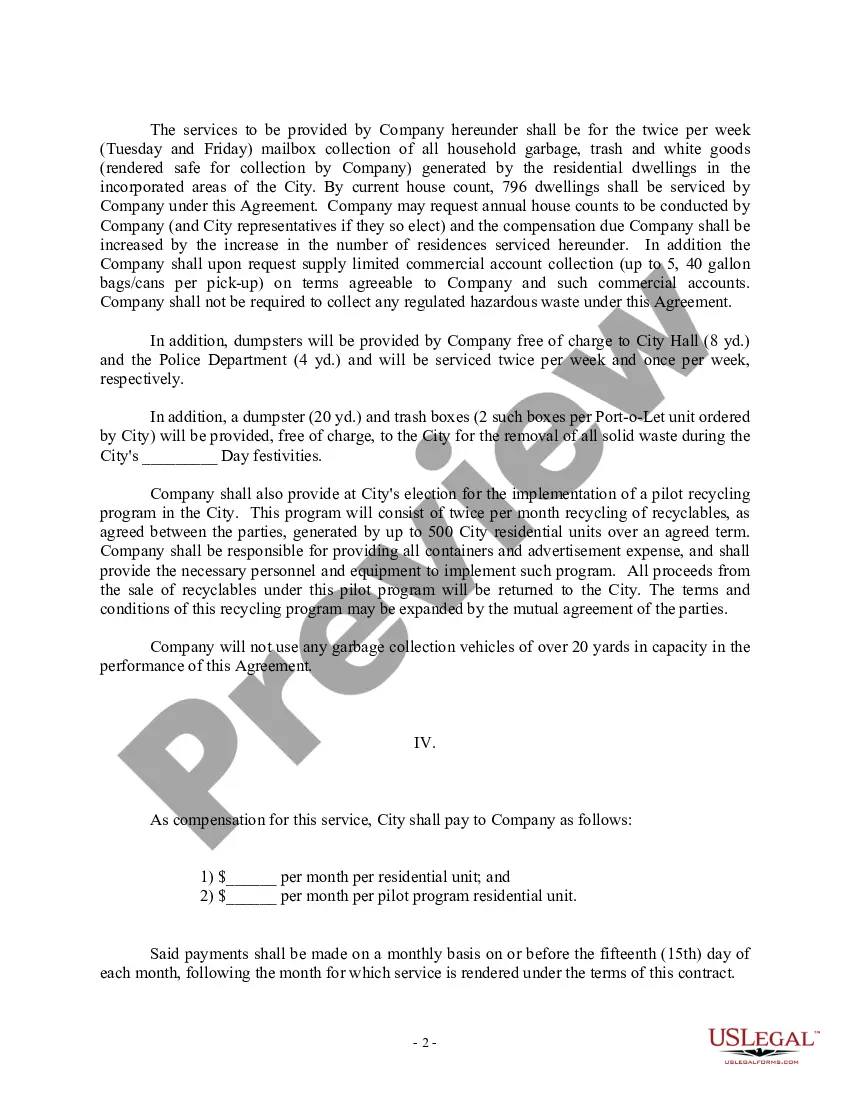
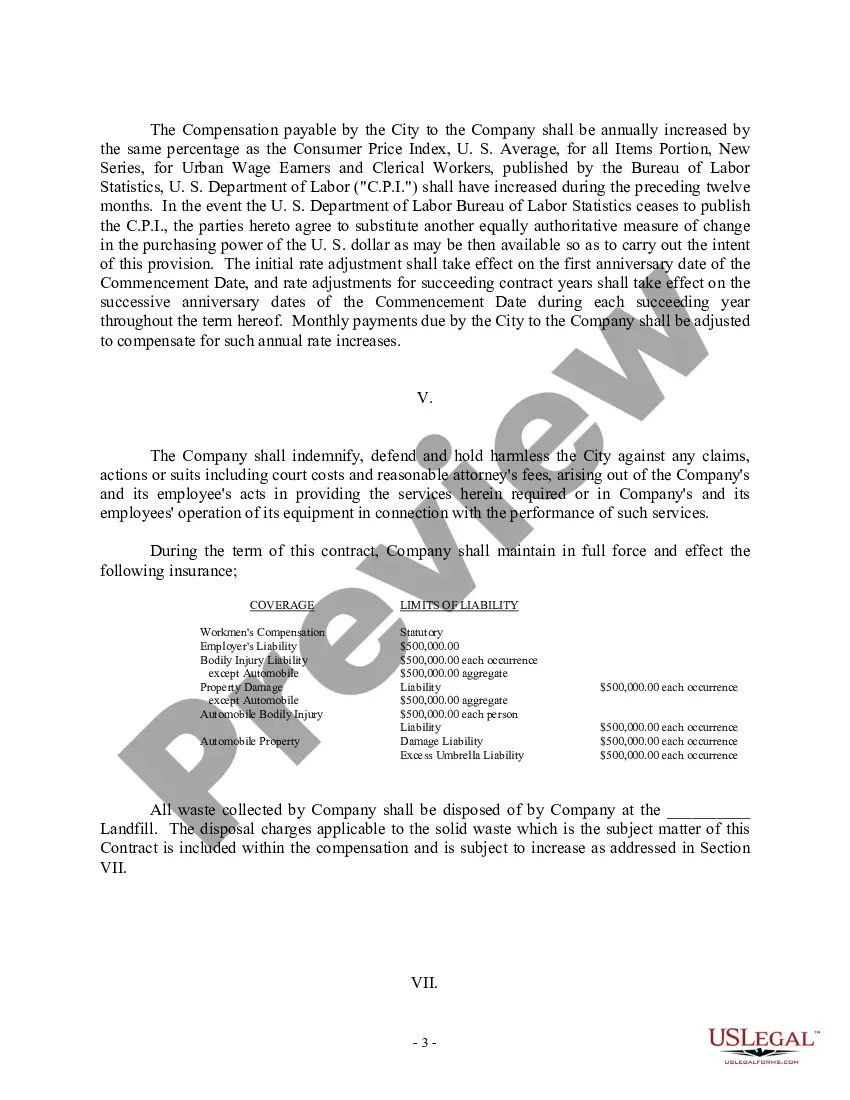
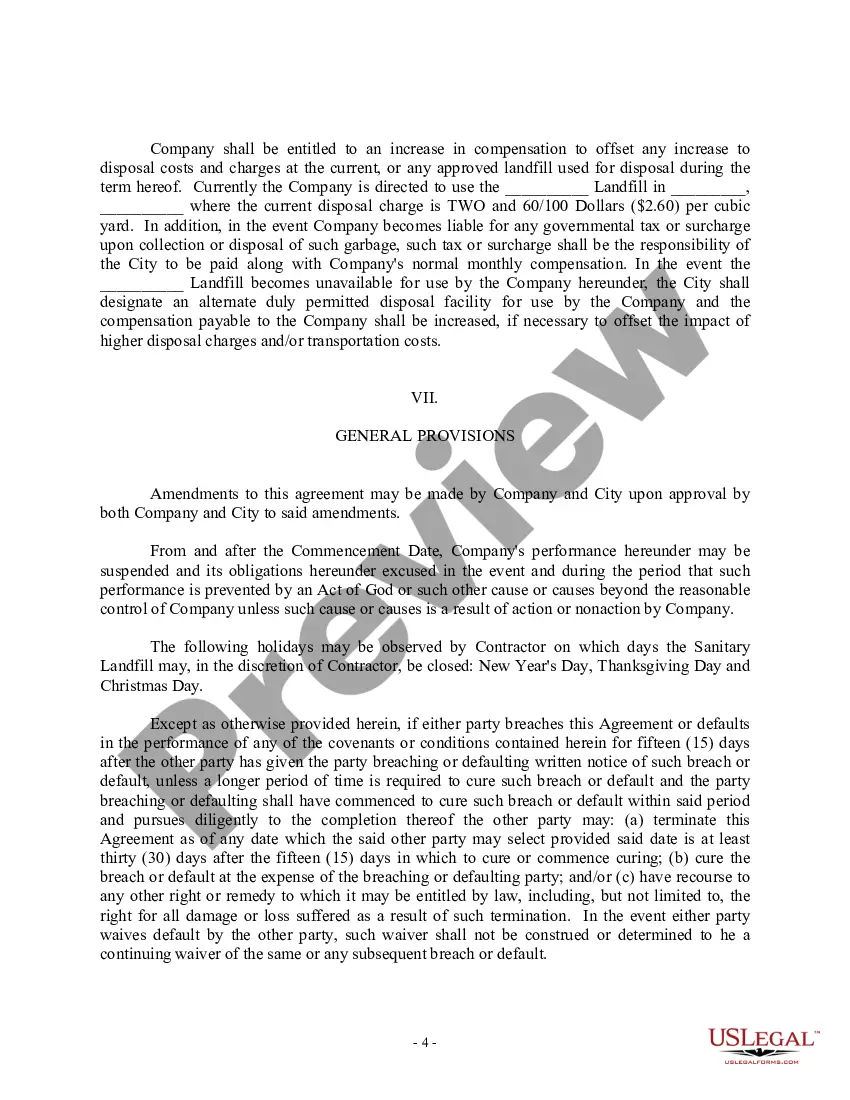
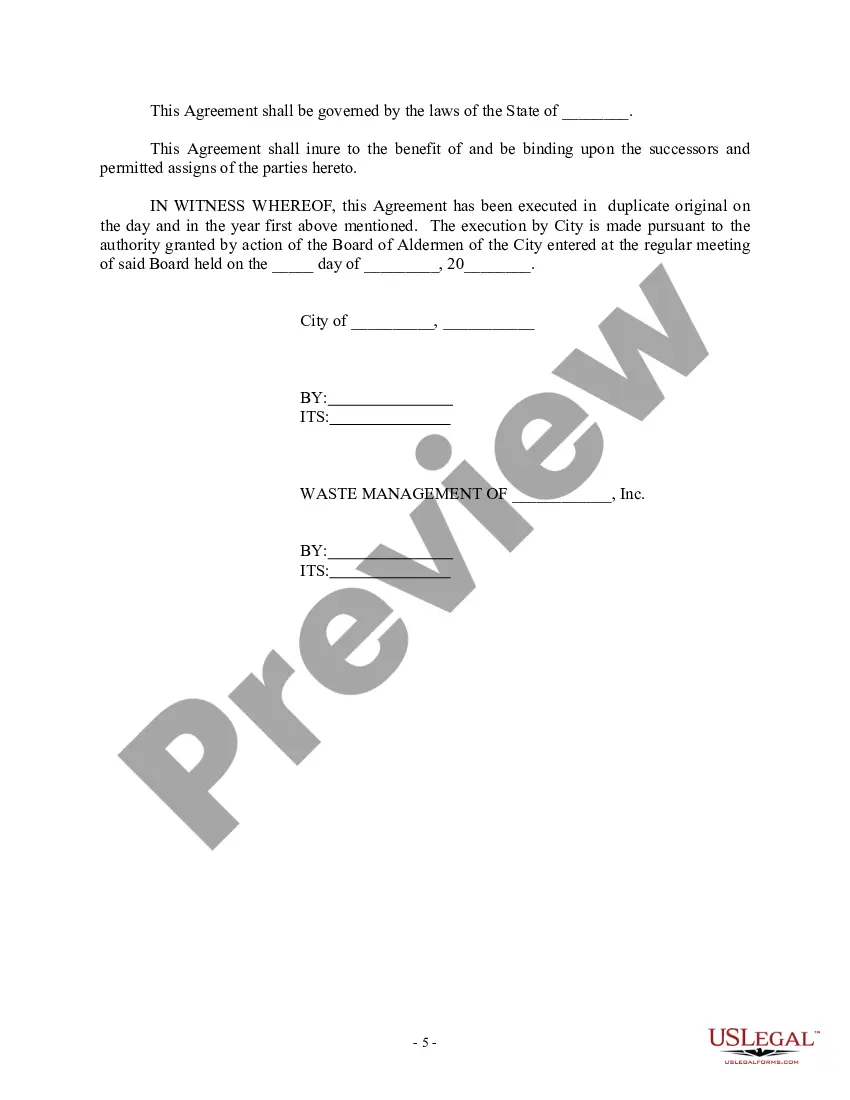
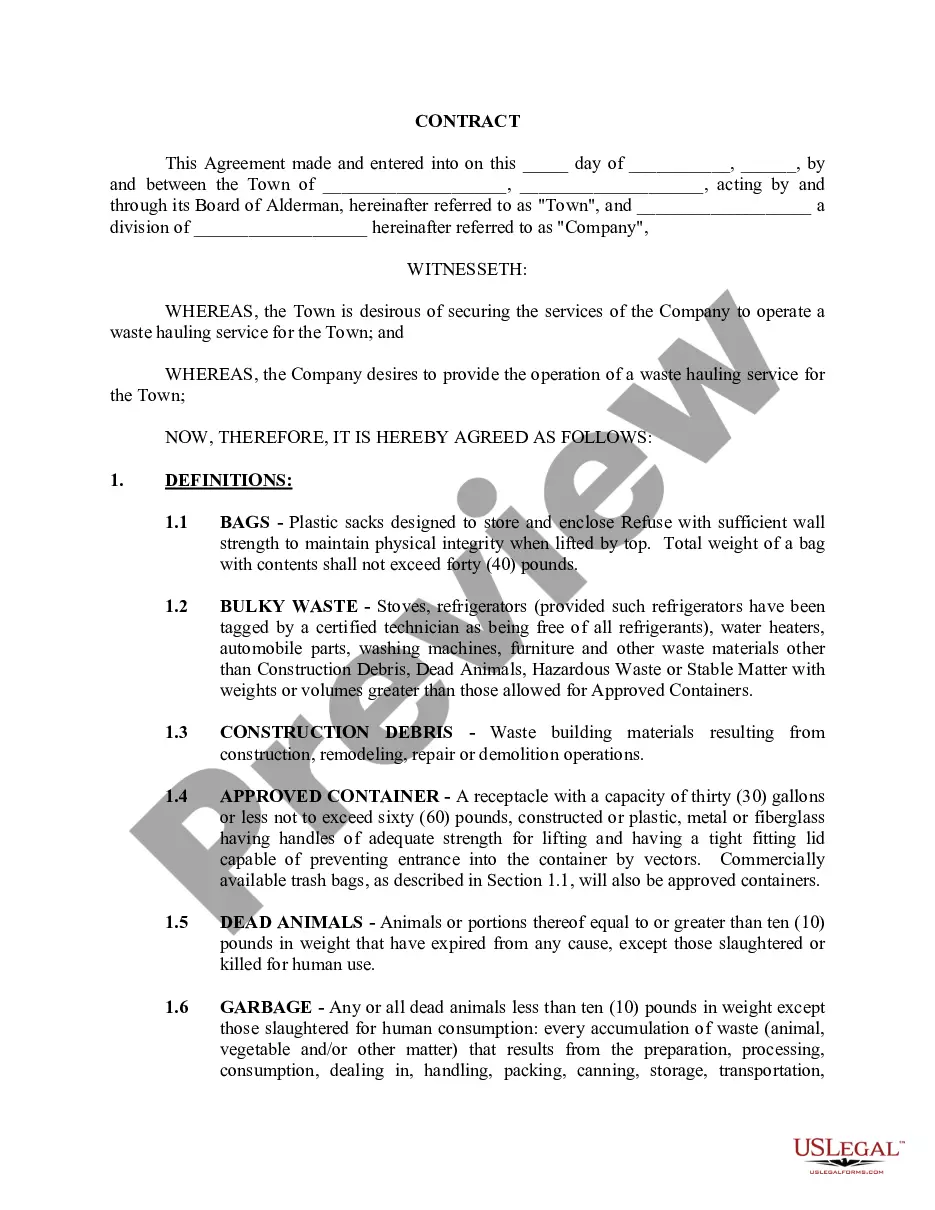
Garbage Collection Contract Template With Api In Kings
Description

Get your form ready online
Our built-in tools help you complete, sign, share, and store your documents in one place.
Make edits, fill in missing information, and update formatting in US Legal Forms—just like you would in MS Word.
Download a copy, print it, send it by email, or mail it via USPS—whatever works best for your next step.
Sign and collect signatures with our SignNow integration. Send to multiple recipients, set reminders, and more. Go Premium to unlock E-Sign.
If this form requires notarization, complete it online through a secure video call—no need to meet a notary in person or wait for an appointment.
We protect your documents and personal data by following strict security and privacy standards.

Make edits, fill in missing information, and update formatting in US Legal Forms—just like you would in MS Word.

Download a copy, print it, send it by email, or mail it via USPS—whatever works best for your next step.

Sign and collect signatures with our SignNow integration. Send to multiple recipients, set reminders, and more. Go Premium to unlock E-Sign.

If this form requires notarization, complete it online through a secure video call—no need to meet a notary in person or wait for an appointment.

We protect your documents and personal data by following strict security and privacy standards.
Looking for another form?

Form popularity
FAQ
To request the Java Virtual Machine (JVM) to run garbage collector, you can follow these steps: Call the System. gc() method: This method is used to request the JVM to run the garbage collector. Use the Runtime. Use the -XX:+DisableExplicitGC JVM flag: This flag disables explicit garbage collection requests.
You can ask the garbage collector to run at any time by calling System's gc() method: System. gc(); You might want to run the garbage collector to ensure that it runs at the best time for your program rather than when it's most convenient for the runtime system to run it.
In these cases, you can induce garbage collection by using the GC. Collect method to force a garbage collection. Use the GC. Collect method when there is a significant reduction in the amount of memory being used at a specific point in your application's code.
It performs a blocking garbage collection of all generations. All objects, regardless of how long they have been in memory, are considered for collection; however, objects that are referenced in managed code are not collected. Use this method to force the system to try to reclaim the maximum amount of available memory.
In the common language runtime (CLR), the garbage collector (GC) serves as an automatic memory manager. The garbage collector manages the allocation and release of memory for an application. Therefore, developers working with managed code don't have to write code to perform memory management tasks.
Garbage collection is the process of automatically freeing up memory that is no longer in use by the application. In C#, the garbage collector is part of the . NET runtime and works to: Allocate memory: When objects are created, the garbage collector allocates memory from the managed heap.
Building Your Own Automatic Garbage Collector: A Guide for Developers Step 1: Understand Java's Memory Model. Step 2: Design a Custom Memory Allocator. Step 3: Implement Reference Tracking. Step 4: Choose a Garbage Collection Algorithm. Step 5: Implement Root Object Identification. Step 6: Implement a Marking Algorithm.
