Contingency Fee Agreement Form For Attorney Fees
Description







Get your form ready online
Our built-in tools help you complete, sign, share, and store your documents in one place.
Make edits, fill in missing information, and update formatting in US Legal Forms—just like you would in MS Word.
Download a copy, print it, send it by email, or mail it via USPS—whatever works best for your next step.
Sign and collect signatures with our SignNow integration. Send to multiple recipients, set reminders, and more. Go Premium to unlock E-Sign.
If this form requires notarization, complete it online through a secure video call—no need to meet a notary in person or wait for an appointment.
We protect your documents and personal data by following strict security and privacy standards.

Make edits, fill in missing information, and update formatting in US Legal Forms—just like you would in MS Word.

Download a copy, print it, send it by email, or mail it via USPS—whatever works best for your next step.

Sign and collect signatures with our SignNow integration. Send to multiple recipients, set reminders, and more. Go Premium to unlock E-Sign.

If this form requires notarization, complete it online through a secure video call—no need to meet a notary in person or wait for an appointment.

We protect your documents and personal data by following strict security and privacy standards.
Looking for another form?

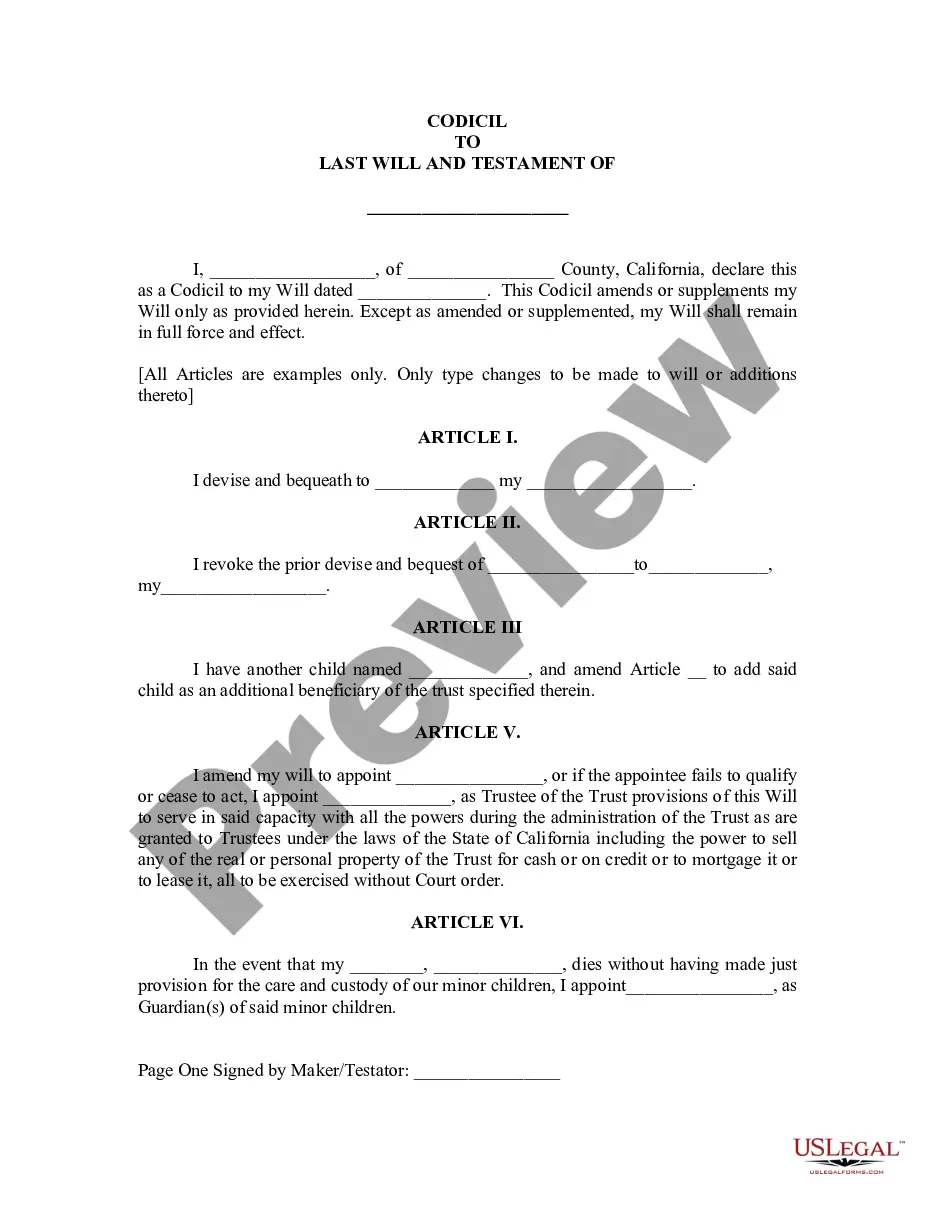
How to fill out Contingency Fee Agreement With An Attorney Or Law Firm?
Regardless of whether it's for corporate reasons or personal issues, everyone must confront legal matters at some stage in their life.
Filling out legal documents requires meticulous focus, beginning with the choice of the correct form template.
Avoid altering or deleting any HTML tags. Only synonymize plain text outside of the HTML tags.
- For instance, if you select an incorrect version of the Contingency Fee Agreement Form For Attorney Fees, it will be rejected upon submission.
- Thus, it is essential to have a reliable source of legal documents such as US Legal Forms.
- If you need to obtain a Contingency Fee Agreement Form For Attorney Fees template, follow these straightforward steps.
- Locate the sample you require using the search bar or catalog navigation.
- Review the form’s description to verify it corresponds to your circumstances, state, and locality.
- Click on the form's preview to inspect it.
- If it is the wrong form, return to the search feature to locate the Contingency Fee Agreement Form For Attorney Fees sample you require.
- Download the file when it aligns with your needs.
- If you already have a US Legal Forms account, simply click Log in to access previously saved templates in My documents.
- If you do not have an account yet, you can acquire the form by clicking Buy now.
- Choose the suitable pricing option.
- Complete the account registration form.
- Select your payment method: you can utilize a credit card or PayPal account.
- Choose the file format you desire and download the Contingency Fee Agreement Form For Attorney Fees.
- Once it is saved, you can complete the form using editing software or print it out and finish it manually.
- With a comprehensive US Legal Forms catalog available, you do not have to waste time searching for the appropriate sample online.
- Utilize the library’s straightforward navigation to find the correct form for any situation.
Form popularity
FAQ
Contingency fees mean you will pay the lawyer a certain percentage of the money you receive if you win the case or settle the matter out of court. If you lose your case, the lawyer does not receive any payment from you.
One straightforward example might be a child who agrees with their parent that if they get an A in a particular class, they will get a new bicycle. Of course, the contract may be verbal, and it may be between family members.
That said, the most common lawyer contingency fee average ends up being 33%, or ? of the total earnings of a case, but can go up to 40% (in some jurisdictions) as the complexity and risk involved in taking the case increases.
That is, generally in a contingency fee agreement, the lawyer only receives compensation if the lawyer has successfully represented the client. Further, the amount the lawyer receives is contingent upon the result the lawyer obtains and often on the phase of litigation in which the dispute settles.
Contingency fees mean you will pay the lawyer a certain percentage of the money you receive if you win the case or settle the matter out of court. If you lose your case, the lawyer does not receive any payment from you.