Suing An Estate Executor For Misrepresentation In Texas
Description


Get your form ready online
Our built-in tools help you complete, sign, share, and store your documents in one place.
Make edits, fill in missing information, and update formatting in US Legal Forms—just like you would in MS Word.
Download a copy, print it, send it by email, or mail it via USPS—whatever works best for your next step.
Sign and collect signatures with our SignNow integration. Send to multiple recipients, set reminders, and more. Go Premium to unlock E-Sign.
If this form requires notarization, complete it online through a secure video call—no need to meet a notary in person or wait for an appointment.
We protect your documents and personal data by following strict security and privacy standards.
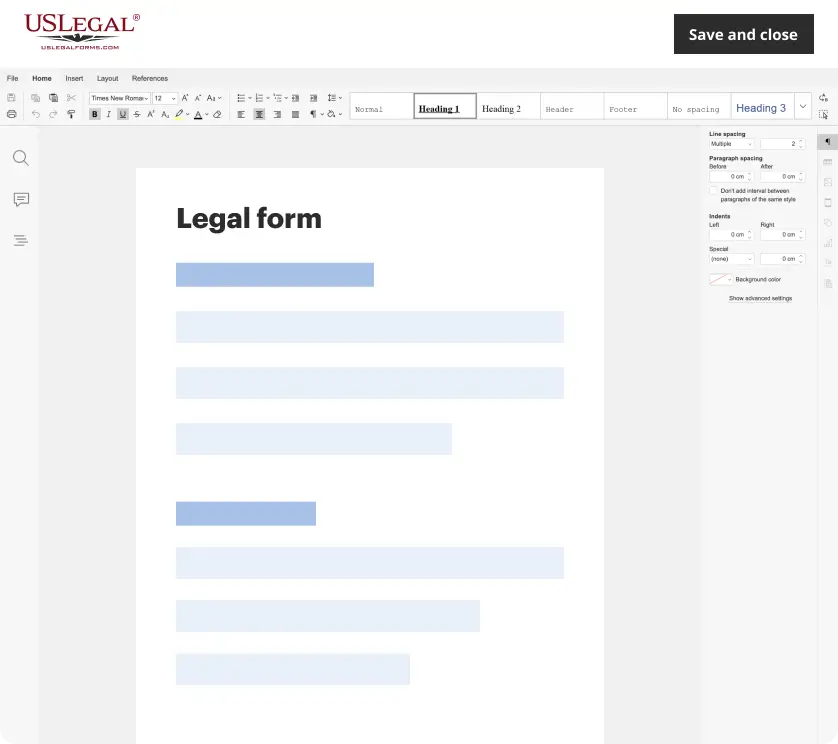
Make edits, fill in missing information, and update formatting in US Legal Forms—just like you would in MS Word.
Download a copy, print it, send it by email, or mail it via USPS—whatever works best for your next step.
Sign and collect signatures with our SignNow integration. Send to multiple recipients, set reminders, and more. Go Premium to unlock E-Sign.

If this form requires notarization, complete it online through a secure video call—no need to meet a notary in person or wait for an appointment.
We protect your documents and personal data by following strict security and privacy standards.
Looking for another form?

Form popularity
FAQ
Proving Executor Misconduct Pull the bank statements, transaction records, and communication logs. Beneficiaries or others involved in the probate process can provide detailed accounts of the executor's actions. You need a sharp attorney to gather evidence, file the motions, and fight for your interests.
As an Executor, what you cannot do is go against the terms of the Will, Breach Fiduciary duty, fail to act, self-deal, embezzle, intentionally or unintentionally through neglect harm the estate, and cannot do threats to beneficiaries and heirs.
If the executor fails to meet their legal obligations, a beneficiary can sue them for breach of fiduciary duty. If there are multiple beneficiaries, all must agree on whether to sue an executor.
Liability when an executor makes a mistake Unfortunately, a genuine mistake can sometimes snowball into a much bigger and often expensive problem that can be very complicated to resolve. The executor of an estate can be held personally liable for a mistake that results in a loss to the estate.
Executor's Role and Timeline for Asset Distribution. In Texas, an executor is given up to three years from their court appointment to distribute assets, excluding those allocated to creditors.
An estate beneficiary has a right to sue the executor or administrator if they are not competently doing their job or are engaged in fiduciary misconduct.
Standard Executor Compensation This is referred to as the five-and-five rule. However, there are limitations to this commission. It cannot exceed five percent of the gross fair market value of the estate being administered, and it is not applicable in certain situations.
Section 304.003 - Persons Disqualified To Serve As Executor Or Administrator (a) Except as provided by Subsection (b), a person is not qualified to serve as an executor or administrator if the person is: (1) incapacitated; (2) a felon convicted under the laws of the United States or of any state of the United States ...
Can You Sue an Estate After Probate? Typically, no. Texas law states that claimants must make their claims on an estate before probate closes. However, many claimants can still seek payment from beneficiaries who received assets from the estate during distribution.

