Settlement Against Estate Form Ny In California
Description


Get your form ready online
Our built-in tools help you complete, sign, share, and store your documents in one place.
Make edits, fill in missing information, and update formatting in US Legal Forms—just like you would in MS Word.
Download a copy, print it, send it by email, or mail it via USPS—whatever works best for your next step.
Sign and collect signatures with our SignNow integration. Send to multiple recipients, set reminders, and more. Go Premium to unlock E-Sign.
If this form requires notarization, complete it online through a secure video call—no need to meet a notary in person or wait for an appointment.
We protect your documents and personal data by following strict security and privacy standards.
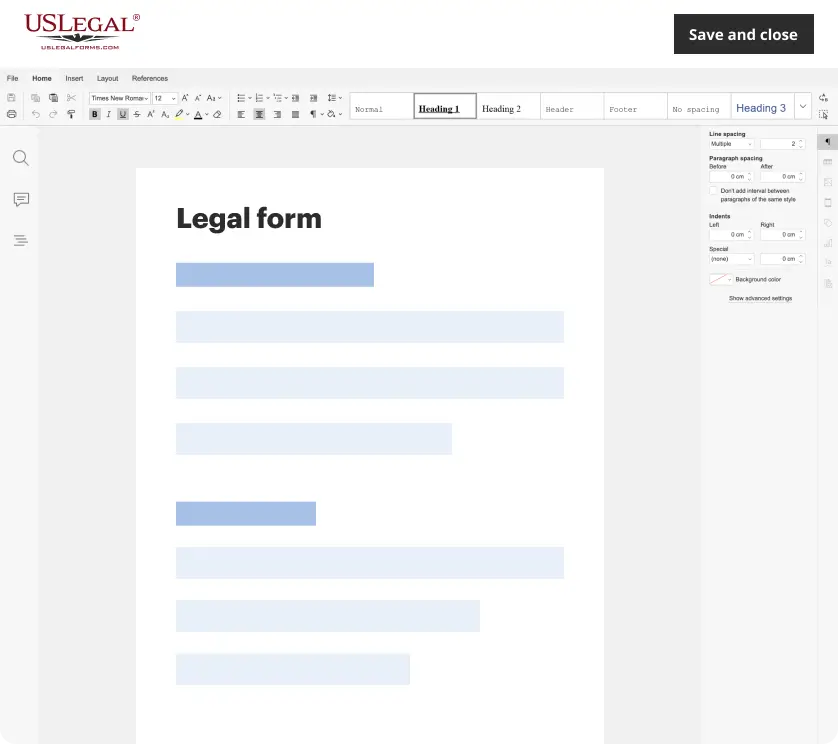
Make edits, fill in missing information, and update formatting in US Legal Forms—just like you would in MS Word.
Download a copy, print it, send it by email, or mail it via USPS—whatever works best for your next step.
Sign and collect signatures with our SignNow integration. Send to multiple recipients, set reminders, and more. Go Premium to unlock E-Sign.

If this form requires notarization, complete it online through a secure video call—no need to meet a notary in person or wait for an appointment.
We protect your documents and personal data by following strict security and privacy standards.
Looking for another form?






Form popularity
FAQ
A: To avoid probate in California the estate must be worth less than $166,250.
Not all estates need to go through formal probate. Depending on how the property is owned, and the type and amount of property, you may not need to go to court or you may be able to use a simpler court process.
In California, smaller estates can avoid going through probate. Currently, a deceased person's estate is only required to go through probate if the estate property is worth over $166,250. If the total value of estate assets is $166,250 or less, the estate may qualify for a non-formal probate case.
Generally, in California creditors of a decedent's estate have up to one year (365 days) from the decedent's death to file a timely creditor claim. The claim must be filed inside an open probate court proceeding.
You can transfer property without opening probate if the estate is valued under a set amount. That amount changes every few years and is based on the year the person passed away. You can find the latest limits in Maximum Values for Small Estate Set-Aside & Disposition of Estate Without Administration (form DE-300).
California law says the personal representative must complete probate within one year from the date of appointment, unless s/he files a federal estate tax. In this case, the personal representative can have 18 months to complete probate.
In some cases, the probate process in California can take as little as nine months, but that is rare. It typically takes anywhere from half a year to eighteen months, and complicated cases may take as long as two years or more. However, having an idea of how long a case may take helps you understand the process.
Why avoid probate in California? What are the costs of letting your heirs go to probate? For the first $100,000 of the estate value, both parties are entitled to 4%. For the next $100,000, they receive 3%. For the following $800,000, they receive 2%. For the next $9 million, they receive 1%.

