Personal Property Damages For Rent In Suffolk
Description

Get your form ready online
Our built-in tools help you complete, sign, share, and store your documents in one place.
Make edits, fill in missing information, and update formatting in US Legal Forms—just like you would in MS Word.
Download a copy, print it, send it by email, or mail it via USPS—whatever works best for your next step.
Sign and collect signatures with our SignNow integration. Send to multiple recipients, set reminders, and more. Go Premium to unlock E-Sign.
If this form requires notarization, complete it online through a secure video call—no need to meet a notary in person or wait for an appointment.
We protect your documents and personal data by following strict security and privacy standards.
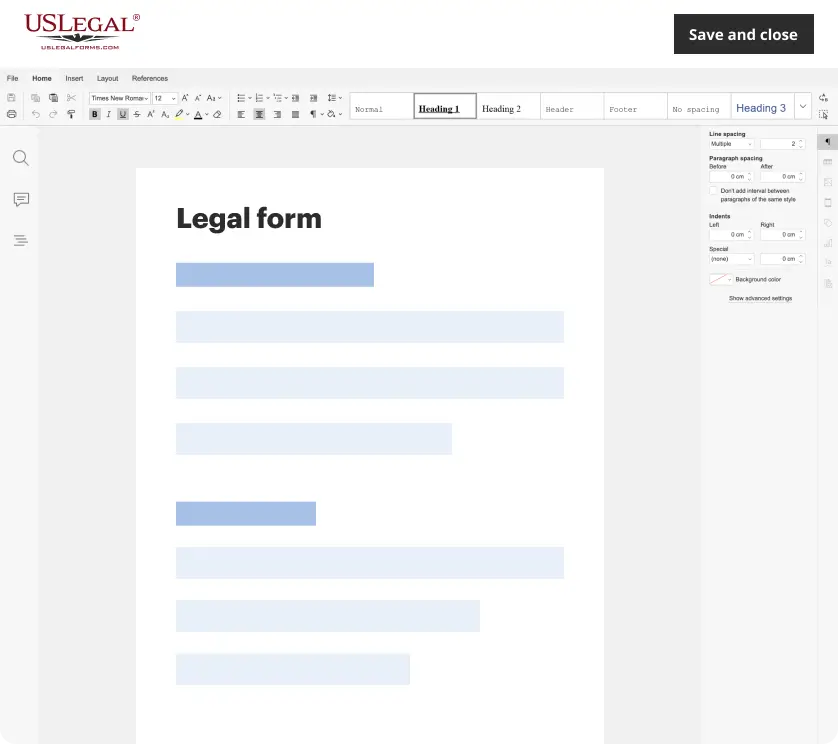
Make edits, fill in missing information, and update formatting in US Legal Forms—just like you would in MS Word.
Download a copy, print it, send it by email, or mail it via USPS—whatever works best for your next step.
Sign and collect signatures with our SignNow integration. Send to multiple recipients, set reminders, and more. Go Premium to unlock E-Sign.
If this form requires notarization, complete it online through a secure video call—no need to meet a notary in person or wait for an appointment.
We protect your documents and personal data by following strict security and privacy standards.
Looking for another form?



Form popularity
FAQ
Effective April 7, 2022, the New York statute of limitations for debt/rent collection lawsuits arising out of a consumer credit transaction is reduced from six years to three years.
You can stay in a New York City apartment for 90 days without paying rent before the landlord can initiate eviction proceedings against you. This does not mean that that the landlord will take no action prior to the 90-day mark; there are several steps leading up to the eviction notice.
If you think a landlord has discriminated against you, you can complain to Long Island Housing Services at (631) 567-5111. You can also file a fair housing complaint with HUD at (800) 669-9777.
Landlords may not take the law into their own hands and evict a tenant by use of force or unlawful means. For example, a landlord cannot use threats of violence, remove a tenant's possessions, lock the tenant out of the apartment, or willfully discontinue essential services such as water or heat.
