Corporation Corporate Resolution For Signing Authority In Georgia
Description

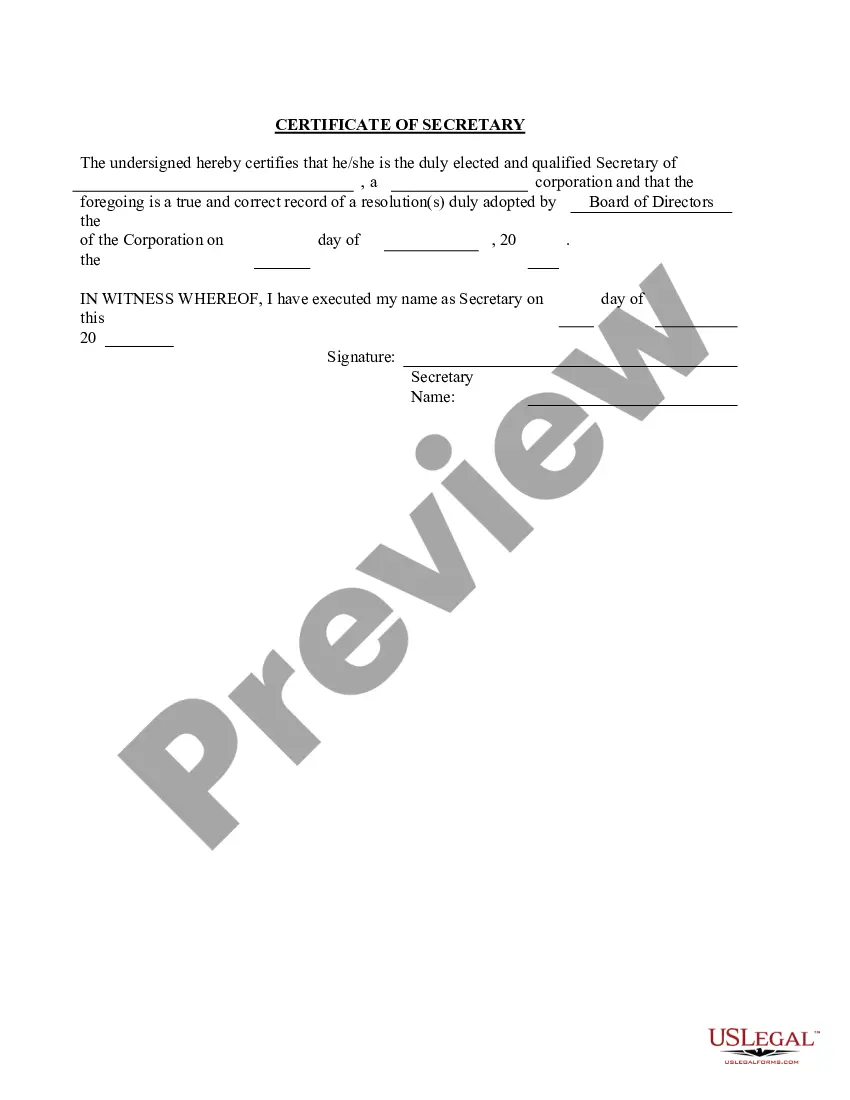
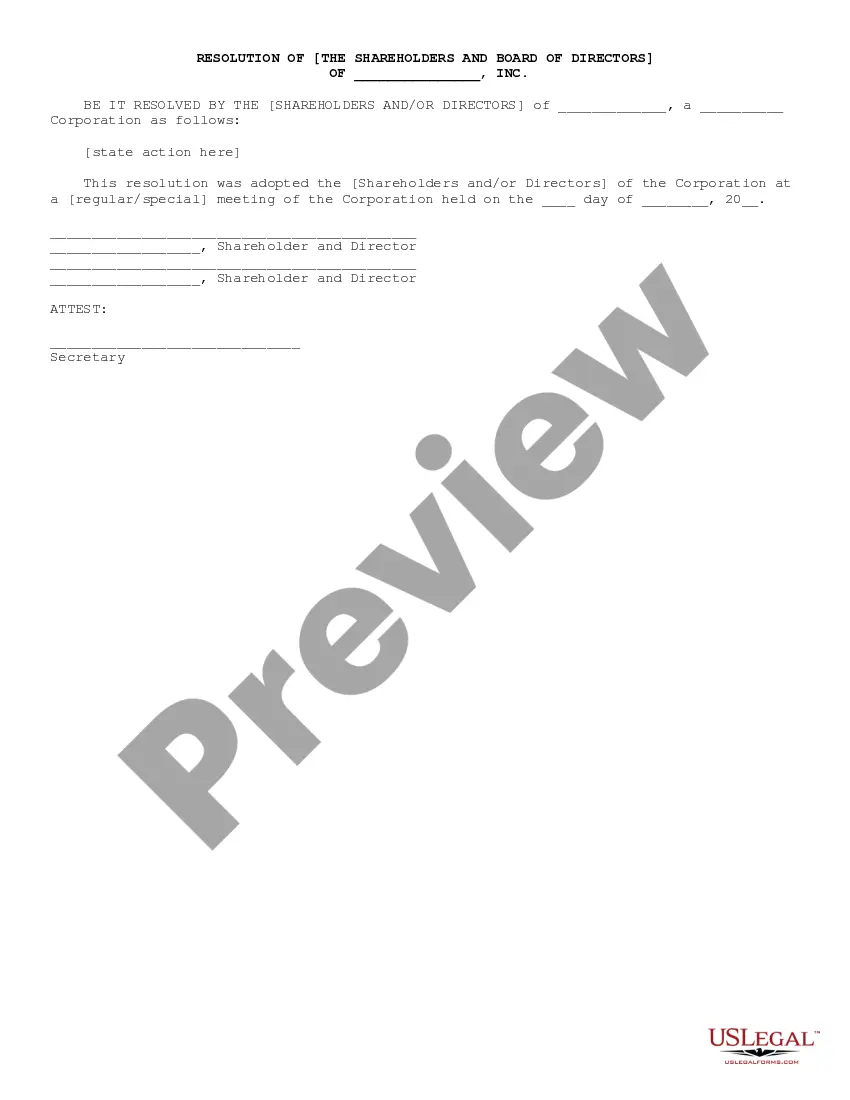
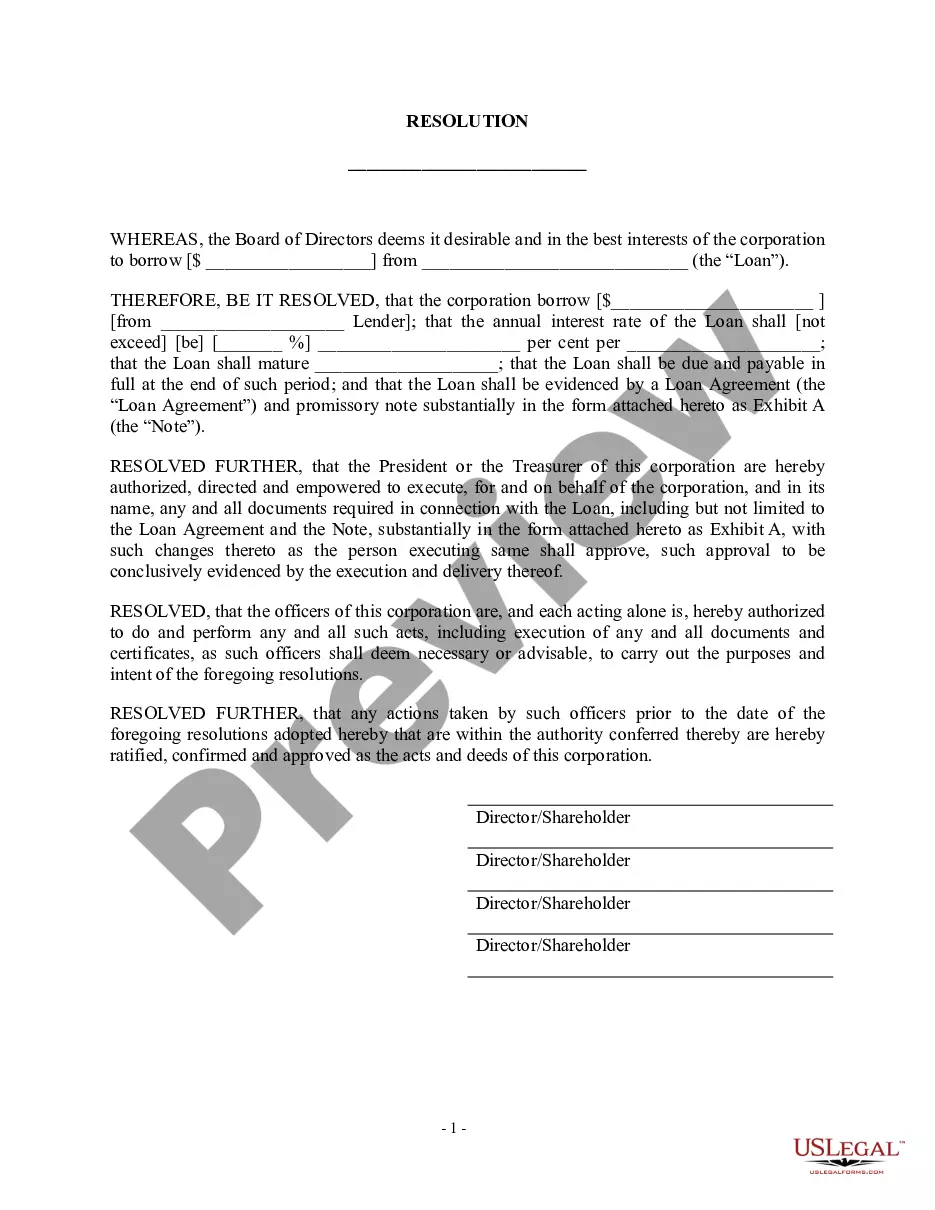
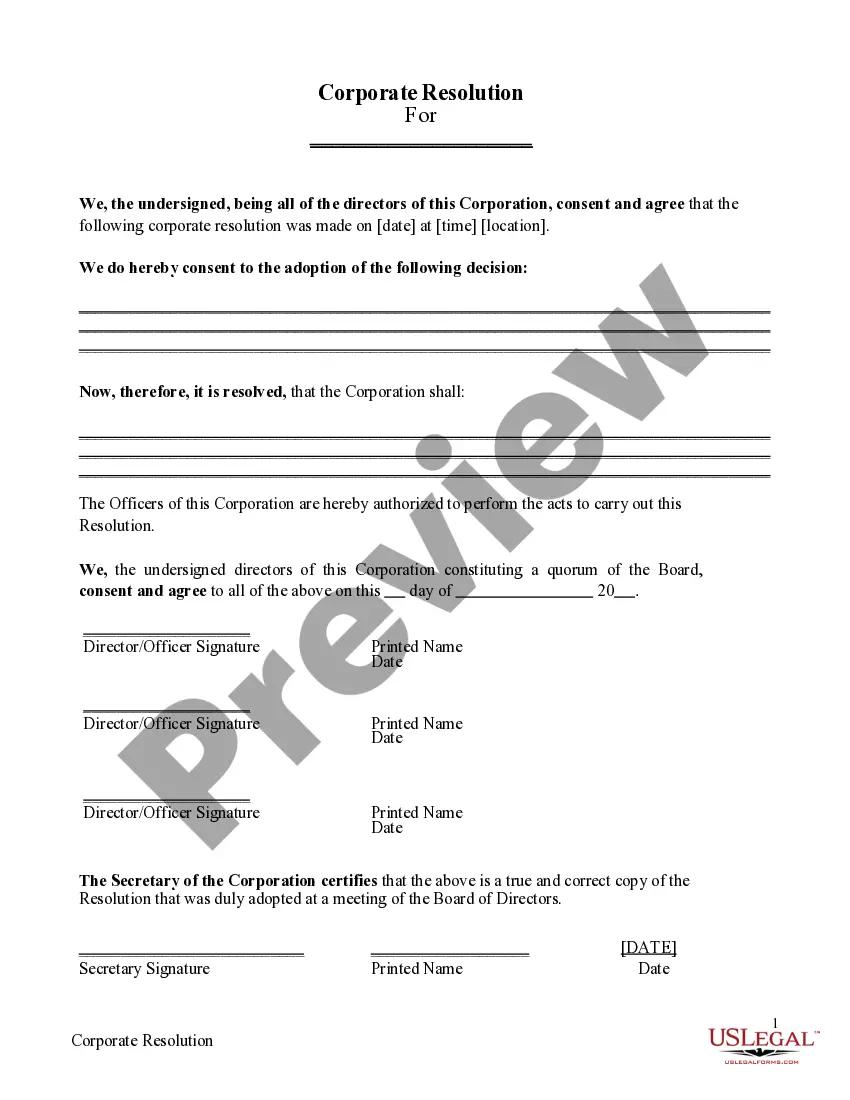
Get your form ready online
Our built-in tools help you complete, sign, share, and store your documents in one place.
Make edits, fill in missing information, and update formatting in US Legal Forms—just like you would in MS Word.
Download a copy, print it, send it by email, or mail it via USPS—whatever works best for your next step.
Sign and collect signatures with our SignNow integration. Send to multiple recipients, set reminders, and more. Go Premium to unlock E-Sign.
If this form requires notarization, complete it online through a secure video call—no need to meet a notary in person or wait for an appointment.
We protect your documents and personal data by following strict security and privacy standards.

Make edits, fill in missing information, and update formatting in US Legal Forms—just like you would in MS Word.

Download a copy, print it, send it by email, or mail it via USPS—whatever works best for your next step.

Sign and collect signatures with our SignNow integration. Send to multiple recipients, set reminders, and more. Go Premium to unlock E-Sign.

If this form requires notarization, complete it online through a secure video call—no need to meet a notary in person or wait for an appointment.

We protect your documents and personal data by following strict security and privacy standards.
Looking for another form?



Form popularity
FAQ
A corporate resolution is considered a binding document, so it's stored in the corporate records book after the board members sign it. This process may seem rigid and formal, but corporate resolutions are necessary for various reasons.
Corporation. Signing authority often lies with the company's chief executive officer (CEO) or president. If an individual signs on behalf of a corporation and they have not been given the authority to do so, the corporation will not be bound to the contract.
Chairperson of the board: The board chair will sign the resolution to affirm that the board approved it. Corporate secretary: The secretary will sign the resolution to attest that it's been adopted and recorded in the board meeting minutes.
Generally, a Board Resolution does not need to be notarized unless it's being submitted to a government agency, a bank, or a court — or if it involves highly sensitive or financial decisions.
“RESOLVED FURTHER THAT, any one of the above officials of the Company/Bank/Cooperative Society/Trust/legal entity, be and is hereby authorized to do all such acts, deeds, things, sign all such papers, documents, power of attorneys, indemnities, correspondence and to do and perform all such acts, deeds and things and ...
The corporate resolution must include the signature of the corporate officer and the corporate seal or the articles of incorporation.
Each shareholder will usually sign and return the written resolution to the company to signify agreement. This can be on paper or electronically.
The corporate resolution for signing authority is a specific corporate resolution that authorizes specific corporate officers with the legal standing to sign contracts on behalf of the corporation.
