Acknowledgement Letter For Stock Donation
Description
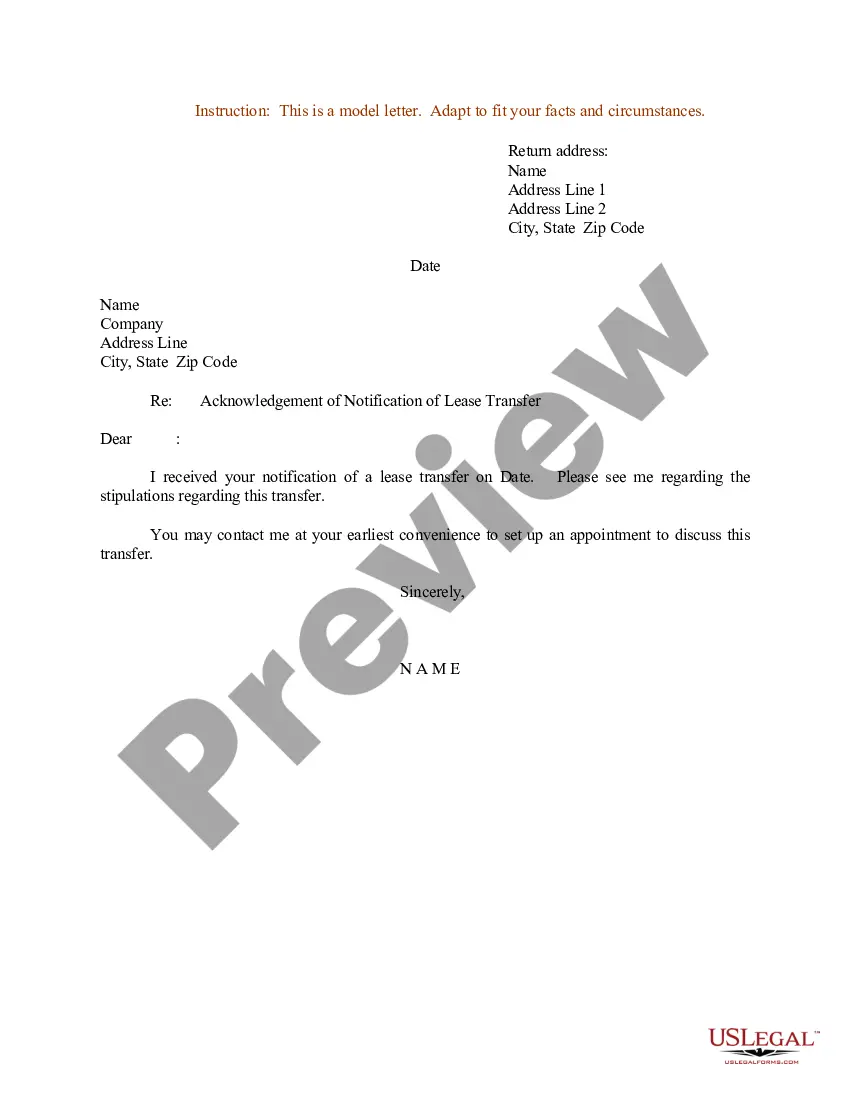


How to fill out Sample Letter For Acknowledgment - Sale On Consignment?
Regardless of whether it's for commercial reasons or personal issues, everyone must confront legal matters at some point in their lives.
Filling out legal forms requires meticulous attention, beginning with selecting the appropriate form template.
With the extensive US Legal Forms catalog available, you need not waste time searching for the correct sample online. Utilize the library's user-friendly navigation to find the appropriate template for any situation.
- For example, if you select an incorrect version of an Acknowledgment Letter For Stock Donation, it will be rejected upon submission.
- Thus, it's crucial to find a trustworthy source of legal documents like US Legal Forms.
- If you wish to acquire an Acknowledgment Letter For Stock Donation template, adhere to these straightforward steps.
- 1. Locate the sample you require by using the search bar or browsing through the catalog.
- 2. Review the form's details to verify it aligns with your circumstances, state, and locality.
- 3. Click on the form's preview to examine it.
- 4. If it's not the right form, return to the search feature to find the Acknowledgment Letter For Stock Donation template you need.
- 5. Obtain the template if it satisfies your requirements.
- 6. If you already own a US Legal Forms account, just click Log in to access your previously saved templates in My documents.
- 7. If you do not have an account yet, you can purchase the form by clicking Buy now.
- 8. Choose the right pricing option.
- 9. Complete the account registration form.
- 10. Select your payment method: a credit card or PayPal account.
- 11. Choose the document format you desire and download the Acknowledgment Letter For Stock Donation.
- 12. After it is saved, you can fill out the form using editing software or print it to complete it manually.
Form popularity
FAQ
Accepting stock donations for a nonprofit involves establishing a clear process that outlines how donors can transfer stocks. The organization should have a brokerage account and communicate its policies regarding stock gifts. After the donation is received, it is crucial to send an accurate acknowledgement letter for the stock donation, ensuring both the nonprofit and donor have proper records for tax and accounting purposes.
To accept a gift of stock, a nonprofit should work closely with the donor to facilitate the transfer process. This typically involves obtaining the donor's brokerage information and completing necessary paperwork. After the stock transfer is completed, the organization should issue an acknowledgement letter for the stock donation to formally recognize the contribution and notify the donor of the successful transaction.
Yes, individuals can gift stock to a nonprofit organization, which can provide significant tax benefits for the donor. It's an effective way to support a cause while potentially avoiding capital gains taxes. When the nonprofit receives the stock, it should generate an acknowledgement letter for the stock donation to ensure proper documentation for the donor's tax records.
The 33% rule for nonprofits refers to a guideline that limits the amount a nonprofit can spend on administrative costs to no more than 33% of its total budget. This encourages transparency and ensures more funds are directed toward fulfilling the organization's mission. Understanding this rule helps nonprofits effectively manage resources, especially when processing stock donations and preparing the acknowledgement letter for stock donation.
To write an acknowledgement for a donation, first include your organization's name, address, and contact information. Next, clearly state the donor's name, the donation amount or description, and the date of the donation. Close with a sincere thank you and mention the importance of the donor's contribution, ensuring to reference the acknowledgement letter for stock donation when applicable.
A nonprofit can accept a gift of stock by working with a brokerage firm or by opening a brokerage account in the organization's name. The donor will need to provide specific details about the stock, such as the number of shares and the stock certificate if applicable. Additionally, the nonprofit should issue an acknowledgement letter for the stock donation to document the gift for both the donor and the organization.
When writing a letter to acknowledge a donation, begin with a personal touch by thanking the donor directly. Mention specifics, such as the type of donation and its significance to your organization. Closing with an invitation to future engagement can enhance the donor’s experience and encourage ongoing support.
To write a letter acknowledging a donation, start with a friendly greeting to the donor and clearly state the reason for your letter. Include details of the donation, express gratitude, and describe how the contribution aligns with your mission. A well-crafted acknowledgement letter for stock donation strengthens the bond between your organization and the donor.
An example of a written acknowledgement for charitable contributions can include a brief introduction expressing thanks, followed by the donation specifics. For instance, say, 'Thank you for your generous donation of shares valued at $X on date. Your contribution plays a vital role in describe the purpose.' Ending with an invitation to connect reinforces a positive relationship.
To write a good acknowledgement letter, be sure to include essential details such as the donor's name, the donation amount, and the date. Express genuine appreciation and the significance of their contribution. Keep the tone warm and personal, which helps foster a positive relationship with the donor.
