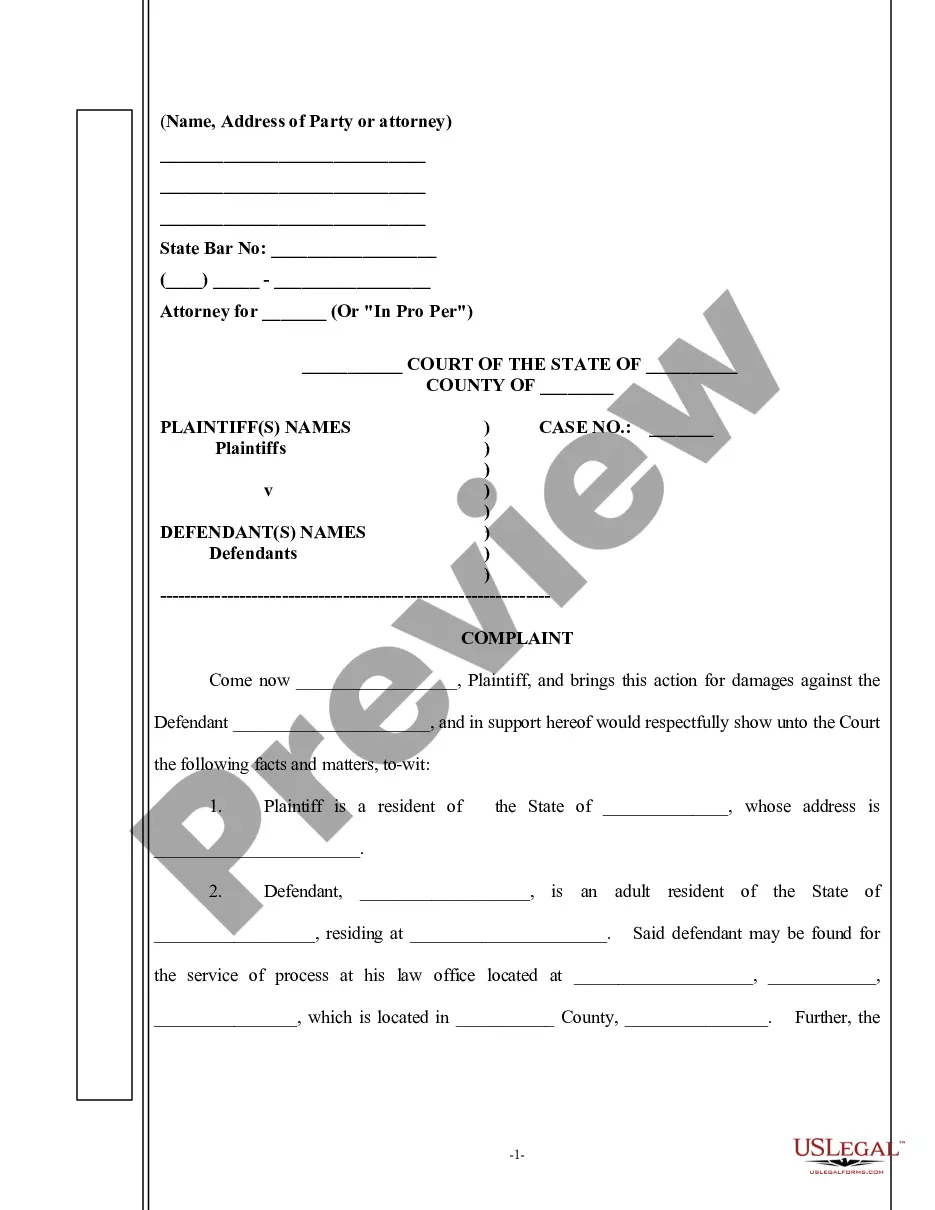
Sample Defamation Of Character Complaint In Illinois
Description

Get your form ready online
Our built-in tools help you complete, sign, share, and store your documents in one place.
Make edits, fill in missing information, and update formatting in US Legal Forms—just like you would in MS Word.
Download a copy, print it, send it by email, or mail it via USPS—whatever works best for your next step.
Sign and collect signatures with our SignNow integration. Send to multiple recipients, set reminders, and more. Go Premium to unlock E-Sign.
If this form requires notarization, complete it online through a secure video call—no need to meet a notary in person or wait for an appointment.
We protect your documents and personal data by following strict security and privacy standards.

Make edits, fill in missing information, and update formatting in US Legal Forms—just like you would in MS Word.

Download a copy, print it, send it by email, or mail it via USPS—whatever works best for your next step.

Sign and collect signatures with our SignNow integration. Send to multiple recipients, set reminders, and more. Go Premium to unlock E-Sign.

If this form requires notarization, complete it online through a secure video call—no need to meet a notary in person or wait for an appointment.

We protect your documents and personal data by following strict security and privacy standards.
Looking for another form?



Form popularity
FAQ
Knowingly publishing a lie about another person would be libel if that lie damages, or some harm caused to the reputation of the person or entity who is the subject. If the damaging lie was spoken rather than written, then it would be slander.
The statute of limitations for defamation in Illinois is one (1) year. 735 ILCS 5/13-201. It states: Defamation – Privacy.
In Illinois, a plaintiff must file a defamation lawsuit within one year after the defamatory statement was made, so it is important act quickly. To speak with one of our experienced defamation litigation attorneys, call us at (630) 560-1123 or visit us at our website at .DGLLC/contact.
In many cases, the harassment remains verbal. However, as long as the victim faces disruption to their ability to work safely, any action could fall under the category of harassment. Needless to say, rumors and slander attack the reputation of an individual and can make it difficult or even impossible to work safely.
Under Illinois law, the elements of a defamation claim are: (1) a false statement about the plaintiff (2) made to a third party (sometimes referred to by courts as publication) (3) that harms the plaintiff's reputation.
The types of damages available for defamation per se in Illinois generally include presumed damages, as discussed above, and nominal damage. Punitive damages may also be available if the plaintiff can show that the defendant acted with actual malice.
Under Illinois law, you may have a claim for defamation if you can prove that someone made a false statement about you. If you win, you may be entitled to economic and punitive damages. The law of defamation, however, is complicated and there are numerous defenses to defamation claims.
Identify the false statements: Clearly outline the defamatory remarks and where they were made. Describe the harm: Explain how the statements have affected your reputation or career. Request retraction: Demand the removal of defamatory content or a formal apology.
The Illinois Supreme Court considers five types of statements to be defamatory per se: (1) accusing a person of committing a crime, (2) accusing a person of being infected with a “loathsome communicable disease,” (3) accusing a person of lacking ability or integrity in the performance of job duties, (4) statements that ...
The statute of limitations for defamation in Illinois is one (1) year. 735 ILCS 5/13-201. It states: Defamation – Privacy.
