Assignment With A Returned Value In Illinois
Description
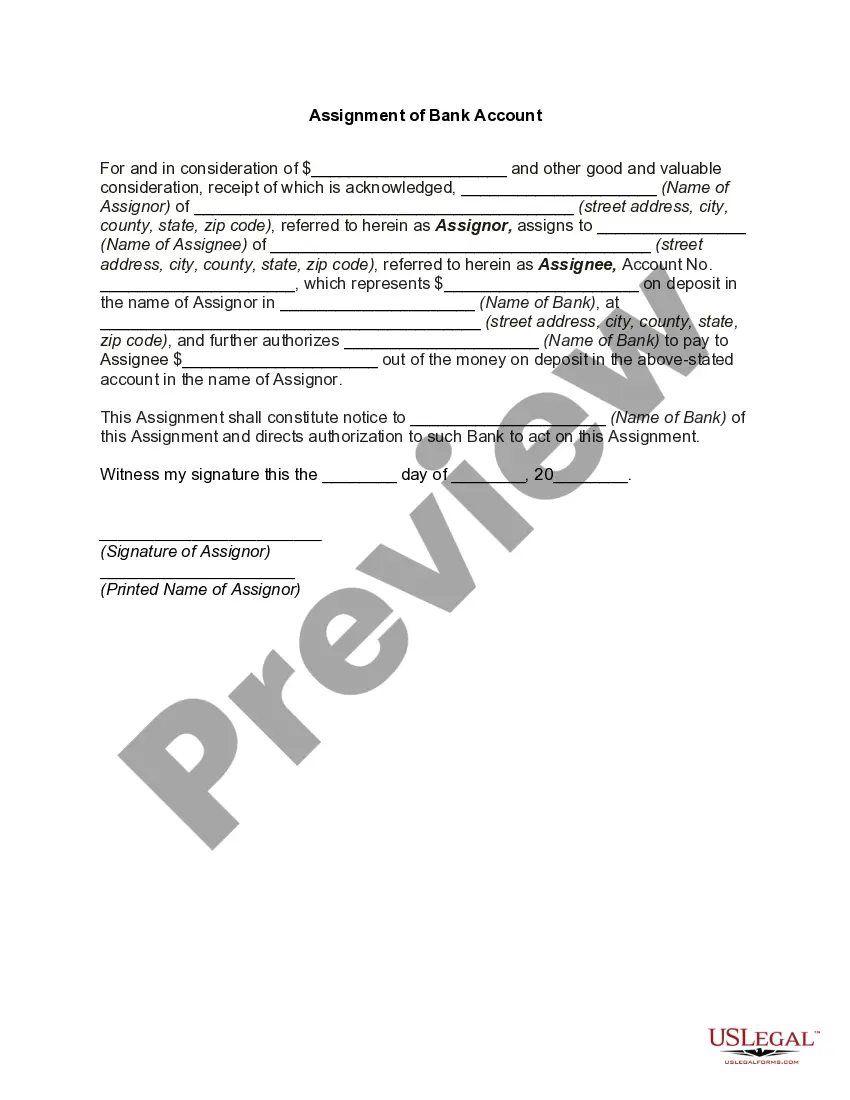
Get your form ready online
Our built-in tools help you complete, sign, share, and store your documents in one place.
Make edits, fill in missing information, and update formatting in US Legal Forms—just like you would in MS Word.
Download a copy, print it, send it by email, or mail it via USPS—whatever works best for your next step.
Sign and collect signatures with our SignNow integration. Send to multiple recipients, set reminders, and more. Go Premium to unlock E-Sign.
If this form requires notarization, complete it online through a secure video call—no need to meet a notary in person or wait for an appointment.
We protect your documents and personal data by following strict security and privacy standards.

Make edits, fill in missing information, and update formatting in US Legal Forms—just like you would in MS Word.

Download a copy, print it, send it by email, or mail it via USPS—whatever works best for your next step.

Sign and collect signatures with our SignNow integration. Send to multiple recipients, set reminders, and more. Go Premium to unlock E-Sign.

If this form requires notarization, complete it online through a secure video call—no need to meet a notary in person or wait for an appointment.

We protect your documents and personal data by following strict security and privacy standards.
Looking for another form?


Form popularity
FAQ
The built-in assignment operators return the value of the object specified by the left operand after the assignment (and the arithmetic/logical operation in the case of compound assignment operators). The resultant type is the type of the left operand. The result of an assignment expression is always an l-value.
How It Works: Function with a Return Value: A function calculates a result or performs an operation and returns the output using the return statement. Pass the Return Value: Another function can use this returned value as an argument or input for further operations.
Print is for people. Save it for later. The returned value may be: Assigned to a variable. Use it in a more complex expression. In that case, think of the return value as replacing the entire text of the function invocation. Print it for human consumption. For example, print(square(3)) outputs 9 to the output area.
Python allows for returning a function from within another function. This enables dynamic programming patterns. def outer_function(): def inner_function(): return "Hello from the inner function!" return inner_function func = outer_function() print(func()) # Outputs: "Hello from the inner function!"
To return a value from a function, you must include a return statement, followed by the value to be returned, before the function's end statement. If you do not include a return statement or if you do not specify a value after the keyword return, the value returned by the function is unpredictable.
Use the IF function, one of the logical functions, to return one value if a condition is true and another value if it's false. For example: =IF(A2>B2,"Over Budget","OK") =IF(A2=B2,B4-A4,"")

