Covenant And Agreement Difference
Description

Get your form ready online
Our built-in tools help you complete, sign, share, and store your documents in one place.
Make edits, fill in missing information, and update formatting in US Legal Forms—just like you would in MS Word.
Download a copy, print it, send it by email, or mail it via USPS—whatever works best for your next step.
Sign and collect signatures with our SignNow integration. Send to multiple recipients, set reminders, and more. Go Premium to unlock E-Sign.
If this form requires notarization, complete it online through a secure video call—no need to meet a notary in person or wait for an appointment.
We protect your documents and personal data by following strict security and privacy standards.

Make edits, fill in missing information, and update formatting in US Legal Forms—just like you would in MS Word.

Download a copy, print it, send it by email, or mail it via USPS—whatever works best for your next step.

Sign and collect signatures with our SignNow integration. Send to multiple recipients, set reminders, and more. Go Premium to unlock E-Sign.

If this form requires notarization, complete it online through a secure video call—no need to meet a notary in person or wait for an appointment.

We protect your documents and personal data by following strict security and privacy standards.
Looking for another form?
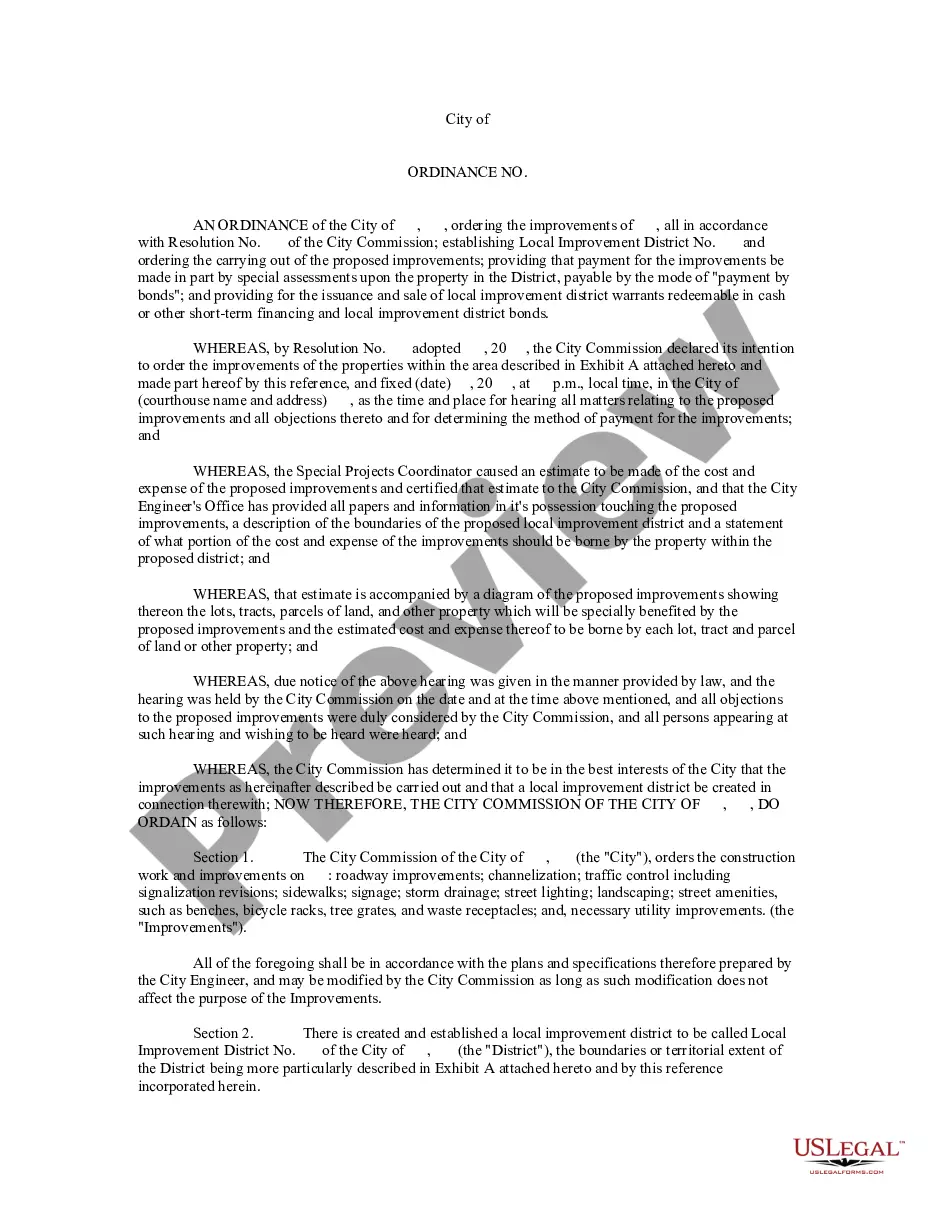




How to fill out Agreement Creating Restrictive Covenants?
Utilizing legal document examples that comply with federal and local regulations is essential, and the internet provides many alternatives to choose from.
However, what is the benefit of spending time searching for the right Covenant And Agreement Difference example online when the US Legal Forms online library already consolidates such templates in one location.
US Legal Forms is the largest online legal repository, featuring over 85,000 fillable templates crafted by legal professionals for various business and personal scenarios.
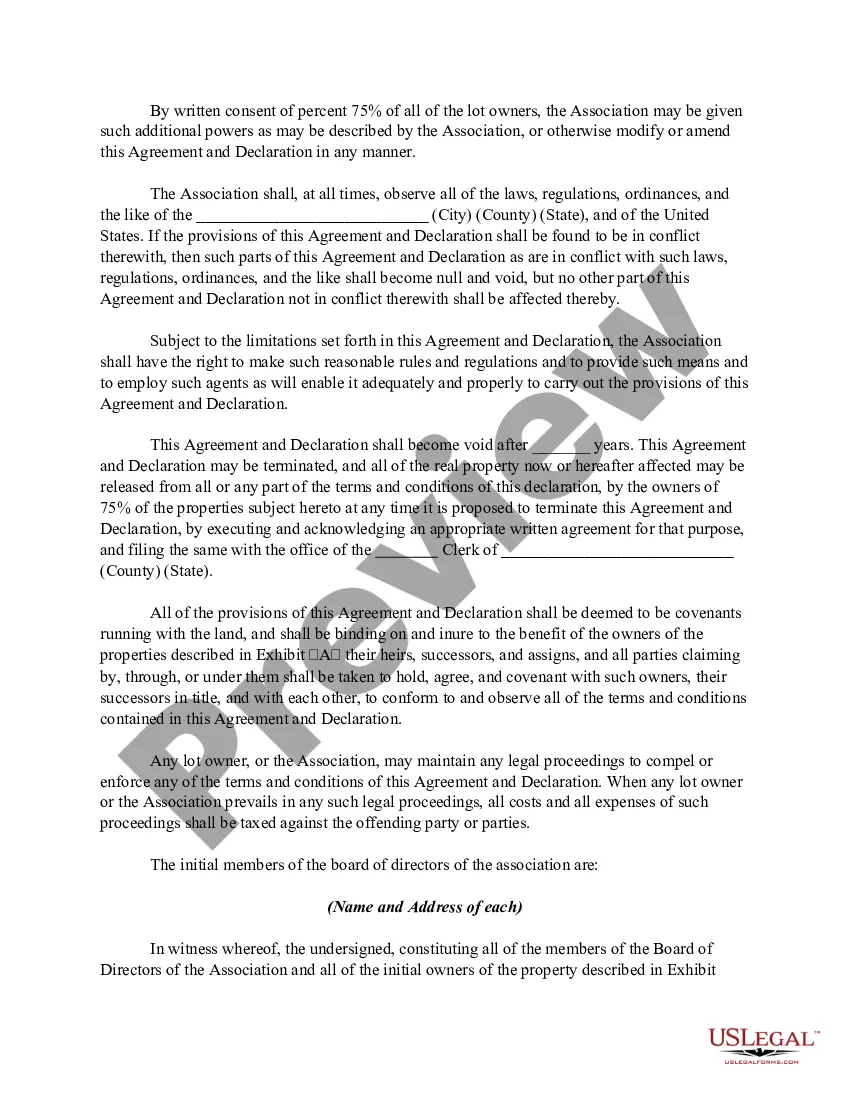
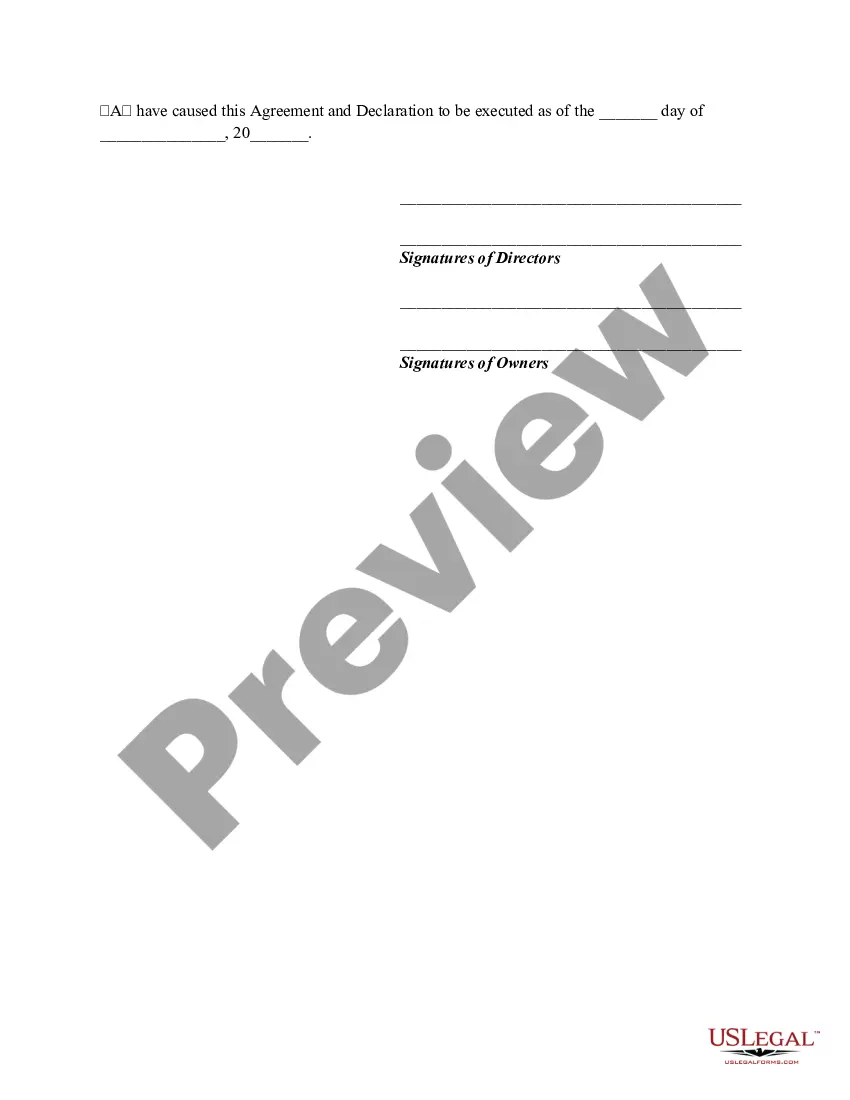
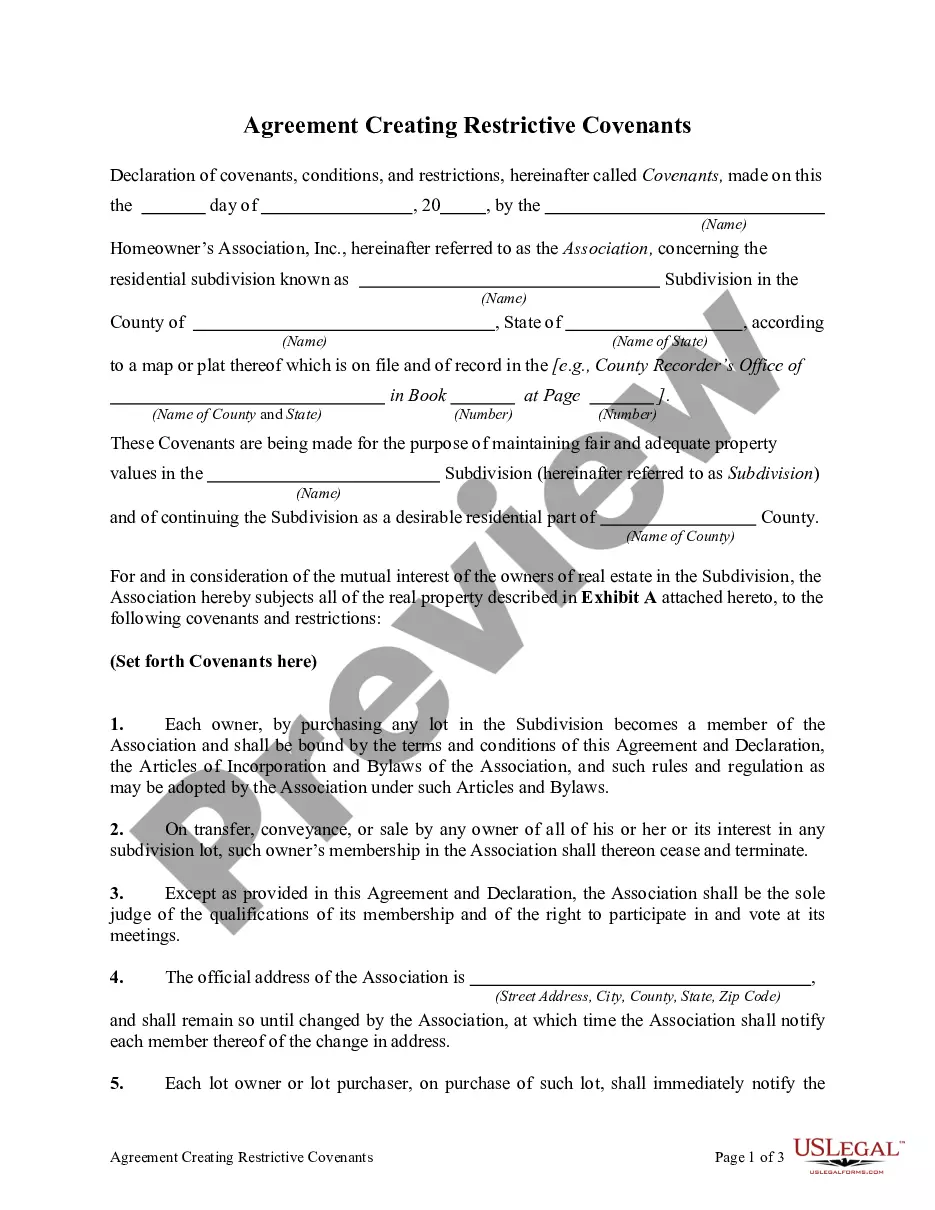
Explore the template using the Preview option or via the text outline to confirm it suits your requirements.
- These templates are user-friendly and organized according to state and intended use.
- Our experts keep track of legal changes, ensuring that your form is current and compliant when you obtain a Covenant And Agreement Difference from our platform.
- Acquiring a Covenant And Agreement Difference is simple and swift for both existing and new clients.
- If you already possess an account with a valid subscription, Log In to download the document sample you need in the correct format.
- If you are a first-time visitor, follow the steps listed below.
Form popularity
FAQ
An affirmative covenant obligates a person to act. For example, a covenant that requires the homeowner to keep the trees trimmed in the yard is an affirmative covenant.
In brief, a covenant is a contractual promise in which your business agrees to perform a particular action or, alternatively, agrees not to carry out a specific activity. A covenant differs from other clauses in a loan agreement in that a breach of a covenant will result in more severe consequences.
A contract is an agreement between parties while a covenant is a pledge. A covenant is an agreement you can break while a covenant is a perpetual promise. You seal a covenant while you sign a contract. A contract is a mutually beneficial relationship while a covenant is something you fulfill.
A promise is a commitment made by one party to another, while an agreement is a mutual understanding between two or more parties. While both promises and agreements create obligations, agreements are legally binding contracts that can be enforced in court, while promises may or may not be legally binding.
A promise is a commitment made by one party to another, while an agreement is a mutual understanding between two or more parties. While both promises and agreements create obligations, agreements are legally binding contracts that can be enforced in court, while promises may or may not be legally binding.