Apply For Homestead Exemption In Hillsborough County In Santa Clara
Description





Get your form ready online
Our built-in tools help you complete, sign, share, and store your documents in one place.
Make edits, fill in missing information, and update formatting in US Legal Forms—just like you would in MS Word.
Download a copy, print it, send it by email, or mail it via USPS—whatever works best for your next step.
Sign and collect signatures with our SignNow integration. Send to multiple recipients, set reminders, and more. Go Premium to unlock E-Sign.
If this form requires notarization, complete it online through a secure video call—no need to meet a notary in person or wait for an appointment.
We protect your documents and personal data by following strict security and privacy standards.
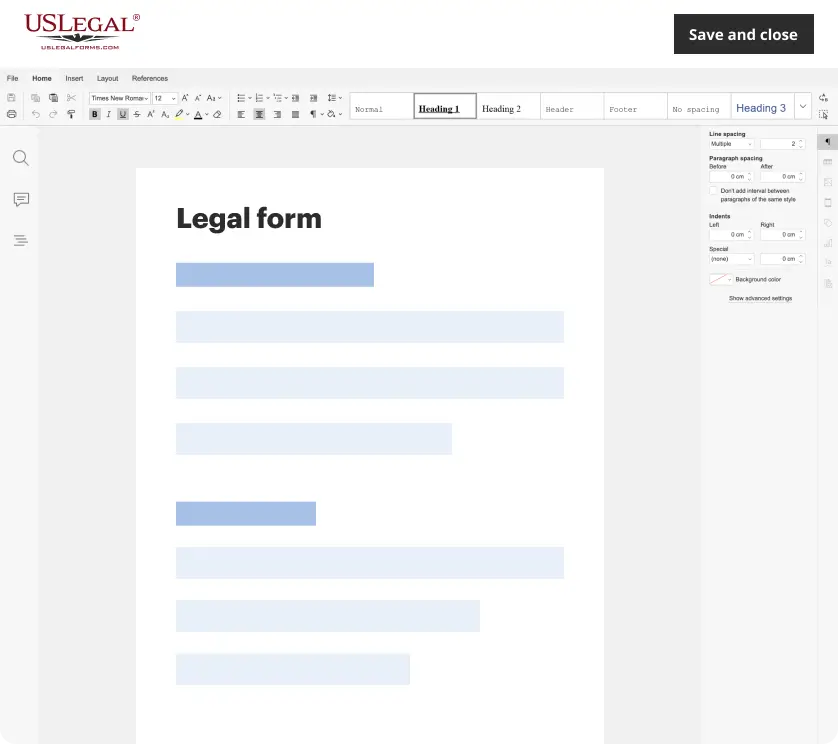
Make edits, fill in missing information, and update formatting in US Legal Forms—just like you would in MS Word.
Download a copy, print it, send it by email, or mail it via USPS—whatever works best for your next step.
Sign and collect signatures with our SignNow integration. Send to multiple recipients, set reminders, and more. Go Premium to unlock E-Sign.
If this form requires notarization, complete it online through a secure video call—no need to meet a notary in person or wait for an appointment.
We protect your documents and personal data by following strict security and privacy standards.
Looking for another form?



Form popularity
FAQ
Homeowners' exemption If you own and occupy your home as your principal place of residence, you may be eligible for an exemption of up to $7,000 off the dwelling's assessed value, resulting in a property tax savings of approximately $70 to $80 annually.
Homestead exemption is $25,000 deducted from your assessed value before the taxes are calculated plus an additional homestead exemption up to $25,000 applied to the assessed value above $50,000. The additional exemption does not apply to school taxes.
In order to qualify for the Long-term Residency Senior Exemption, the applicant must have maintained permanent residence on the property for at least 25 years, meet the age and income requirements listed above and the applicant's property must have a just value less than $250,000 for the initial year of application.
To get a homestead deduction on your Florida taxes, you have to fill out an application form, the DR-501, and demonstrate proof of residence by March 1 of the year for which you wish to qualify.
The deadline to file for homestead exemption is March 1st of the current tax year. However, you may late file up to 25 days from that date the Notices of Proposed Property Taxes are mailed. For help, please contact our office at 772-288-5608.
To apply for the Florida Homestead Property Tax Exemption, the property owner must complete Form DR-501 and submit it to the property appraiser in the county where the property is located by March 1, or if in Brevard County, by using the above links.
To get a homestead deduction on your Florida taxes, you have to fill out an application form, the DR-501, and demonstrate proof of residence by March 1 of the year for which you wish to qualify.
Your Homestead will become effective on January 1st of the year FOLLOWING the year in which you ESTABLISHED your Homestead, SO LONG as you FILE for Homestead no later than March 1st of the year following the year in which you established your Homestead.
The deadline to file an application for exemption is March 1st. Under Florida law, failure to file for any Exemption by March 1st constitutes a waiver of the exemption privilege for the year. Regular filing is January 2nd- March 1st. Pre-filing for the coming year is March 2nd- December 31st.
Applications are taken year round. The statutory filing deadline is March 1 with late-filed applications taken up to the 25th day after the mailing of the yearly Notice of Proposed Property Taxes (TRIM), which is typically mailed in August.

