Notice Of Application For Discovery
Description


Get your form ready online
Our built-in tools help you complete, sign, share, and store your documents in one place.
Make edits, fill in missing information, and update formatting in US Legal Forms—just like you would in MS Word.
Download a copy, print it, send it by email, or mail it via USPS—whatever works best for your next step.
Sign and collect signatures with our SignNow integration. Send to multiple recipients, set reminders, and more. Go Premium to unlock E-Sign.
If this form requires notarization, complete it online through a secure video call—no need to meet a notary in person or wait for an appointment.
We protect your documents and personal data by following strict security and privacy standards.

Make edits, fill in missing information, and update formatting in US Legal Forms—just like you would in MS Word.

Download a copy, print it, send it by email, or mail it via USPS—whatever works best for your next step.

Sign and collect signatures with our SignNow integration. Send to multiple recipients, set reminders, and more. Go Premium to unlock E-Sign.

If this form requires notarization, complete it online through a secure video call—no need to meet a notary in person or wait for an appointment.

We protect your documents and personal data by following strict security and privacy standards.
Looking for another form?
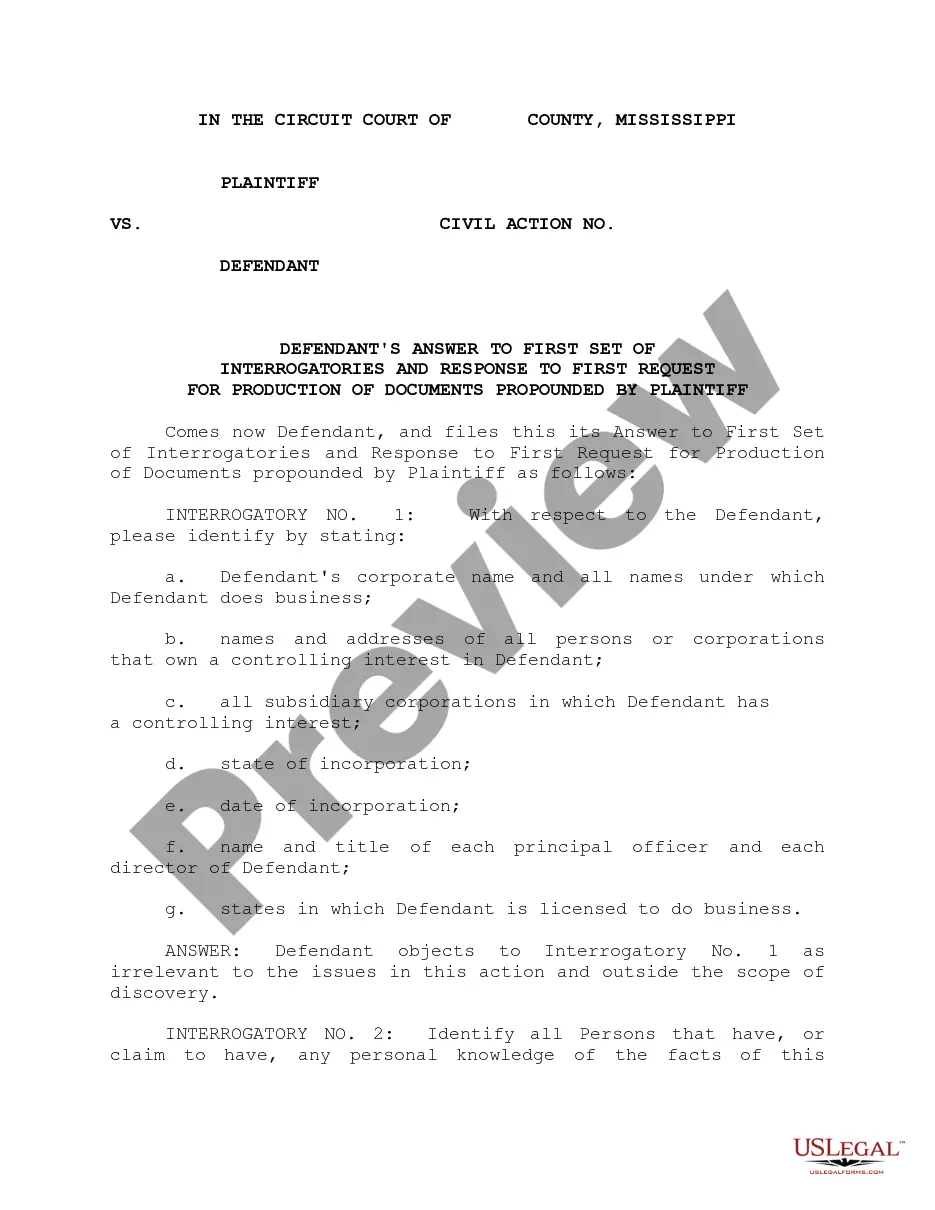


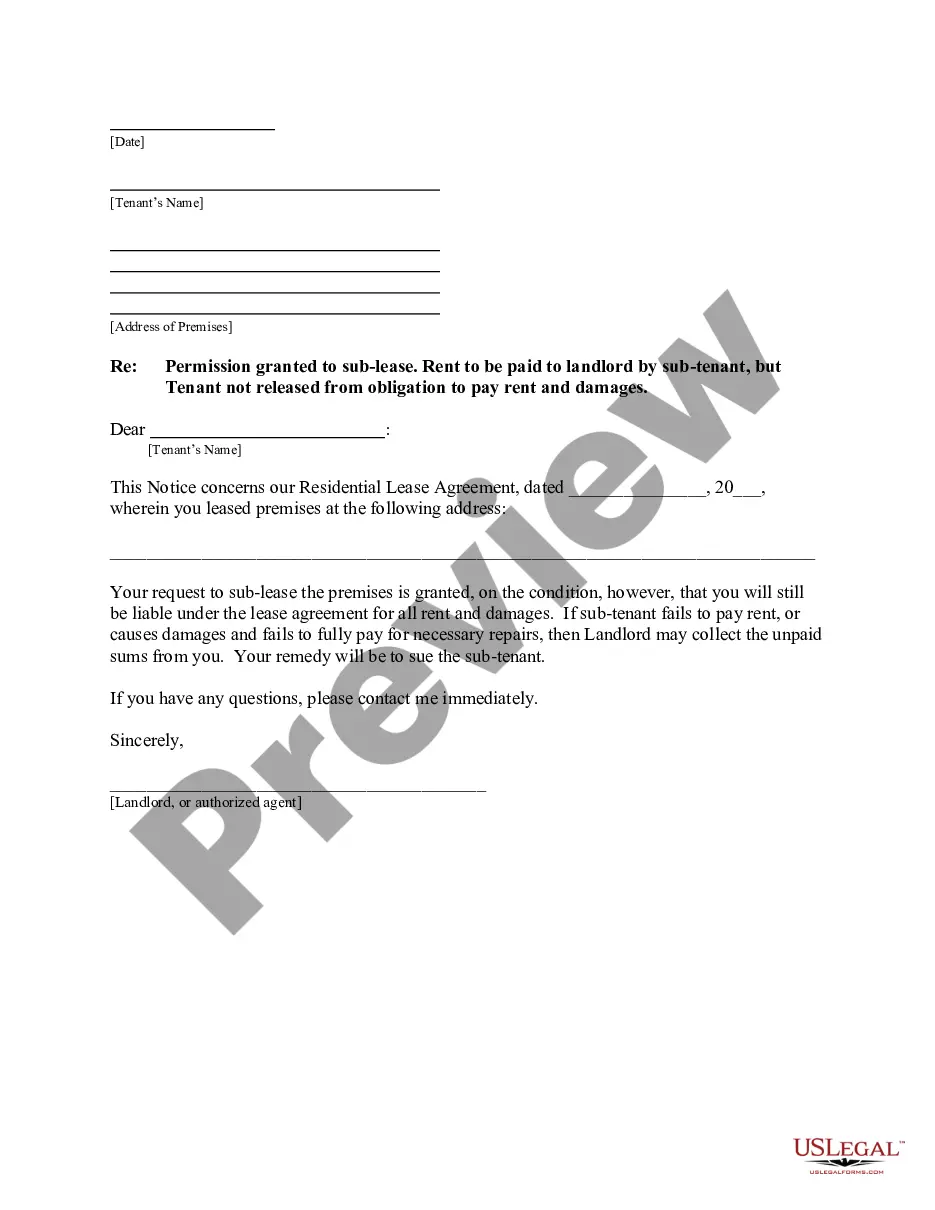
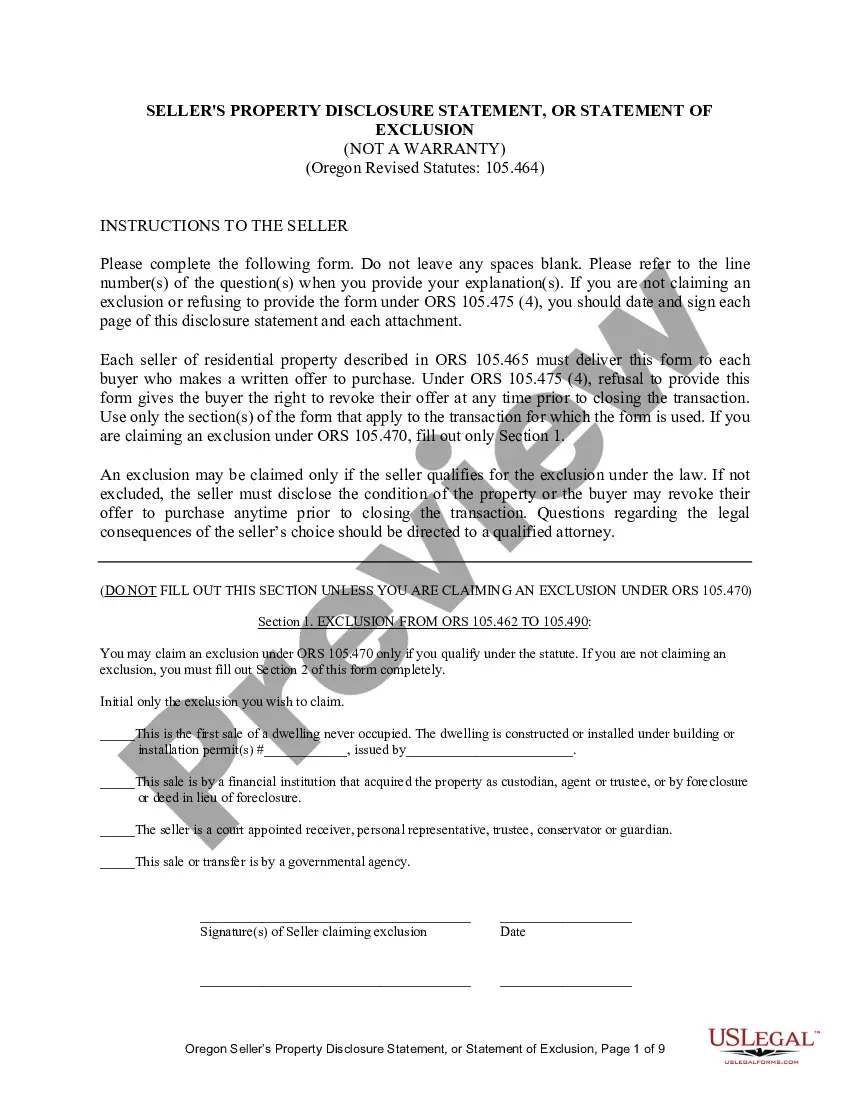
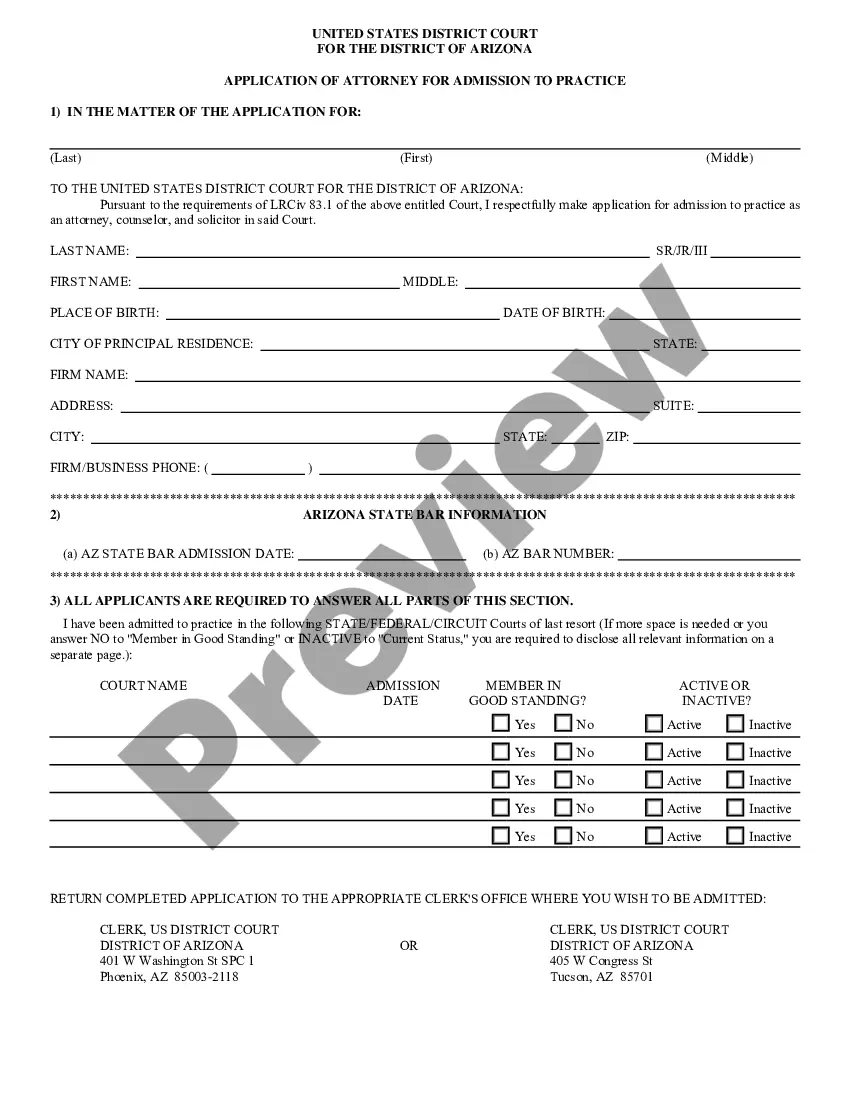
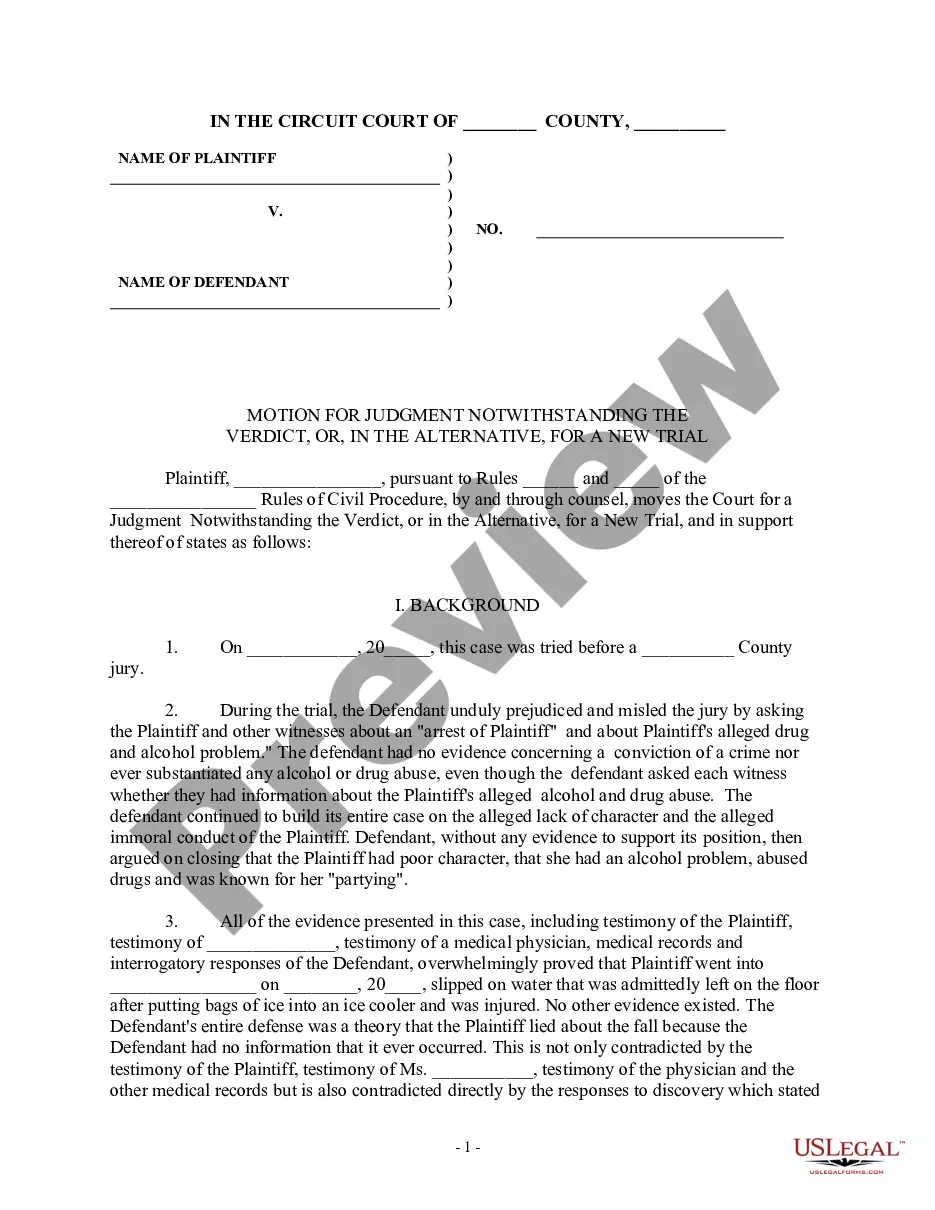
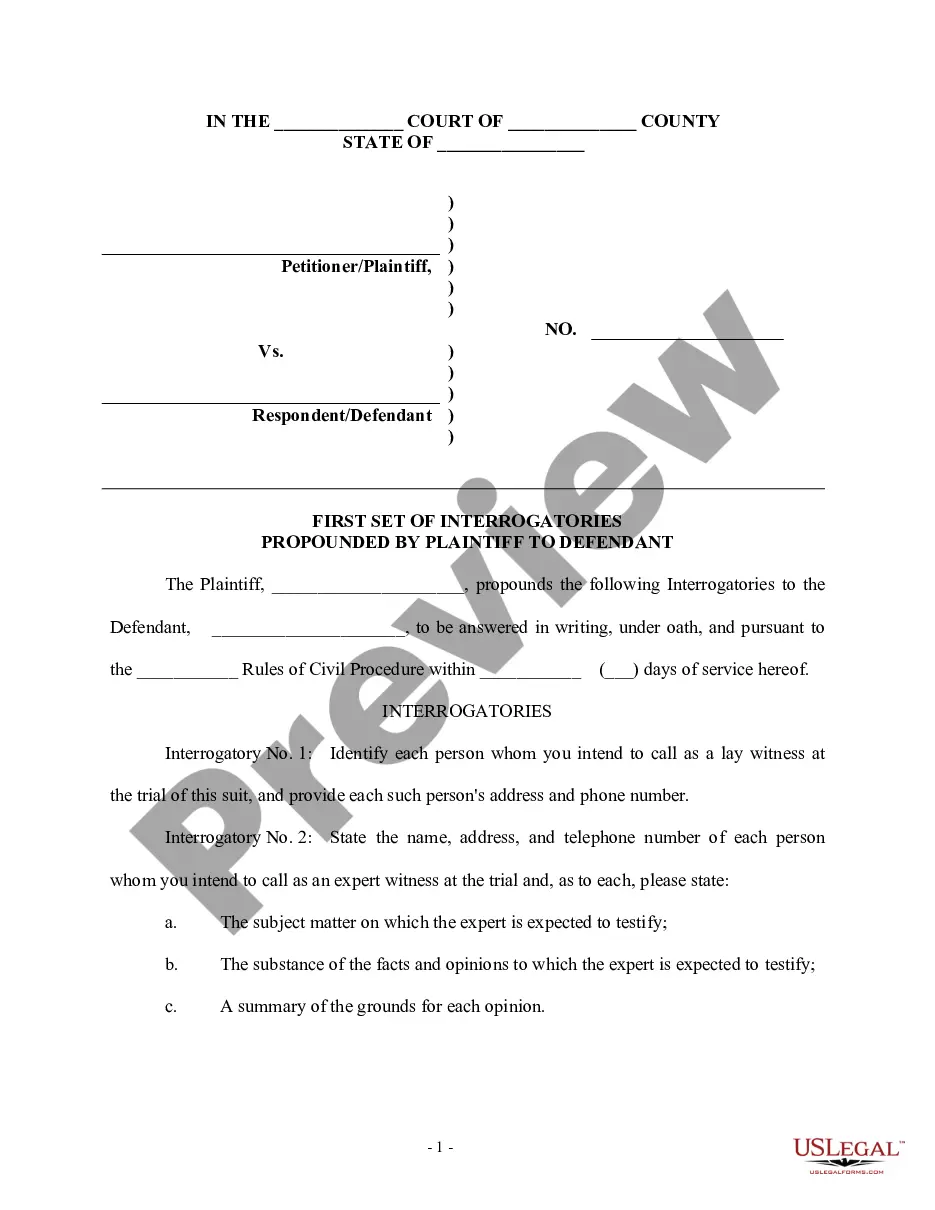
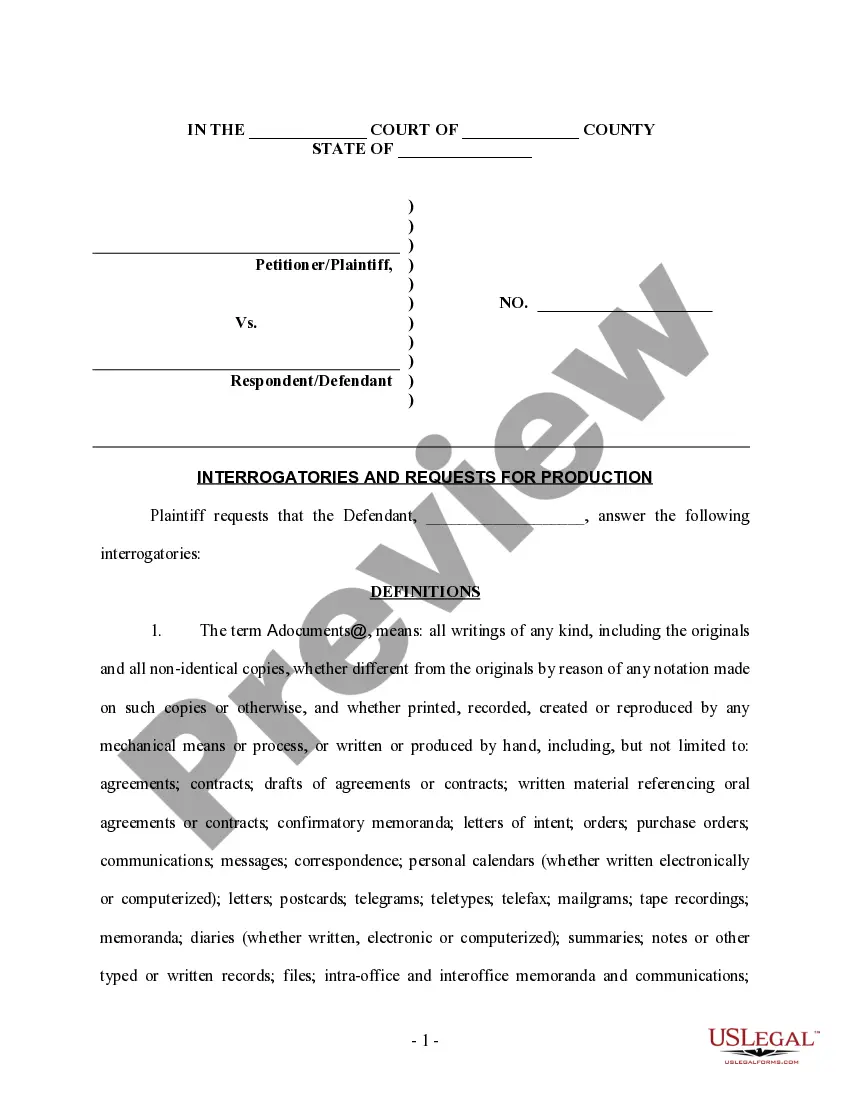
How to fill out Notice Of Service Of Interrogatories - Discovery?
Handling legal documentation and processes can be a lengthy addition to your entire day.
Notice Of Application For Discovery and similar forms often require you to locate them and comprehend how to fill them out accurately.
For this reason, whether you are managing financial, legal, or personal matters, utilizing a comprehensive and effective online library of forms as needed will be beneficial.
US Legal Forms is the premier online platform for legal templates, featuring over 85,000 state-specific documents and various resources to assist you in completing your paperwork effortlessly.
Simply Log In to your account, find Notice Of Application For Discovery, and download it immediately from the My documents section. You can also access any forms you have previously saved.
- Explore the collection of relevant documents available to you with just a single click.
- US Legal Forms provides state- and county-specific forms available for download at any time.
- Streamline your document management processes with premium support that allows you to create any form within minutes without any additional or hidden fees.
Form popularity
FAQ
The competency requirements for a common law marriage are the same as those in a traditional marriage. The parties cannot be related. They cannot be already and for them as a family, the three of them were able married to someone else. They must have the mental capacity to enter into a marital relationship.
Yes, Montana state divorce records (from 1943) are public records accessible at the Office of Vital Statistics. Please note that publicly available divorce records are applicable to only those for which the State Case Registry and Vital Statistics Form has been completed and filed with the local courthouse clerk.
Certified copies are not available from State Office. Fee for search and verification of essential facts of marriage is $10.00. Apply to Clerk of District Court where marriage license was purchased if known. Remarks: Clerk of District Court in county where marriage license was purchased.
Don't we have to live together for 7 years or something? No. This is definitely the #1 common law marriage myth in Montana. There isn't a certain amount of time you have to live together to be considered common law spouses in Montana.
Montana law requires the existence of all elements. As such, living together for a number of years, but not holding yourselves out as married, will not automatically result in a common law marriage. A Common Law Marriage is a REAL marriage, meaning it requires a divorce/dissolution to terminate the relationship.
Don't we have to live together for 7 years or something? No. This is definitely the #1 common law marriage myth in Montana. There isn't a certain amount of time you have to live together to be considered common law spouses in Montana.
Montana is an equitable division state, not a "community property" state. The difference is Montana courts weigh multiple legal factors to determine an equitable division of the marital estate versus the assumption that all property is community property regardless each spouse's contributions.
The parties must live together and hold themselves out to relatives, friends, neighbors, co-workers and others as being married. Merely living together or having children together is NOT proof that a common law marriage exists. There must be evidence that the parties hold themselves out as a married couple.