Notice Discovery Template With Calculator In Maryland
Description





Get your form ready online
Our built-in tools help you complete, sign, share, and store your documents in one place.
Make edits, fill in missing information, and update formatting in US Legal Forms—just like you would in MS Word.
Download a copy, print it, send it by email, or mail it via USPS—whatever works best for your next step.
Sign and collect signatures with our SignNow integration. Send to multiple recipients, set reminders, and more. Go Premium to unlock E-Sign.
If this form requires notarization, complete it online through a secure video call—no need to meet a notary in person or wait for an appointment.
We protect your documents and personal data by following strict security and privacy standards.

Make edits, fill in missing information, and update formatting in US Legal Forms—just like you would in MS Word.

Download a copy, print it, send it by email, or mail it via USPS—whatever works best for your next step.

Sign and collect signatures with our SignNow integration. Send to multiple recipients, set reminders, and more. Go Premium to unlock E-Sign.

If this form requires notarization, complete it online through a secure video call—no need to meet a notary in person or wait for an appointment.

We protect your documents and personal data by following strict security and privacy standards.
Looking for another form?







Form popularity
FAQ
Failure to comply with discovery obligations may result in sanctions. Sanctions are actions taken by the Administrative Judge to penalize a party that fails to comply with their orders or other legal obligations.
A party may obtain discovery regarding any matter, not privileged, including the existence, description, nature, custody, condition, and location of any documents or other tangible things and the identity and location of persons having knowledge of any discoverable matter, if the matter sought is relevant to the ...
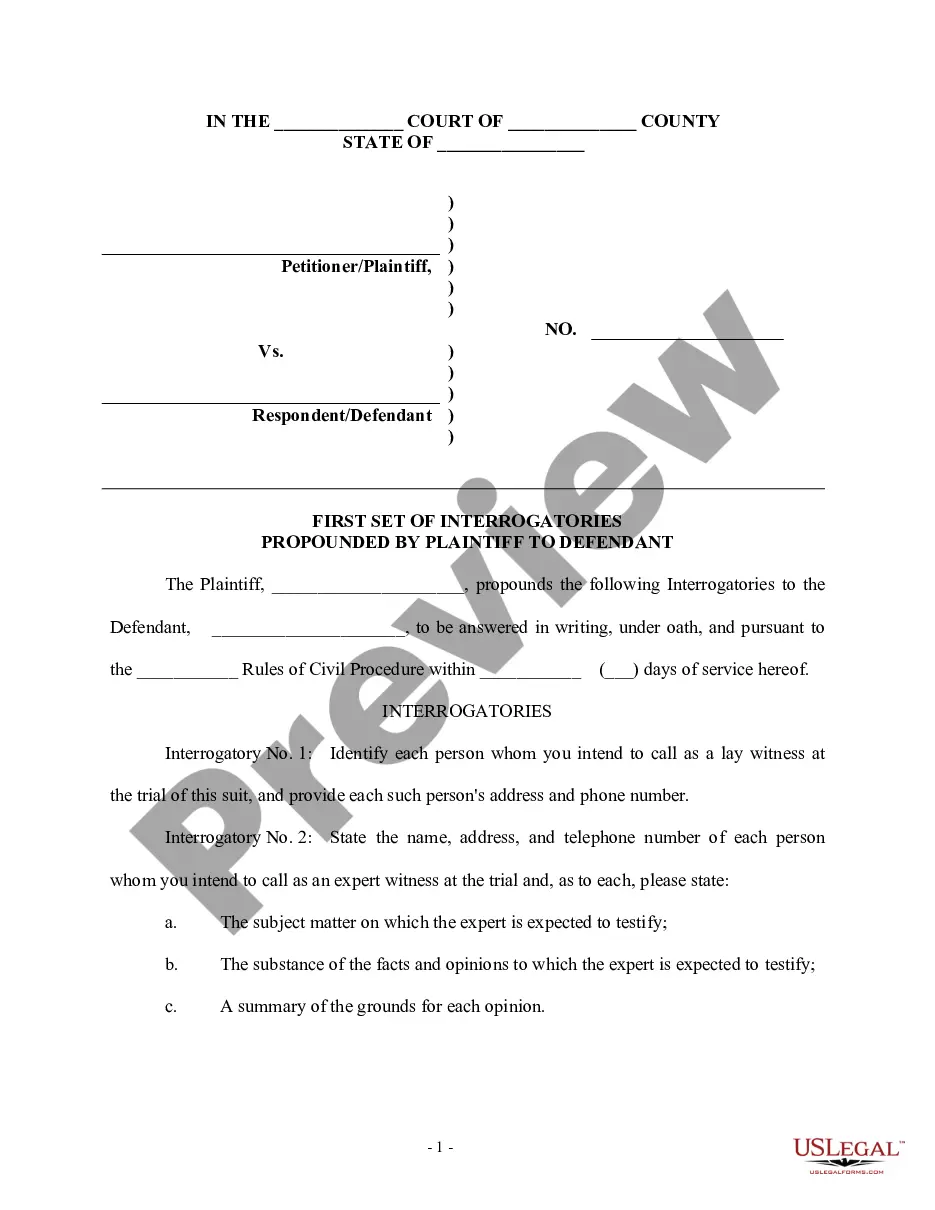
Maryland Rule of Procedure 2-421 controls how and when interrogatories are sent and responded to in circuit court cases. A request for admissions is a list of statements sent to another party. The receiving party must admit or deny each statement.
Prosecutors are given up to the time before trial to present the discovery to the defense. If prosecutors do not present the discovery in a timely manner, they can face sanctions including the dismissal of charges. Maryland law enforcement is usually not a part of the discovery process.
A party may obtain discovery regarding any matter, not privileged, including the existence, description, nature, custody, condition, and location of any documents or other tangible things and the identity and location of persons having knowledge of any discoverable matter, if the matter sought is relevant to the ...
All discovery must be completed not later than 15 days before the date set for the arbitration hearing unless the court, upon a showing of good cause, makes an order granting an extension of the time within which discovery must be completed.
Any party may serve written interrogatories directed to any other party. Unless the court orders otherwise, a party may serve one or more sets having a cumulative total of not more than 30 interrogatories to be answered by the same party.
Seek a protective order from the court pursuant to Rule 2-403, which allows a court to enter an order that protects a party from annoyance, embarrassment, oppression, or undue burden or expense related to the discovery request.
Under the Maryland Rules, you must provide the opposing party with your discovery answers within either 30 days after service of the request or 15 days after the date on which the party's initial pleading or motion is required, whichever is later.
“Permissive” intervention is governed by Maryland Rule 2-214(b), which states: (1) Generally. Upon timely motion a person may be permitted to intervene in an action when the person's claim or defense has a question of law or fact in common with the action.