State Specific Employment Laws Within Hospitality In Riverside
Description
















Get your form ready online
Our built-in tools help you complete, sign, share, and store your documents in one place.
Make edits, fill in missing information, and update formatting in US Legal Forms—just like you would in MS Word.
Download a copy, print it, send it by email, or mail it via USPS—whatever works best for your next step.
Sign and collect signatures with our SignNow integration. Send to multiple recipients, set reminders, and more. Go Premium to unlock E-Sign.
If this form requires notarization, complete it online through a secure video call—no need to meet a notary in person or wait for an appointment.
We protect your documents and personal data by following strict security and privacy standards.
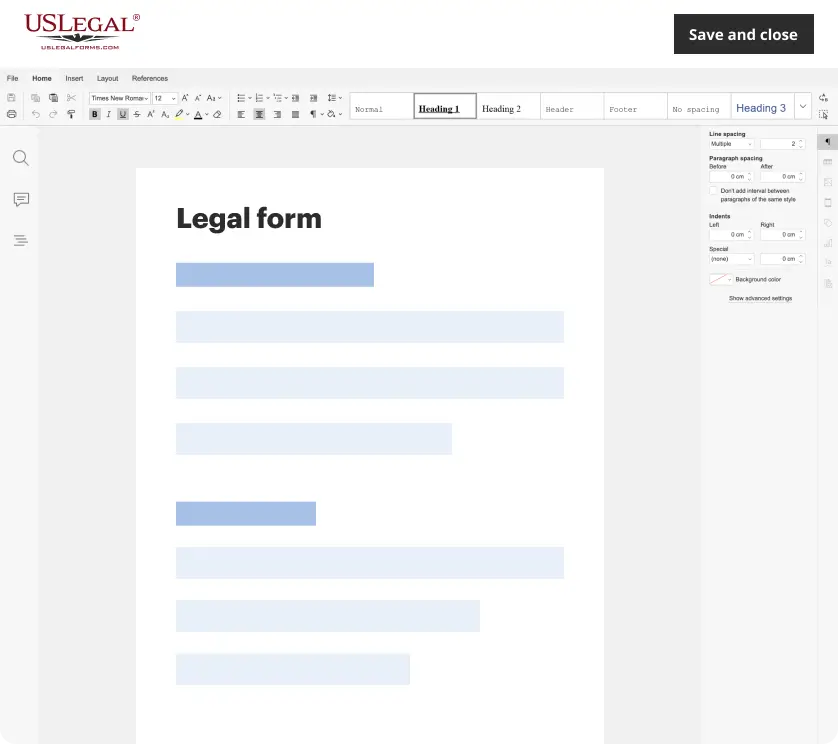
Make edits, fill in missing information, and update formatting in US Legal Forms—just like you would in MS Word.
Download a copy, print it, send it by email, or mail it via USPS—whatever works best for your next step.
Sign and collect signatures with our SignNow integration. Send to multiple recipients, set reminders, and more. Go Premium to unlock E-Sign.
If this form requires notarization, complete it online through a secure video call—no need to meet a notary in person or wait for an appointment.
We protect your documents and personal data by following strict security and privacy standards.
Looking for another form?





Form popularity
FAQ
Each state sets laws related to fair employment and workplace safety. In most cases, state laws offer more protections than the federal ones. Contact your state department of labor to learn about the labor laws in your state.
To remain compliant and prepared for government inspections and avoid penalties, businesses should: Document every employment-related activity accurately. Maintain up-to-date and easily accessible employee records. Regularly review and update company policies to align with current laws.
To avoid restaurant legal issues, keep in mind these restaurant regulations: Labor compliance and restaurant employment laws. Food safety and food handling regulations. Staff conduct. Worker injury prevention policies. Cleaning policy.
The golden rules' of hospitality Extend a welcome: Make eye contact, smile, say hello, introduce yourself, call people by name, and extend a few words of concern. Notice when someone looks confused: Stop and lend a hand. Take time for courtesy and consideration: Kind words and polite gestures make people feel special.
Physical Work Conditions Are regularly exposed to loud sounds and distracting noise levels from kitchen equipment. Are sometimes exposed to very hot or very cold temperatures. Are sometimes exposed to contaminants. Are occasionally exposed to hazardous situations and equipment that may produce cuts or minor burns.
The hospitality industry encompasses a wide range of jobs, each with its own set of risks and dangers. Some roles require working in fast-paced, high-pressure environments where others require exposure to hazardous cleaning materials and working in crammed spaces. Roles most susceptible to risks: Kitchen staff.
The Top 10 Hospitality Industry Challenges Talent Shortages. It's difficult to overstate the impact that the COVID-19 pandemic had on the hospitality industry. Evolving Guest Expectations. Reputation Management. Sustainability. Skill Gaps. Cybersecurity Threats. Seasonal Fluctuations. Managing Regulations.
It may involve extensive physical work. Most entry-level hospitality roles tend to require constant physical activity, like climbing stairs, carrying luggage, walking for long distances and other related activities. Although this can make the job more challenging, it can also enhance your physical condition.
Most employers are surprised to learn that California does not require companies to have an employee handbook. However, the Fair Employment and Housing Act (FEHA) requires that California employers with at least five employees distribute written harassment, discrimination, and retaliation prevention policies.