State Specific Employment Laws Within Hospitality In Maricopa
Description
















Get your form ready online
Our built-in tools help you complete, sign, share, and store your documents in one place.
Make edits, fill in missing information, and update formatting in US Legal Forms—just like you would in MS Word.
Download a copy, print it, send it by email, or mail it via USPS—whatever works best for your next step.
Sign and collect signatures with our SignNow integration. Send to multiple recipients, set reminders, and more. Go Premium to unlock E-Sign.
If this form requires notarization, complete it online through a secure video call—no need to meet a notary in person or wait for an appointment.
We protect your documents and personal data by following strict security and privacy standards.
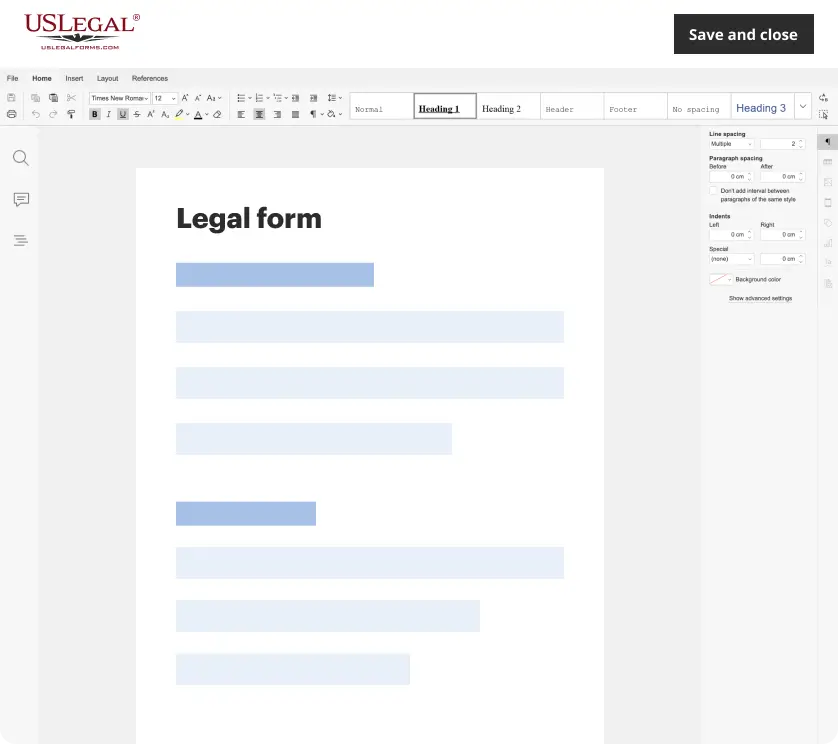
Make edits, fill in missing information, and update formatting in US Legal Forms—just like you would in MS Word.
Download a copy, print it, send it by email, or mail it via USPS—whatever works best for your next step.
Sign and collect signatures with our SignNow integration. Send to multiple recipients, set reminders, and more. Go Premium to unlock E-Sign.
If this form requires notarization, complete it online through a secure video call—no need to meet a notary in person or wait for an appointment.
We protect your documents and personal data by following strict security and privacy standards.
Looking for another form?




Form popularity
FAQ
In some instances, employers may have a requirement in place that workers must live within a certain distance of an office location. This maybe rare, but employers are within their rights to require this and moving out of this zone could ultimately lead to termination.
Each state sets laws related to fair employment and workplace safety. In most cases, state laws offer more protections than the federal ones. Contact your state department of labor to learn about the labor laws in your state.
Simply put, your employer can not require that you move. They can make you an offer of employment in another state and if you choose to accept it, then you do so on your own. If you choose not to accept it, then you lose ``at will'' employment which technically can be lost for any reason.
There are very few laws protecting employees and candidates against geographical discrimination. A person's location or origin is not a protected class like race or religion. From an ethical standpoint, employers and managers should endeavor to treat employees the same no matter their location or geographical origin.
The simple answer to these questions is yes, your employer can making hiring and firing decisions based on where you live. Some employers view potential employees with a long commute as risky. Government employers might also require employees live within the city or county in which they work.
Arizona Labor Laws Guide Arizona Labor Laws FAQ Arizona minimum wages$14.35 per hour Arizona overtime laws 1.5 times the regular wage for any time worked over 40 hours/week ($19.20 for minimum wage workers) Arizona break laws Breaks not required by law
Federal labor laws Information aboutLabor law or act Minimum wage, overtime, child labor Fair Labor Standards Act Workplace safety, retaliation for whistleblowing Occupational Safety and Health Act Migrant and seasonal agricultural workers Migrant and Seasonal Agricultural Worker Protection Act (MSPA)5 more rows •
5 Important Laws In The US Civil Rights Act (1964): Voting Rights Act (1965) Medicare and Medicaid acts (1965) National Defense Education Act (1958) Economic Recovery Tax Act (1981)
23-1501 - Severability of employment relationships; protection from retaliatory discharges; exclusivity of statutory remedies in employment.