Writ Of Habeas Corpus Meaning With Example In San Bernardino
Description


Form popularity
FAQ
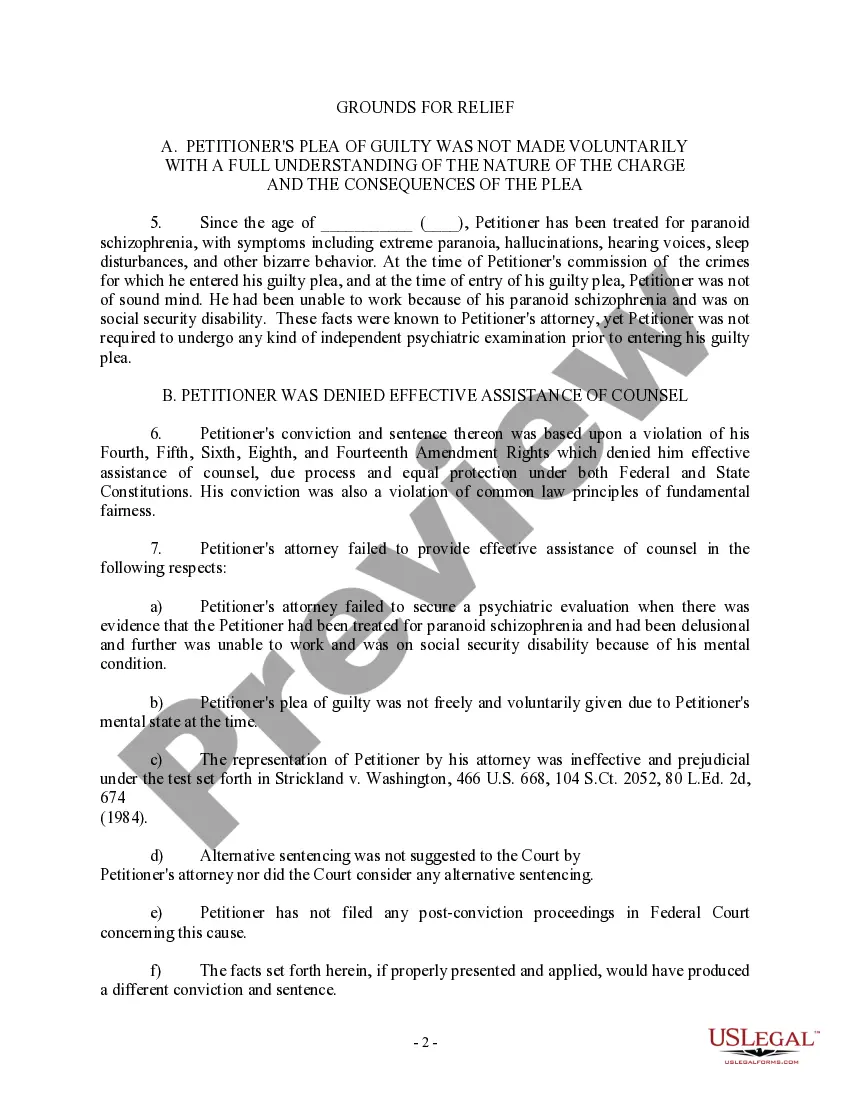
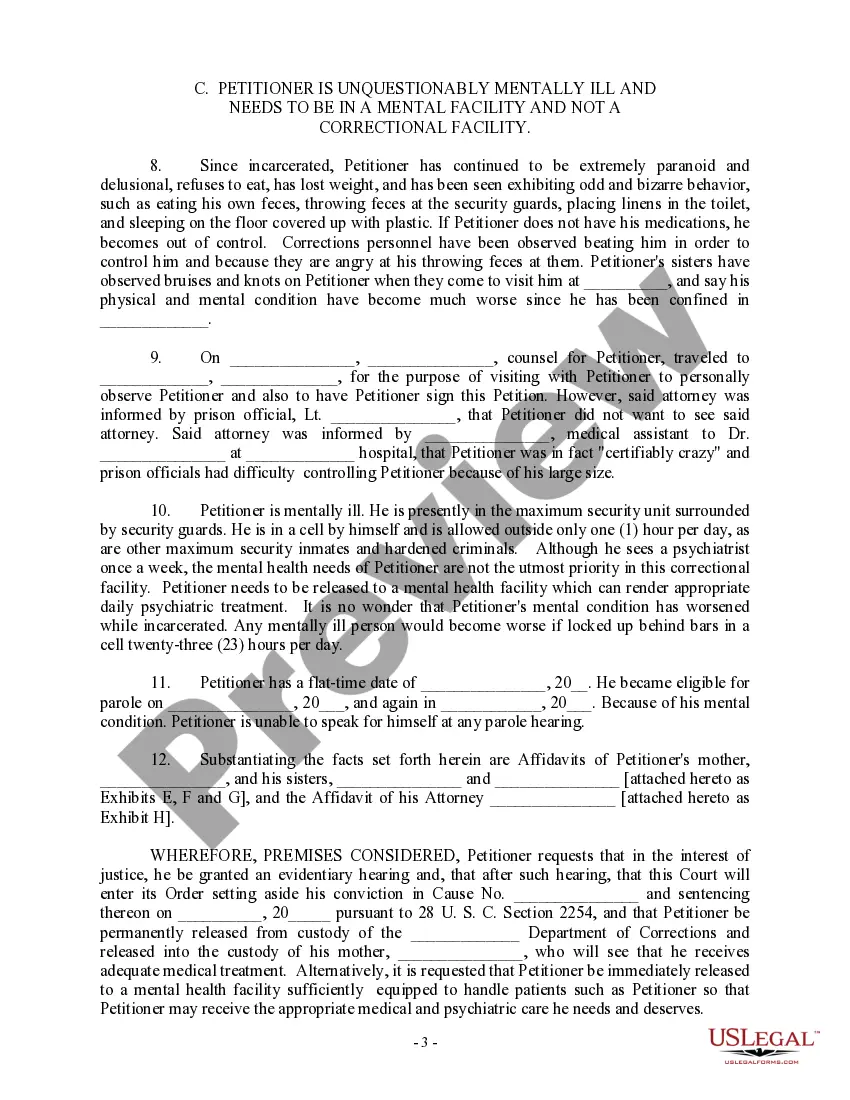
Habeas Corpus is a Latin word meaning which literally means 'to have the body of'. It is an order issued by the court to a person who has detained another person, to produce the body of the latter before it. The court then examines the cause and legality of detention.
Like most legalese, habeas corpus is Latin, literally "You should have the person," and it means a person can't be locked up without explanation or trial — they must be brought before a judge. Definitions of habeas corpus. noun. a writ ordering a prisoner to be brought before a judge. synonyms: writ of habeas corpus.
The writ of habeas corpus, or the “Great Writ” as it's also known, is a powerful tool that allows courts to review an inmate's final conviction and, when appropriate, reverse a conviction or otherwise reopen proceedings.
Federal habeas corpus is a procedure under which a federal court may review the legality of an individual's incarceration. It is most often the stage of the criminal appellate process that follows direct appeal and any available state collateral review. The law in the area is an intricate weave of statute and case law.
Habeas Corpus is a Latin word meaning which literally means 'to have the body of'. It is an order issued by the court to a person who has detained another person, to produce the body of the latter before it. The court then examines the cause and legality of detention. Further Reading: Types of Writs.
A legal action demanding that a prisoner be brought before a judge to make sure that he or she is not being held illegally. (Definition of habeas corpus from the Cambridge Academic Content Dictionary © Cambridge University Press)
Examples of 'writ of habeas corpus' in a sentence A number of people arrested and detained throughout the country sought writs of habeas corpus before the courts. He wanted them released through writs of habeas corpus, a right hitherto granted only to human prisoners.
The difference between these two writs is that habeas corpus is designed to enforce the right to freedom of the person, whereas amparo is designed to protect those other fundamental human rights enshrined in the Constitution but not covered by the writ of habeas corpus.”
Habeas Corpus is a Latin word meaning which literally means 'to have the body of'. It is an order issued by the court to a person who has detained another person, to produce the body of the latter before it. The court then examines the cause and legality of detention. Further Reading: Types of Writs.
Sound it Out: Break down the word 'writ of habeas corpus' into its individual sounds "rit uhv kaw" + "puhs". Say these sounds out loud, exaggerating them at first. Practice until you can consistently produce them clearly.
