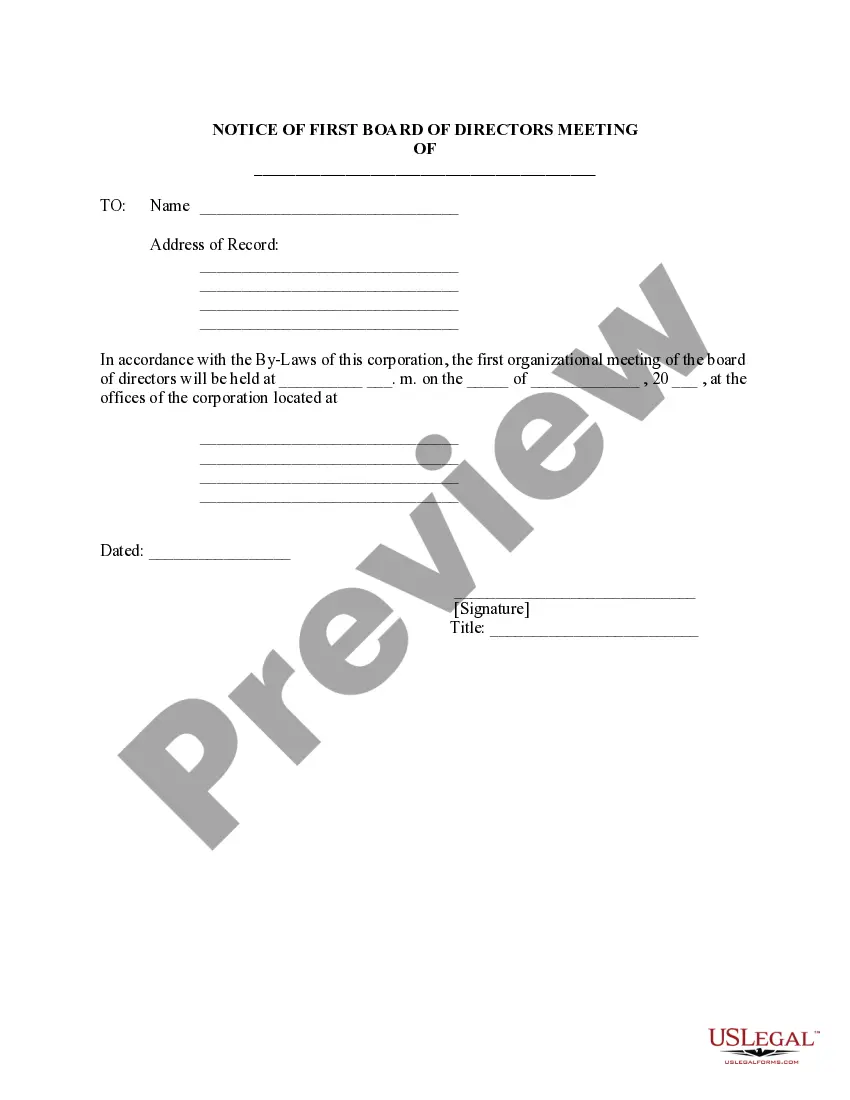
Corporation First Meeting With Senior Management In Fulton
Description


Get your form ready online
Our built-in tools help you complete, sign, share, and store your documents in one place.
Make edits, fill in missing information, and update formatting in US Legal Forms—just like you would in MS Word.
Download a copy, print it, send it by email, or mail it via USPS—whatever works best for your next step.
Sign and collect signatures with our SignNow integration. Send to multiple recipients, set reminders, and more. Go Premium to unlock E-Sign.
If this form requires notarization, complete it online through a secure video call—no need to meet a notary in person or wait for an appointment.
We protect your documents and personal data by following strict security and privacy standards.

Make edits, fill in missing information, and update formatting in US Legal Forms—just like you would in MS Word.

Download a copy, print it, send it by email, or mail it via USPS—whatever works best for your next step.

Sign and collect signatures with our SignNow integration. Send to multiple recipients, set reminders, and more. Go Premium to unlock E-Sign.

If this form requires notarization, complete it online through a secure video call—no need to meet a notary in person or wait for an appointment.

We protect your documents and personal data by following strict security and privacy standards.
Looking for another form?


Form popularity
FAQ
The main difference between an LLC and a corporation is that an LLC is owned by one or more individuals, and a corporation is owned by its shareholders. No matter which entity you choose, both entities offer big benefits to your business. Incorporating a business allows you to establish credibility and professionalism.
Domestic and foreign business corporations are required by Section 408 of the Business Corporation Law to file a Biennial Statement every two years with the New York Department of State.
Although actual requirements can vary depending on the state, they typically involve the following: Select a state of incorporation. Choose a business name. File incorporation paperwork. Appoint a registered agent. Prepare corporate bylaws. Draft a shareholders' agreement. Hold the first board meeting. Get an EIN.
Due Date for First Board Meeting Type of CompanyDue Date for First Board MeetingGap Between Subsequent Meetings Small Companies Within 30 days of Incorporation Not more than 120 days between meetings Dormant Companies Within 30 days of Incorporation Not more than 120 days between meetings2 more rows •
What should board of directors first meeting minutes include? Your corporation's first directors meeting typically focuses on initial organizational tasks, including electing officers, setting their salaries, resolving to open a bank account, and ratifying bylaws and actions of the incorporators.
What to Include in the Minutes of Board Meetings Name of all directors present and absent. Time, date, and venue of the meeting. Name of other personalities present. Name of the Chairman of the meeting. Agenda of the meetings. Matters discussed and each director's suggestions.
Secretary/ Support Calls each member by name, noting their presence or Staff: absence at the meeting. Secretary then announces to the chair: “Madame Chair/Mr. Chair, we have a quorum or we do not have a quorum.”

