Annual Shareholder Meeting Form In Washington
Description
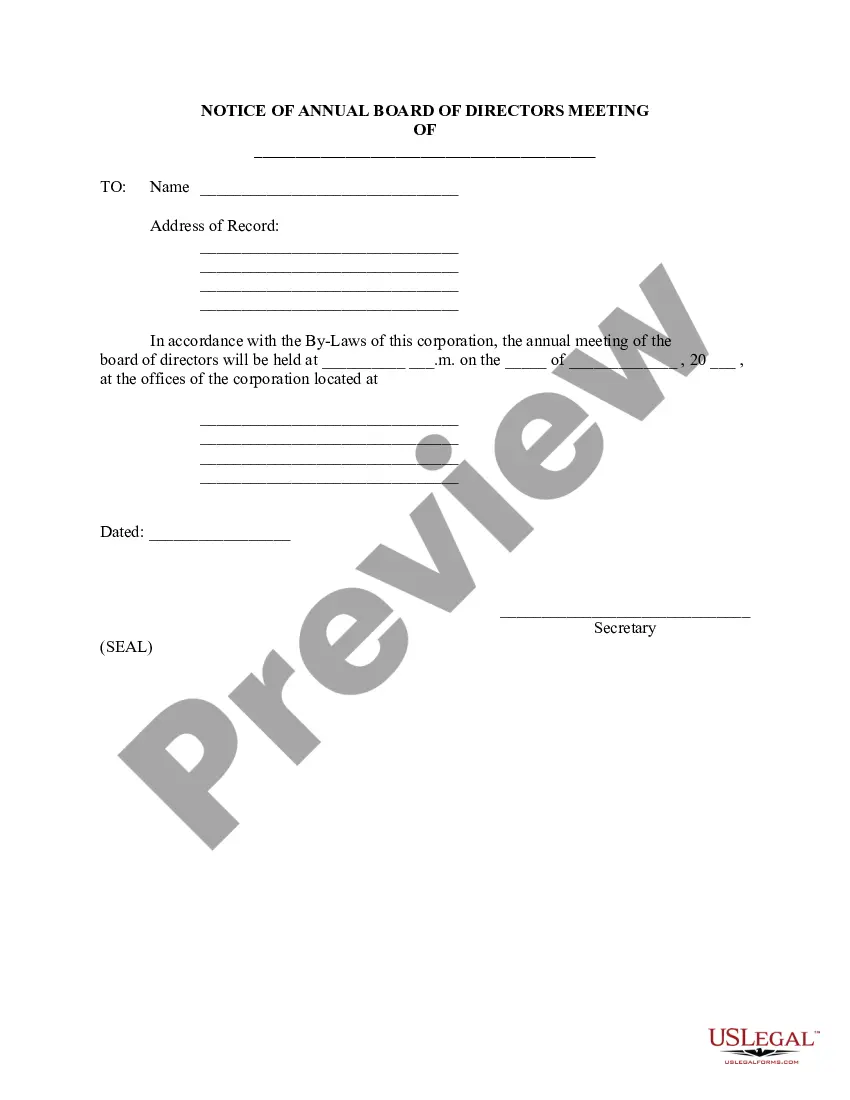


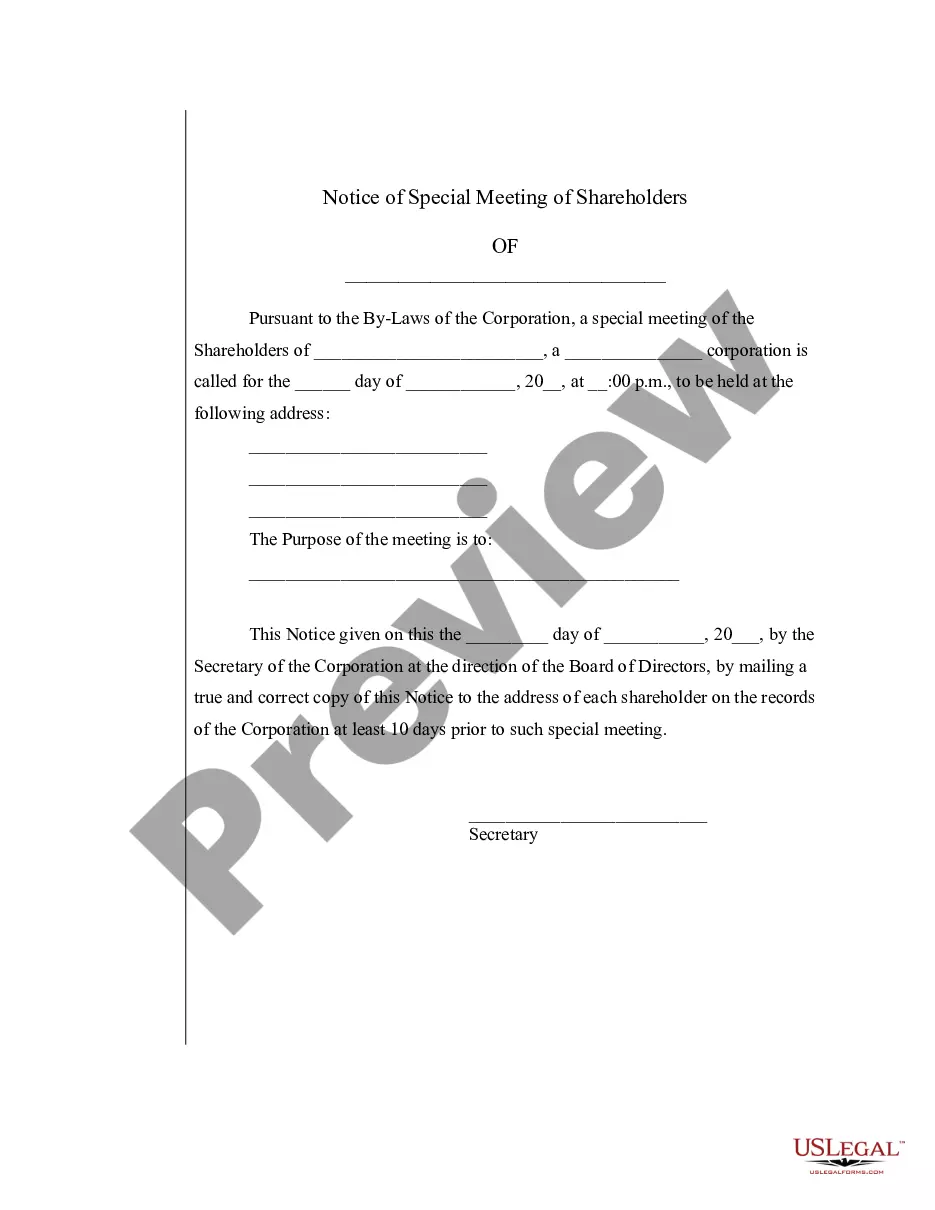
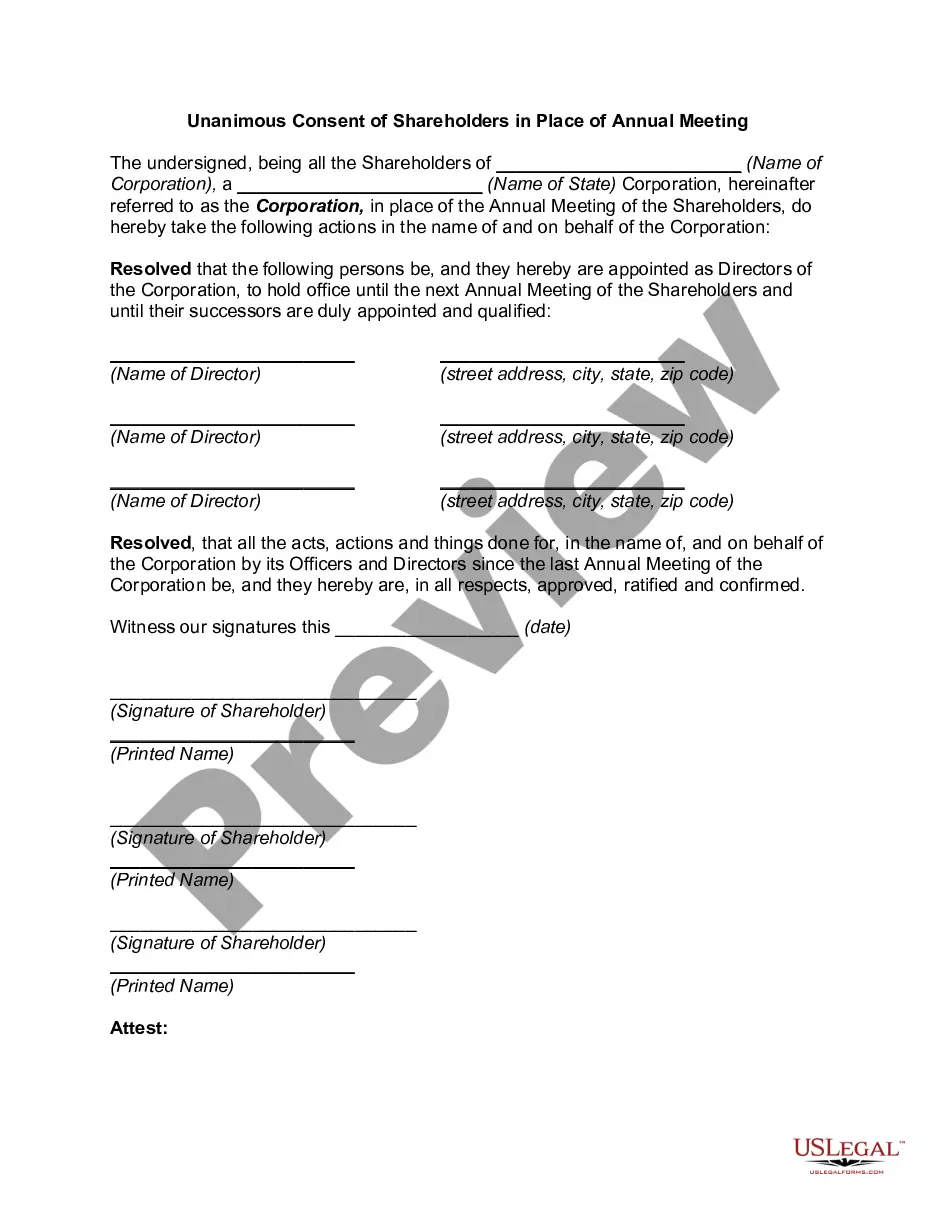
Get your form ready online
Our built-in tools help you complete, sign, share, and store your documents in one place.
Make edits, fill in missing information, and update formatting in US Legal Forms—just like you would in MS Word.
Download a copy, print it, send it by email, or mail it via USPS—whatever works best for your next step.
Sign and collect signatures with our SignNow integration. Send to multiple recipients, set reminders, and more. Go Premium to unlock E-Sign.
If this form requires notarization, complete it online through a secure video call—no need to meet a notary in person or wait for an appointment.
We protect your documents and personal data by following strict security and privacy standards.

Make edits, fill in missing information, and update formatting in US Legal Forms—just like you would in MS Word.

Download a copy, print it, send it by email, or mail it via USPS—whatever works best for your next step.

Sign and collect signatures with our SignNow integration. Send to multiple recipients, set reminders, and more. Go Premium to unlock E-Sign.

If this form requires notarization, complete it online through a secure video call—no need to meet a notary in person or wait for an appointment.

We protect your documents and personal data by following strict security and privacy standards.
Looking for another form?

Form popularity
FAQ
Washington requires LLCs to file an annual report with the Washington Secretary of State (SOS). You can file your annual report online using the Washington Corporations and Charities Filing System.
How to Form a Corporation in Washington Choose a Corporate Name. Choose Directors to serve on the Board of Directors. Prepare and file the Articles of Incorporation. Apply for a Federal Employer Identification Number (EIN) Write Corporate Bylaws. Create a Shareholder Agreement. Elect S Corporation status if desired.
Purpose: Articles of Incorporation for a Nonprofit Miscellaneous and Mutual Corporation business entity governed by RCW 24.06 is used to create a new business entity that has not previously been registered with the Office of the Secretary of State; or is beyond its five (5) year reinstatement period.
General meetings include any meetings of members (usually shareholders) such as annual general meetings (AGMs), meetings of different classes of members and creditors' meetings.
An Annual General Meeting (AGM) is a yearly gathering where a company's shareholders and board of directors meet to discuss important aspects of the company. At the AGM, the directors present an annual report to update shareholders on the company's performance, strategy, and management.
A General Meeting is simply a meeting of shareholders and 21 days' notice must be given to shareholders, but this can be reduced to 14 days, or increased to 28 days, in certain situations.
The shareholders of a C Corporation (or S Corporation) hold annual meetings to discuss the company's needs, its previous year's financials, elect new directors to the board of directors. The directors are the corporation's decision-makers, so as a shareholder, this is an important duty.
The terms “Annual General Meeting” and “annual meeting” are frequently used interchangeably, though they can have distinct meanings. An AGM specifically refers to a formal meeting held by organizations, such as corporations or nonprofits, where key issues are discussed.
If your business is set up and registered as a Corporation, you're required by law to hold an annual shareholder meeting and to document the meeting with minutes.
A company's annual shareholder meeting is a fundamental part of sound corporate governance. These formal gatherings provide the perfect opportunity for shareholders (also known as stakeholders) and the board of directors to take stock of the current business and discuss potential paths forward for the organization.

