Annual Shareholder Meeting For In Utah
Description



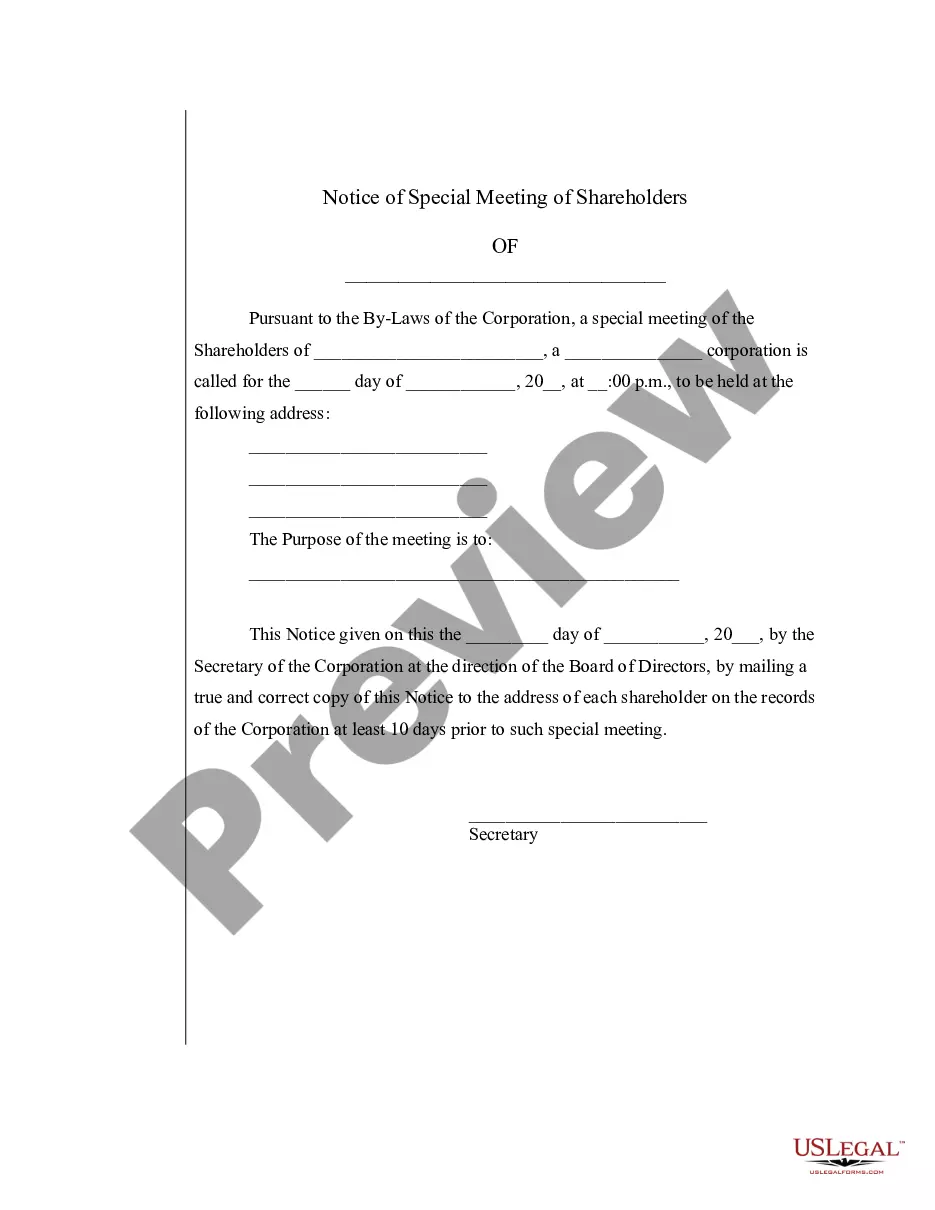
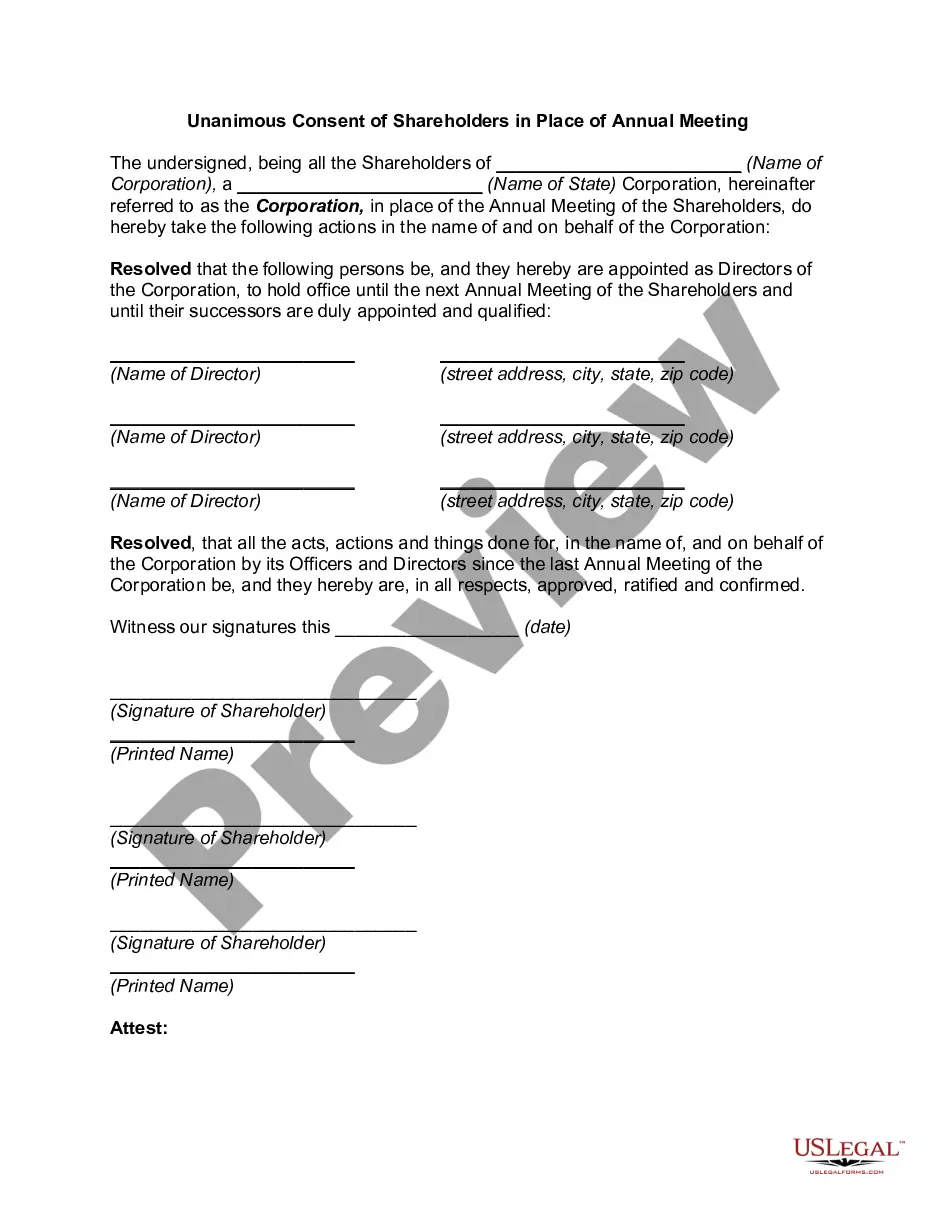
Get your form ready online
Our built-in tools help you complete, sign, share, and store your documents in one place.
Make edits, fill in missing information, and update formatting in US Legal Forms—just like you would in MS Word.
Download a copy, print it, send it by email, or mail it via USPS—whatever works best for your next step.
Sign and collect signatures with our SignNow integration. Send to multiple recipients, set reminders, and more. Go Premium to unlock E-Sign.
If this form requires notarization, complete it online through a secure video call—no need to meet a notary in person or wait for an appointment.
We protect your documents and personal data by following strict security and privacy standards.

Make edits, fill in missing information, and update formatting in US Legal Forms—just like you would in MS Word.

Download a copy, print it, send it by email, or mail it via USPS—whatever works best for your next step.

Sign and collect signatures with our SignNow integration. Send to multiple recipients, set reminders, and more. Go Premium to unlock E-Sign.

If this form requires notarization, complete it online through a secure video call—no need to meet a notary in person or wait for an appointment.

We protect your documents and personal data by following strict security and privacy standards.
Looking for another form?
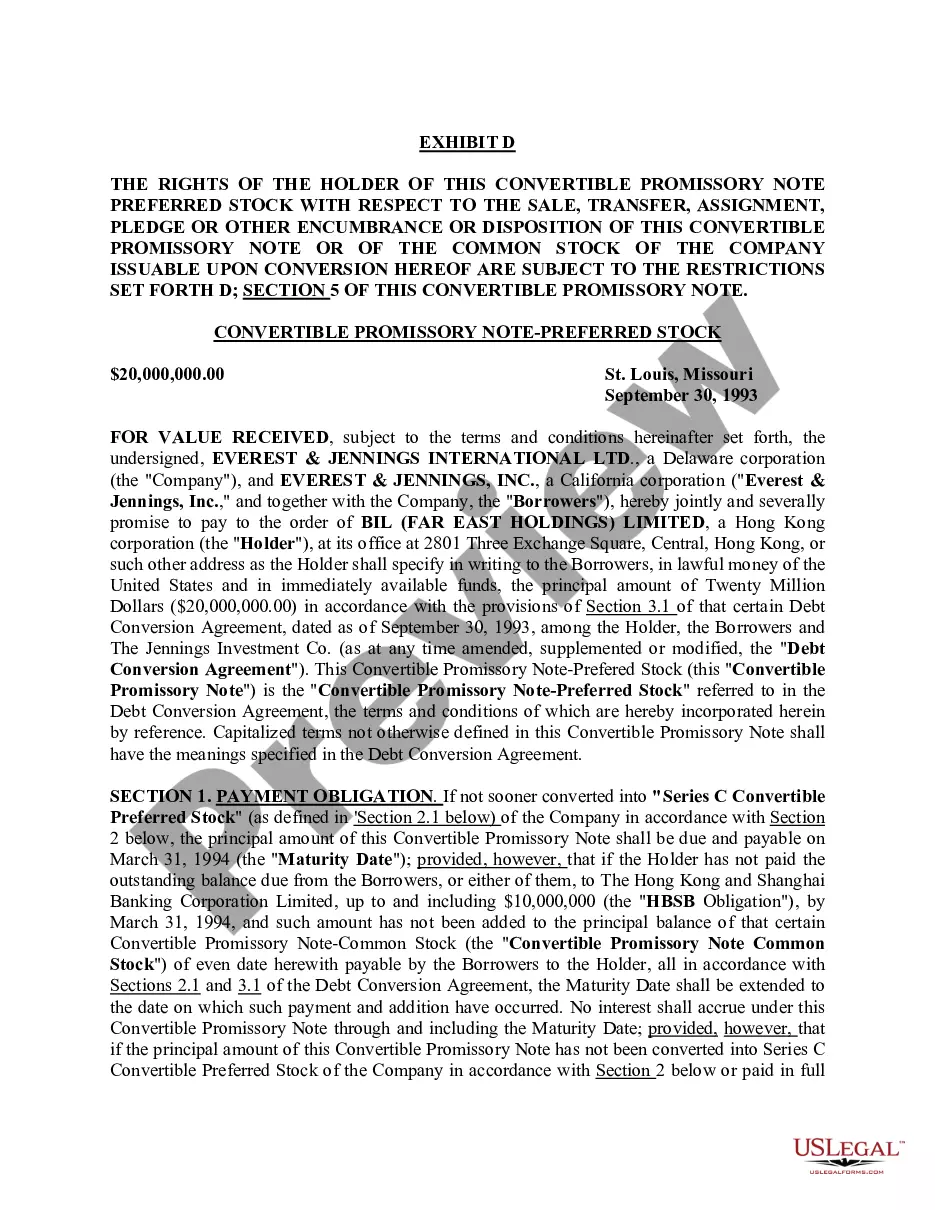
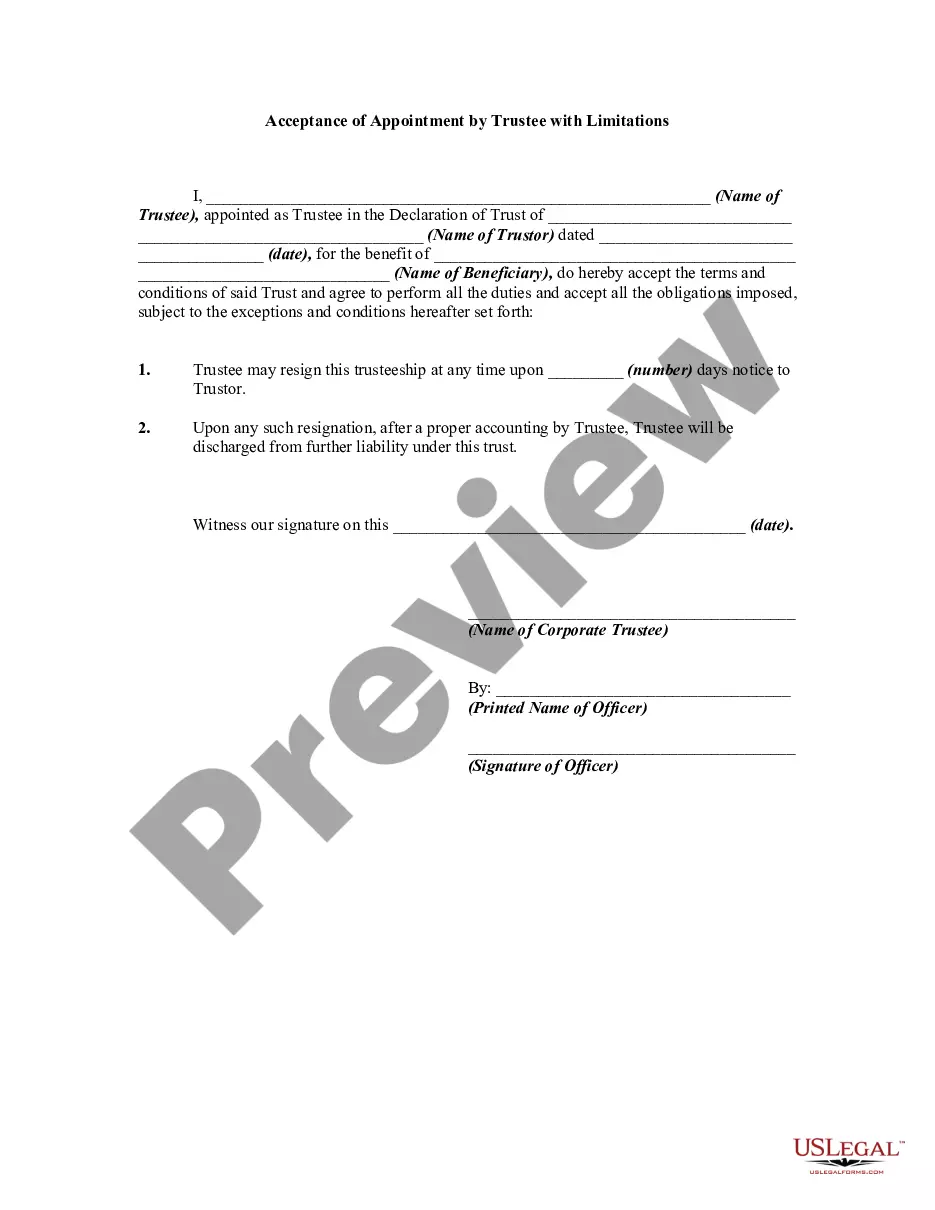

Form popularity
FAQ
Both California Corporations and California S-Corps are required to hold an annual meeting for shareholders. These meetings are pivotal for fostering transparency, discussing business strategy, and making essential corporate decisions.
Annual shareholder meetings require a notice period of at least 21 days. The notice period can be shortened with the expressed consent of all shareholders. The notice should include all the basic meeting details and other important pieces of documentation, such as the meeting agenda.
If your business is set up and registered as a Corporation, you're required by law to hold an annual shareholder meeting and to document the meeting with minutes.
The first AGM must be held within 18 months of the company's incorporation, with subsequent AGMs held annually, ensuring no more than 15 months elapse between meetings. This regular scheduling ensures timely review and approval of financial and operational matters.
An Annual General Meeting (AGM) is a yearly gathering where a company's shareholders and board of directors meet to discuss important aspects of the company. At the AGM, the directors present an annual report to update shareholders on the company's performance, strategy, and management.
(a) initially, no more than 18 months after the company's date of incorporation; and. (b) thereafter, once in every calendar year, but no more than 15 months after the date of the previous annual general meeting, or within an extended time allowed by the Companies Tribunal, on good cause shown.
The annual shareholder and director meetings are typically held after the end of the corporation's fiscal year, with more details such as time and location dictated by the corporation's bylaws. Often, the shareholders meeting and directors meeting are held back-to-back.
An annual shareholder meeting is typically scheduled just after the end of the fiscal year. This allows for the previous year's financial performance to be fully assessed and discussed.
An annual general meeting (AGM) is a yearly meeting between shareholders and the board of directors. AGMs are mandatory events for private and public companies and require a notice period of at least 21 days. The notice period can be shortened if all shareholders with the right to attend and vote consent to doing so.
Follow these steps to host an annual shareholder meeting. Planning and Preparation. A successful annual shareholder meeting requires detailed preparation. Notification to Shareholders. Organize the Meeting Logistics. Conducting the Meeting. Post-Meeting Follow-Up.

