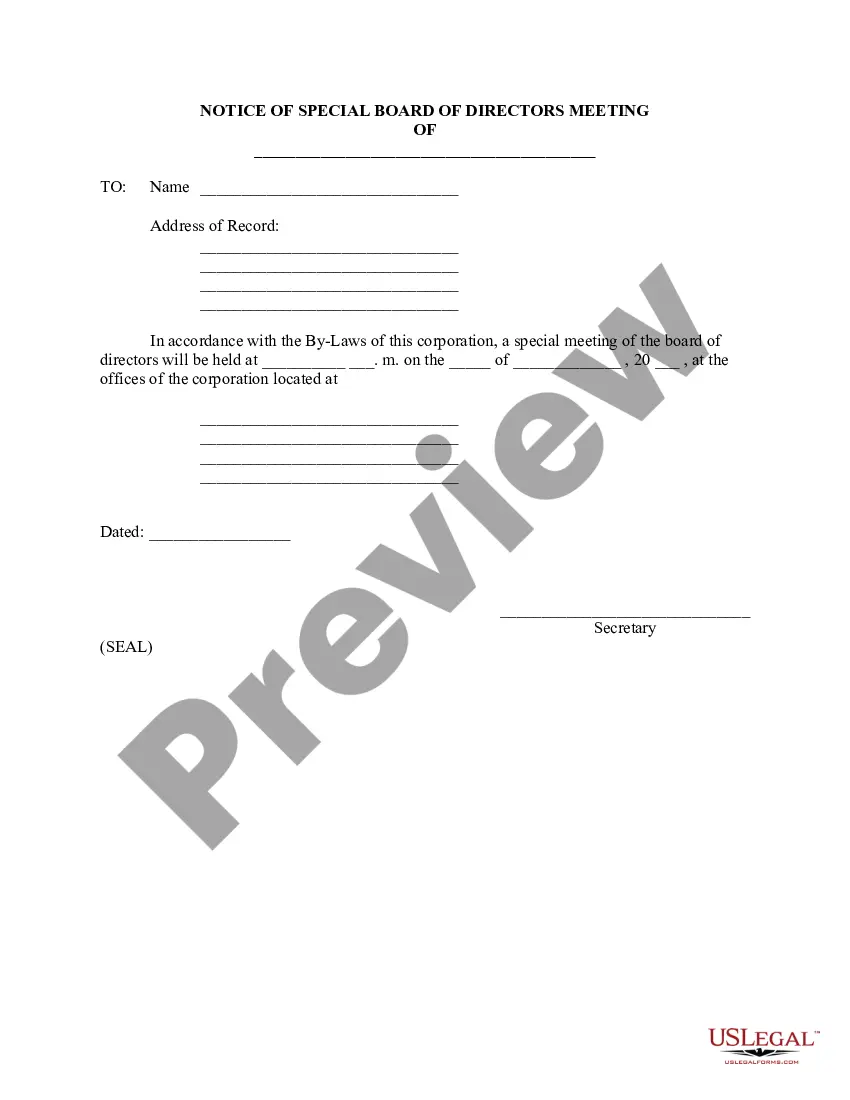
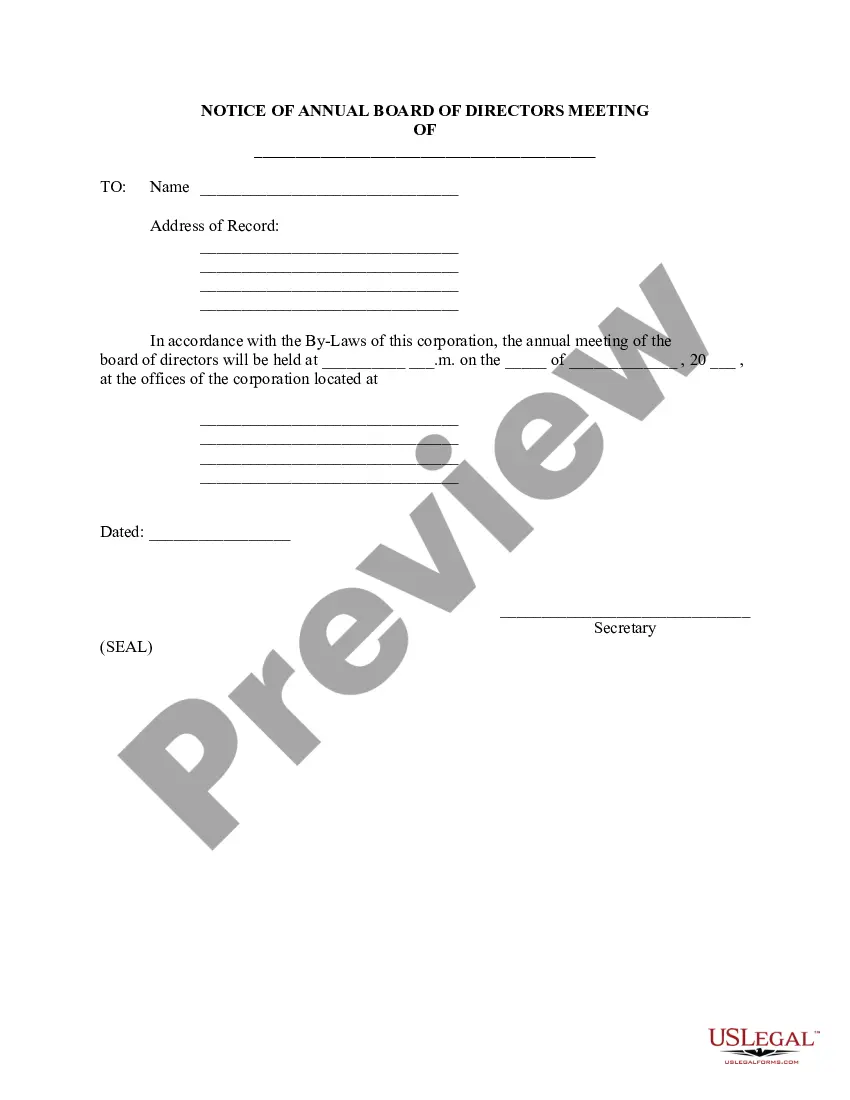
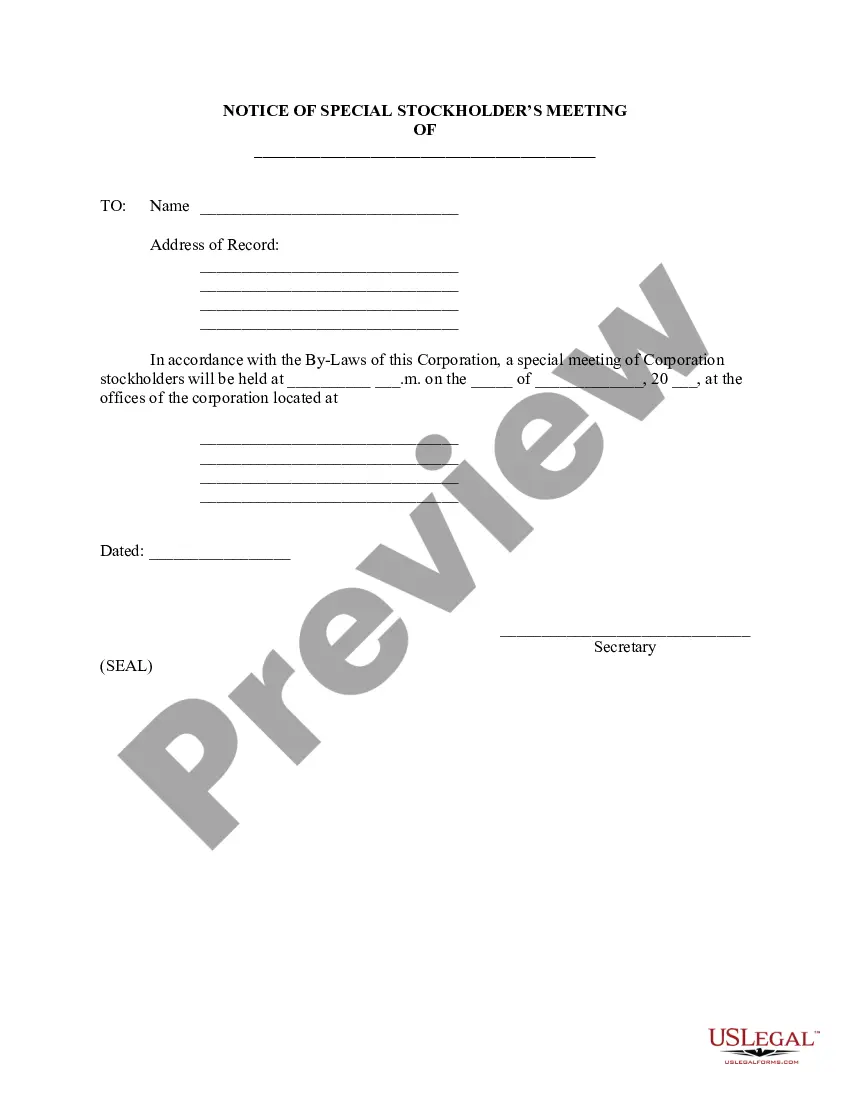
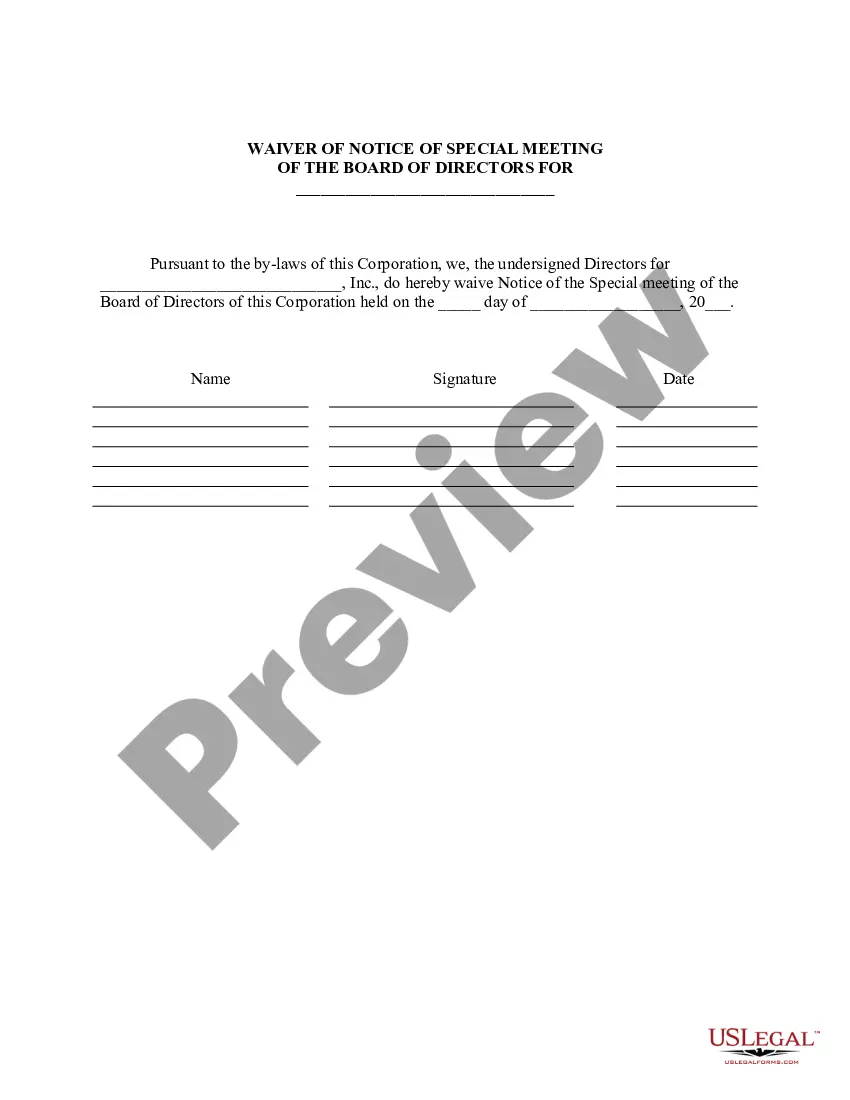
Notice Of Meeting With Example In Massachusetts
Description
Get your form ready online
Our built-in tools help you complete, sign, share, and store your documents in one place.
Make edits, fill in missing information, and update formatting in US Legal Forms—just like you would in MS Word.
Download a copy, print it, send it by email, or mail it via USPS—whatever works best for your next step.
Sign and collect signatures with our SignNow integration. Send to multiple recipients, set reminders, and more. Go Premium to unlock E-Sign.
If this form requires notarization, complete it online through a secure video call—no need to meet a notary in person or wait for an appointment.
We protect your documents and personal data by following strict security and privacy standards.

Make edits, fill in missing information, and update formatting in US Legal Forms—just like you would in MS Word.

Download a copy, print it, send it by email, or mail it via USPS—whatever works best for your next step.

Sign and collect signatures with our SignNow integration. Send to multiple recipients, set reminders, and more. Go Premium to unlock E-Sign.

If this form requires notarization, complete it online through a secure video call—no need to meet a notary in person or wait for an appointment.

We protect your documents and personal data by following strict security and privacy standards.
Looking for another form?
Form popularity
FAQ
The main components of a meeting notice are: Title or Heading – It should display a clear title like “Board aMeeting Notice” or “Notice of Annual General Meeting”. Date and Time of the Meeting – The notice must specify the exact date and time of the meeting to prevent ambiguities and schedule conflicts.
Here are five steps to write a notice of meeting letter: Create a header. Start by creating a header for the notice of meeting letter. Write meeting information. Below the header, write a brief paragraph that includes the meeting's information. List the agenda. Conclude the letter. Revise the letter.
The _________________ Name of Governing Body of the _________________ Name of Public Entity (hereafter referred to as "governing body") will be holding a __________ regular or special meeting on _____________ Date at ________ Time.
A proper meeting notice should include: Date, Time, and Venue: Clear details on when and where the meeting will take place. Purpose of the Meeting: A brief description of the meeting's objectives. Agenda: An outline of topics to be discussed; this helps attendees prepare for the meeting.
Include the agenda, date, time, and location Determine the agenda for the meeting and write it down. Decide on the date and time for the meeting, making sure to account for any potential conflicts. Choose the location for the meeting and include the address. Put all of this information into the meeting notice.
A meeting notice should include the following key details: Name and contact information of the meeting chair. Name and role of the sender of the meeting notice. Names and roles of all the invitees. Type of meeting — regular, annual, or special. Date, time and location of the meeting (the notice should also be dated)
Announce that there will be a meeting and divulge the details such as the location, date and time. Who is required to be in attendance and who is expected to be there? What is the reason behind the meeting? If the attendees are required to bring anything with them, state this here.
Here are five steps to write a notice of meeting letter: Create a header. Start by creating a header for the notice of meeting letter. Write meeting information. Below the header, write a brief paragraph that includes the meeting's information. List the agenda. Conclude the letter. Revise the letter.
Open meetings are often scheduled to take place either immediately before or after an executive session meeting. Because members do not have the right to attend executive session, the term “open session” is commonly used to refer to which aspect of the board meeting is open to attendance by the membership.
Upon finding a violation of the Open Meeting Law, the Attorney General may impose a civil penalty upon a public body of not more than $1,000 for each intentional violation.