Agreement Arbitration Document For Medical Malpractice In Maryland
Description






Form popularity
FAQ
Arbitration is a fairer, faster, and less expensive way to resolve disputes than time-consuming and expensive litigation.
Arbitration might be the right choice for some cases. Limited discovery rights and costs might be useful when less is at stake. Arbitration might feel less adversarial, which could be an advantage where ongoing relationships are hoped to be preserved. Arbitration lends some confidentiality.
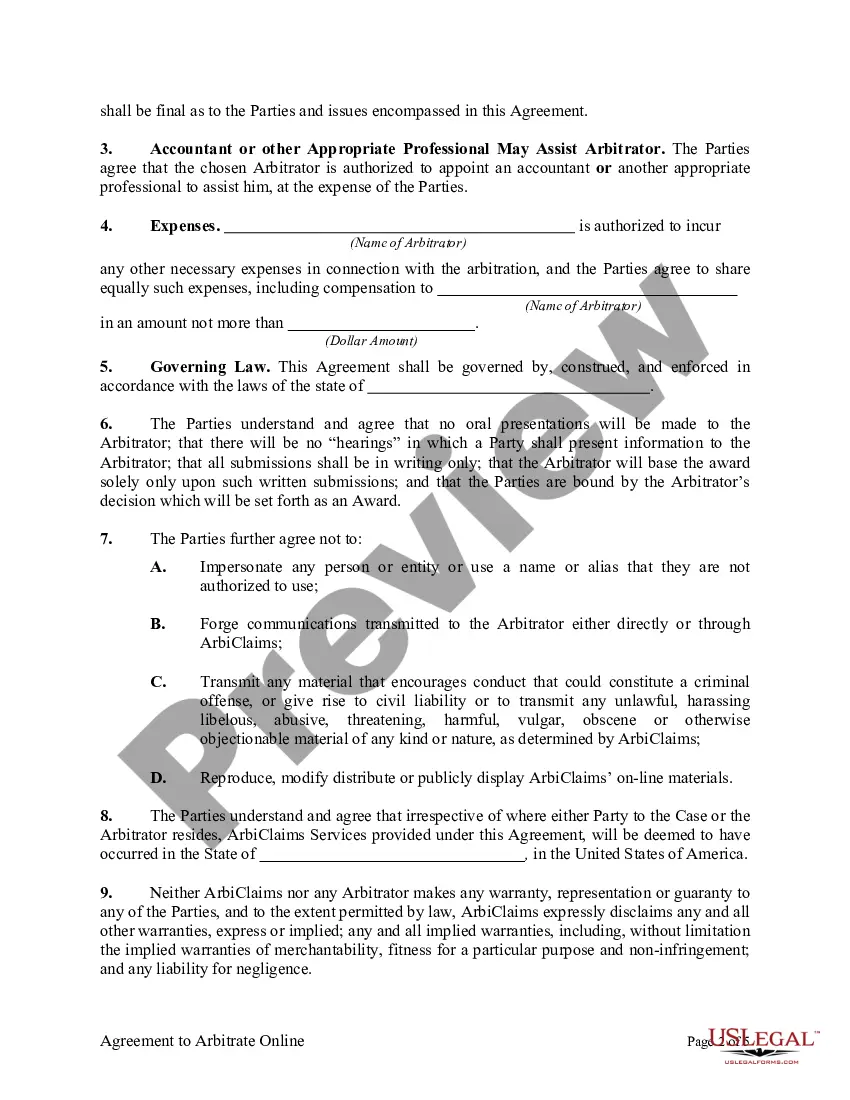
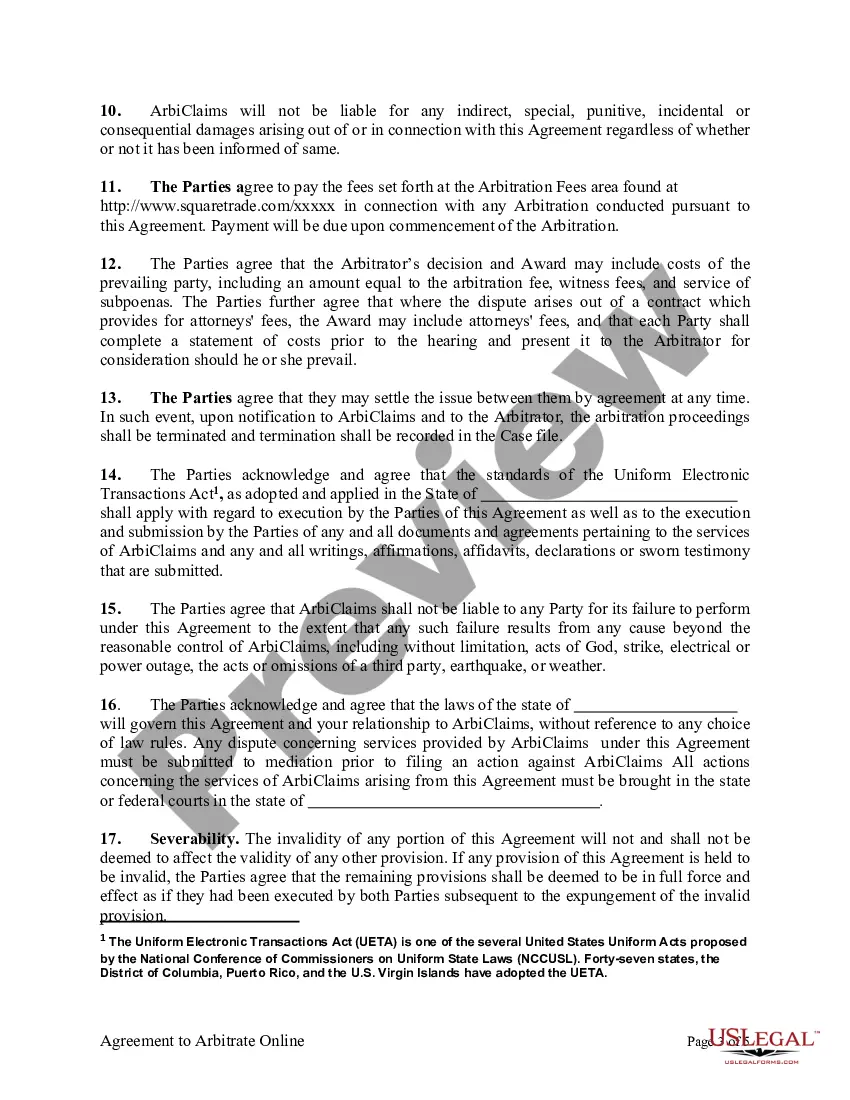
Arbitration agreements require that persons who signed them resolve any disputes by binding arbitration, rather than in court before a judge and/or jury. What is binding arbitration? Binding arbitration involves the submission of a dispute to a neutral party who hears the case and makes a decision.
Employees should evaluate whether the agreement is voluntary, fair, and balanced—especially regarding costs, arbitrator selection, and remedies. There are strategies to negotiate more favorable arbitration terms. Arbitration can significantly limit rights such as access to discovery, public trials, and appeals.
An offer of proof is a document filed in court that demonstrates that: 1) the defendant and plaintiff had a clinician-patient relationship; 2) the defendant's conduct did not conform to good medical practice; and 3) the plaintiff suffered damages as a result of the defendant's failure to conform to good medical ...
Arbitration agreements are a way that employers try to avoid being sued by employees for employment law violations, such as wage and hour violations or sexual harassment.
1 Arbitration agreements for medical malpractice are written contracts between health care providers and patients in which both agree to arbitrate any dispute or claim arising from the medical care provided to the patient by the health care provider.
1 Arbitration agreements for medical malpractice are written contracts between health care providers and patients in which both agree to arbitrate any dispute or claim arising from the medical care provided to the patient by the health care provider.
How To File a Medical Malpractice Claim in Court Finding an attorney who will represent you. Gathering evidence, such as medical records and communications. Identifying the proper court with jurisdiction. Filing paperwork with the court.
When you sign a healthcare arbitration agreement when seeking medical care from a hospital or physician, you waive your right to file a malpractice lawsuit. Instead, you will submit any claim against the medical provider to an arbitrator for determination.
