Board Minutes For Sole Director In Fulton
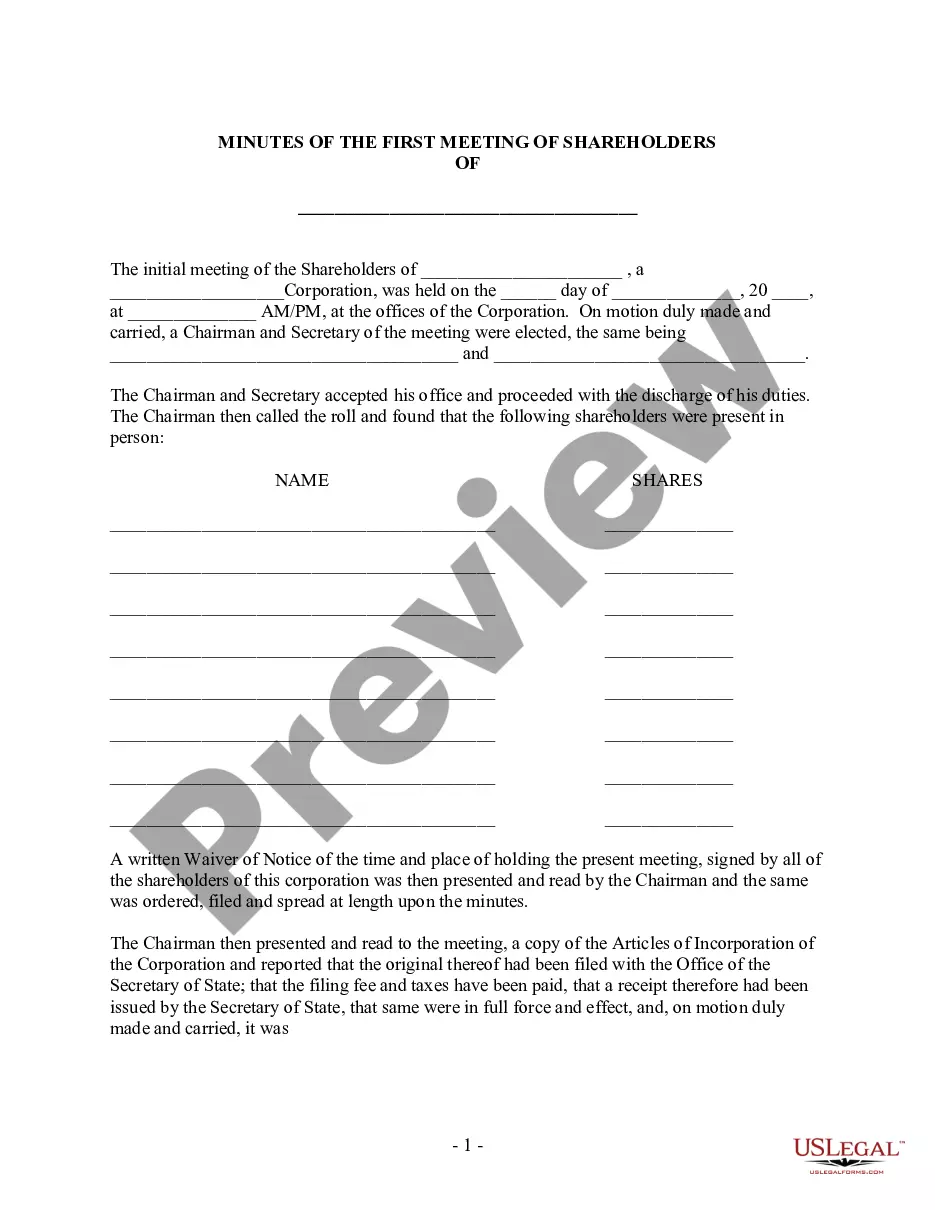
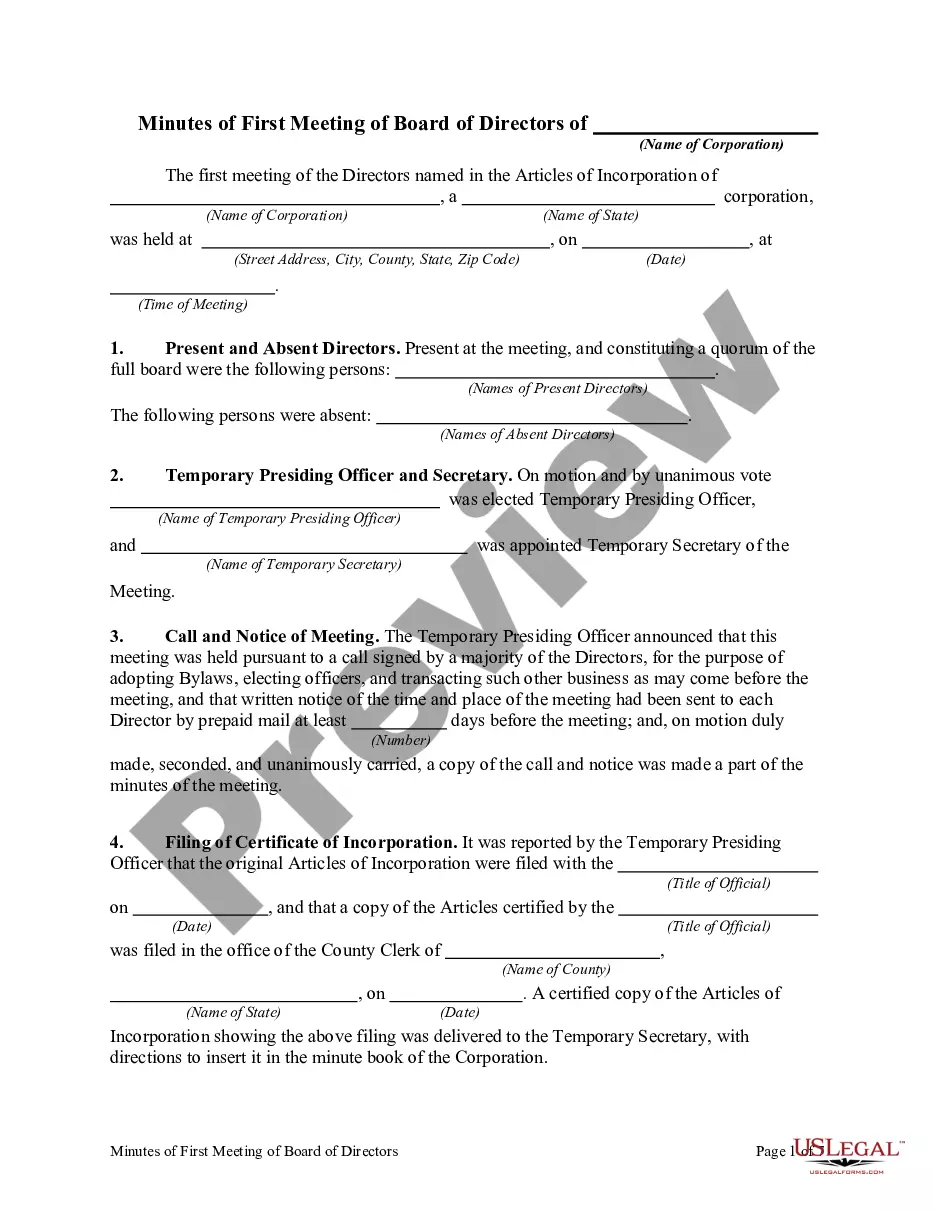
Description


Get your form ready online
Our built-in tools help you complete, sign, share, and store your documents in one place.
Make edits, fill in missing information, and update formatting in US Legal Forms—just like you would in MS Word.
Download a copy, print it, send it by email, or mail it via USPS—whatever works best for your next step.
Sign and collect signatures with our SignNow integration. Send to multiple recipients, set reminders, and more. Go Premium to unlock E-Sign.
If this form requires notarization, complete it online through a secure video call—no need to meet a notary in person or wait for an appointment.
We protect your documents and personal data by following strict security and privacy standards.

Make edits, fill in missing information, and update formatting in US Legal Forms—just like you would in MS Word.

Download a copy, print it, send it by email, or mail it via USPS—whatever works best for your next step.

Sign and collect signatures with our SignNow integration. Send to multiple recipients, set reminders, and more. Go Premium to unlock E-Sign.

If this form requires notarization, complete it online through a secure video call—no need to meet a notary in person or wait for an appointment.

We protect your documents and personal data by following strict security and privacy standards.
Looking for another form?









Form popularity
FAQ
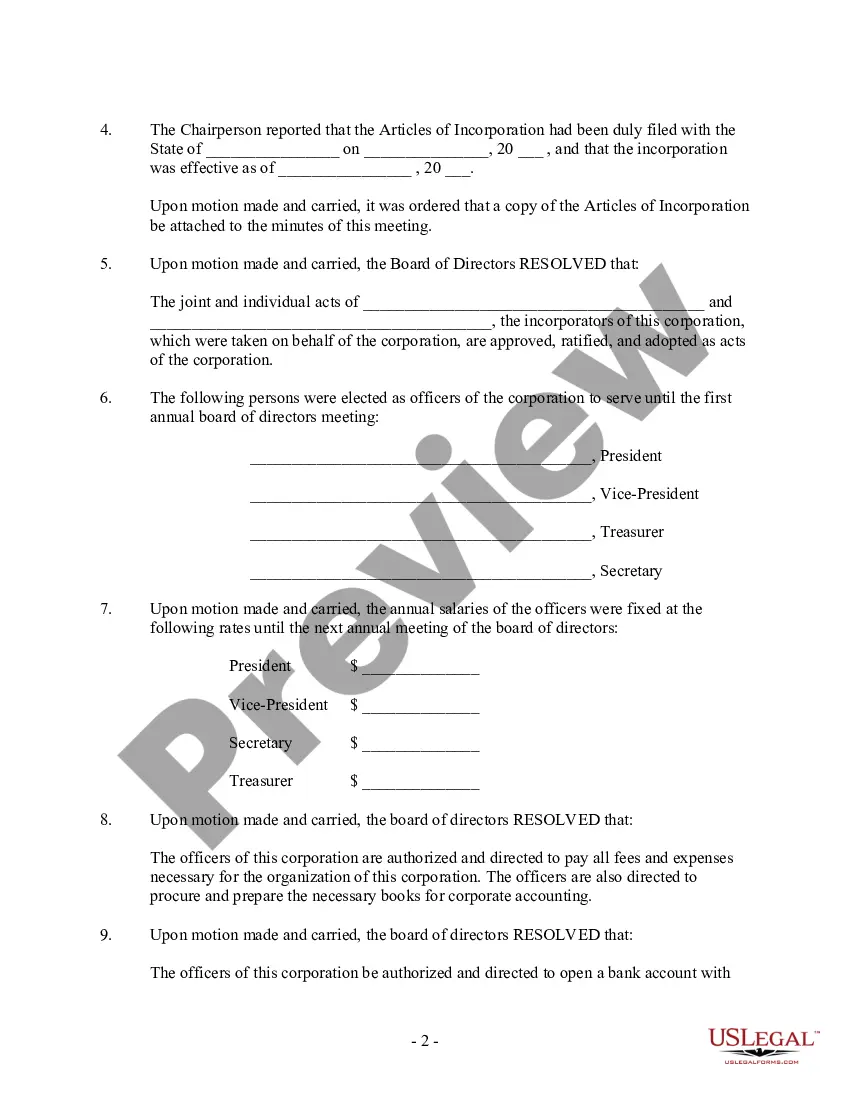
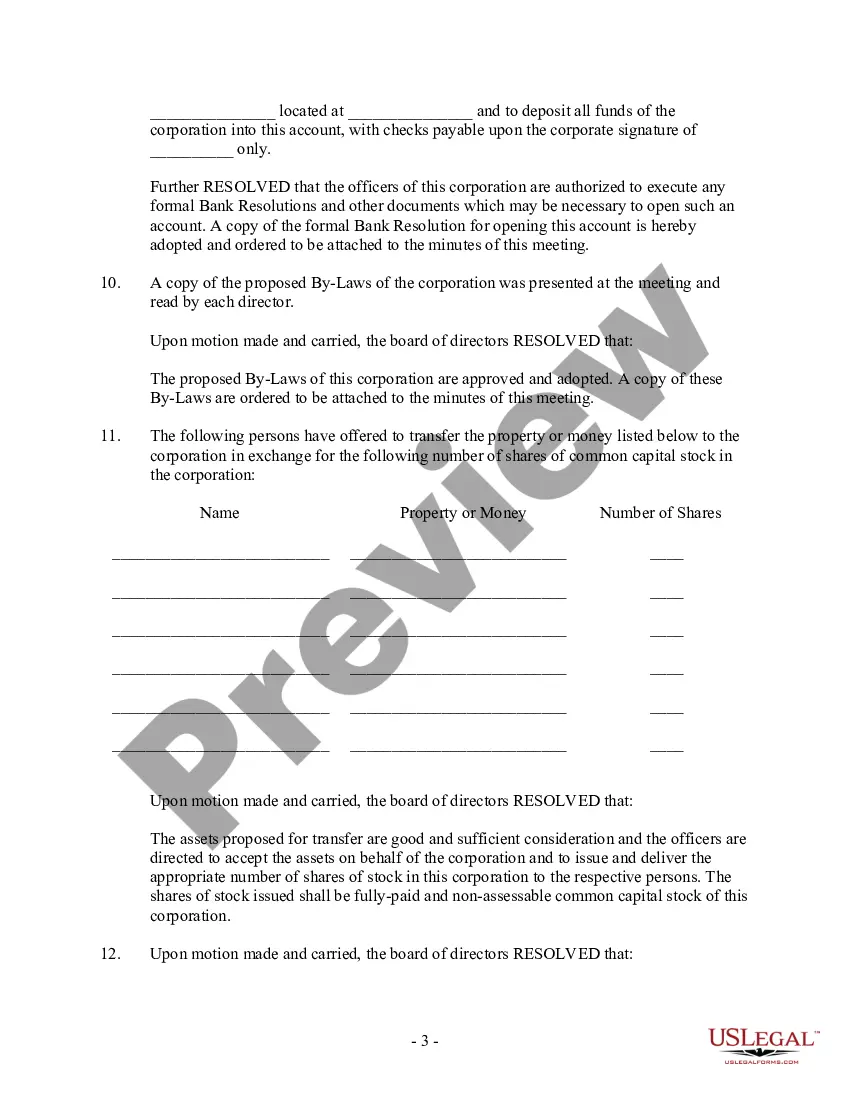
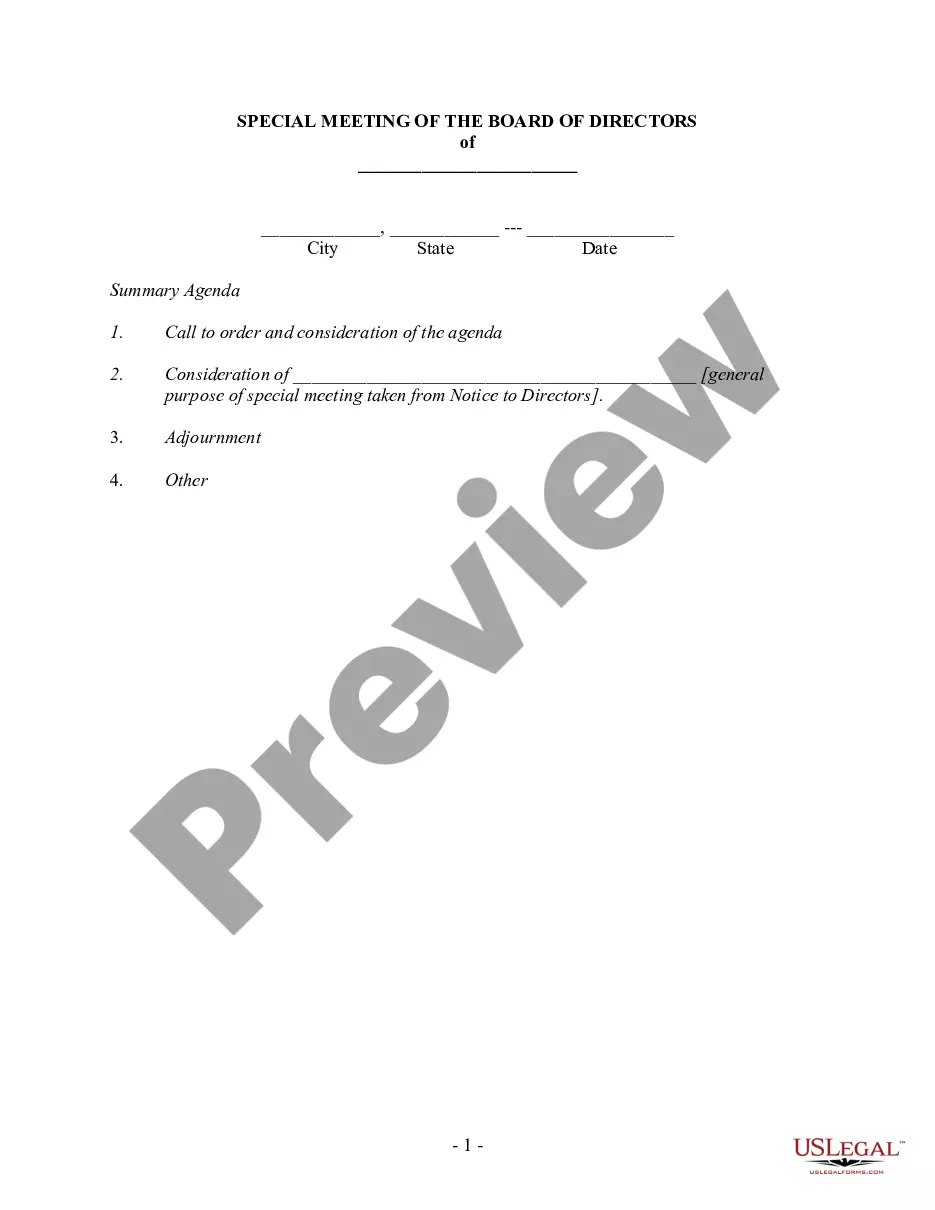
Decision-making by directors Decisions are usually taken either by passing resolutions at a board meeting or by passing a written resolution. Although a sole director may be able to hold a board meeting, in practice, a sole director would usually make decisions by passing written resolutions.
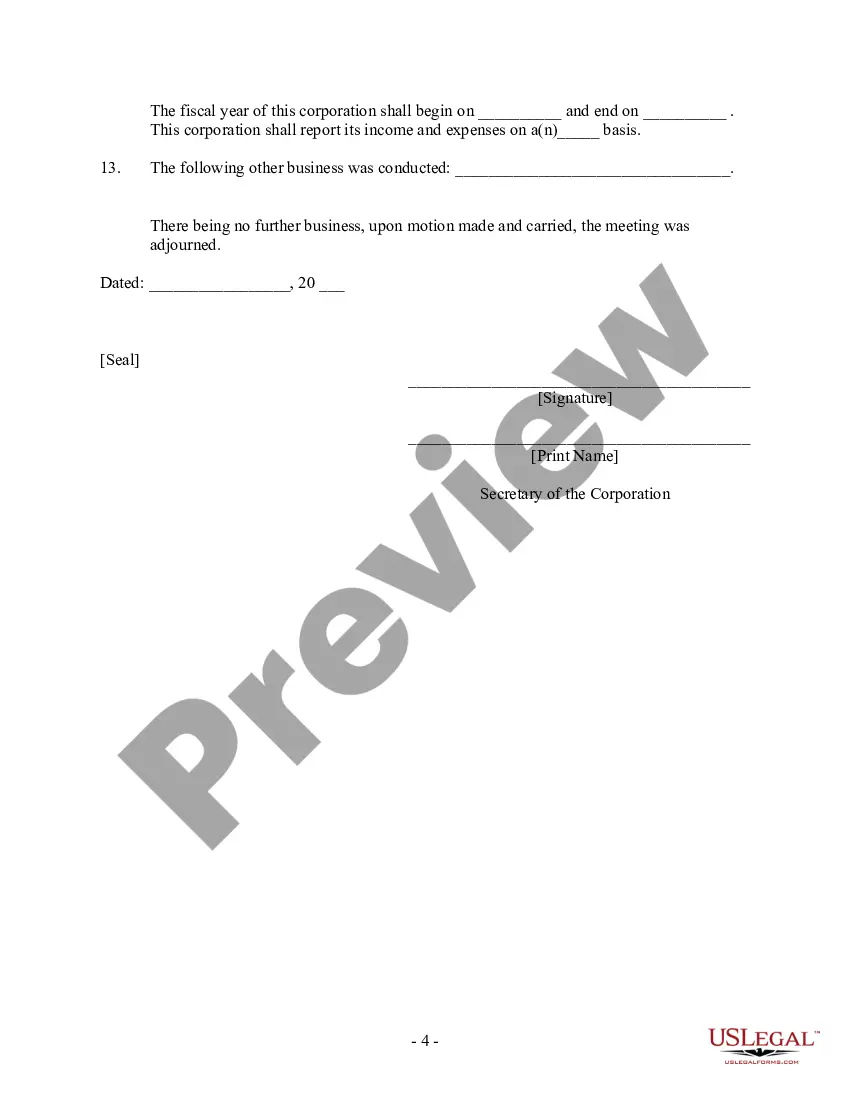
They are legally required to include these details: Date, time, and location of the meeting. Record of notice of board meeting provision and acknowledgment. Names of attendees and absentees, including guests. Approval of previous meeting minutes.
Section 248 does not specifically refer to the situation that applies to sole directors, however, it is considered good practice for a sole director to record their decisions which, if there were more than one director, would have been considered at a board meeting as resolutions in writing, particularly where ...
Resolution in Writing of Sole Director Sole directors usually record their decisions as resolutions in writing. This template resolution can be used by sole directors to record decisions and so keep a written record of company business.
Usually, a meeting will consist of more than one person. There is however legal precedent regarding the ability of sole directors to have a meeting of one. Sole directors will, however, usually record their decisions as resolutions in writing which they will then sign.
Decision-making by directors Decisions are usually taken either by passing resolutions at a board meeting or by passing a written resolution. Although a sole director may be able to hold a board meeting, in practice, a sole director would usually make decisions by passing written resolutions.
The complexity of your business is also an important factor to consider. If your business is simple with few moving parts, you may not need a board. However, if your business is complex and requires expertise in multiple areas, a board can provide the guidance and support you need to make informed decisions.
What information do board meeting minutes contain? Meeting date, time and location. Type of meeting. Names and titles of attendees and guests. Any absent board directors. Quorum. Notes about directors who left early or re-entered the meeting. Board approvals, resolutions and acceptance of reports. Overview of discussions.
