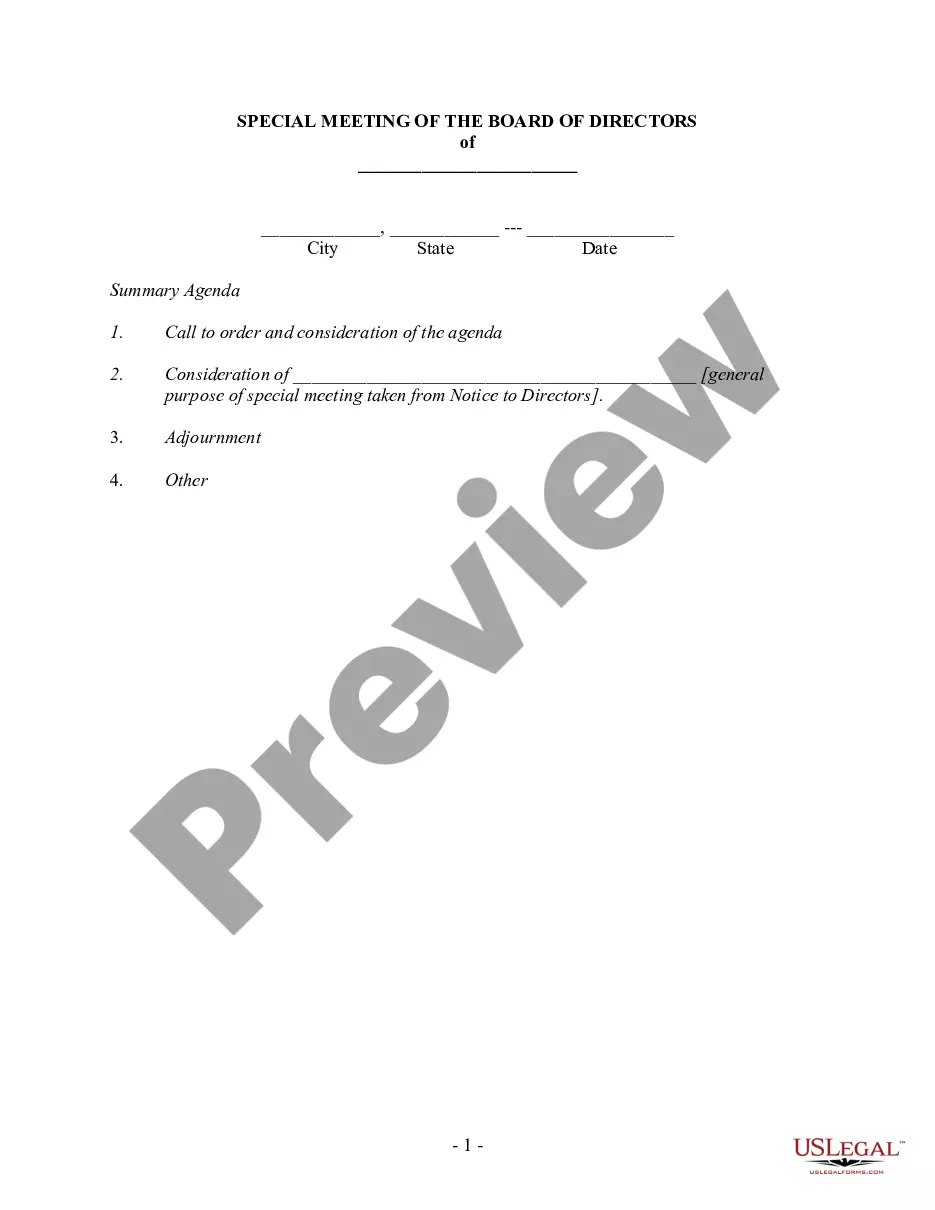
Board Meeting For Directors In Suffolk
Description



Get your form ready online
Our built-in tools help you complete, sign, share, and store your documents in one place.
Make edits, fill in missing information, and update formatting in US Legal Forms—just like you would in MS Word.
Download a copy, print it, send it by email, or mail it via USPS—whatever works best for your next step.
Sign and collect signatures with our SignNow integration. Send to multiple recipients, set reminders, and more. Go Premium to unlock E-Sign.
If this form requires notarization, complete it online through a secure video call—no need to meet a notary in person or wait for an appointment.
We protect your documents and personal data by following strict security and privacy standards.

Make edits, fill in missing information, and update formatting in US Legal Forms—just like you would in MS Word.

Download a copy, print it, send it by email, or mail it via USPS—whatever works best for your next step.

Sign and collect signatures with our SignNow integration. Send to multiple recipients, set reminders, and more. Go Premium to unlock E-Sign.

If this form requires notarization, complete it online through a secure video call—no need to meet a notary in person or wait for an appointment.

We protect your documents and personal data by following strict security and privacy standards.
Looking for another form?



Form popularity
FAQ
Who Is Allowed To Call a Meeting? A company's board can assemble a general meeting, and likewise the shareholders. Regardless, the CEO of the company may, all alone, gather a Meeting. The Company Secretary can't call a Meeting of his , except if approved by the Board of Directors or the Articles to do as such.
The chair calls the meeting to order with a simple statement. They should say something along the lines of: “Good morning/evening, everyone! It's state the date and time, and I'd like to call the meeting of organization name to order.”
The president is responsible for providing leadership and setting the tone for meetings. Typically, they lead the meeting, introduce agenda items, and ensure focus on strategic priorities. As president, they also have the authority to call special meetings, represent the organization externally, and lead the board.
A directors' meeting may be called by a director giving reasonable notice individually to every other director.
A general meeting can be called by the company directors or shareholders. A minimum notice period of 14 days is required for calling a general meeting in a private limited company. The notice must be sent to every member and director, and any persons entitled to a share on the death or bankruptcy of a shareholder.
Most board meeting agendas follow a classic meeting structure: Calling meeting to order – ensure you have quorum. Approve the agenda and prior board meeting minutes. Executive and committee reports – allow 25% of time here for key topic discussion. Old/new/other business. Close the meeting and adjourn.
The following steps to running a board meeting are: Recognizing a quorum. Calling the meeting to order. Approving the agenda and minutes. Allowing for communication and reports. Addressing old/new/other business. Closing the meeting.
"Any Director of a company may, at any time, summon a Meeting of the Board, and the Company Secretary or where there is no Company Secretary, any person authorised by the Board in this behalf, on the requisition of a Director, shall convene a Meeting of the Board, in consultation with the Chairman or in his absence, ...
Most board meeting agendas follow a classic meeting structure: Calling meeting to order – ensure you have quorum. Approve the agenda and prior board meeting minutes. Executive and committee reports – allow 25% of time here for key topic discussion. Old/new/other business. Close the meeting and adjourn.
Unless the nonprofit is a governmental entity, there is no obligation to open board meetings to the public. (“Governmental entities” would include school boards, state educational organizations, such as a state university, and quasi-governmental groups such as public libraries.)

