Meeting For Company In Orange
Description

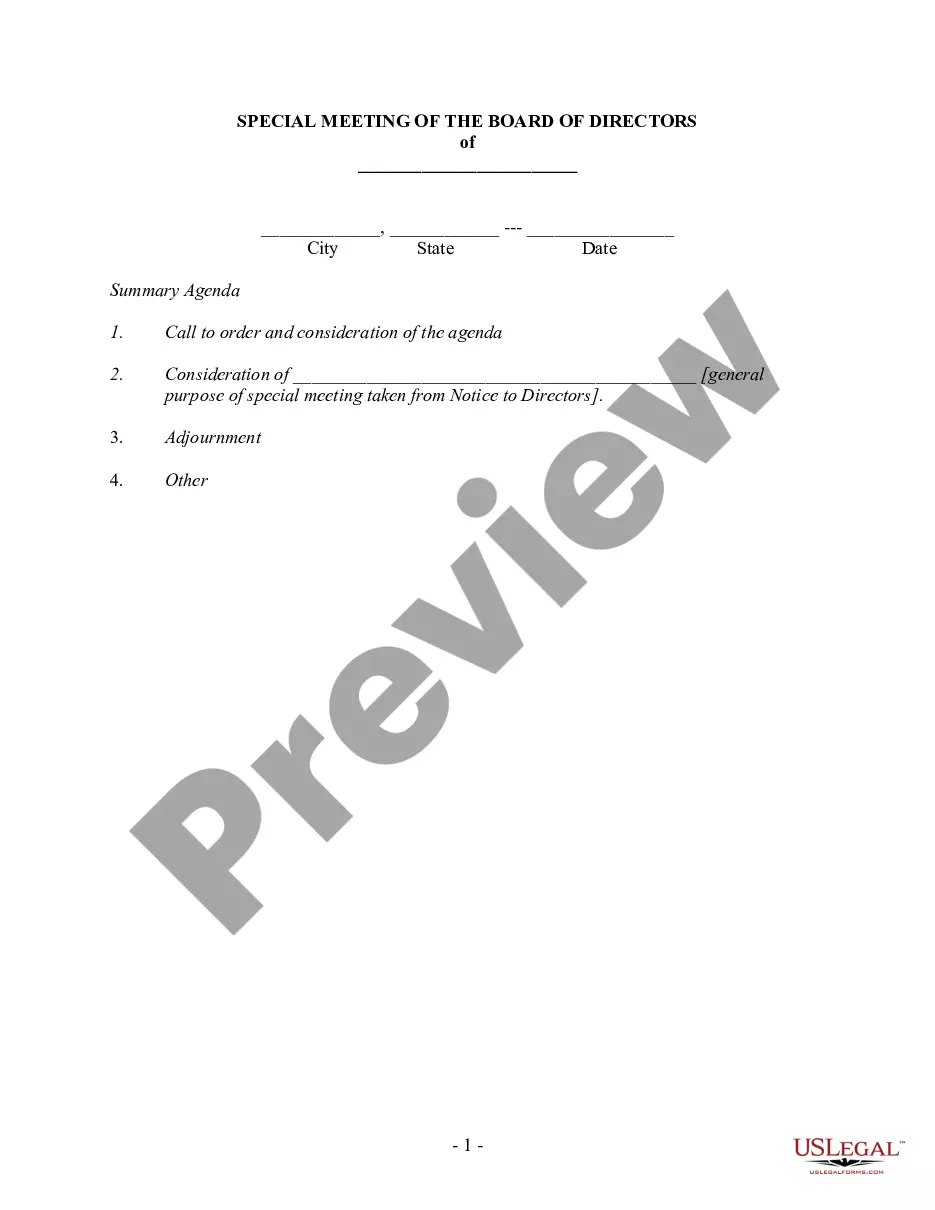


Get your form ready online
Our built-in tools help you complete, sign, share, and store your documents in one place.
Make edits, fill in missing information, and update formatting in US Legal Forms—just like you would in MS Word.
Download a copy, print it, send it by email, or mail it via USPS—whatever works best for your next step.
Sign and collect signatures with our SignNow integration. Send to multiple recipients, set reminders, and more. Go Premium to unlock E-Sign.
If this form requires notarization, complete it online through a secure video call—no need to meet a notary in person or wait for an appointment.
We protect your documents and personal data by following strict security and privacy standards.

Make edits, fill in missing information, and update formatting in US Legal Forms—just like you would in MS Word.

Download a copy, print it, send it by email, or mail it via USPS—whatever works best for your next step.

Sign and collect signatures with our SignNow integration. Send to multiple recipients, set reminders, and more. Go Premium to unlock E-Sign.

If this form requires notarization, complete it online through a secure video call—no need to meet a notary in person or wait for an appointment.

We protect your documents and personal data by following strict security and privacy standards.
Looking for another form?
Form popularity
FAQ
In many companies, every shareholder or guarantor can attend and vote at general meetings. However, it depends on the rights attached to each member's shares (in a company limited by shares) or class of membership (in a company limited by guarantee).
Characteristics of a Company Meeting: The assembly of persons must be for discussion and transaction of some lawful business. A previous notice would be given for convening a meeting. The meeting must be held at a particular place, date and time. The meeting must be held as per provisions/rules of Companies Act.
Company meetings may be broadly divided into three types: i) Meetings of shareholders or members, ii) Meetings of Directors and iii) Other meetings. i) Statutory Meeting; il) Annual General Meeting; iii) Extraordinary General Meeting; and iv) Class Meetings.
The Chair normally must be a member/shareholder of the Company (or their representative).
Meaning of company meetings This is when two or more persons (shareholders or the directors or the debenture holder or of the contributories), get together at one place, at a specific time, for lawful purposes, to discuss any common issue.
A business meeting is a gathering of professionals who come together to discuss operations, address changes or celebrate the success of an organization. Some groups who might meet together include company executives and employees, company representatives and clients or department leaders and their teams.
An AGM meeting, also known as an 'Annual General Meeting', or simply 'AGM', is an instrumental meeting in which all of the shareholders of an organisation meet and discuss aspects of the company. Several key activities take place, and this is the primary event through which companies engage in the democratic process.
• The word “meeting” is not defined anywhere in the Companies Act. Ordinarily, a company meeting. may be defined as gathering, assembling or coming together of two or more persons (by previous notice. or by mutual arrangement) for discussion and transaction of some lawful business.
In many companies, every shareholder or guarantor can attend and vote at general meetings. However, it depends on the rights attached to each member's shares (in a company limited by shares) or class of membership (in a company limited by guarantee).
The eight main types of company meetings Statutory Meeting. Annual General Meeting. Extra ordinary General Meeting. Class Meeting. Meeting of Debenture Holders. Meeting of the Board of Directors. Meeting of Creditors. Meeting of Creditors and Contributories.

