Annual Board Directors Template With Members In Montgomery
Description

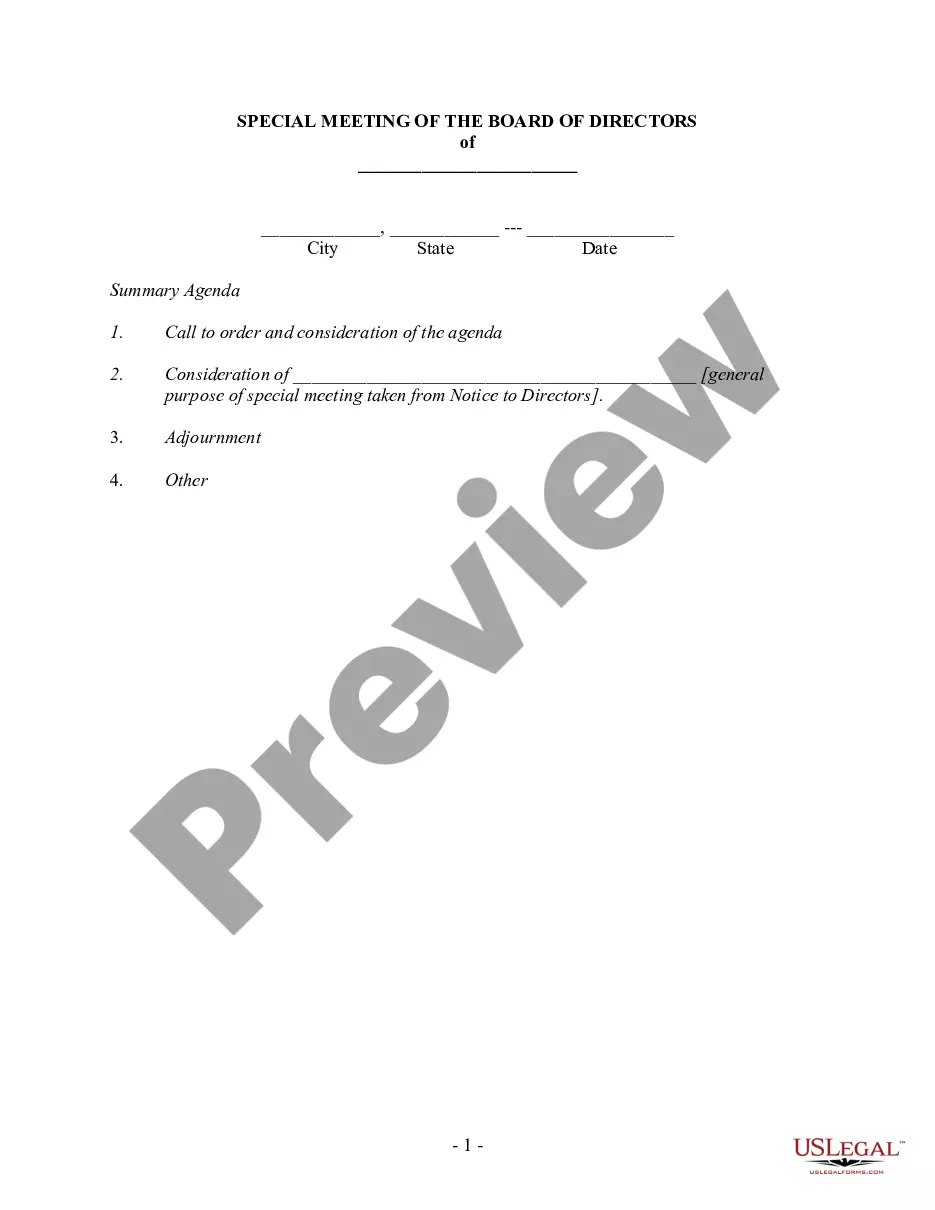


Get your form ready online
Our built-in tools help you complete, sign, share, and store your documents in one place.
Make edits, fill in missing information, and update formatting in US Legal Forms—just like you would in MS Word.
Download a copy, print it, send it by email, or mail it via USPS—whatever works best for your next step.
Sign and collect signatures with our SignNow integration. Send to multiple recipients, set reminders, and more. Go Premium to unlock E-Sign.
If this form requires notarization, complete it online through a secure video call—no need to meet a notary in person or wait for an appointment.
We protect your documents and personal data by following strict security and privacy standards.

Make edits, fill in missing information, and update formatting in US Legal Forms—just like you would in MS Word.

Download a copy, print it, send it by email, or mail it via USPS—whatever works best for your next step.

Sign and collect signatures with our SignNow integration. Send to multiple recipients, set reminders, and more. Go Premium to unlock E-Sign.

If this form requires notarization, complete it online through a secure video call—no need to meet a notary in person or wait for an appointment.

We protect your documents and personal data by following strict security and privacy standards.
Looking for another form?



Form popularity
FAQ
The humble board binder holds more power than you might imagine. Far from just a collection of paperwork, a well-assembled board binder is a vital tool for maintaining effective governance, promoting transparency, and equipping board members with the knowledge they need to fulfill their duties confidently.
The answer to this question is a resounding yes! In fact, ing to business Insider, "There's no law that says a board of directors has to be made up of more than one person, and plenty of companies are run by a single director."
However, the IRS requires a minimum of three board members for tax-exempt status. Find out more. ? How does a nonprofit choose board members? Look for board candidates who have passion, motivation, know-how, availability, integrity, and adaptability.
In most states the laws dictate the minimum size for nonprofit boards. Usually it is three, but in some states only one board member is required. Some boards function under a representational mandate; their composition needs to reflect the constituency, and this creates an upward pressure on the size.
Generally, a board of three to five members is ideal. Too many members can make decision-making difficult, and too few may not provide the necessary insight and expertise.
It is important to remember that board reports should be simple and easy to read. One way to do this is to format written content into brief paragraphs, bullet points or numbered lists. Sometimes, reports can look like a collection of memos with this simple structure.
A public company's board of directors is chosen by shareholders, and its primary job is to look out for shareholders' interests. In fact, directors are legally required to put shareholders' interests ahead of their own.
How to form a board of directors Register articles of incorporation. You must file articles of incorporation in your state to gain legal status as a corporation. Create bylaws. Set up a board of directors agreement. Select your board of directors. Have an initial shareholder meeting.
How to build a board of directors that actually helps Step 1: Establish the board's role within your organization. Step 2: Determine the board's powers. Step 3: Figure out the nitty gritty. Step 4: Decide who should be on your board and ask them. Step 5: Onboard your board. Step 6: Engage!

